Jordi Herreruela is not accustomed to talking about music only in terms of lineups, artists, or ticket sales. Founder of Cruïlla, promoter of the Cases de la Música, and one of the most influential figures in the Catalan music industry, he has built a vision that transcends the stages. It is the perspective of a son of Extremaduran immigrants, of a telecommunications student who ended up dedicating his life to culture, of the promoter of the El Clap venue in Mataró, and of an entrepreneur who has seen how music went from selling records to selling experiences. When he reflects on the sector, he ends up talking about the city, culture, identity, and even politics. About everything that makes a community recognize itself and find its own way of explaining itself to the world; also through music.
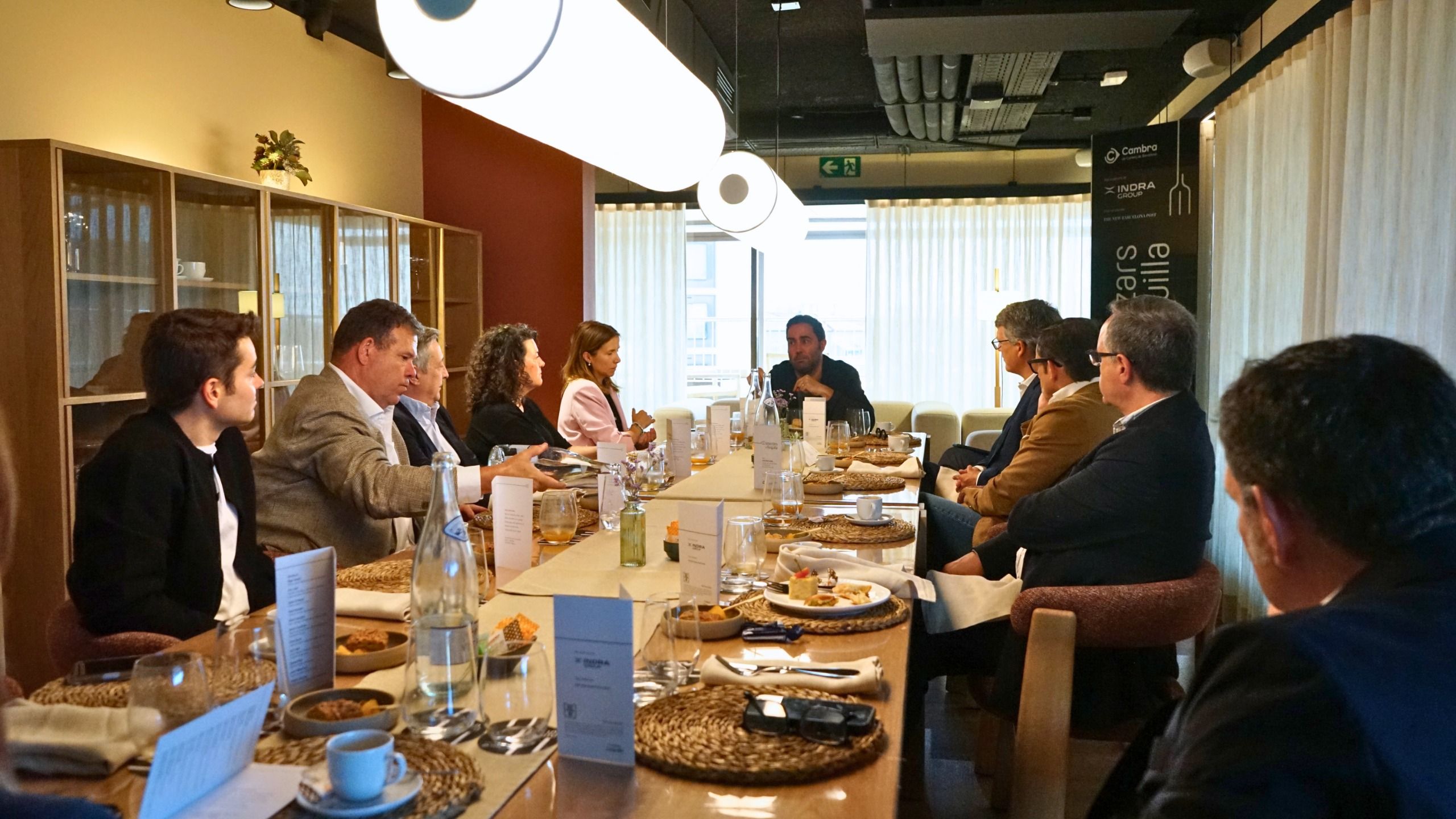
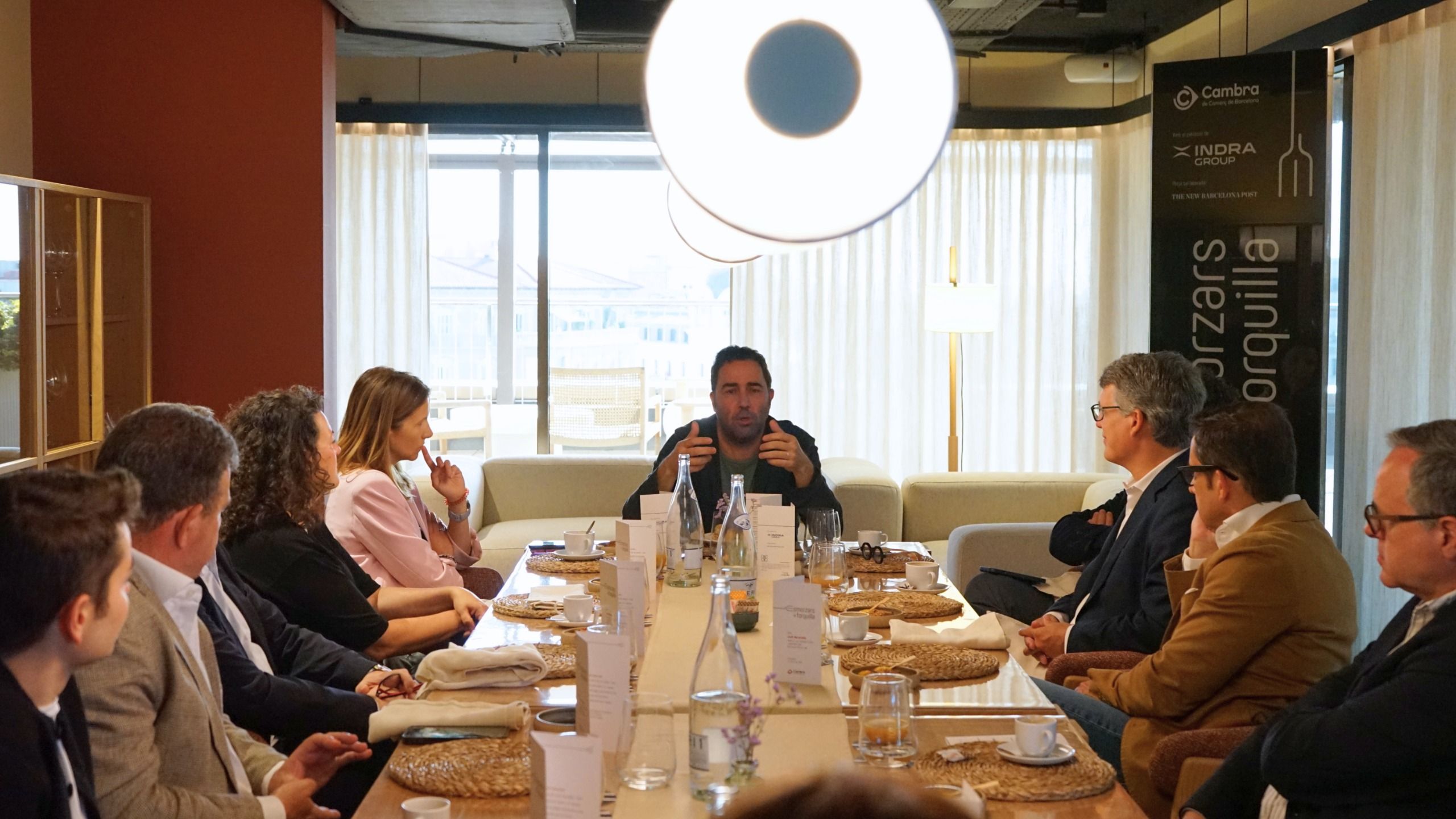
He receives us, a few weeks before the start of Cruïlla 2026, at the Esmorzar de Forquilla organized by the Cambra de Comerç de Barcelona and sponsored by Indra. The series brings together entrepreneurs and executives in closed-door meetings that combine the traditional Catalan fork breakfast with reflection, conversation, and networking. The soundtrack today, however, is not economics or geopolitics. It is music.
— How do music and identity combine?
— Everyone's identity is determined by where they live, by family, by language, by friendships, and by education. But also by everything that is cultural and experiential: the books we read, the movies we watch, the music we listen to, the trips we take, or the moments we share with other people. In the end, conversations, relationships, and lived experiences are what build an identity that we recognize as our own.
I dedicate myself precisely to offering experiences. And I like to think that these experiences contribute to building collective identity. A concert or a festival is not just an artistic program; it is a space where shared memories, community, and a way of relating to the territory are generated.
— But in such a globalized world, also in the musical field, is there still space for the singularities of territories?
— For many years we have tended to treat everything in the same way, regardless of where it happened. But culture doesn't work like that. It doesn't scale as well as other industries. It's not selling screws. It depends on factors such as the identity of people, cities, and territories. And I believe we will end up entering a second stage of globalization in which we will be able to identify and value the things that make us unique.
— Does this uniqueness, then, limit the scalability of cultural projects?
— Not necessarily. On the contrary. A cultural project can scale, but only if it is able to incorporate this perspective on regional uniqueness. Sometimes here in Catalonia we experience the issue of identity in a very passionate way, but in reality, all of Europe is made up of minority cultures. The European model is, precisely, a model of cultural diversity.
That's why I believe that a cultural model that works in Catalonia can also have scalability, as long as it does so from the identification of its cultural uniqueness and from respect for regional identity.
In fact, this is my business vision. As long as globalized companies are not able to incorporate this perspective on regional uniqueness, there will be space for companies like ours to work, grow, and do business.
— Independent festivals are experiencing a wave of acquisitions by large investment funds and multinationals such as Live Nation or AEG. How do you compete against publicly traded companies?
— Our business model is very different. I run a festival and I have to make money from that festival. A multinational can lose money on a specific activity because its goal is to grow and increase the value of the company. From the outside, it seems like we do the same thing, but the business models have nothing to do with each other.
And yes, I compete with companies that can offer an artist fifty dates in fifty different countries, but when a multinational arrives in a territory, it often does so without understanding its nuances. And we, on the other hand, dedicate a lot of time to understanding the place where we work, its complexities, and its cultural reality.
— The music industry has undergone a profound transformation in the last fifteen years. Recording is no longer the big business and everything is focused on live performance. How do you economically explain this structural change for artists?
— Artists used to live off recorded music. They would record an album, a record label would give them an advance, and they would go on tour almost as an excuse to promote it. The focus was on recorded music.
All of this changes with technological transformation. First with Napster and then with digital platforms. For every ten euros generated by recorded music, the artist earns approximately one. In contrast, for every ten euros generated by live music, they take between six and seven. This has caused the model to invert: today the album serves to promote the tour.
— And it has professionalized concerts!
— A lot! Now no one goes to perform drunk (laughs), the artist takes it very seriously.
"It's very difficult to leave a concert angry. There are no rivalries, there is no team that loses."
— Does Rosalía's model, a global phenomenon, also respond exactly to this same pattern of living exclusively from her tour?
— In this specific case, I might have some doubts. I believe there are some artists that record labels don't have to make a profit, but to build a brand, and they pour a lot of resources into them. Rosalía is in a similar scenario to footballers: she earns money for performing, but above all for advertising and image. Sony, by having Rosalía, attracts many other artists. Having her helps them make money with the rest of their catalog.
— Rosalía plays in a similar scenario to footballers, but… live music too? Is it at the same level?
— Both are probably the two major activities capable of moving people out of their homes massively and recurrently. But there is an important difference: in music, everyone wins. It's very difficult to leave a concert angry. There are no rivalries, there is no team that loses. Everyone sings in the same direction.
— What do the data tell you about the future of live music?
— That we haven't peaked yet. Today, between 94% and 95% of the population listens to music regularly, but only about 30% go to concerts or festivals. This means there is still enormous room for growth.
And this potential is already being reflected in the sector's figures. Before the pandemic, live music grew at rates close to 20% annually. After COVID-19, we thought it might be difficult to recover, but the opposite has happened: we have seen growth of 25% annually. In the last three or four years, global live music revenue has grown by about 75%.
— And what accounts for these growths?
— The fact that music has ceased to be an activity for music lovers to become a mass experience. Before, you had to buy an album and, as it represented an investment, you had to choose very carefully. You listened to it whole, dozens or hundreds of times, and you ended up becoming an absolute fan of that artist. The way we consumed music turned us into music lovers.
But today we have all the music in the world available with a flat rate. You listen to a song for thirty seconds, you don't like it and you move on to another. You might even really like some songs on a playlist and not even know who performs them. The relationship with music is much faster and much less exclusive.
And furthermore, live music has become socialized. Concerts have ceased to be an activity reserved for big fans and have become a shared, family, and transversal experience.
"Barcelona has clearly positioned itself as a musical city, but this leadership is in danger."
— In such a digital world, we are once again valuing the experiential.
— That's right. With artificial intelligence and all the transformations to come, we will probably doubt many of the things we see on screens. In contrast, we will continue to trust real experiences. And live music is one of the great collective experiences of our time.
— And if live music has not peaked, is Barcelona prepared to take advantage of this growth?
— Not enough. Barcelona has clearly positioned itself as a musical city, but this leadership is in danger.
— Why?
— Due to the lack of infrastructure. There is a new generation of venues specifically designed for live music and Barcelona does not have them. For many years, concerts have ended up in spaces designed for sports, such as the Palau Sant Jordi or stadiums, which are not conceived to offer the best musical experience.
The world is changing. We see examples like the Sphere in Las Vegas, the new Co-op Live in Manchester, or the large venues being promoted in Frankfurt, Madrid, or Paris. Artists are increasingly creating more complex productions and tend to settle for weeks in the same place. Whoever wants to see that show has to travel.
— Do we run the risk of being left out of this circuit?
— Clearly. And not just because of the large venues. We have very few concert halls compared to other major European cities. We are losing live music spaces and have very significant gaps between capacities. We lack small, medium, and large venues. We lack a plan.
— But Barcelona still attracts great artists.
— Yes, but this doesn't happen by spontaneous generation. To attract congresses, there are teams that work specifically on it. To attract major sporting events too. With music, on the other hand, it has been taken for granted that there was already a strong local industry and that, therefore, things would just happen.
The problem is that this industry is ceasing to be local. Major promoters are being sold, ownership and decision-making centers are shifting, and no one is thinking in a coordinated way about what the city needs to remain a musical capital.
— Is this where Barcelona Music Lab comes in?
— Yes. Barcelona Music Lab was born precisely to help position Barcelona as one of the world's great centers of musical innovation. We have extraordinary assets that we talk about very little. We have internationally recognized research groups in music technology, pioneering companies in copyright management, music schools that attract talent from all over the world, and an industry much more important than is often perceived.
Because private companies also engage in politics. Not party politics, but a politics that has to do with the model of society you defend. When you create an association of venues, the Casas de la Música, or a foundation like Barcelona Music Lab, you are trying to influence reality. You are defending a certain vision of culture, territory, and the city without having to enter into the dynamics of political parties.
— By the way, when Jordi Herreruela stops being a promoter, what does he listen to?— I really like black music from the early seventies. Stevie Wonder, Al Green, Terry Callier... I also really like jazz, but that music that has elements of soul, funk, and jazz is probably what I enjoy the most. Obviously, I listen to everything, but when I want to treat myself, I often go back to that.
Add The New Barcelona Post as your preferred Google source for free
Stay informed with the latest news.