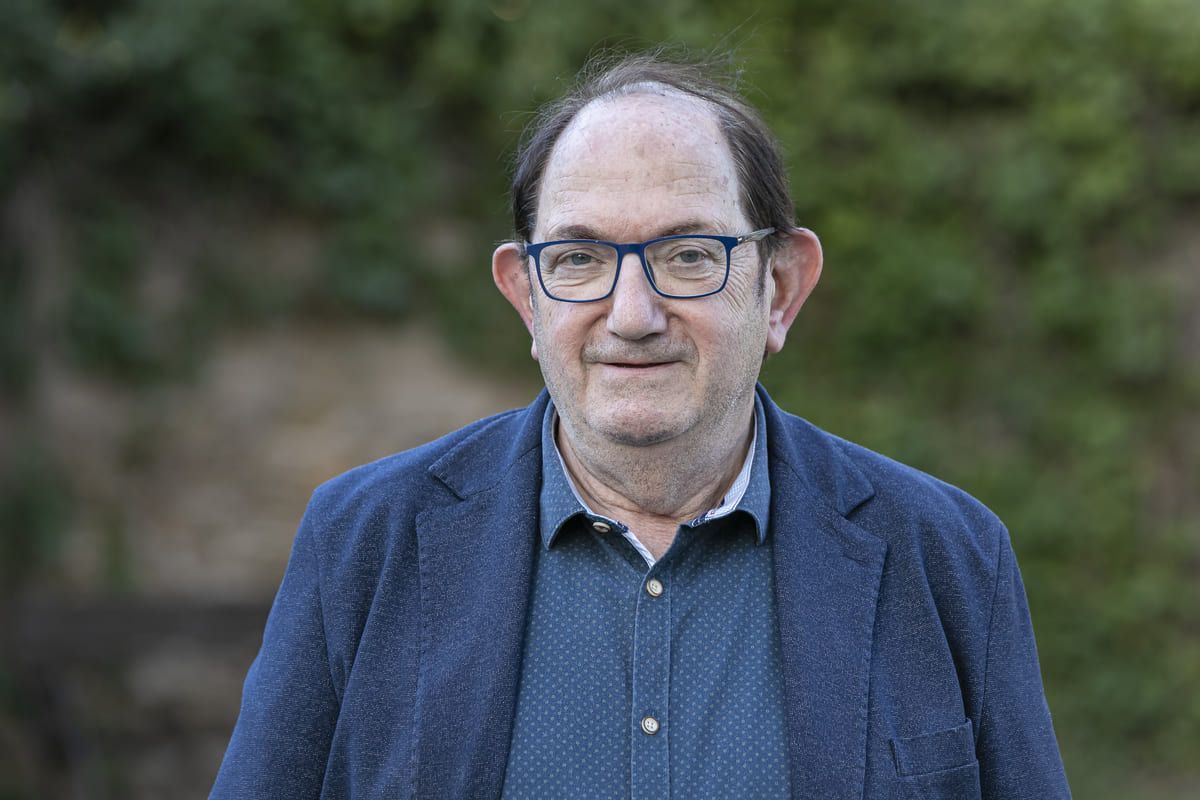
Joan Font is the founder, CEO, and president of the Bon Preu group. Son of a cod merchant and a shopkeeper. From Torelló (Barcelona) and from the family of the escoltes [boy scouts] with whom he traveled with a Citroën 2CV through 1970s Europe. He worked by day and studied surveying and mercantile professorship by night. A Catalan entrepreneur of cut stone. The keys? Common sense, instinct, trust, and emotional temperament. He is not obsessed with growth, but he wants to grow as much as possible.
We talk with Joan Font about childhood, family, trade, the market, the company, success, administration, the territory, society, and the country. About almost everything, or nothing, leaving the best for last. How does Joan Font protect himself from himself? How would he "kill" his company? What would he not do again? These three questions are not mine, but from the previous interviewee, who is the physicist Alfons Cornella. Three rebellious turns.
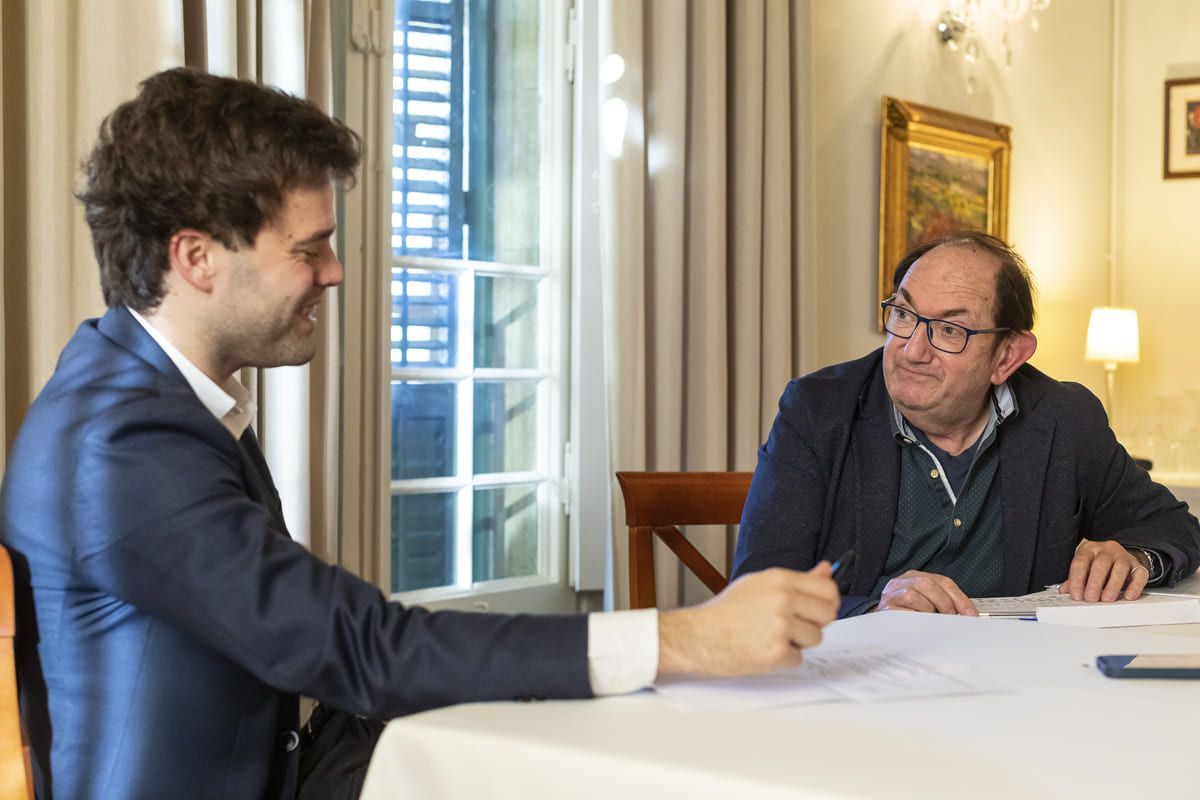
The art of asking questions and listening to answers. This is the final result of almost seven hours of lunch with Joan Font at Torre Simón in Tona after a visit to Esclat de Malla and the logistics city of Balenyà, in the Osona region. I hope you enjoy this unique journey with the leader of Bon Preu.
--- He is the son of a cod merchant and a shopkeeper.
--- I have great childhood memories. I would wake up at five in the morning when I was still a nine-year-old child. It was a very demanding time of work and dedication, but I remember it very positively for learning to live the economic, social, and political reality of families and the country.
--- What was the reality of the country like?
--- I was born in 1951 and lived my childhood in the midst of Francoism, a time of intellectual, political, moral, and religious misery. It was a real disaster. How can this be and until when?, I wondered. There were also people who were a source of hope in gray times.
"I lived my childhood in the midst of Francoism, a time of intellectual, political, moral, and religious misery. I remember some entrepreneurs who were a source of hope in gray times"--- Light in the face of darkness.
--- I am from Torelló and I remember some businessmen who would tell you the history and literature of Catalonia. The scouting movement was very important for our generation and helped us discover society and the territory.
--- I worked by day, studied by night.
--- I couldn't do anything else. I told my father I wanted to study and he told me I had to help him every day at five in the morning. I studied mercantile expertise at night, which was the only way to reach higher education.
--- And you succeeded.
--- Mercantile expertise would be like Business Administration, auditing, and insurance. There was also a lot of misery in the economy of the university world of the 60s and 70s. Things were taught that had no utility or interest whatsoever. However, again I found people of great value.
--- People of great value.
--- I remember a professor who really liked to teach and for us to learn. There are people who do things with enthusiasm and awaken excitement. If you don't like mathematics, it's because you haven't had a teacher who taught you to love and learn them.
"It's not just about knowing a lot, you have to have empathy and encourage students"--- To want and to learn.
--- It's not just about knowing a lot; you have to have empathy and encourage students.
--- What was it like traveling through Europe in the 70s?
--- My father told me I should learn to drive the truck and go to the markets first thing in the morning. We decided to take a trip through Europe with the escoltes group and rented a couple of Citroën 2CVs to go to Rome.
--- To Rome with the Citroën.
--- We talked about politics and religion with complete freedom. We also discovered France and saw the first self-service stores where people took what they wanted and went through the checkout. Here, everything was still done from a counter where the customer asked for a product and the clerk brought it to them.
--- The checkout revolution.
--- I mentioned it to my father, and I didn't succeed immediately. In 1974, we opened the first Bon Preu self-service store in Manlleu in a 200-square-meter shop behind the church. We already had some established clientele, and the self-service worked very well for us. A woman who had been working in the Manlleu store for almost 50 years just retired. Imagine that!
"Family businesses have different criteria than those that are not, for example, with the return on an investment or the consistency of values over time"--- Is Bon Preu a business family or a family business?
--- Family businesses have different criteria than those that are not, and it is very evident in the long term. For example, a family business does not expect an investment to start yielding returns from the beginning. It can take time, and that's fine. It is also much easier for values to have consistency over time.
--- What values?
--- Honesty, teamwork, positive attitude... It is easier to maintain these values if there are no changes in the shareholding, as is the case with Bon Preu. And if the shareholding changes, the values surely will too, as often happens in large competing multinationals that clean out the management team every three or four years, expecting new things to happen.
--- New things?
--- Different from the previous ones, even if the previous ones might not have been bad. There is a lack of consistency. Strategy implies long term, such as the commercial model. A company that is in a hurry and must deliver immediate results because it is publicly traded cannot wait four or five years to see the fruits of its strategic decisions.
"In the family there are values of affection, but affection is not a priority in the business world. Separating the family well from the business is an obligation"--- The strategy, long-term.
--- This gives us strength because we know how to identify our strengths compared to multinationals, just as we ensure they do not attack our weaknesses. The financial capacity and resources of a family are limited, as it only has what it earns or reinvests, while a multinational has billions of euros on the stock market.
--- David vs. Goliath.
--- We must be very intelligent when managing this weakness against a competitor that is much stronger than us. A multinational can sign talent from anywhere at any price, but we cannot do that.
--- Attracting and retaining talent?
--- We must look for that talent we can afford, accept it, and project it over a long time horizon. It is much easier to maintain thought, purpose, and values in the long term than over a three or four-year horizon. Like politicians.
--- Long-term vision is also lacking in politics.
--- Politicians do what they can in just three years. At Bon Preu, we know that our expansion plan with the logistics center in Montblanc (Tarragona) will take some time to become a proper logistics platform. If we want to grow, we must anticipate.
"Not everyone, by virtue of being a family member, must be a good company manager, just as a family member does not have to be a bad company manager"--- Vision is key.
--- Of course, family and business must be well separated. In the family there are values of affection, but affection is not a priority ---it can be important--- in the business world. There are family members who can be very valid as managers, in the same way that there are family members ---you can love them very much--- who are not. And be careful because this can mean a great disaster for the company and the family.
--- How to anticipate disaster?
--- Separating it well is an obligation. The company can be managed with criteria deeply internalized by the family, such as, for example, not wasting, looking long-term, or prioritizing certain investments. Not everyone, by virtue of being a family member, must be a good company executive, just as a family member does not have to be a bad company executive.
--- Has Bon Preu ever considered going public?
--- Yes, we have considered it, but we will not do it because we don't need to. We have invoiced 2.2 billion euros and we can reach 3 billion euros in invoicing. We have no need to finance ourselves on the stock market because there are other channels that are equally or more efficient for growth. It has to be done well.
"We have considered going public, but we will not do it because we don't need to. In the business world, you can't do too many silly things"--- What does it mean to do it well?
--- The company must be competitive and generate enough Ebitda to repay its debt. In the business world, you can't do too many foolish things. If you take on debt, you must be convinced that you can repay it on time and with interest. Nothing makes us think that the Stock Market can solve part of the problem for us.
--- What problem?
--- Most companies go public to get better financing. This is not our case because we have never exhausted bank financing at a competitive price. Bon Preu is not thinking about the Stock Market scenario.
--- Bon Preu is a life project. How was it before and how is it now?
--- Yes, a life project that has evolved a lot. Now it is very different from how we set it up. Back then, we considered having a human resources manager and wondered where we could get one or what training they should have. Now there are very specialized people.
--- Training has also changed a lot."We have lost the spirit of work, personal demand, or long-term sacrifice that so strengthened this country. In the 70s or 80s, there were more groups with leadership capacity"
--- This country has changed a lot since the 70s or 80s in terms of languages, travel, and connection with the world. It's a radical change for the better. However, we have also lost the spirit of work, personal demand, or long-term sacrifice that so strengthened this country.
--- Why?
--- In the 70s or 80s, there were more groups with leadership and driving capacity because there were people who had a very clear way of seeing life. It was a matter of personal demand. You gave a 10 if you could, now maybe you give an 8 and everyone is happy.
--- Personal and collective demand.
--- The feeling of belonging and solidarity between generations has loosened, and that affects the company. Now we need good specialists in everything, for example, in information management. We have tools, machines, and people with talent, experience, and the ability to achieve things that were previously unthinkable.
--- Jorge Wagensberg used to say that "changing the answer is evolution, changing the question is revolution."
--- We must be able to ask the right questions in the company. What do we want to know from the millions of data we have every day? What interests us? And why? What decisions will we make with all that information?
"It's not about being the biggest, but about being the best. We must know what game we are playing and where it is worth fighting to win"--- Questions that open new horizons.
--- Exactly, the question is very important, as is knowing if it has an answer. It's not about being the biggest, but about being the best. I insist that we bill 2,000 million euros, but we compete with groups that have a turnover of 7,000 million. Volume alone doesn't decide anything, and we can win by a landslide if we are the favorite option for citizens and the most profitable.
--- How else do you win by a landslide?
--- By talent, by intelligence, by success, or by the ability to bring out the best in each team. Perhaps a listed company that bills billions cannot afford this because it must give as many dividends as possible. We must know what game we are playing, where we can be winners, and where it is worth fighting.
--- Choosing the battles.
--- We have great companies in this country that are unknown.
--- Pocket multinationals, says executive Xavier Cambra.
--- In Osona, there are many and very good ones! Perhaps they don't bill a billion, but they have factories in many countries around the world. They have talent, craftsmanship, and work capacity thanks in part to previous generations. They make the right strategic decisions and build a great company. We have many examples like Tarradellas, La Farga, Grifols, or Ferrer, among others.
"We have great companies in this country that are unknown. Catalonia doesn't have billions, but it has skilled people"--- Money doesn't buy the trade.
--- Catalonia does not have billions, but it has skilled people. Farmers, people from a winery or a pharmacy have extracted a competitive model in the 21st century thanks to the craft of parents and grandparents. We must understand talent, intelligence, and the reality of the world.
--- What do you recommend to new generations?
--- I always tell my daughter Anna and the other Bon Preu executives that we have to live in the world in the era we are in. We must clearly understand what the citizens of our time want, what they suffer, and what they like.
--- Live in the world in the era we are in.
--- We will never build a good and competitive company if we don't understand that well. It is important for our children's generation to experience what their peers experience and understand what they value, what moves them, and what they cannot stand. This must be done to attract new citizens to the commercial model.
"I always tell my daughter Anna and the other Bon Preu executives that we have to live in the world in the era we are in. We must clearly understand what the citizens of our time want, what they suffer, and what they like. Emotional proximity is very important in the commercial model"
--- Anna told me one day that we had to stop selling whole hams because young people bought packets of ham. We must focus more on attracting the young generation. Emotional proximity is very important in the commercial model.
--- Emotional proximity.
--- You have to know what interests the customer so they feel close, otherwise you'll screw up. We should not judge the current generation, but apply what moves them. We are here to serve and should not impose anything. Some competitors say they prescribe, we do not have to prescribe what citizens want to buy.
"We are here to serve and should not impose anything. We do not have to prescribe what citizens want to buy"
--- Citizens have to buy the brands they consider for quality and price and we must put everything they want to find on the shelf.
--- What is Bon Preu's formula for success?
--- There is not just one secret to success. You have to be very clear about what it means to do business and what its transcendence is. What we do and how we do it is important. Do we play fair or does anything go for certain objectives?
--- Does the end justify the means?
--- Each one must decide what they want for their company. One can say that not playing fair is a mortal sin and the other that it is only a matter of money. You have to be clear that doing business in a country is good. Being consistent over time is good. Being clear about how to do things is also good.
--- And how should things be done?
--- First, believe in it and then, execute it. People and talent are the most important thing we have, even more than money. And what do we do to make this true? In the case of Bon Preu, it is also important to ask: What do I dedicate myself to doing?
--- And what do you dedicate yourself to doing?
--- You have to know what your business is and seek excellence. Austerity is a virtue that helps a lot. You don't have to waste money just to earn it. That would be a sin. Common sense is very important for the company.
"Doing business in a country is good. Austerity is a virtue that helps a lot. You don't have to waste money just to earn it, that would be a sin. Common sense is very important"--- The least common of the senses.
--- Common sense is the long term or generosity. Not always taking credit, but sharing it. There are many people who add value. What legitimizes something that doesn't go well is the recognition of something that is done well. And next time we have to do it even better.
--- Say everything: good and bad.
--- If we don't say when we do things well, we can't say when we do them badly either. Being an entrepreneur is doing, not talking about it. Being an entrepreneur is not arguing or being right. Being an entrepreneur is doing and measuring what is done. Doing and succeeding.
"Being an entrepreneur is doing, not talking. Being an entrepreneur is not arguing or being right. Being an entrepreneur is doing and measuring what is done. Doing and succeeding. Being brave and making uncomfortable decisions. Whoever has the ultimate responsibility is the one who has the obligation to decide"--- What errors have allowed you to advance?
--- There are decisions in the company that must be made as soon as possible, even if not everyone likes them or if they make you have a bad time. Being an entrepreneur is being brave and making uncomfortable decisions. Whoever has the maximum responsibility is the one who has the obligation to decide.
--- A bad time?
--- At Bon Preu, we have sometimes not decided with the speed that was necessary because perhaps it seemed to us that the moment would come. Entrepreneurs often make mistakes in two things: the management of timings ---not making decisions when they are due--- and explaining ourselves too little both internally and externally.
--- If entrepreneurs don't explain themselves, they are explained.
--- Exactly, exactly... We have the social duty to tell our story, with greater or lesser commitment. If we want a quality country, we must have an efficient and fast Administration. We should not have remorse when saying that what generates wealth in a country is the entrepreneur.
"Entrepreneurs often make mistakes in managing timings and in explaining ourselves too little. If we want a quality country, we must have an efficient and fast Administration. We want citizens to understand that good companies are needed that invest, generate jobs and pay taxes"--- Wealth and job creation.
--- There is no need for us to be given special treatment, but the idea must take hold. We want citizens to understand that to have a quality country with resources for those who suffer the most, good companies that invest, create jobs, and pay taxes are needed.
--- The great ambassadors of a company are its employees.
--- We don't tell our story enough, not even internally. We think there's no need to repeat what we already explained a few years ago, but we are wrong. There are things that need to be said because otherwise people might not remember them. We tell our story little socially, and I repeat it often.
--- They say that to create a good company, you have to be very close to citizens and connect with their needs.
--- Citizens are mature and sharp people and easily detect when you want to sell them a bill of goods or when you truly believe what you say. The honesty or reality of a zero-kilometer discourse is noticeable from a distance.
--- What is your emotional and territorial temperament like?
--- It is easy to see if emotional proximity is a bluff or a reality, and that entails sacrifices. When we talk about zero-kilometer, it means facilitating the entry into production for the person who grows mandarins in the Ebro lands, meeting quality and food safety standards.
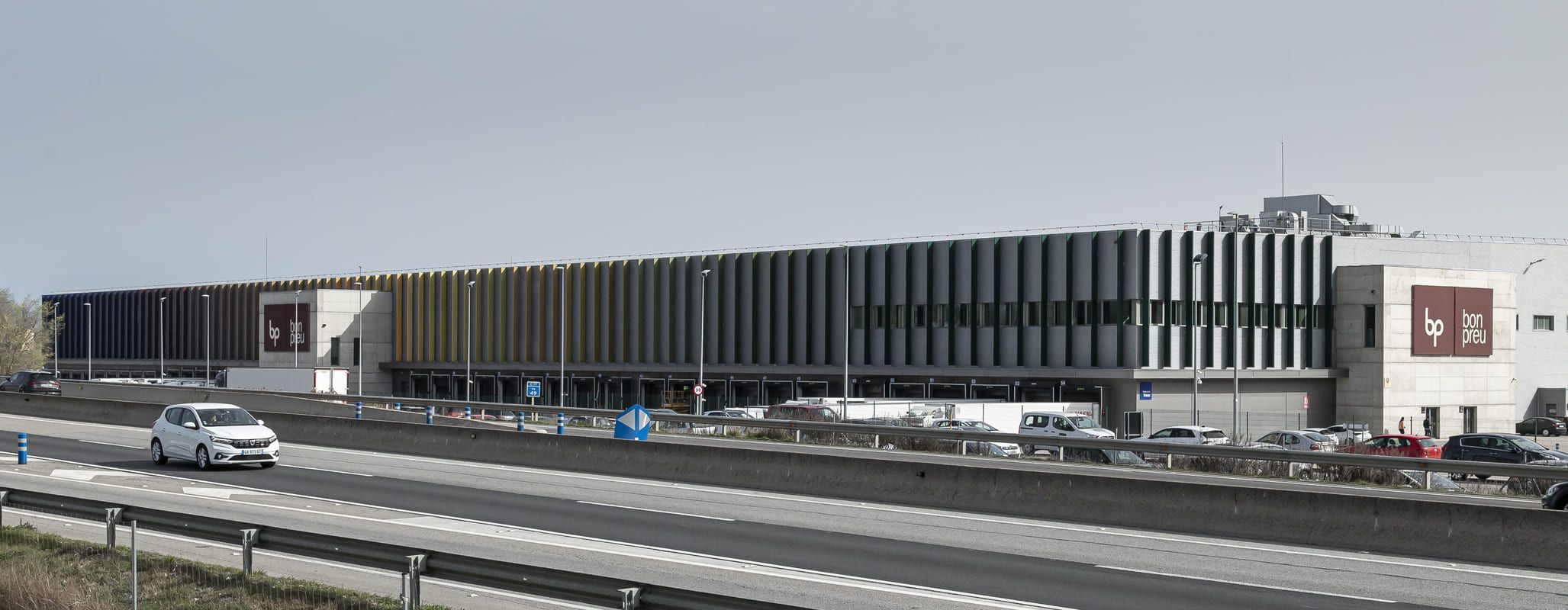
--- "Authenticity is a necessary condition," he asserts.
--- Multinationals have emotional proximity poorly resolved. Everyone is from their own father and mother, and it is very difficult to be close simultaneously in Catalonia, Andalusia, and Brittany.
--- Are you obsessed with growth?
--- Good question! The initial answer should be no. We are not obsessed with growth, but we have wanted to grow as much as possible for 50 years.
"The honesty or reality of a zero-kilometer discourse is noticeable from a distance, and it is easy to see if emotional proximity is a bluff or a reality. We are not obsessed with growth, but we want to grow as much as possible"
--- We must grow in everything within our reach and put all resources to achieve it. This means not overdoing it or wanting to go faster than necessary. It means having a clear understanding of the company's capacity at all times to know what is the maximum that can be done.
--- Digesting growth is not easy.
--- Certainly, many companies have gone bankrupt due to a poorly executed operation. Organic growth should make us bill 3,000 million euros in four or five years. We can look at all the distribution companies in the Spanish market that are for sale, but we are quite demanding when it comes to buying."
--- Was Intermarché a successful operation?
--- The corporate operation with Intermarché went very well. However, we do not carry out operations to grow and gain volume indiscriminately. It must provide us with profitability and have a reasonable price. We will not do it if it is beyond our reach. We must be clear.
--- Let's be clear.
--- When we did the Intermarché operation, there was a part of the business that was within Catalonia and another outside. From the management committee, we considered whether it was time to leave Catalonia; there were executives who were in favor, but we did not do it. We sold the stores outside Catalonia to other operators.
"Perhaps we will leave Catalonia at some point, but with the Intermarché operation, which represented a third of our turnover, we preferred to focus on the territory and forget about Spain"--- Are you considering going beyond Catalonia?
--- Perhaps we will leave Catalonia at some point. The reflection we made then was that we should strive to properly digest the Intermarché operation, which at that time represented a third of Grup Bon Preu's turnover.
--- It was not an easy operation.
--- Not at all. We bought a company that had been losing money for years. Everything had to be done again, and we concluded that we had to do Catalonia well and forget about Spain. It was a wise decision. It is necessary to properly gauge the company's needs.
--- "If you stop, you fall. If there is no growth, you fall," explains businessman Josep Ametller.
--- With one condition: healthy growth, which also means profitable. There is no need to grow if it's just to tell it in the newspapers. Nor will we do it if it's to buy assets without franchises or small stores. You have to know how to say no to avoid harming the company and think if the decision will work after a few years.
--- Decide now, think about tomorrow.
--- Investment funds operate with very different criteria. They care little if it will work in 10 or 20 years because they are governed by volume, the package, expectations, and the big hit on the stock market. Whoever comes next will figure it out, and we would never do that. We have experienced it firsthand.
"It is necessary to properly gauge the company's needs and know how to say no to avoid harming it"--- A company is not a fund, and a fund is not a company.
--- What model is most interesting for a country? Funds are interesting to funds and their executives. How many companies have disappeared because of funds? There is the example of Panrico. Recently, we were asked about an operation by a fund that wanted to sell a company, but it was a ruin because we had to buy and carry a debt of 250 million euros. It was not worth it.
--- Nothing worthwhile.
--- Is anyone capable of running a company with a debt of 250 million euros? Too many doubts. It is necessary to differentiate what interests a group of shareholders and executives who are dedicated to buying and selling companies from what interests the entire economic fabric of a territory.
--- What interests us as an ecosystem, society, and country?
--- We should know, and explain more the value of a company that has the will to generate wealth in the territory, help people grow, and provide a long-term service. We should celebrate that a company can compete with Americans and Chinese. We should go to universities and schools to say that it is good for us to have companies that generate value and wealth, jobs, knowledge, and technology.
"The valuation of companies is not done by executives, politicians, or journalists, but by the market, which tells you if you are doing things well or not"--- You say your raison d'être is "to facilitate the daily lives of customers with basic and everyday services."
--- Our model is better for citizens than that of our competitors because it is the most socially interesting. In Europe, we have been recognized as the third distribution group with the best treatment of fresh produce. We are also better in assortments or customer service.
--- You have an army of more than 10,000 workers.
--- The 10,000 workers are at the service of the customer. All these colleagues ensure that we have the best stores in terms of assortment, order, comfort, and, ultimately, shopping experience. And all this while having the same prices as the cheapest competitor for comparable products. Without harming profitability or competitiveness.
--- Full confidence in your winning model?
--- The data proves it: we grow more than the market, we can locate ourselves next to any competitor, and we are profitable. The valuation of companies is not done by executives, politicians, or journalists, but by the market, which tells you if you are doing things well or not.
"That I want Catalonia to move forward should not have costs, although there may be a part of the people who don't like it. And outside Catalonia, there's no need to even talk about it"--- Have you ever been afraid to express your political ideals?
--- That I want Catalonia to move forward should not have costs, although there may be a part of the people who don't like it. And outside Catalonia, there's no need to even talk about it. We do not hide that our commercial model involves emotional proximity, fresh produce, and zero kilometer.
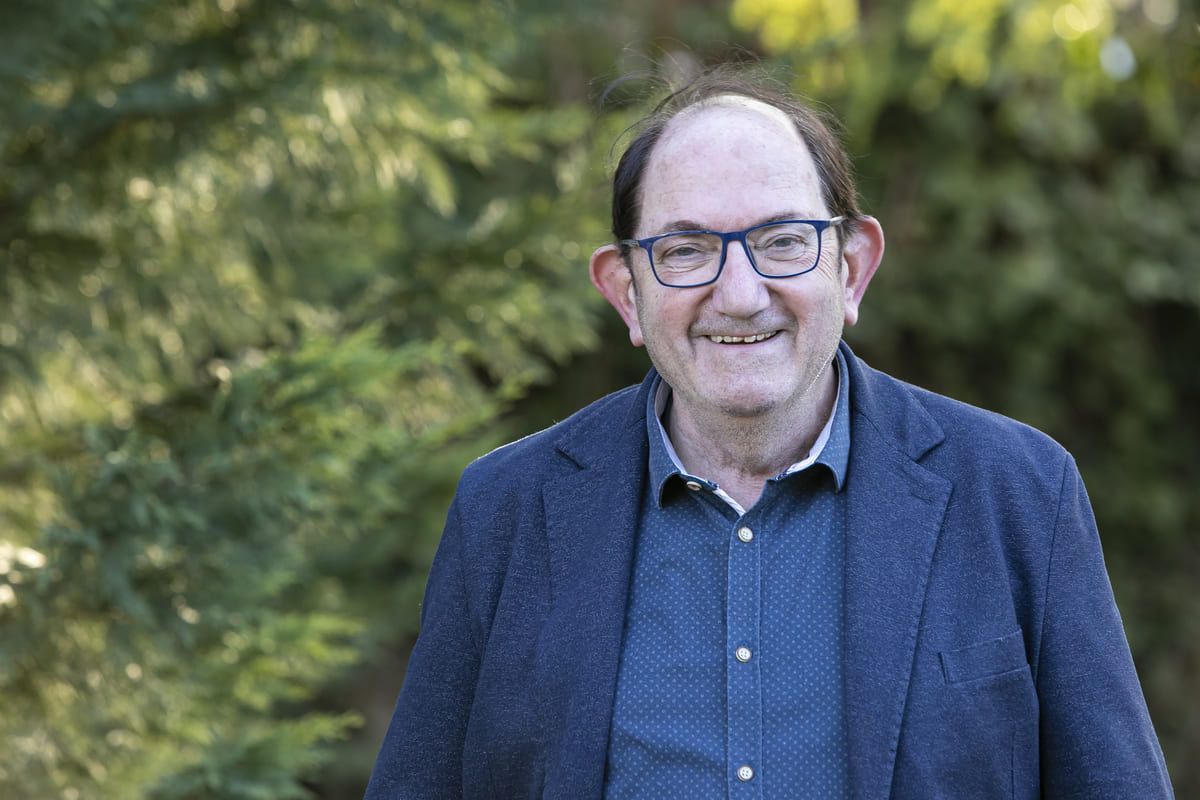
--- And also for the defense of Catalan.
--- It's not my problem if someone doesn't like that our 10,000 workers are able to serve the citizens of the country in their language. Mixing things like that is not good for anyone. Those from cava still suffer boycotts.
--- A matter of flags?
--- Companies should be valued for what they do and citizens should choose for objective reasons such as service or prices. The vast majority of citizens of Catalunya value us for the assortment, the stores or customer service, but not for the flag we have.
--- Do small family businesses have a future?
--- Of course! We are very interested in having specialist shops around Bon Preu. That is, good wineries, good dry cleaners, good cheese shops, good coffee shops or good butcher shops. Specialists should do better than us. We don't mind renting one of our premises to a competitor if we know they work well.
"It's not my problem if someone doesn't like that our 10,000 workers are able to serve the citizens of the country in their language"--- Merchants, united we stand strong!
--- We are interested in having good merchants in cities and towns, so we don't have dead spaces. We must offer products that citizens value and that they cannot find anywhere else. We should not fight for subsidies, but to find our place.
--- Find your place.
--- The customer buys and repeats because they want to. We won't get far if we subsidize products. Each business must find its place, just as your interviews delve into thought and vision.
--- That's the beauty of going much further than the headline.
--- Your success is surely that many people say that one of your interviews was liked more or less than the previous one. It means that they follow you and that they trust your ability to find people who make interesting reflections.
"We should not fight for subsidies, but to find our place. The small shopkeeper does not have to do mass journalism, but be selective and look for their customer"--- In three words: quality, influence, and reflection.
--- The small shopkeeper must also find their space. They don't have to do mass journalism, but rather be selective and look for their client.
--- How do you see Catalonia? I've heard you talk about Tarradellas' business model.
--- I absolutely trust the Catalan business network. We have demonstrated time and again that we are capable of overcoming the challenge of the common market. It had even been said that when the tariffs protecting Catalan industry disappeared, absolutely nothing would remain. And we started doing better than ever.
--- And the euro crisis?
--- Prominent economists recommended I sell the company because they said it wouldn't withstand the euro crisis, but we did well. With the pandemic, more of the same. When you have your feet on the ground and know the business world, you realize there are sensational projects that are very competitive. Absolute confidence.
--- Does the Administration need to be reformed?
-- Farmers, unions, unemployed, immigrants, universities, research centers... Everyone agrees that we have an absolutely inefficient Administration that is capable of paralyzing the country, and it is a duty to ensure it is of quality.
--- And why don't we do it?
--- I'll tell you more: if we don't do it, we will be condemned and will not be a quality country. Everyone has suffered, suffers, and will suffer the inefficiency of the Administration. A lot of demagoguery can be made, and reforming it can have political costs, but this subject must be overcome now.
"Everyone agrees that we have an absolutely inefficient Administration that is capable of paralyzing the country. Let's discuss its reform now and not talk about it again for the next 10 years"--- How has bureaucracy suffered?
--- We can take up to eight years to open a supermarket. Imagine! We could have the same demands and only take three months doing it just as well. Those who decide must reflect on what is strategic and long-term.
--- You decide.
--- If we want this country, we must face the reform of the Administration, as well as territory management, immigration, education, university, research... There must be a consensus.
--- Consensus.
--- Let's discuss it now and not talk about it again for the next 10 years. Let's apply, do things well and assume whatever cost it may be, but let's not turn it into a political element. It is one of the serious problems we have.
--- Do we lack more and better public-private collaboration?
--- There are some success stories... There are good leaderships, good faith from all parties and an ambitious common goal. For example, Fira de Barcelona or research centers. We have the best talent in the world, poorly paid and working with one shoe and one espadrille. We have to help them a little or at least not put too many obstacles in their way.
"We have the best talent in the world, poorly paid and working with one shoe and one espadrille. We have to help them a little or at least not put too many obstacles in their way"--- The art of helping or not hindering.
--- People are there, only the Administration's structures fail. We must learn more from Anglo-Saxon countries that are much more efficient. We have built a country of guarantors where everyone can oppose everything, with or without reason. For now, it remains stopped and we will talk about it later. We have country needs that cannot wait a decade.
--- Tell me some priority need.
--- There is a field that is a police court matter. We need renewable energies and strategic autonomy, but there is no way to set up a wind or photovoltaic farm. It cannot be something and the opposite. Either one or the other. And if we do nothing, then let's not complain when we get energy from other places. We must be a somewhat more mature society and know that you cannot always have everything.
--- You cannot always have everything.
--- I have a good friend who says that in the health field everything for everyone and today it is impossible because there is no money. We must establish priorities and criteria, the money is enough for what it is enough for.
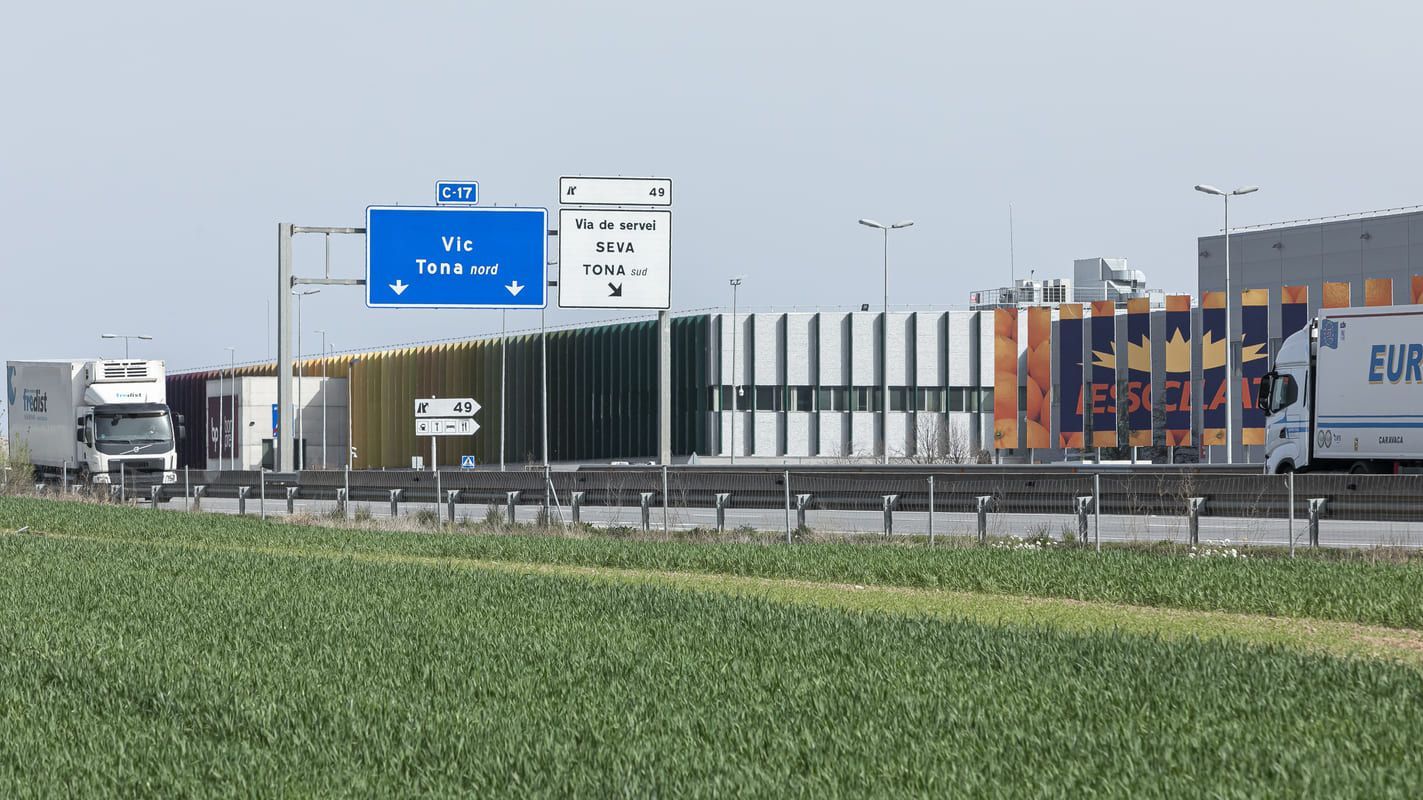
--- In Catalonia, only 15% of the installed power comes from renewable sources. Why?
--- All of us who have tried to do things with renewable energies in Catalonia have given up. Why? Because of the obstacles of the Administration. The current government has tried to make some small change to simplify the whole web of conditions, but it has not gone ahead. This implies a deeper discourse.
"The field of renewables is a police court matter. We need renewable energies and strategic autonomy, but there is no way to set up a wind or photovoltaic farm. All of us who have tried have given up due to the obstacles of the Administration"--- How is Bon Preu's deep discourse?
--- We are a structured and professionalized company, but we have become a bit slow and now we want to foresee everything, monitor everything, have information on everything, but it turns out that we have to make a plan to streamline decision-making. We have gone overboard with controls, information, and opinion. Size can slow down management and we cannot afford to be an elephant.
--- The liquid structure.
--- That is one of the advantages compared to multinationals. We must try to do better and be more agile. It is vital that the Administration also does so. Let's put a little perspective: public administrations weighed very little in the 18th century, specifically around 4% or 5% of GDP.
--- From the Enlightenment era to contemporary society.
--- Public administration now accounts for between 30% and 40% of a country's activity. We are in a very bad way if that percentage is managed terribly. How do we change it? Country consensus, brave policies, and being able to pay an electoral price.
--- Politicians who sow long-term without the will to reap short-term electoral credit.
--- For an ethical and values issue. First is the country, believing in it and acting accordingly.
"How do we change the terrible management of public administration? Country consensus, brave policies, and being able to pay an electoral price"--- How do you decide your investments from Ona Capital?
--- We do things quite well. There is a general director who is Oriol Lobo and we look for projects in initial phases with a business team that convinces us and with a business idea that is not moved only by money.
--- You have invested in Tattox, Tropicfeel, Pangea, Parlem or Worldcoo.
--- The important thing is the project, the values, the long term or the generation of wealth. If we invest it is also because we believe we will make money, but we will certainly not invest if they want to make a quick buck.
--- What legacy would you like to leave?
--- The idea of legacy entails a long-term vision and a certain way of understanding the company. The obligation of all of us who lead a business project is to think well and give it continuity, ensuring that the project transcends beyond oneself.
"The obligation of all of us who lead a business project is to think well and give it continuity. The measure of success is that I am not there and Bon Preu continues to function the same or better"--- How can a project transcend its founder?
--- It is essential that the team and the people share the vision and have the instinct and capacity to carry it forward. At Bon Preu, we have a very good generation of people aged 30 or 40 who share this way of doing things and our values. They will not be tempted.
--- Tempted?
--- This batch prefers to work rather than appear in the media. The goal and measure of success is that I am not there and Bon Preu continues to function the same or better. Eduard Punset used to say that it was not proven that he would die…
--- People die, ideas and emotions endure.
--- Before dying, you must have already done almost everything you had to do. It is convenient for the teams to carry more and more of the company's weight every day. We have good leadership and there is business vision. Instinct is not taught at Esade, but you have to have it.
"Instinct is not taught at Esade, but you have to have it"--- Where did you learn business instinct?
--- I learned it in the markets selling cod and herring and knowing what people value.
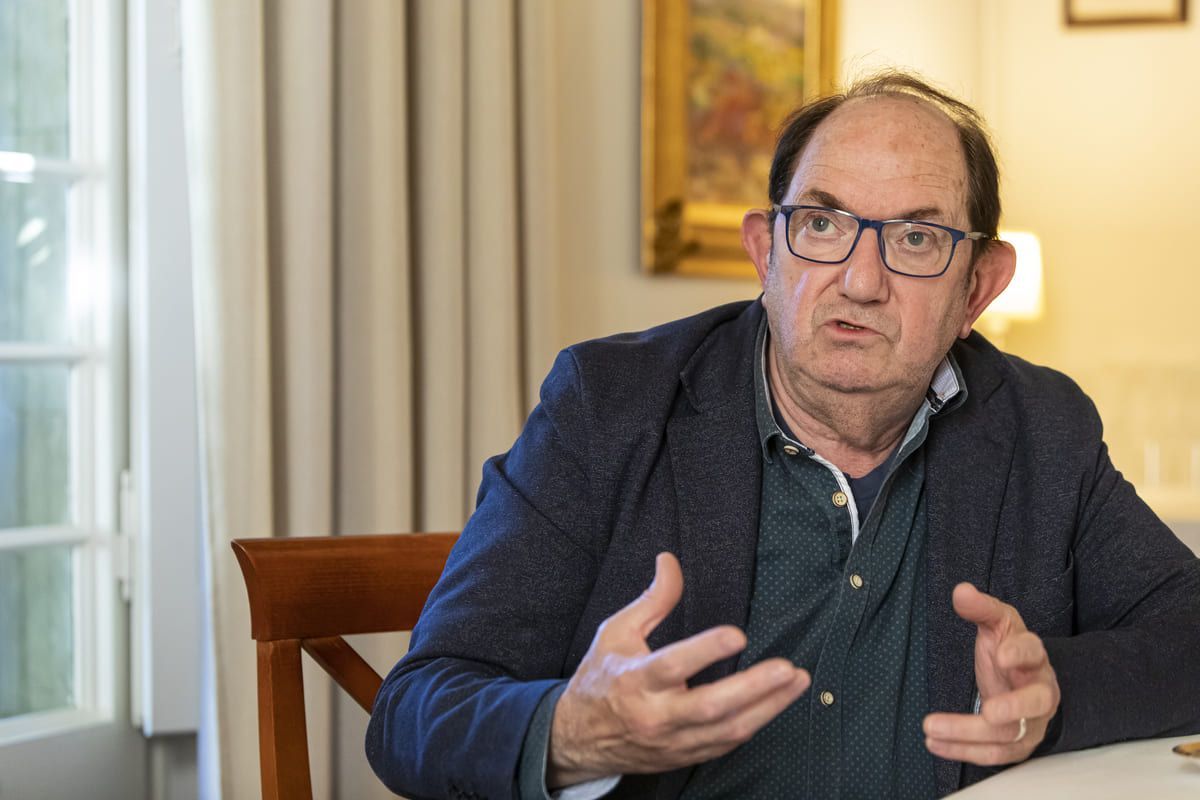
--- The previous interviewee Alfons Cornella asks you the following questions:
--- How do you protect yourself?
--- Tell Alfons what a question! Certainly, the healthy ambition of always wanting to make the company bigger and bigger can make you make dangerous decisions. I believe that one should try to know oneself a little (for entrepreneurs, it is especially important) and know one's own strengths and weaknesses.
--- Do you know yourself?
--- Before making any decision, one must be clear about the biases one may have and reflect coldly on whether, for example, "daring" is excessive at that moment. The previous questions could be: How is the company's musculature? How is the debt? How is the team to carry out this project? What is the competition doing? What is the scope of the project and what is the risk of dragging the company down if it doesn't go well? How do we foresee the customer will receive it?
"The healthy ambition of always wanting to make the company bigger and bigger can make you make dangerous decisions. One of the key points is to be aware that entrepreneurs must be optimistic by nature"--- Interesting questions!
--- One of the key points is to be aware that entrepreneurs must be optimistic by nature and we tend to lean towards the positive. It is essential to have a powerful, committed team that shares the company's values and long-term vision with earned credibility and that can clearly tell you that they don't see that project, or that the risk is too great, or that it's not the right time, or that it will require a lot of dedication that is needed for other projects.
--- Employees who contradict you.
--- Of course, they can tell you clearly and calmly, and you have to receive it with respect and value it with interest. It can also happen that there is no unanimity among senior executives and that you have to decide between opposing positions. But this is one of the great things about being an entrepreneur! Making decisions in uncertainty, lacking all information, with opposing positions from colleagues, partly relying on intuition and trying to make the right decision.
--- What would be the most effective action to kill your company? (That way, knowing it, you can avoid it)
--- If Bon Preu employees lost the conviction that if we don't have good companies (small, medium, and large) we wouldn't have a quality country with a future, we would kill the company (or it would be another). Doing business is more than just economic profitability.
--- How?
--- That is another basic question. The "how". We believe it is necessary to do business and to do it in a certain way. In Bon Preu's case, for more than 25 years we have been discussing and defining the basic values that Bon Preu people should have: willingness to serve, positive attitude, team awareness, honesty and trust, pragmatism, efficiency, and professional development.
--- What would you never do again?
--- Taking too long to make certain decisions that end up being necessary.
SEVEN LIVES
- Referent: My father taught me demandingness and austerity. Exemplarity is a necessary condition in the business world. It is not an intellectual matter. Pere Duran Farell was my business referent and a leader like few others in this country. He built a great company, confronted Franco, and negotiated with communists when by law he couldn't. Intelligent, honest, and committed.
- Book: Cementiri de Sinera, by Salvador Espriu. Moral demandingness still survives and you can return to it throughout life. The other book is Momentos estelares, by Stefan Zweig, which I have in a Quaderns Crema edition with Maria Pous's translation. A person from our country with a strong intellectual and moral charge and another at a global level who highlights the stellar moments of humanity.
- Movie: I'm not a movie person.
- Song: La Partita 1004, by Johann Sebastian Bach and especially the Chaconne. I have a recording by Itzhak Perlman that gives me goosebumps.
- Favorite spot: Any of the sections of the coastal path that starts from Tossa. In this country, we don't know or value what we have. The Costa Brava is beauty and calm.
- Life motto: I like to fight tirelessly to achieve all the dreams I have in any field.
- Dream: That the citizens of my country can choose how they want to be governed and that the following generations have the same or more material, moral, and intellectual progress than my generation.
Add The New Barcelona Post as your preferred Google source for free
Stay informed with the latest news.