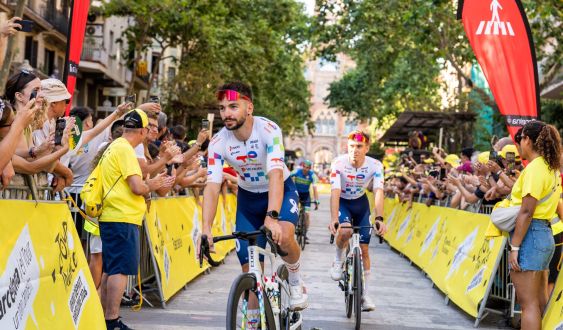
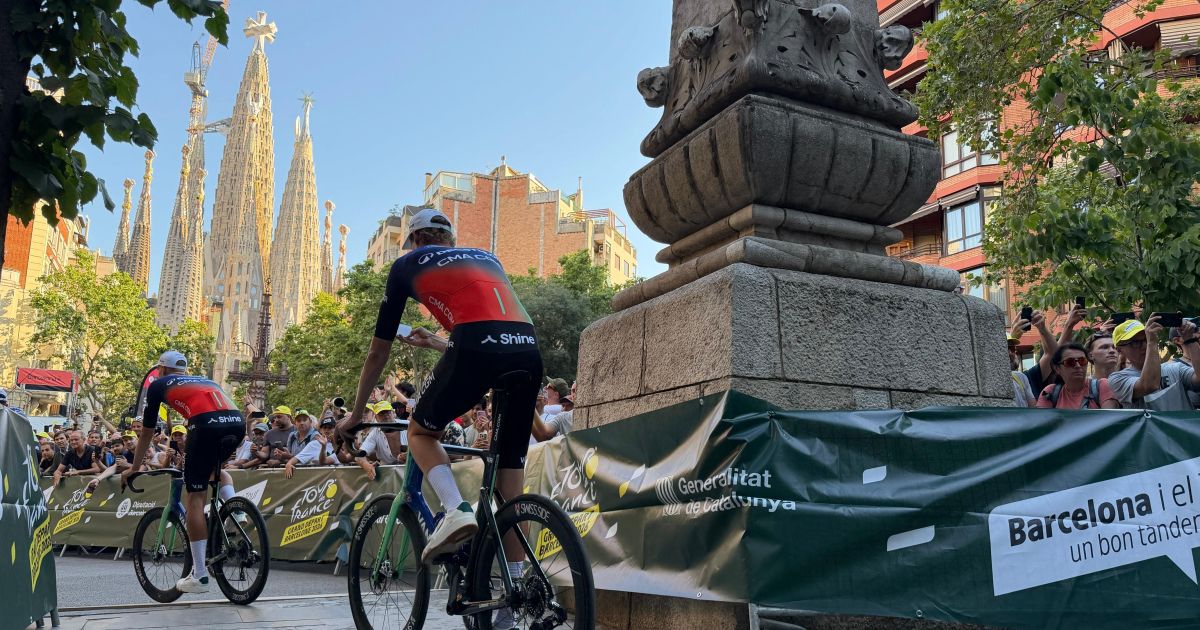
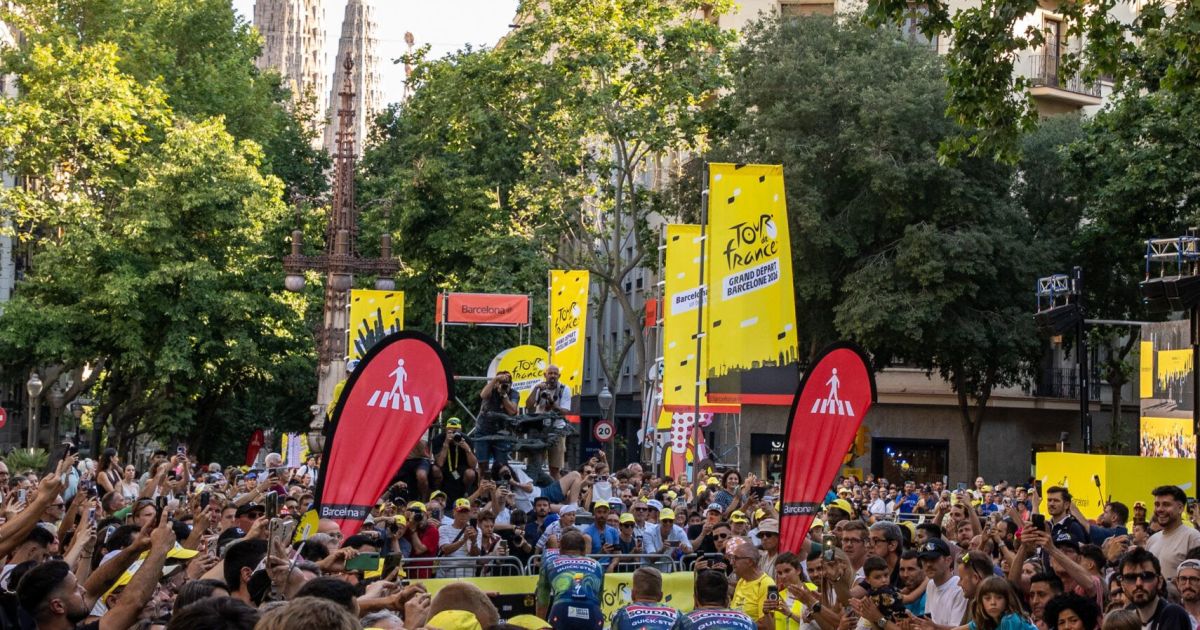
The Tour has already started rolling in Barcelona. The presentation of the teams has filled Gaudí Avenue to connect the Sant Pau enclosure and the Sagrada Familia with the world of sport and international projection. There are 23 teams totaling 184 riders, but most do not race to win. This is one of the many curiosities of the Tour's operation that can surprise cycling novices and those new to the most important and prestigious pedal competition in the world.
And why do most cyclists race, if not to take home the trophy? One of the great peculiarities of the Tour is that it presents itself as an individual sport, but it is won as a team. Each formation has its leader, the rider who will opt for the final victory, and the rest become his gregarios (domestiques). Their job is to expend energy so that the leader saves it: they protect him from the wind, set the pace, fetch water from the team car, wait for him if he has a breakdown, and always position him at the front of the peloton.
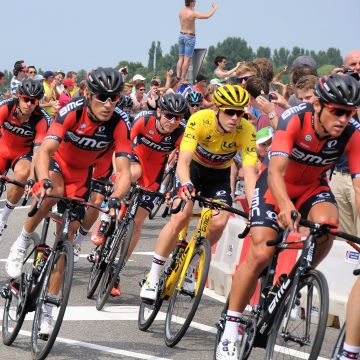
But what is the peloton? It is the main group of cyclists, which circulates as a compact block where teams and their members mix. All this machinery is coordinated from the team car, where the sports director follows the stage and gives instructions to the riders (via headphones). The peloton is also known as the multicolored snake due to the mix of jerseys from the different teams. Among them, one stands out: the yellow one. And it is not just any color, but it is the jersey that identifies the leader of the general classification. It is the same characteristic yellow of the Tour, and it was not chosen at random or for aesthetics, but for advertising: it was the yellow of the newspaper L'Auto, the promoter of the race. The yellow jersey has been used since 1919, to make it easier for the public, because that way they could identify the leader of the classification at a glance.
But the color code of the Tour de France jerseys extends beyond yellow. The green jersey is reserved for the best sprinter; the white jersey, for the best young rider, and the white jersey with red polka dots, for the best climber. Every afternoon, after the stage, the leaders receive a new jersey that they will wear the next day. Even so, it is not uncommon for the same rider to lead several classifications and, in this case, he can only wear one of the jerseys, with yellow as the priority.
Furthermore, the Tour is not decided by victories, but by accumulated time. Over three weeks, 21 stages are contested, each with its winner, but the great triumph comes from the general classification. Whoever accumulates the least time at the end is the winner of the Tour, even if they haven't been first in many finishes. That's why it's common to see riders let a stage victory slip away if it allows them to conserve strength for more demanding days. Occasionally, however, a group of cyclists decides to break away from the peloton, in a move known as an escapada (breakaway). Those who seek a stage victory, to accumulate points for the mountain classification, or to give prominence to their team during the day do so.
But why do riders choose to stay grouped within the peloton? First, because it allows them to save a lot of energy. The riders at the front break the air resistance, and those behind are partially protected, so they have to make less effort to maintain the same speed. Therefore, breaking away from the peloton and riding solo requires much more energy. This also explains why breakaways are so difficult to complete: while a few cyclists wear themselves out paving the way, behind them dozens of riders can organize the chase, distributing the effort until they neutralize them, adopting different positions that involve spending more or less energy, and taking turns to compensate.
Furthermore, the peloton usually operates according to some unwritten rules. When one of the big favorites suffers a puncture or a mechanical breakdown in a moment of relative calm, it is common for the rest of the contenders to wait before attacking. It doesn't always happen, but this type of tacit pact is part of cycling tradition. The situation is very different if the incident occurs in the middle of a battle for a mountain stage or in the last kilometers, when the competition offers no respite.
Behind the riders there is a complex gear. Each team travels with sports directors, mechanics, doctors, physiotherapists and support cars that follow the race very closely. From these vehicles come radio instructions, bike changes when there is a breakdown, and bidons that keep cyclists hydrated during stages that can exceed five hours. Thus, the teams are made up not only of the riders, but of this structure.
And where do the teams come from? Each year, the organization invites a limited number of formations. The teams of the highest category of world cycling —the so-called UCI WorldTeams— automatically participate, to which some teams from the second division are added, selected based on their results or invited by the organization. The teams do not adopt names of cities or countries, but of the brands that sponsor them. For the Tour that is now beginning, the great favorite is the leader of UAE Team Emirates XRG, the Slovenian Tadej Pogačar, with the leader of Visma–Lease a Bike, Jonas Vingegaard, as main rival.
Whether or not they are favorites, the riders are ready to start the competition tomorrow, which is not just one race, but many at once: while one rider defends the yellow jersey, another races for the green, a third to conquer a mountain pass, and a fourth tries to make a breakaway reach the end. All these races roll simultaneously on the same road, in a superposition of battles that make the Tour de France one of the most popular and prestigious competitions in the world.
Add The New Barcelona Post as your preferred Google source for free
Stay informed with the latest news.