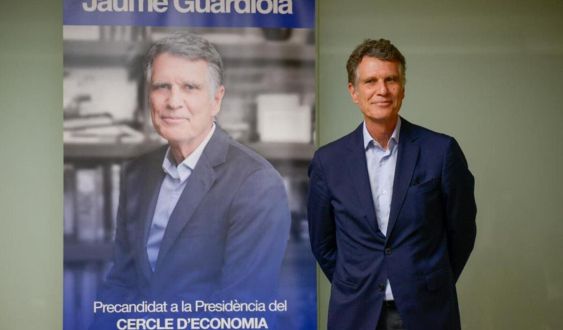
The former CEO of Banco Sabadell, Jaume Guardiola, has presented his pre-candidacy for the presidency of the Cercle d'Economia. An institution that "must preserve its important legacy" and that he considers "useful and more necessary than ever," but that must reconnect with its 1,200 members and with civil society.
These are the challenges that Jaume Guardiola wants to face if he is elected president of the institution which, for the first time in its history, will hold elections on July 12 with more than one candidate vying for the position. Guardiola, who is currently president of the economic commission of FC Barcelona, will face businesswoman Rosa Cañadas. He is also president of the Esade Foundation and a member of the governing council of the APD and Spain and of the board of APD Catalunya.
The pre-candidate outlined this Tuesday, at a press conference, the basic lines that will focus his program for the presidency of the Cercle, emphasizing that it is necessary "to preserve the legacy of the Cercle, a very heterogeneous entity that expresses opinions to interfere in Catalan society and does so independently and bravely," he stated, referring to the ideas expressed by one of its founders, Carles Güell de Sentmenat.
But, Guardiola also said, the entity must have "a long-term view," without entering into sterile debates, and must value the figure of the member "giving them more capacity to participate in the opinions issued by this entity and fostering their sense of belonging through new participation mechanisms." "We have a lot of talent among our members that needs to be channeled in a structured way." To this end, Guardiola advocates for the creation of an "editorial committee or executive commission" that, structured by themes, would select the issues on which the Cercle will opine, and which would have the support of an "editorial group" formed by thinkers from the same entity and "emerging voices" that make up "the existing knowledge ecosystem in Barcelona and Catalunya."
The second challenge has to do with new leaderships and civil society "because the current one articulates and expresses itself very differently from what it was years ago." In this sense, Guardiola states that "the Cercle is anchored in a civil society where industry and family businesses had significant weight, but a new society has emerged with representation from technological businesses, the social economy, knowledge and research centers, a floating population... which has given way to new leaderships, which the Cercle must embrace." The new economy and technological platforms, according to the former CEO of Banco Sabadell, will increasingly be present in the entity, and he gave the example that in the current board of directors "there is no longer any presence of the Ibex." The new "Barcelona society is full of initiatives and is vibrant," he expressed.
The pre-candidate argues that the Cercle must incorporate the new leaderships of current civil societyGuardiola, who has been a member of the Cercle since 1986, said he feels "continuist" of the mandate of the current president Javier Faus and the rest of the entity's former presidents. About the celebration of the annual meeting, as a meeting point for the economic, political and social world, considers that it was a good decision to move its celebration from Sitges to Barcelona and that "perhaps it needs to bet more on relevant figures from the international economy", and even more so when "among our partners there are world-class economists". He has also criticized that in the annual conference "there is an excessive parade of politicians", a toll that, however, allows the entity "to have a lot of visibility".
Asked about the alleged internal disagreements that have led to the call for elections, Guardiola commented that one objective if he wins in these elections will be to "mend" the Cercle after the certain "crisis" that has opened, a task that "due to my character, I believe I can carry out and achieve the recovery of unity in the institution."
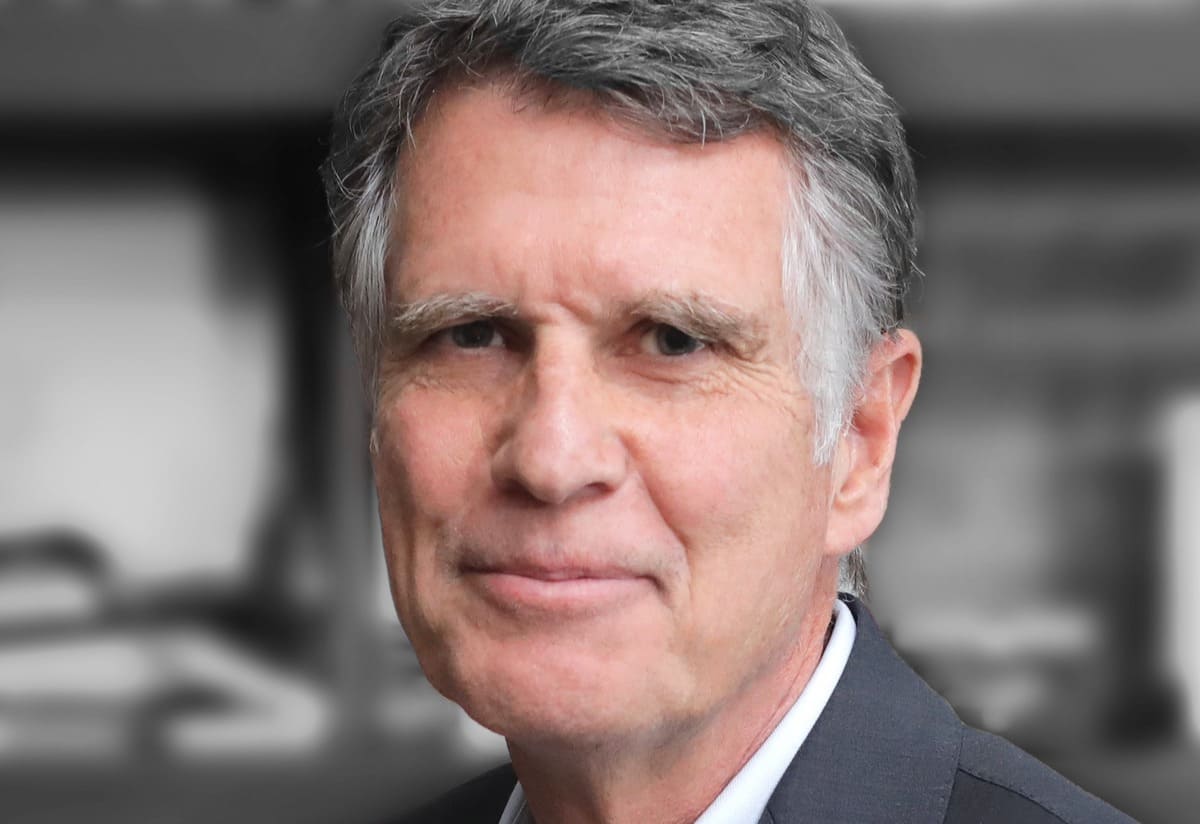
Key points for his program
Jaume Guardiola has also outlined the key points that will mark the program he will present soon, possibly before June 13, which is the deadline to submit the candidacy with the necessary endorsements.
The program outline talks about the defense of five basic points: democracy from a liberal model that is now threatened --according to Guardiola-- by populisms and social fracture; Europe, from a Barcelona and Mediterranean vision to contribute to the debate on the role that Southern Europe should play in the community's future, at a "crucial moment to generate opinion and position Barcelona as the true capital of Southern Europe"; a competitive economy that is not based on wages but on productivity and that must be sustainable and socially inclusive; the territorial fit of Catalonia without shying away from the debate "from its heterogeneity, from its transactional vocation, from mature debate offering a meeting space"; and Barcelona, "because the evolution of the world will take place through large metropolises and Barcelona must compete from the best position."
During the formal presentation of his candidacy to the members, Jaume Guardiola expressed that he is "very excited" to be able to preside over the Cercle, because now, retired, he has time and wants to introduce many changes. "There are members who believe that their opinions are not taken into account, so we must structure mechanisms for participation and knowledge generation," he insisted. Another idea he put forward is the opening of Cercle d'Economia delegations in Madrid and Brussels, where many of the members work. His former boss, Josep Oliu, president of Banco Sabadell, highlighted that Guardiola "is a person of consensus, who has great common sense and very keen intelligence," qualities he considers very necessary to lead the institution.
Add The New Barcelona Post as your preferred Google source for free
Stay informed with the latest news.
