
In the previous article, I spoke about tourism overcrowding and the unfavorable medium-term prospects for solving this problem in cities. Various news items recently published in the press have reinforced this forecast.
Thus, for example, The Economist, illustrating a note on the growth of the number of Indian tourists in the world (from 27 million in 2017 to 90 million projected for 2040), showed a graph in which, according to the University of Oxford, the number of global trips will have multiplied by approximately 2.5 between 2010 and 2034, with China and India itself leading this growth.
Meanwhile, the National Observatory of Outbound Tourism (ObservaTur) presented the results of a survey according to which the number of senior tourists (over 60 years old) will quadruple by 2030 compared to 2010, reaching 140 million in Europe.
In the previous article, we also commented that new territories will continue to open up to tourism (for example, North Korea announces that it will again admit tourists within its borders), but everything seems to indicate that the most frequented destinations today will continue to be so in the future, unless, as we also said, they "self-destruct" due to saturation.
Given these circumstances, if the global increase in demand for now seems unstoppable and the supply, for different reasons that we also pointed out (resistance, lack of alternatives, etc.), cannot be limited in sufficient proportion regarding the projected growth, how can we at least mitigate overcrowding?
Everything indicates that a strategy that has been globally applied in cities in recent decades to boost their economic development will have to be rethought: touristification.
Touristification is the making available of a resource for its exploitation eminently for tourist purposes, be it a natural resource, such as a beach, be it an element of cultural or architectural heritage, or simply an attractive public space. This is, evidently, the essence of tourism as an economic activity: to obtain economic return from the interest in enjoying a certain landscape, admiring a certain work, or taking part in certain festivities by people who live in places more or less distant from all of it.
Everything indicates that touristification will have to be rethought, a strategy that has been applied globally in cities in recent decades to boost their economic development.The problem, as is often the case, begins to arise when things are taken to extremes. And tourism is very prone to this. One only has to look at how many modalities this human activity unfolds depending on what is being touristified, which is practically everything now (cultural, religious, gastronomic, linguistic, health, sports, business, adventure tourism, along with perverse variants such as sexual or disaster tourism). The last frontier (so far): space tourism.
In this sense, when we talk about the touristification of cities, we refer to the process by which urban areas, neighborhoods, or entire cities are transformed primarily to satisfy the demands and expectations of tourist demand, above (or even instead of) those of the people who reside there.
That cities transform according to the needs of economic activity is not new. The clearest example is industrialization, which configured particular urban landscapes that largely still endure today (in many cases, touristified, which has often meant their rescue from certain disappearance), while also changing the way of life of the population.
The urban transformation associated with industrialization meant a radical change in the organization of cities, while also bringing significant problems to many of them, as is well known, and was crudely described in both novels and economic and social treatises, especially throughout the 19th century.
Likewise, industrialization brought with it (significantly in our country) something similar to what theme parks or holiday resorts are today with respect to tourism: textile colonies. Hyperspecialized spaces where absolutely everything revolves around the economic activity in question.
But, then as now, cities must ensure a balance regarding the weight and consequent impact of the economic activities they host, each with its requirements and particularities. This balance is fundamental to guarantee economic dynamism, strengthen resilience against crises that usually affect some sectors more than others, and reduce pressure on those monofunctional resources specifically serving one of these sectors.
The urban transformation associated with industrialization meant a radical change in the organization of cities, while also bringing significant problemsIn addition to hosting diverse economic activities, cities evidently perform other functions that go beyond being the physical platform where they take place. Among them, guaranteeing the satisfaction of everyone's basic needs. Something that should not be threatened by economic activity, since it should precisely be the means to achieve the satisfaction of needs for everyone.
However, today we can already identify in many cities some of the main signs of excessive touristification, which imply that tourism breaks in beyond what is reasonable into other spheres of urban life, such as, for example:
- There is a substantial increase in tourist accommodations, with the proliferation of specialized establishments (hotels, hostels, guesthouses, campsites...), but, above all, of vacation rentals of houses and apartments, which act to the detriment of the housing supply for local residents.
- There is a transformation of the local commercial fabric. The emergence of souvenir shops, restaurants, and bars oriented towards tourism, which replace businesses that serve the local community. In this way, the authenticity and character of neighborhoods can be diluted due to commercialization and the adaptation of the commercial offer for tourists.
- There is excessive pressure on infrastructure. The intensive use of public transport, public services, and other urban infrastructures by tourists can saturate these systems and affect residents.
- There are substantial changes in the use of public space. The conversion of squares, parks, and streets into areas primarily for the enjoyment of tourists, sometimes limiting access or enjoyment of these by local inhabitants, deepens the loss of their own character. Discontent between local residents and tourists can increase, generating social tensions and conflicts.
The first reaction to such phenomena must be to recognize them, which does not always happen, and to understand that they affect the citizens who reside where they occur. It is useless to focus on the positive aspects of tourism (income, jobs, external image, etc.) and accuse those who express their discontent of "tourismphobia", just as a total amendment to tourism is useless because, like it or not, it will continue to exist as a human activity and, as such, should be accessible to all people.
What can be modulated is touristification, and that is why the second reaction should be, once the phenomenon has been recognized and conveniently analyzed, with data and evidence, to activate specific mechanisms to curb, and where necessary, begin to reverse, its incidence. Of course, it is essential to do so in an integral and decisive manner, and not with isolated and deferred actions.
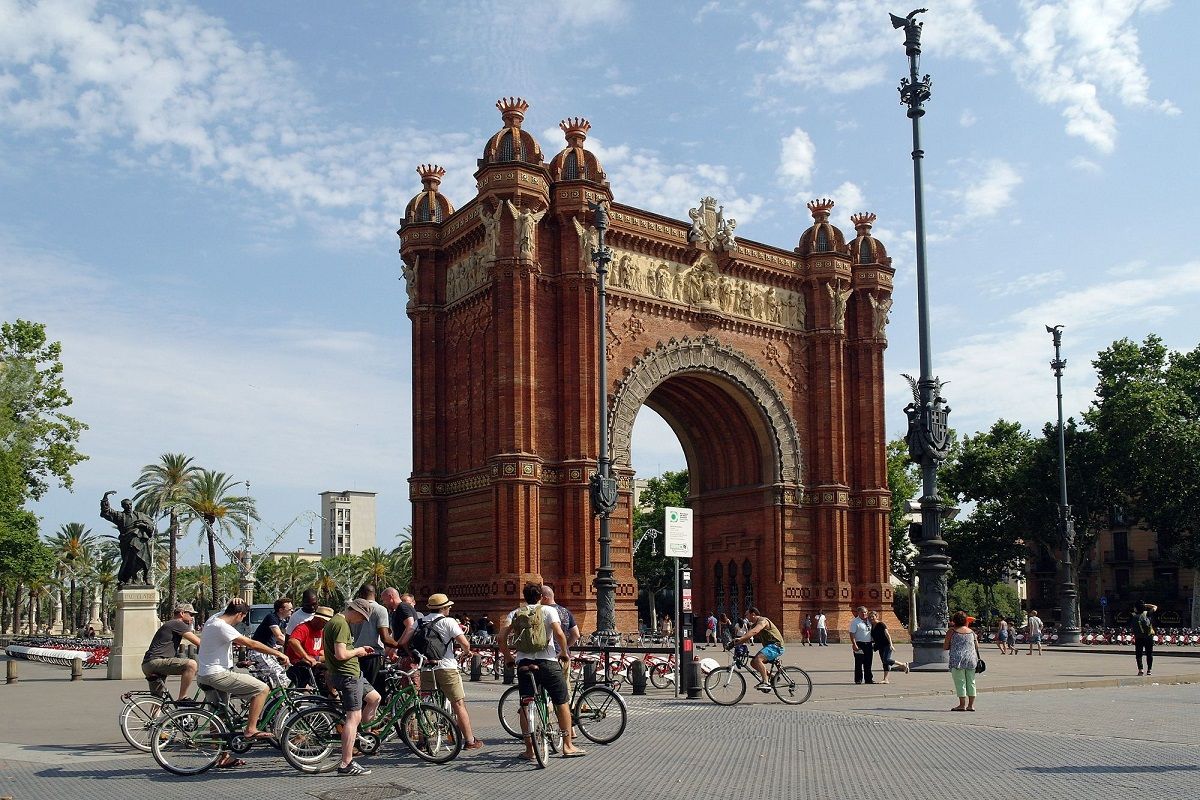
Housing can be de-touristified, without a doubt, with regulations and the management of licenses (in case it is considered appropriate to allow holiday rentals).
Commerce and other street-level services can be de-touristified through land use plans.
Services, such as public transport, may be more difficult to de-touristify, but formulas should continue to be sought to channel the flow of tourists towards specific lines and keep others primarily for locals (exploring beyond the well-known case of line 116 in the La Salut neighborhood that passes through Park Güell).
Public space can be de-touristified by designing, caring for, and revitalizing them with the direct participation of the resident population in their environment and eliminating privatization elements that are not part of that collective design.
Housing, commerce, and other street-level services can be de-touristifiedIn this sense, and since there is still much to explore and innovate in the matter, it would be interesting for Barcelona to leadan international network of cities with which to share proposals to achieve tourism that is not only sustainable, but also non-gentrifying
But, in addition, there is the path of building alternatives. And, recovering the association made earlier with industry, a more than interesting and convenient way to detouristify is to reindustrialize.
We will see if, in the case of the European Union, the warnings and proposals of the recent Draghi Report are heeded, cities are enabled to take matters into their own hands, and a strategy is pursued that diversifies urban economies and generates economic activity and quality employment for the people who reside in its cities.
Add The New Barcelona Post as your preferred Google source for free
Stay informed with the latest news.