To what extent does the place we live in condition our happiness? The question is as old as it is difficult to answer. Year after year, Finland tops the major global happiness rankings, thanks to factors such as quality of life, trust in institutions, and security. But if, instead of asking citizens how they feel, we measure other indicators, countries like Indonesia, Mexico, or Paraguay appear among those who smile the most. Now, what happens if we reduce the scale? If we stop talking about countries and focus on cities? Is it possible to measure if one metropolis is happier than another?
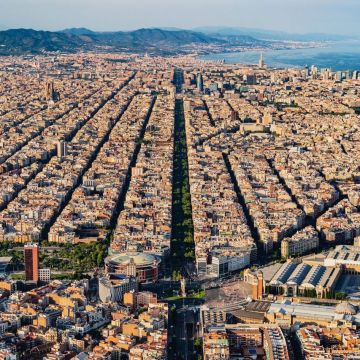
This is precisely what the Happy City Index 2026 attempts to answer, an international study that analyzes which cities offer the best conditions for their inhabitants to live well. And Barcelona occupies a prominent position: it is the 12th city in the world, the first in Spain, and one of the few cities in Southern Europe that manages to enter a top 15 dominated by Nordic and Central European capitals.
It is not a minor ranking. In this sixth edition, led by the Institute for Quality of Life based in Paris and the Happy City Hub Ltd based in London, 466 researchers have analyzed more than 150,000 data records corresponding to 3,400 cities worldwide. And only 251 ended up being part of the final classification, which was officially presented at the British Parliament in London this spring.
Now, what exactly does it mean to be a "happy city"? Interestingly, the index does not ask citizens if they are happy. Instead, it suggests that happiness also depends on the conditions a city is able to offer its inhabitants. That is why it evaluates 82 indicators grouped into six broad areas: citizenship, governance, environment, economy, health, and mobility.
In Barcelona's case, the ranking depicts a well-connected, healthy, and highly digitized city. The study scores very positively the intensive use of public transport —with 406 trips per inhabitant, more than double the average of the analyzed cities—, a fully accessible network, and a life expectancy of 84.45 years, also higher than the index average.
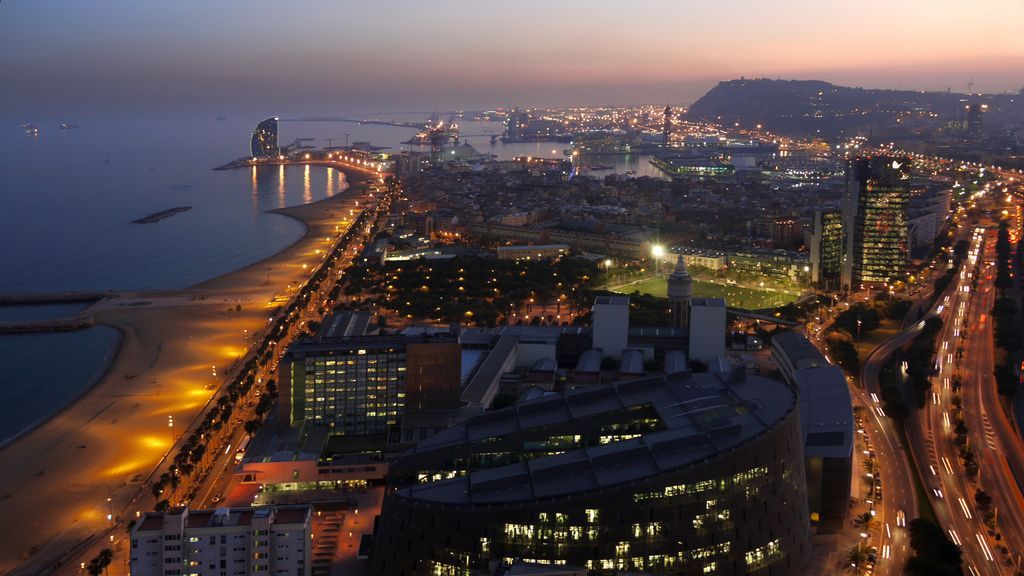
The study also scores the digitalization of public services very positively. Barcelona obtains the highest rating in aspects such as the open data portal, the possibility of carrying out municipal procedures online, booking an appointment with the City Council, or reporting incidents on public roads from a mobile phone. Added to this is a high density of educational centers, access to internationally prestigious universities, and the existence of municipal strategies in areas such as mental health, biodiversity, or the prevention of hate speech.
The dominance of Northern Europe and a great absence
Although the authors of the study insist that the objective is not to determine which is the best city in the world, or the happiest, the final result inevitably takes the form of a ranking, with all the limitations that this entails. To begin with, only 251 of the more than 3,400 cities analyzed end up being part of the final classification. In Spain, in addition to Barcelona, Zaragoza (64th), Bilbao (76th), Valencia (88th), Palma (147th), Las Palmas de Gran Canaria (149th), and Córdoba (190th) appear. One of the most surprising absences is Madrid, which after occupying the 132nd position in the 2025 edition, this year completely disappears from the final classification.

Global leadership remains in the hands of Nordic and Central European countries. Copenhagen tops the ranking, followed by Helsinki, Geneva, Uppsala, and Tokyo. Trondheim, Bern, Malmö, Munich, Aarhus, Zurich, Barcelona, Espoo, Oslo, and The Hague complete the top 15.
The cost of well-being
The Happy City Index is not the only attempt to put numbers to a concept as subjective as happiness. In fact, the World Happiness Report, considered the main global reference in this field, follows a completely different methodology: it does not classify cities, but countries, and directly asks citizens how they rate their lives. Because what a society considers a good life does not always coincide with what other countries value. There are places where economic security weighs more, others where free time, community life, trust in institutions, or simply a different way of understanding social relations prevail. The World Happiness Report is, by the way, this study that year after year continues to place Finland at the top of the world ranking.
And what happens if we ask the same question to Barcelona residents? According to the Observatory of the Subjective Well-being Indicator of the Generalitat, citizens rate their well-being with a 6.9 out of 10. Perhaps it is what Plato already pointed out more than two thousand years ago: "A city is what it is because its citizens are what they are". Although it could also be read in reverse: citizens are, in part, a reflection of the city where they live.
Barcelona residents rate their well-being with a 6.9 out of 10
But well-being is not the same for everyone within the same city. And, in fact, there are studies that analyze it from another perspective and that, to the conditions offered by the territory, add another key variable: income. That is, it is not enough for a city to gather the ingredients to live well in it; it is also necessary for its inhabitants to have the economic capacity to enjoy them.
A recent study by Remitly, based on research from Purdue University, estimates that in Barcelona the income threshold associated with maximum well-being is 88,562 euros per year. This figure is more than double the average gross salary in the city, which is around 35,000 euros per year. In Spain, only Madrid has a higher threshold (89,759 euros), while Palma de Mallorca occupies the third position, with 88,263 euros.
However, knowing how many households in Barcelona actually reach this income threshold would make for another Barcelona in figures. And we'll save that for another Monday.
Add The New Barcelona Post as your preferred Google source for free
Stay informed with the latest news.