Contemporary circus in Catalonia has lived for decades in a kind of unwanted collective amnesia. Despite the richness of projects, companies, and street creations born since the seventies and eighties, the lack of infrastructure meant that many of these materials, photographs, testimonies, and tour diaries were forgotten.
For the first time in the history of cultural policies, the Department of Culture of the Generalitat de Catalunya promoted the Circus Promotion Plan (2023-2026) —in collaboration with the Association of Circus Professionals of Catalonia (APCC)—, an initiative that presents 14 strategic measures to incentivize, structure, and dignify the activity around the discipline in all its areas: education, creation, production, dissemination, exhibition, and heritage.
At the center of this plan is the creation of the Circus Archive, a collective and digital knowledge management project led by La Central del Circ. After three years of research, documentation, digitization of press, contemporary reviews, and interviews, the archive has been structured around six major thematic axes. The objective has been to build a memorandum that gives visibility to circus companies, collectives, and trajectories that have been part of Catalan cultural life from the Transition to the present day.
But how is this great heritage fund presented? The answer has been clear: to bring the archive directly to the street, which is precisely where it was born. From this premise comes Interrupcions, a fair of phenomena, skills, thought, and circus.
A fair to combat isolation and lost collectivity
Interrupcions will last for 15 days and can be enjoyed for free in the streets and squares of the neighborhoods of Sant Pere, Santa Caterina, and La Ribera. The project completely rejects the label of "festival of shows"; in fact, the team has baptized it with the subtitle of Fair of Phenomena, Skills, Thought, and Circus, referring to the Fair held in Plaça de Catalunya during the La Mercè Festivities of 1983. What is sought is to reclaim circus practices linked to public space in Barcelona and to recover those more popular and neighborhood forms of artistic expression.
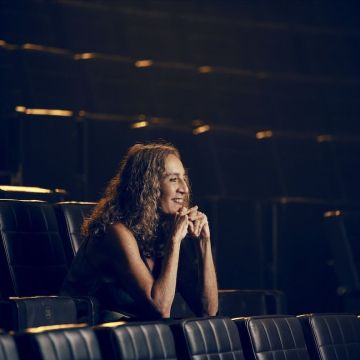
"Can one create without memory?", directly asks us Semolina Tomic, director of the Antic Teatre and one of the voices coordinating the project. "The main motivation for this alliance between the three entities is to give the Circus Archive the visibility it deserves, a project we have been working on intensely for three years. How have we done it? Well, we have asked artists to first delve into the archive's holdings to then build, from there, their own 'interruption'. The obligatory starting point for any piece in the program is memory."
The ultimate goal is to defend the street as a meeting place.
For Tomic, the proposal has an ideological and social intervention background: "The ultimate goal is to defend the street as a meeting place. We live immersed in a neoliberal system that seeks precisely the opposite: that we don't meet, that collectivity disappears, and that we isolate ourselves. We try to work in exactly the opposite direction. We want to ensure that the neighborhood is not a passive audience or a mere spectator looking from the outside, but that the neighborhood itself gets involved and makes art."
To make this premise a reality, the team has carried out months of community mediation work, contacting neighborhood associations, social platforms, local entities, merchant collectives in the neighborhood, and reception networks in Sant Pere, Santa Caterina, and La Ribera.
From the balconies of 1994 to an 8-hour performance
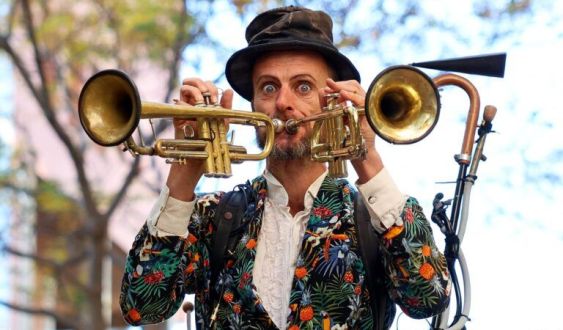
The journey of Interrupcions will begin on Saturday, October 3, in front of the Casa de la Seda. There, the inauguration will take place with El veí del balcó (The Neighbor on the Balcony), one of the most daring and remembered pieces by the company Circ Perillós, originally premiered in 1994. The synopsis of the work poses the friction between an artist who sings and performs in the street and the neighbor on the opposite balcony who is bothered by the noise.
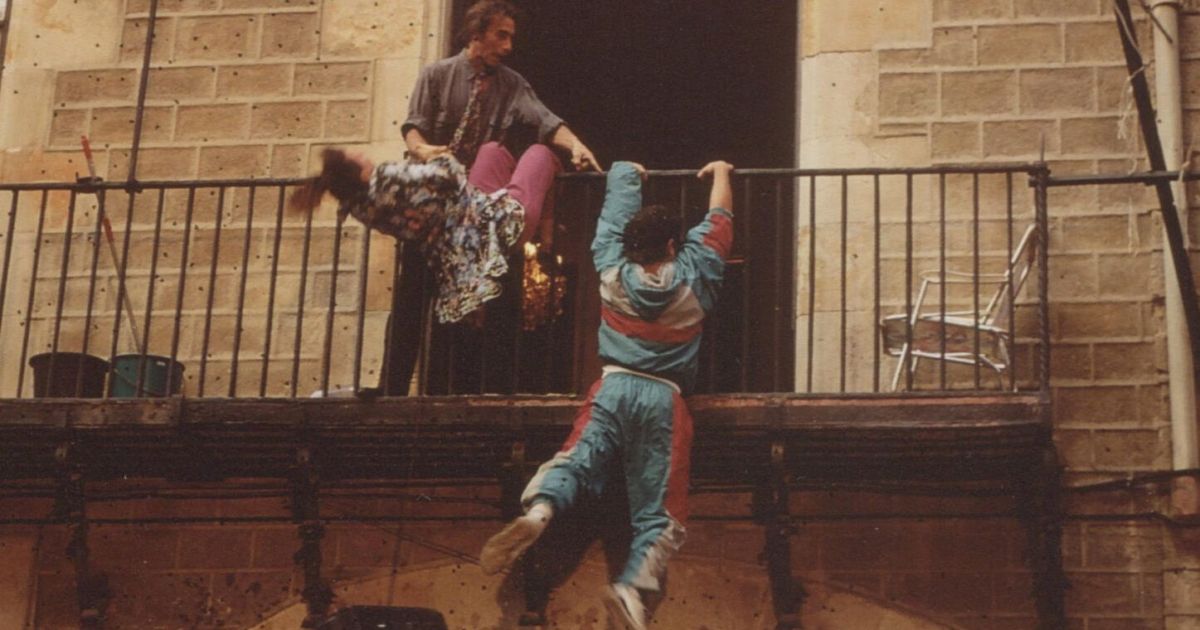
In 2005, the City Council approved the controversial Civic Ordinance, a regulation that prohibited art and activity in the street without a license; this caused the disappearance of dozens of street circus companies. At the same time, the neighborhood of Sant Pere, Santa Caterina i la Ribera has been affected by the pressure of mass tourism and gentrification processes. The recovery of this historical work allows us to directly ask: what does it mean today to poetically intervene a balcony or a city street?
Throughout the fifteen days of programming (from October 3 to 17), 10 artists, visual creators, philosophers, musicians, and contemporary companies (among whom names such as Jorge Albuerne, Ingrid Esperanza, Jaume Clotet, Verónica Navas, ROOM 100, Colectivo Ameno, P.L.A.S., Karl Stets, and curator Arnau Horta stand out) will present their actions.
The proposals will include everything from street parades and tours through the city to a neighborhood merchants' fair, as well as children's circus workshops in the squares, interventions on the balconies of the Palau de la Música, or an 8-hour performance.
A closing of agora and political debate
The final point of Interrupcions will be in the Plaça del Pou de la Figuera, a space that was an icon of neighborhood struggle and resistance in the 2000s to prevent its privatization and construction. Here, an open citizen agora will be organized, open to everyone, which will feature the participation of the former councilor of Ciutat Vella.
In this meeting, neighbors, entities, philosophers, and artists will sit down to debate the uses of public space, gentrification, the right to the city, and forms of collective resistance. The program will close with an institutional and artistic round table where the official public presentation of the digital platform of the Circus Archive will take place.
Interrupcions is an event that reminds us that memory is not just a matter of the past: it is a living, uncomfortable, and indispensable material for understanding the present and imagining the future in the city.
Add The New Barcelona Post as your preferred Google source for free
Stay informed with the latest news.