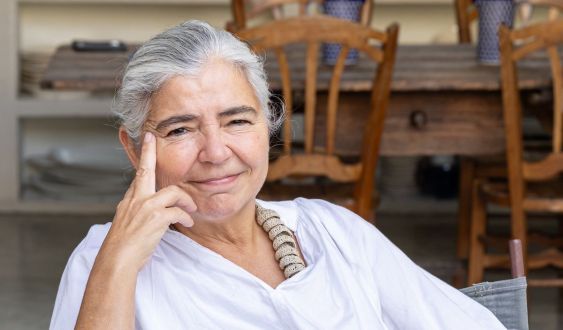
In an old piano restoration workshop, in the Gràcia neighborhood, lives Inés García-Albi. She was born in Bilbao, but after having lived in Bilbao and Madrid, she settled in Barcelona, which is the city of her mother, family of the poet Jaime Gil de Biedma, and her husband.
Inés García-Albi is a journalist, historian, documentalist, writer, and cultural manager. And she incredibly manages musical, artistic, and literary proposals that are experienced and shared in petit-comité. For this, she founded the Factoría Cultural Martínez.
--- How did this way of convening to experience cultural events in such a small format in a house come about?
--- One day, having lunch with a singer-songwriter friend, Silvia Comas, she told us she wanted to make an album about Gloria Fuertes. And she did it, and before premiering it publicly, she commented that she needed to do a "fake live" somewhere. And I told her, okay, we'll do it at home and invite friends. And people had dinner. It was a huge success and people started showing up to do things. And we started calling those things "Mr. Martínez's things." I invented Mr. Martínez because I wanted to write, and looking at blogs I saw that everyone talked about themselves, but that made me uncomfortable, so I created the character, a real estate agent who became unemployed, and I named him after the street where we live, Martínez (de la Rosa).
--- And, from that trigger, everything escalated.
--- After that, we started organizing gatherings at home. Since we had young children, and Marcos ---her husband, the illustrator Marcos Isamat--- cooks very well, after the conference, concert, or performance, whatever it was, we always shared a dinner, so that there would also be that great moment of relaxation. But all that started around 2012 or 2013, we've gone very slowly. Then in 2018 I rented the place next door, and set up an art gallery shop specializing in illustration. Everything we've been doing has had a long journey over time. 100%, actually, we've gotten serious after the pandemic.
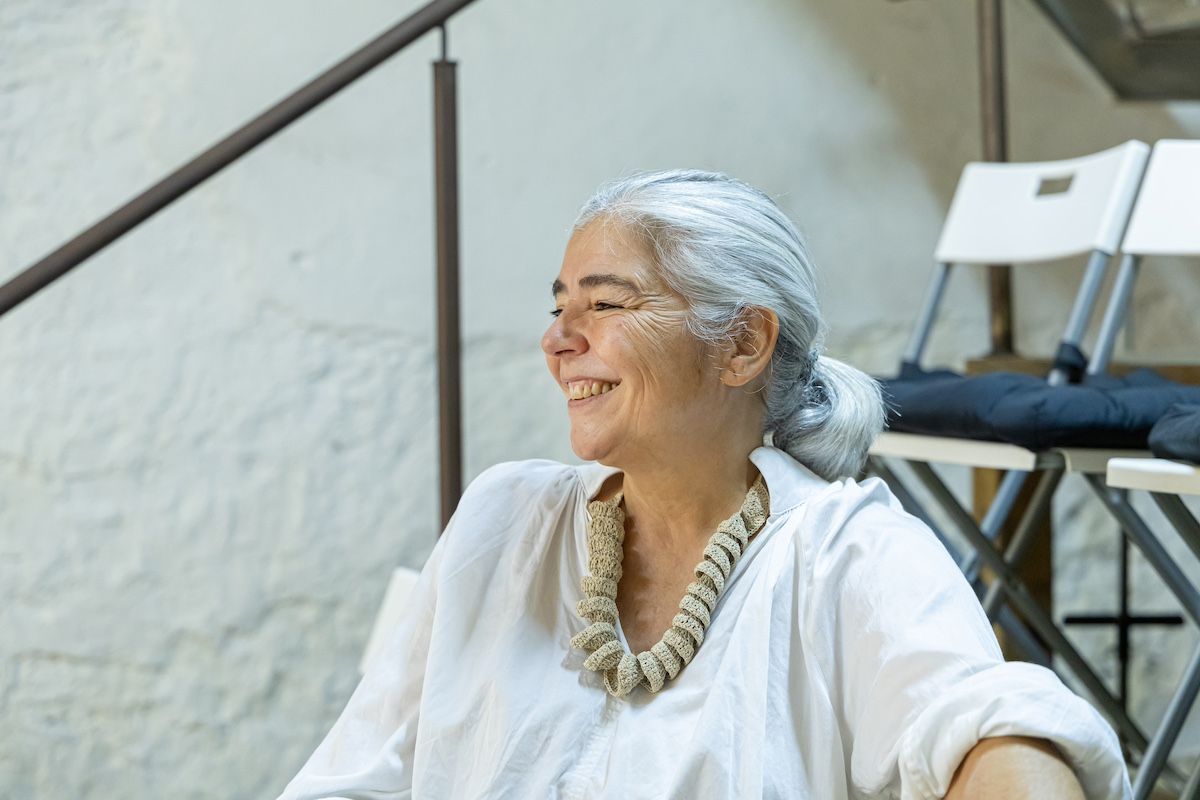
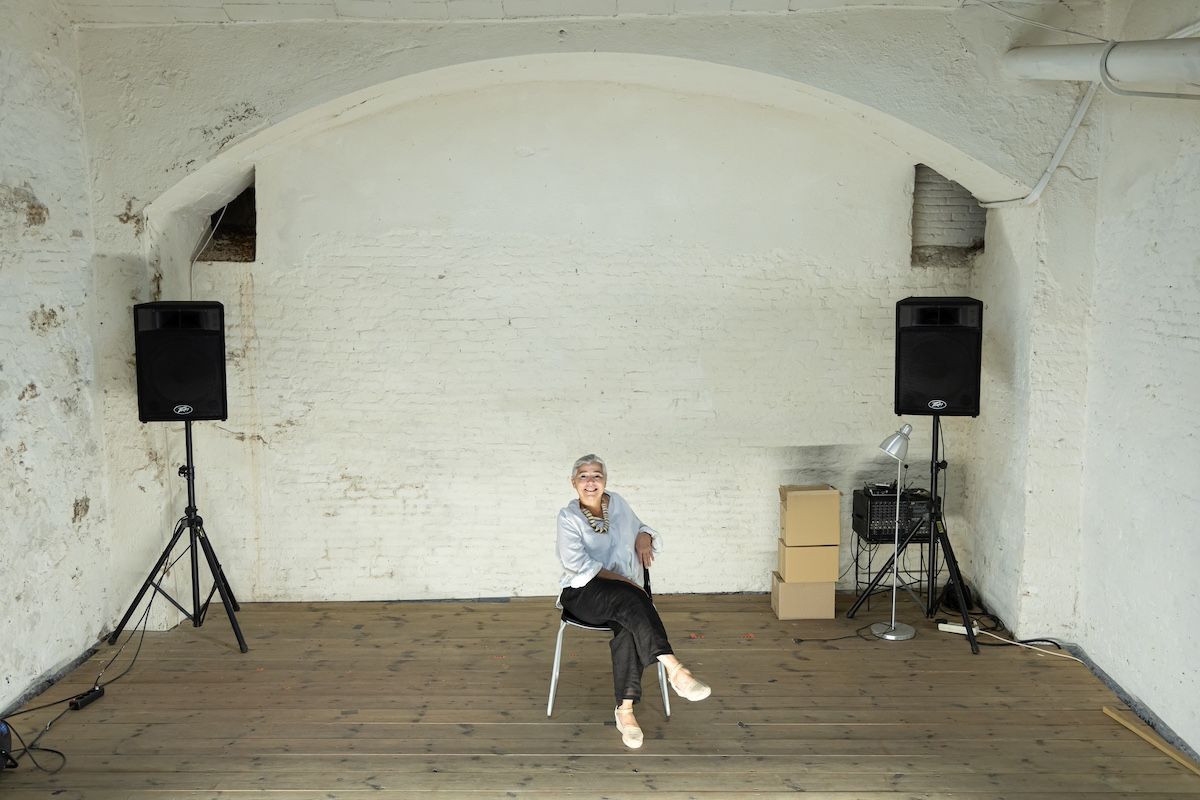
--- During the pandemic, that home theater appeared, with a stage and bleachers.
--- Just before the pandemic, I had just closed the gallery space and the store, and I already had other things on my hands, among them, some trips I was organizing. I closed the premises on January 31 and in March we were confined. So, in the basement of the house we set up four things to play badminton with the children and, suddenly, we imagined a theater in that space. Marcos visualized it and immediately began to draw the stands. Eduardo Mendoza had written for the actress and singer Patricia Jacas the text of the play Si alguien me hubiera dicho (If someone had told me), a monologue about a singer, and our theater served as a rehearsal place and hosted the first performance. And after the pandemic I founded the company Factoría Cultural Martínez.
--- What happens inside it?
--- We organize theater performances, concerts, conferences... There is no fixed program. When I feel like it, I set something up. This week, for example, we have the French cellist and composer Matthieu Saglio. We had been after him for a long time and now, taking advantage of a trip between concert and concert, he will be in Barcelona. I gather initiatives that come to me through friends and acquaintances, and those that occur to me.
--- And how do you reach the public?
--- It's always word-of-mouth. And through Mr. Martínez's bulletin, the newsletter that people can subscribe to through the website and receive the agenda of our activities by email. This is like a club.
--- What does the life of this club make you feel?
--- That this is an open house. I come from a large family, and I am delighted with my house. We discovered it when we lived on the next street. We learned that it had been foreclosed and was being auctioned. I loved the facade, with the industrial door. I came to talk to the gentleman from the workshop who sold piano legs. I had been in Barcelona for two weeks and, even so, in his closed Catalan, I understood what he explained to me and we bid at the auction. Once we had the house, we started cleaning it with friends, it was great fun, and then we asked for the license to do the works. Until 1865, the entire block had been a farmhouse.
--- Your house and all your efforts in the factory have made you a link between people.
--- Yes, a total bridge, and one person leads you to another. Conferences, courses, theater, music, a classics reading club with great people, one Sunday a month or the reading liturgy, where I bring a professor, someone very top in a subject. I try to organize quality encounters.
--- And you go on trips.
--- Yes. We organize three types of trips: international, Ancha es Castilla (Broad is Castile), and Paradas culturales (Cultural Stops). The international ones are world capitals. I create the content, for example, Baroque Naples, and I focus on a specific moment when the city shone with its own light. From there, I organize conferences in Barcelona, sessions on Neapolitan literature, cinema, and music with powerful people who talk about Baroque art or Neapolitan cinema, and then we go to the city. We have already done several cities, where we have a route director who knows a lot about the place, but who is not a guide, because it is more of an author's route, where we provide bibliography and audiovisuals.
--- What does Ancha es Castilla consist of?
--- In a small village in Valladolid that doesn't even have a bar, with about thirty inhabitants, I organize three days with someone who knows a lot about something and gives us three conferences. They can be professors, researchers... Then I do a route that reinforces the conferences. We do this activity twice a year. And then there are the Paradas Culturales, which are also specific routes with conferences. We have done Madrid, Silver Age; Cádiz, ¡Olé la Pepa!, about the Constitution of 1812, and Barcelona, Architecture and Design. We have done fourteen of these outings.
"Culture is an inalienable facet of my life, like eating"--- And from the trips, you make guides.
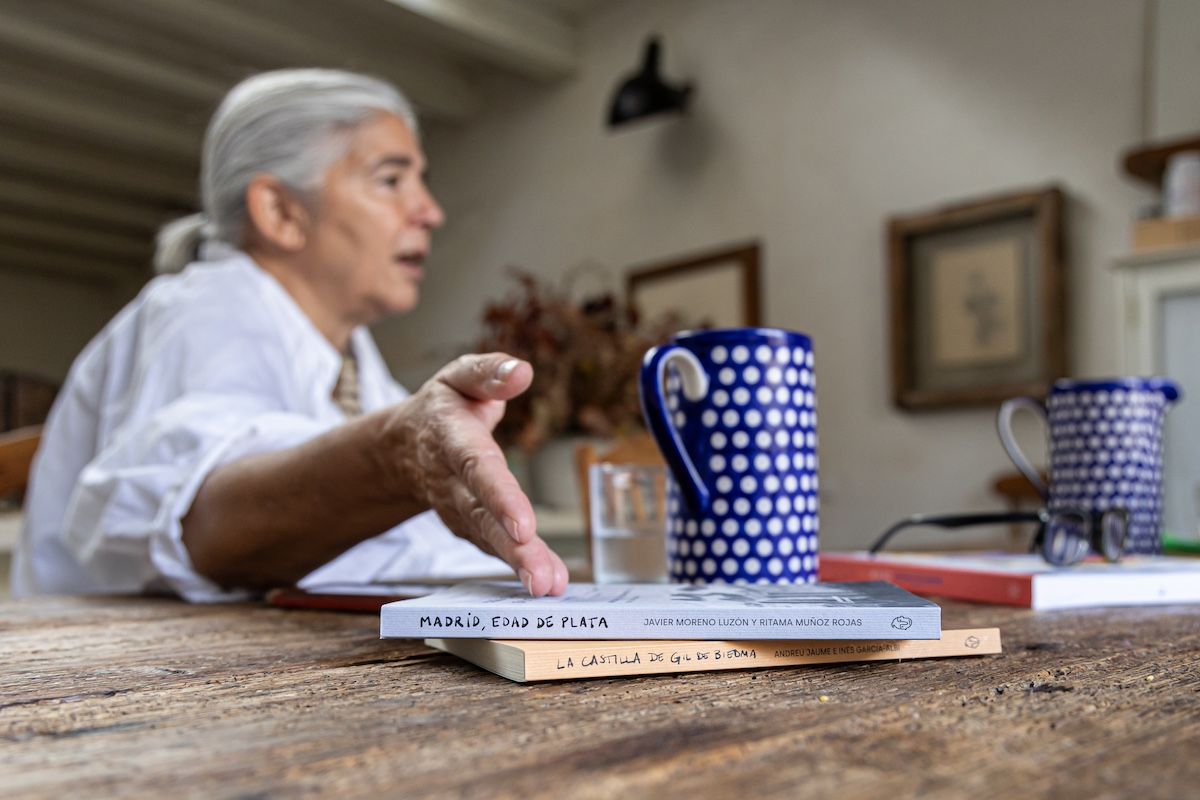
--- It always saddened me greatly that the conferences from those trips were lost, and I thought that if I recorded them, the other side of the trip—the route, the meals, the history—would be lost. That's why we devised the Apuntes Culturales collection, to be able to make a trip collecting the three lectures from the illustrious speaker and then the route of what we did on the trip, all illustrated. It's an intellectual and recreational journey. Everything is culture, and the place and the route are always sentimental. The route supports the conferences, and whoever writes it has a connection to it. We really like the perspective of 17th and 18th-century travelers, and we opted for Marcos Isamat's drawings. The first book in this collection was La Castilla de Gil de Biedma, with a lecture by the critic Andreu Jaume, editor of Gil de Biedma's complete works, and the route, in this case, I wrote myself due to my family and sentimental connection with the poet. The third book will be about Barcelona and architecture, and with its author, we have also organized outings to contemplate the city from different perspectives.
--- And there's more…
-- Yes, we also do Los domingos de Martínez, once a month, with lectures also by illustrious figures on a topic, such as Javier Moreno Luzón, National History Award winner. The spirit of everything we organize is to have a good time with culture, to leave a conference where you've learned so much that you feel physical and intellectual pleasure. We also experience the trips deeply. When things are explained well to you, it's a delight. I advocate for those who have spent their lives studying the topics we cover, because they tell it with passion, they transmit very well, and they infect you.
--- Culture, for pure pleasure, envelops everything you do.
--- It is an inalienable facet of my life, like eating. Culture is what makes us a little human in this complex world. The more perspectives they offer you and the more you know, the more you will understand. I could not live or be myself without reading, without going to know things and understand. Culture is a part of myself, it is a pleasure. In my house, in Castilla, summers were very long and we would get together with the elders. We read a lot and talked a lot with my parents, talking and telling stories. I also studied History and then did the Journalism master's degree at El País. There has always been a newspaper at home, El Correo, in summer in northern Castilla, and at my grandmother's house, La Vanguardia. I have grown up with the culture of books and movies, and dedicating myself to it seems like a luxury to me.
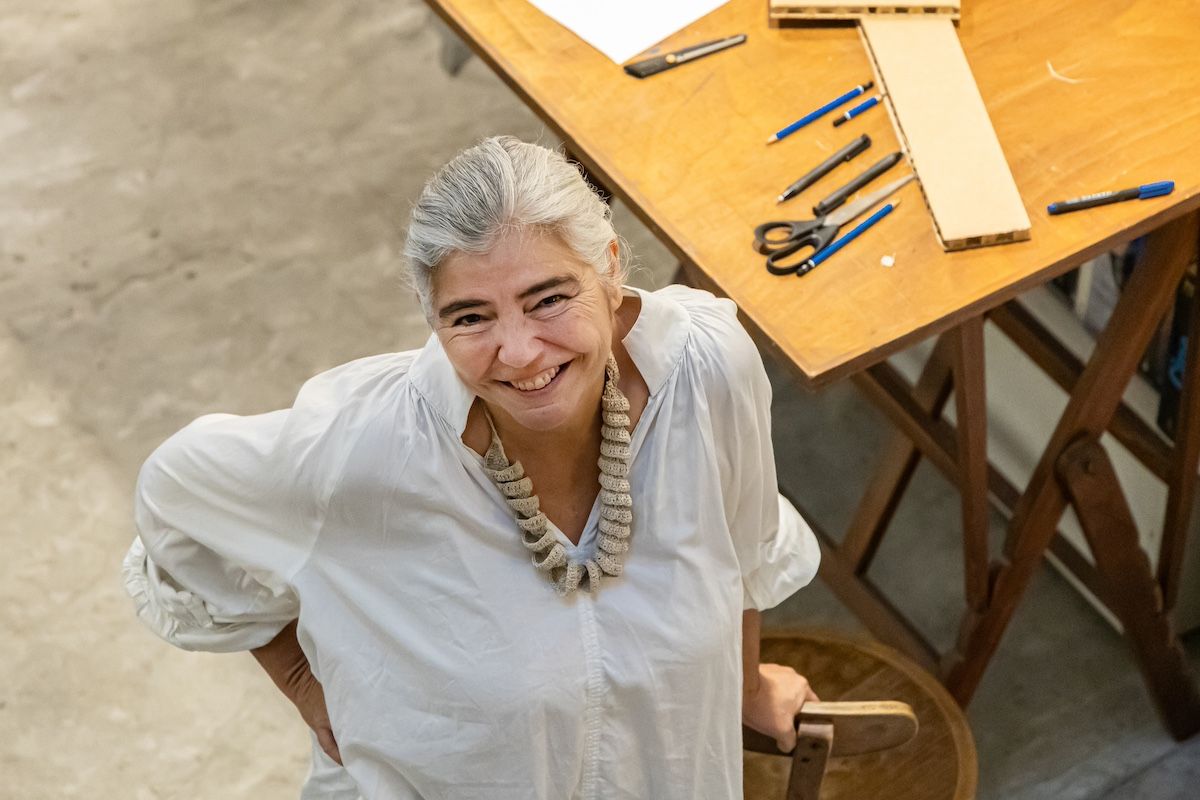
--- And in a time of so much virtuality, meeting people is a very valuable extra.
--- In my house, dinners with friends are very common. In fact, we also organize another activity that we call Guess who's coming to dinner tonight. It's another formula for organizing gatherings at home and talking about current events. I keep inventing things. We work a lot, but I'm delighted. I have clients who are almost patrons, I already call them my patrons, ambassadors of Martínez.
--- Inés is also one of the promoters of The Barcelonian. How did this project come about?
--- It occurred to Luisa Vera, the illustrator I had worked with at the gallery. And during the pandemic, several friends joined in. It started by posting covers made by illustrators on Instagram, as we saw that it was also done in Paris and Milan. And with La Factoría, we started the online sales project for the prints, one or two exhibitions, and the books. There are four sizes of prints, on very good paper. We gather all the creative talent of this city, which there is a lot of.
Add The New Barcelona Post as your preferred Google source for free
Stay informed with the latest news.
