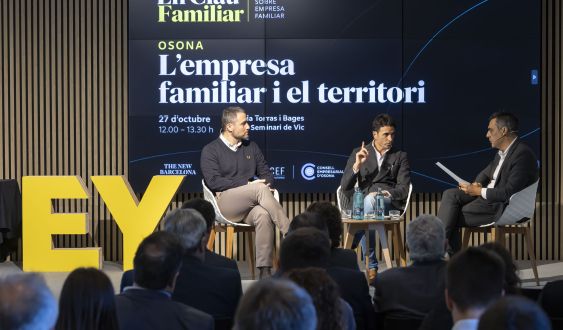
“At MIT (the Massachusetts Institute of Technology) in Boston, you’ll find some of the brightest minds in the world. But if you isolate them and place each one in a different part of the planet, they will struggle to reach their full potential.” Julià Ferrer, Managing Director of Frigorífics Ferrer, uses this image to illustrate how a company’s growth depends on more than its own capabilities. Beyond each company’s talent and business vision, growth also depends on the relationships it builds with the local community, the knowledge it shares within its ecosystem, and the synergies that emerge from these connections.
A territory that, in the case of Julià Ferrer, general director of Frigorífics Ferrer, plays a particularly relevant role: Osona, where the company was born and where, today, it remains rooted. The region has also been the setting, this Tuesday, for the first session of the En Clau Familiar conversation cycle, promoted by the Catalan Association of Family Business (ASCEF), EY and The New Barcelona Post, and, in this session, also the collaboration of the Osona Business Council (CEDO), to analyze the challenges and opportunities of family businesses.
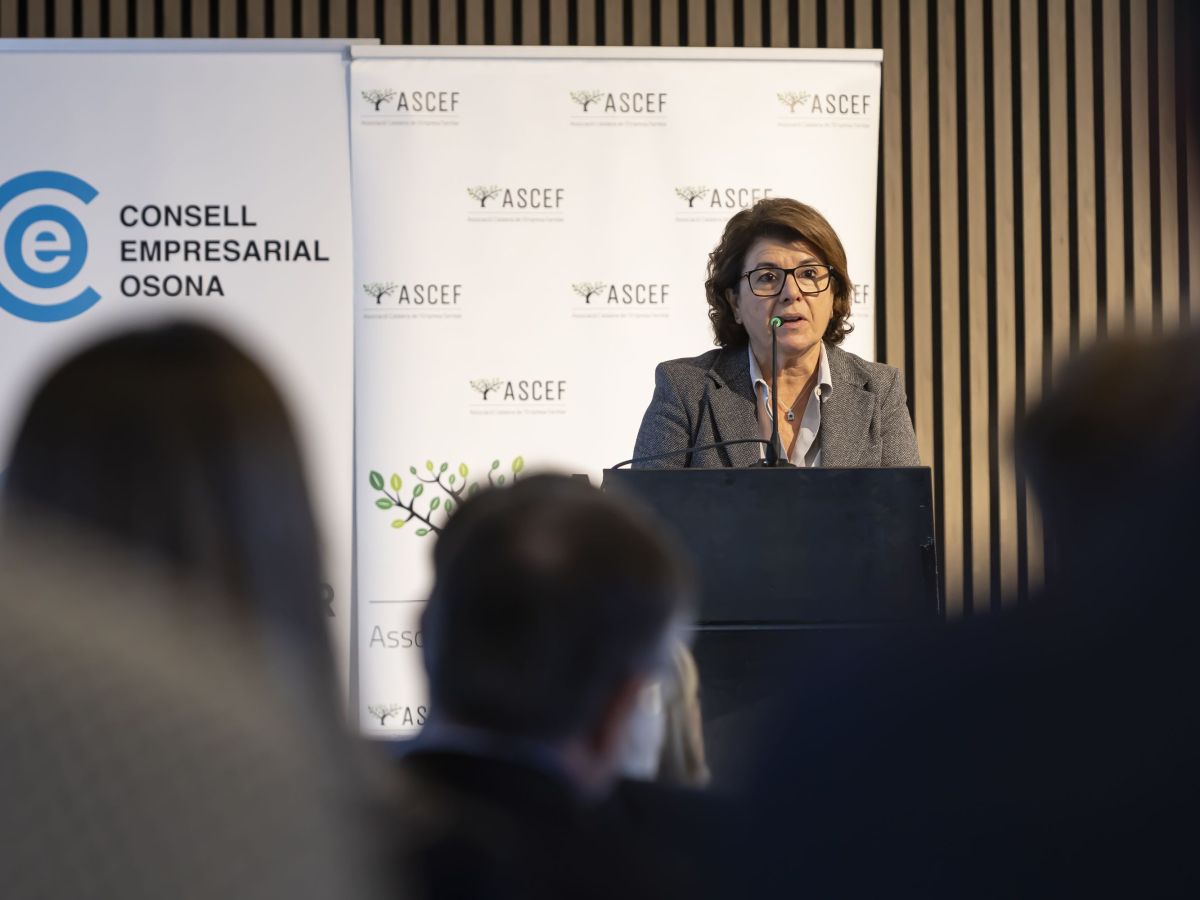
The first meeting of this cycle, held this Tuesday at the Vic Seminary, brought together representatives of Frigorífics Ferrer and Grup Gepork to explore a two-way relationship: what a company contributes to the territory where it takes root and how this environment contributes, in turn, to its growth. Because the link between company and territory is not built in a single direction. “Just as the company leaves its mark on the territory, the territory also leaves its mark on the company,” said Rosa Tous, corporate vice president of TOUS and president of ASCEF.

The landscape, the people, the customs and the culture contribute to defining the identity of a company and condition its way of working. A footprint that does not necessarily disappear when the company grows or internationalizes, but remains present in its trajectory. Frigorífics Ferrer and Grup Gepork are two examples: companies that have been able to compete even with large multinationals and grow without detaching themselves from the territory where they were born.
A territory that, in both cases, has favored its development. Because, as Gemma Vivet, CEO of Grup Gepork and president of CEDO, has claimed, Osona has a deep-rooted industrial tradition, a knowledge of trades that passes from generation to generation, and a network of companies that relate and collaborate with each other. "Osona starts from a solid structure; industry represents almost 36% of the added value of the region, almost double that of Catalonia as a whole, where it stands at around 19%," she emphasized. From CEDO, precisely, work is being done to strengthen this business network and encourage companies in the region to continue growing.
Two trajectories, the same roots
Despite sharing these roots in Osona, Frigorífics Ferrer and Grup Gepork were born from very different realities: while the first was born to cover a lack in the territory, the second found in the strength of the region's pork sector the opportunity to grow.
Today consolidated as a frozen food distributor with presence in several markets, Frigorífics Ferrer was actually born from a small fishmonger in the Vic market, launched in 1924 by the great-grandparents of the current general director: Julià Ferrer and Manela Farga Pons. The fish was brought daily from Barcelona, at a time when getting it fresh to an inland region, with a strong livestock tradition, was quite a challenge. With the passing of generations, the business evolved and expanded its offer beyond fresh fish, until focusing on the distribution of frozen foods. An evolution that has allowed it to have a presence in different parts of the State, without leaving behind its origins in Vic, where the company remains established.
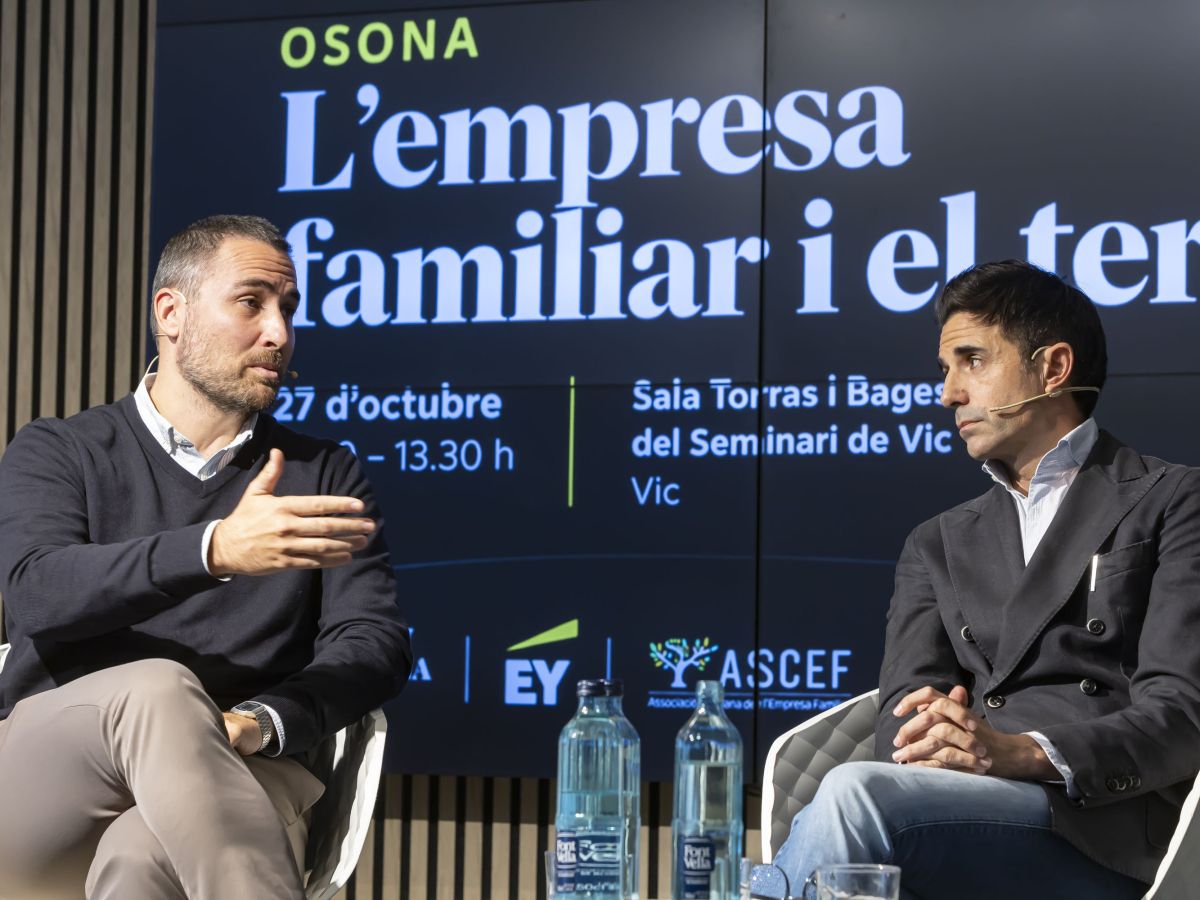
If Frigorífics Ferrer was born to cover a shortcoming —bringing fresh fish to an inland region—, Gepork was born precisely from the richness that Osona already had: a powerful pig sector, which offered opportunities to innovate and grow. Founded in 1979 by Josep Puigdollers, the company began working in genetics and artificial pig insemination and, over the years, expanded its activity to the distribution of veterinary products and other areas related to animal health. Again, however, without abandoning the region that has seen them grow.
The two companies also exemplify different ways of maintaining leadership without losing their roots in the territory. Frigorífics Ferrer continues to be managed by the founding family, now in the hands of the fourth generation, while Gepork maintains family ownership and has incorporated an external professional management with the appointment of Francesc Giné in January 2025.
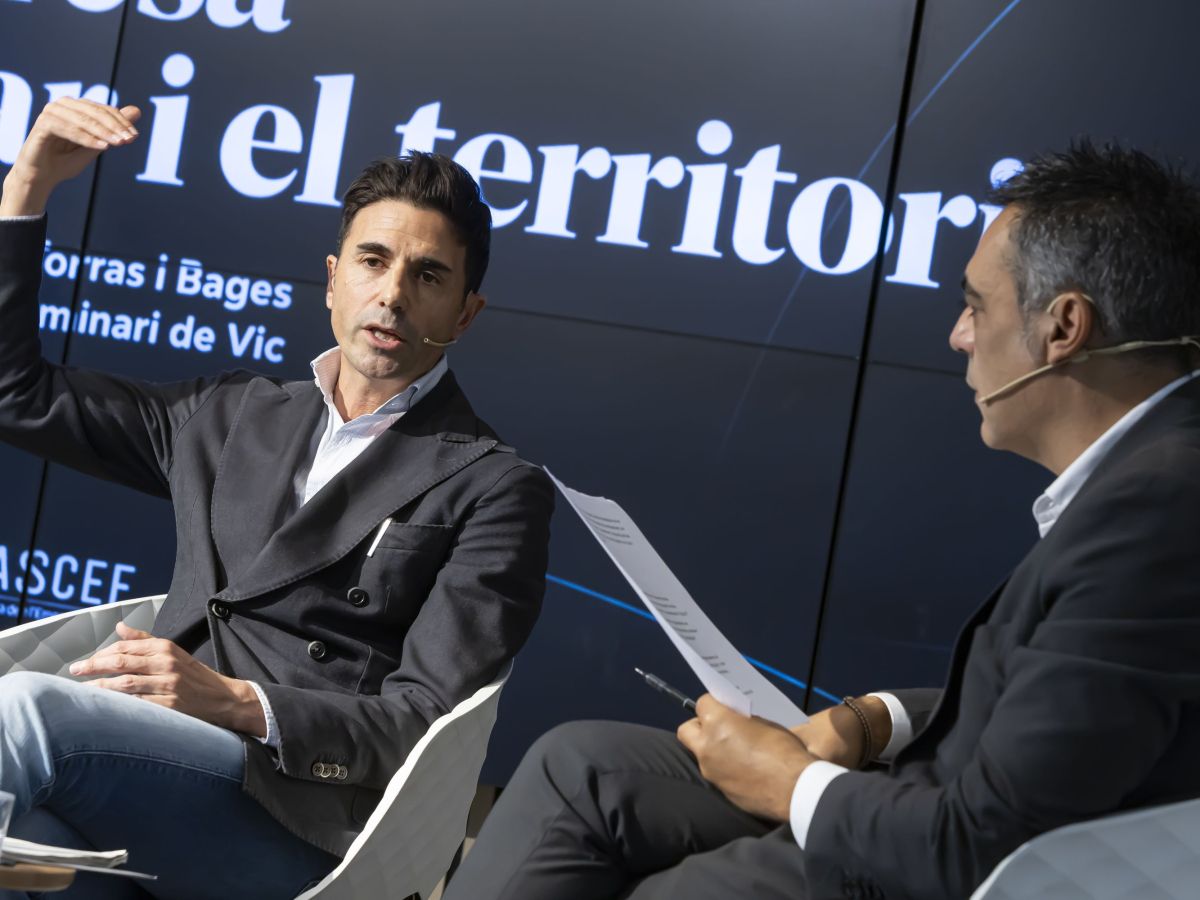
Beyond the differences in how the business is managed, both share the challenge of continuing to grow without detaching themselves from the environment that has made them grow. And this implies not only making strategic decisions within each company, but also contributing to strengthening the business fabric of which they are a part.

Weaving a large network
“Every company in the region, larger or smaller, contributes this joint knowledge. The fabric is held together by many fibers, not just one,” Ferrer pointed out. A network of relationships that allows sharing knowledge, generating opportunities, and strengthening the competitive capacity of the entire territory. Strengthening this network, however, also requires the active involvement of companies, which can contribute through their own decisions.
“When we choose suppliers, we always try to opt for local ones, as long as they are competitive and allow us to achieve the excellence we seek. Sometimes we think we have to resort to large international consultants, but we can also find talent in the same region,” remarked Francesc Giné, general director of Grup Gepork, who thus championed the value of trusting in local talent.
This commitment to local talent, however, also encounters difficulties in finding professionals in certain areas. Giné has pointed out that this is one of the great pending issues of the agri-food sector, which needs specialized profiles that are not always easy to find in the region. To address this, the company collaborates with initiatives that favor the arrival of talent to the territory, with the aim of generating a positive impact on the territory, both direct and indirect.
Beyond talent, companies also have to face other conditioning factors that can hinder their growth, such as mobility, the cost of energy or geopolitical instability. These are issues that go beyond the capacity of action of each company and that place administrations in a key role in guaranteeing a favorable environment for economic activity.
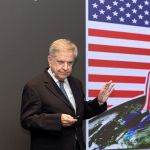
In this regard, Ferrer has called for "more administrative agility and regulatory stability" to facilitate investments and prevent bureaucracy from becoming an obstacle to business projects. A particularly relevant need for family businesses, which tend to plan long-term and work with a vision that goes beyond a single generation. For this reason, he has defended the importance of having a "stable framework" that allows them to grow with confidence and guarantee the continuity of the business in the future.
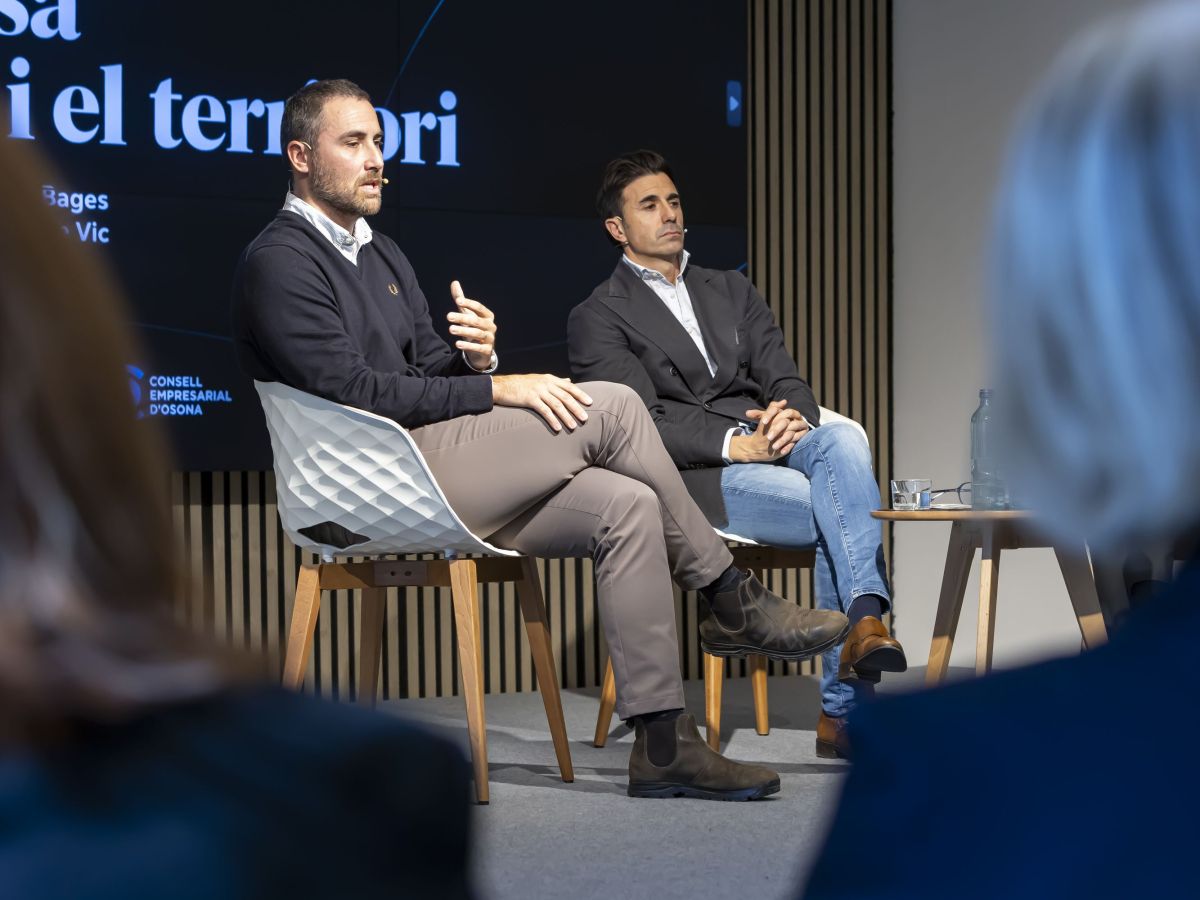
Giné has also defended the need for a regulatory environment that allows companies to compete on equal terms. In the case of Gepork, which operates in the field of animal health, differences in the application of regulations can affect both competitiveness and investment decisions. For this reason, during the En Clau Familiar session, the executive called for "coherent" regulation between administrations and homogeneous compliance criteria, which avoid placing companies in a disadvantageous position.
Growing with an eye on future generations
Beyond environmental conditions, the very nature of family businesses also influences growth decisions. The desire to preserve the project and ensure its continuity for future generations means that these companies tend to adopt a more cautious attitude towards risk. Decisions are made with a long-term perspective, taking into account not only potential benefits but also the impact that a failure could have on the future of the business.
Because, as Rosalía Soler, EY Audit Partner, has reminded us, "the family business is not just a family, it is a past, a history, but above all a future." And it is precisely this responsibility towards the future that, in some cases, can make family businesses more cautious when undertaking new projects or taking risks, and that, unlike other companies more willing to bet on uncertain initiatives to accelerate growth, they prioritize a more gradual evolution that guarantees the long-term continuity of the business.
At Frigorífics Ferrer, this vision has led to discarding some operations to preserve the company's autonomy. "Anything that could jeopardize this legacy must be looked at with many eyes," Ferrer assured. In the case of Gepork, Giné stressed that "the limits are set by the values and purpose of the company," which he summarized as accompanying the veterinary sector and offering solutions for animal health.
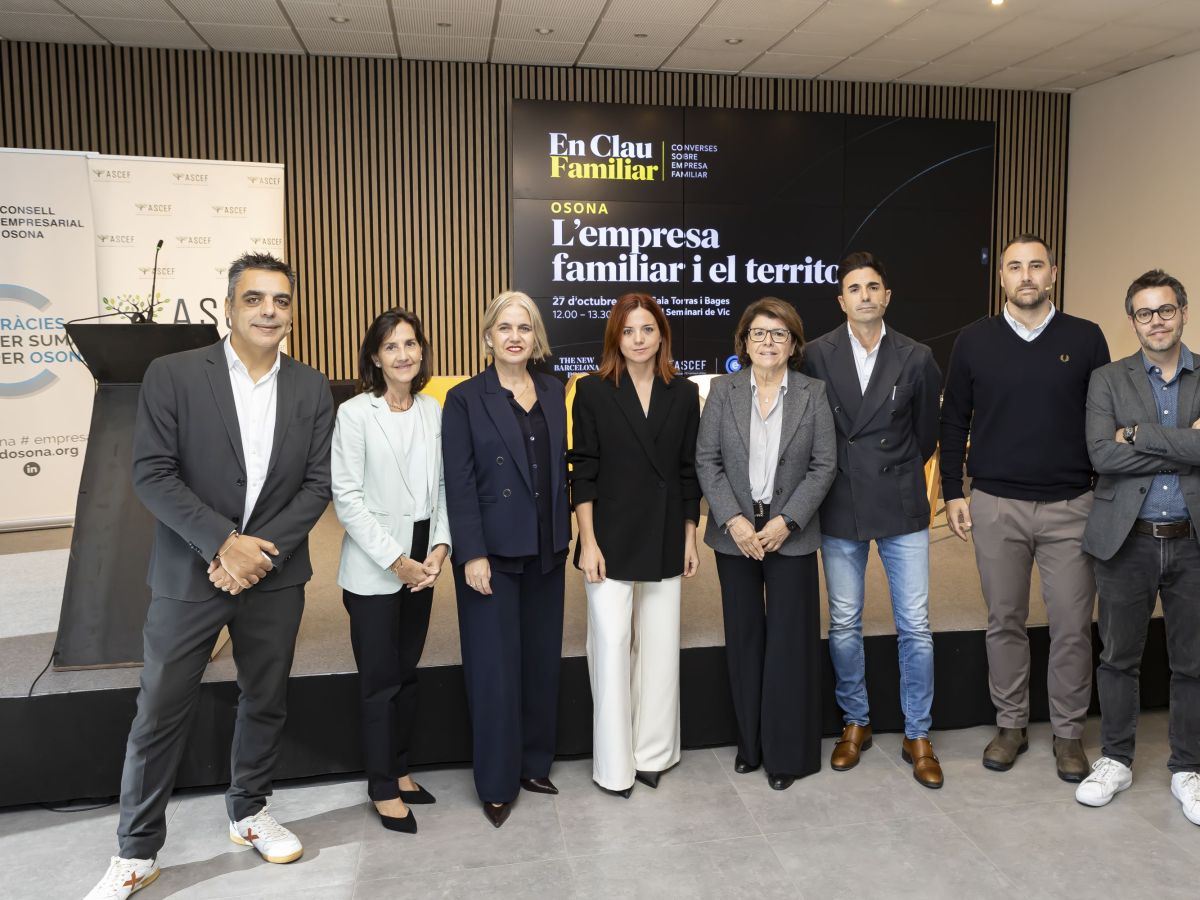
In both cases, the challenge is to grow and adapt to new times without losing sight of the values and origins that have defined the business project. A matter that the En Clau Familiar cycle will continue to explore in the two sessions it still has ahead: the one in Reus, on November 18, will focus on generational succession and the continuity of business projects, while the one in Girona, on December 1, will focus on talent, corporate culture and the role of people within the family business, before closing the cycle.
Add The New Barcelona Post as your preferred Google source for free
Stay informed with the latest news.