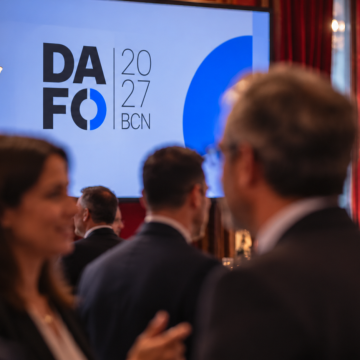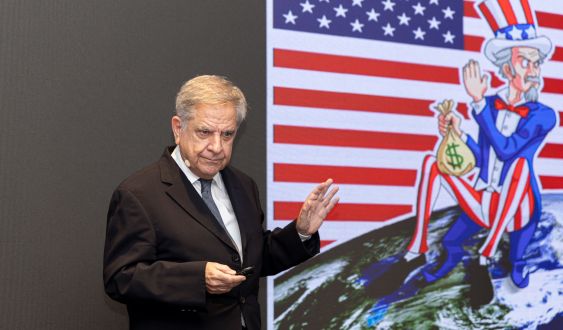
The world lives immersed in chronic geopolitical conflicts. In a polarized world where the new normal is conflict, tension, and wars. In a space where diseases, trends, and fashions govern global decisions, companies must surf uncertainty and see it as an opportunity to reinvent themselves. There are increasingly more reasons to understand the world from within boardrooms and to add these geopolitical changes to the decision-making line regarding the future of the company. One can no longer live with one's back to the world, but rather must face the new paradigm and manage how global changes can also affect companies on an individual scale. Precisely, geopolitics has been one of the key blocks in the presentations of the first edition of DAFO Barcelona 2027, The year ambiguity ends. Organized by The New Barcelona Post and Banc Sabadell, the conference brought together a hundred entrepreneurs to debate and reflect on the future they want. The event featured the participation of Marcos Urarte, president of the PHAROS Group, strategic and organizational consultant and specialist in geopolitics, foresight, and business transformation, who in the first keynote of the event highlighted global uncertainty as a driver of change for the business fabric.
According to Urarte, in a SWOT analysis, the most important are the strengths. He established two readings: a defensive one, which relates weaknesses and threats, and a growth one, which combines opportunities and strengths. He applied this strategic perspective to the global scenario, stating that "the world moves in waves": crucial moments such as covid-19, the arrival of the internet, or 9/11 have built the world we know today. However, he acknowledged that all these changes have been clouded by a single reason: The President of the United States, Donald Trump, whom he described as an "unpresentable" person. Nevertheless, he warned that until now he was seen as a caricature: every time he said something, we thought he was crazy. According to him, however, this is not the case, and what is behind it is "the madman's strategy," which consists of "creating conflicts and then solving them."
Following this same line, Urarte has specified that we live in a new world order, and to understand it, he recalled the Cold War, sustained by nuclear weapons. "The balances of terror are the basis of everything," said the expert, who stressed that "if before they were nuclear, now it is commercialization." In this context, he stated that Europe needs to free itself from this dependence on the United States and affirmed that strategic autonomy is necessary. For him, Europe does not play a key role among the world's great powers and he exemplified it as a game of chess: "In China's game, Russia is the queen, while in the US game we are pawns, and pawns can always be dispensed with," the expert quipped. Therefore, he encouraged the entrepreneurs in the room to take geopolitics into account from the boards of directors and recalled that the strengths of the business fabric must be boosted for an autonomous European future.
Companies as agents of change
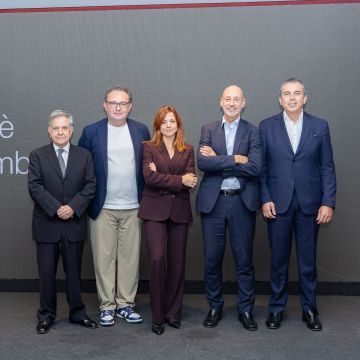
Urarte ended his intervention with an ovation from the audience and left the door open for the subsequent debate. Sara Puig, communication director of the College of Economists of Catalonia, was in charge of moderating the panel in which great names of the Catalan economy participated. Raquel Carrasco, general director of Veolia Catalunya; David Garrofé, former general secretary of Cecot and CEO of Binillum; Rafael Ruiz, president of EBRO Motors Group; and Josep Lluís Sanfeliu, president of Barcelona Global were in charge of discussing this idea of geopolitics and its impact at the business level.
The debate started from an idea raised by the president of EBRO: "behind the current geopolitical conflicts there is a struggle between blocs for resources." In this sense, the businessman highlighted fossil fuels and critical minerals, essential for the electrical transition. Carrasco, from Veolia, added a new variant to this scarcity of resources: price volatility. The proposed response is resilience, and she gave an example with Barcelona's energy recovery network, which has allowed heat that was previously lost to be reused and reduced dependence on gas, electricity, and water. In other words, a strategy to gain autonomy. However, Carrasco recalled that "to do so, courage, public-private alliances, and the ability to see weaknesses as strengths have been necessary."
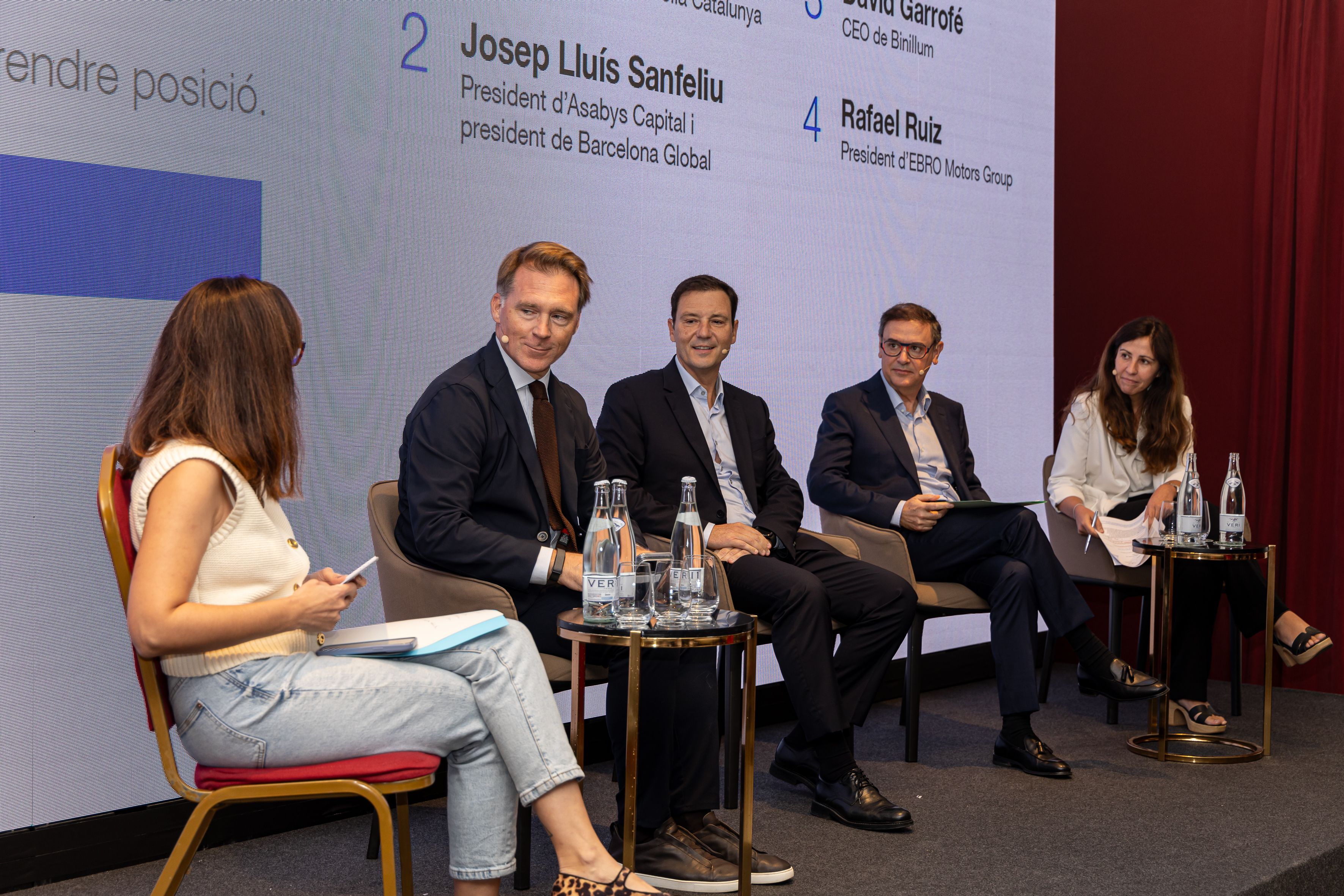
Regarding the volatility mentioned by the general director of Veolia Catalunya, David Garrofé, former general secretary of Cecot and CEO of Binillum, assured that there are companies that are more prepared to live with this uncertainty caused by geopolitical conflict and remarked that "volatility is a business opportunity for start-ups," as emerging companies are accustomed to working with this constant change. On general geopolitics, however, Garrofé stated that it does not affect all sectors equally and exemplified this with proximity services, which depend little on it, and real estate development, which has seen construction costs skyrocket by up to 40% due to an energy shock.
The last big idea of the debate was brought by Josep Lluís Sanfeliu, president of Barcelona Global, who recalled that strategic autonomy should not come at the expense of other priorities. For him, the flow of talent and investment must be free, and he lamented that "so much bureaucracy hinders the entry of financial capital." Thus, he asserted that regulations with sense are needed, meaning they should not collapse current markets, but also not hinder innovation and talent. The common point among the speakers brought the audience back to the beginning, to Urarte's opinions. In the end, Ruiz, from EBRO, highlighted that "companies cannot limit themselves to observing geopolitics, but must interpret it and convey it to their boards of directors."
Add The New Barcelona Post as your preferred Google source for free
Stay informed with the latest news.