
A life in a hurry, without stops or lay-bys, leaves little room to think, decide and plan the best way to progress in the direction that only we can know if we want. Hence, initiatives like the one that led to the creation of the Hay Festival 37 years ago in Wales, an organization that celebrates thought, literature and exchange between people, are so necessary and valuable. Through talks, workshops, concerts and screenings around a conversation, mental spaces are opened to imagine the world that should be.
The festival expanded to different countries and this year marks the 18th edition of the Hay Festival Segovia in Spain. It will take place from September 14 to 17, but preliminary events are already being held this month, and in various locations, as the spirit of the festival has been expanded from Segovia through the Hay Viajero formula. This Monday in Barcelona, the experience made its first stop. It was at the MACBA auditorium, with a colloquium focused on the challenges and concerns facing a future apparently governed by artificial intelligence (AI), and under the title Imagining a Humanist Future. What space will remain in that future for humanism, happiness, nature and personal interaction was what AI specialist researcher Nuria Oliver, co-founder and director of the ELLIS Alicante Unit Foundation; the director of Fundación Banco Sabadell, Sonia Mulero, and journalist Miquel Molina tried to outline in their dialogue.
At a time when algorithms already decide the information we receive, and automatisms replace human brains, like chatGPT, without transparency about the original sources of the content with which we build a "supposed" reality, education and regulation are "absolutely necessary", as pointed out by AI specialist, Nuria Oliver. "Education, at all levels, starting with a transformation of compulsory educational programs, to an ambitious investment in companies, citizens and the political class," Oliver believes. "Regulation is also needed, just as it exists for putting any other technology or tool available to society on the market, cosmetic products, pharmaceuticals, home appliances, toys or clothing. Just as there is control and regulation in all of this, we must ensure that the use of artificial intelligence is not negative for anyone," she added.
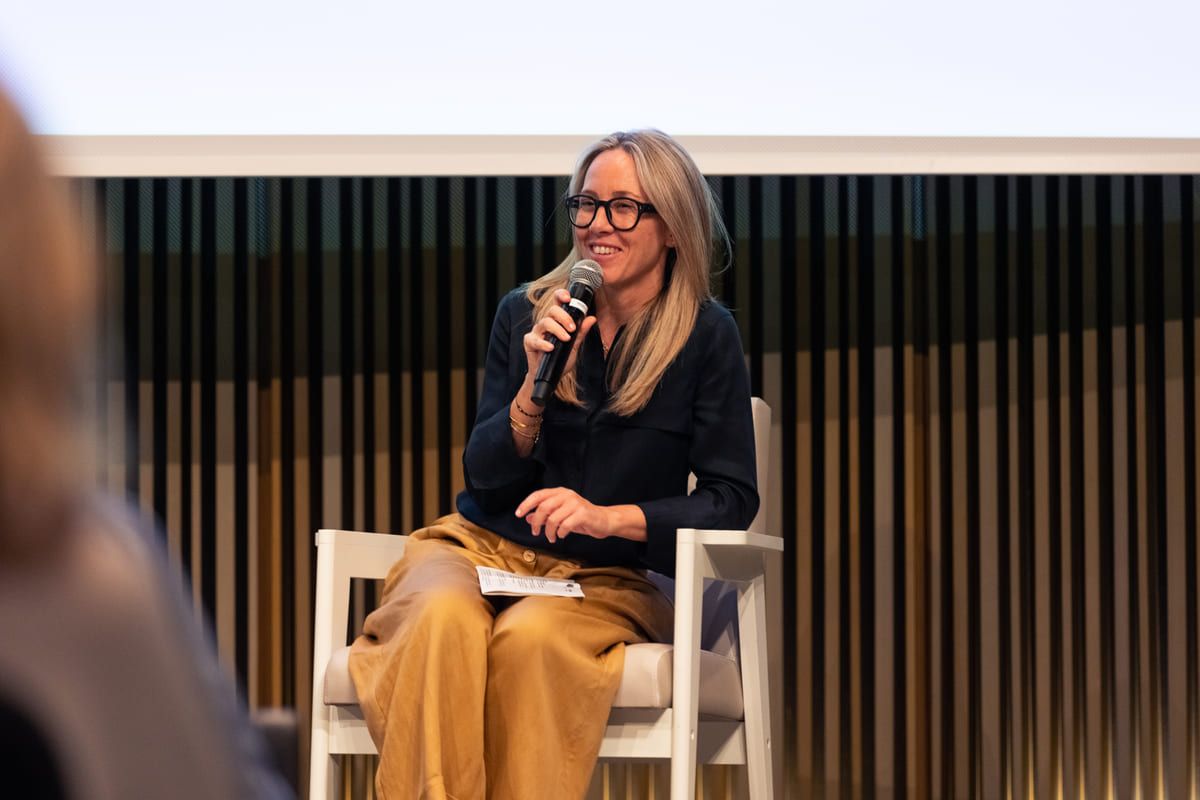
In the words of the deputy director of La Vanguardia, Miquel Molina, "some kind of positioning by countries is necessary, and attitudes that might seem too dramatic, like that of the Italian government, which initially vetoed chatGPT, are warnings that can make governments react a little, that they consider something similar or not." In that sense, Molina wanted to emphasize that now in the election campaign no party is talking about it, when ---in his opinion--- "we are very late" for no one to be doing anything, hence he considers that certain table thumps are necessary.
Mobilize
"We are in the fourth industrial revolution that is transforming reality," Nuria Oliver pointed out. And, despite the fact that the European position has already shown itself in favor of making the implementation of technology converge with the respect for European values centered on human well-being, and intends to control it through specialized agencies in different countries, Oliver also raises the parallel need for social mobilization, from below. "We should, as a society, mobilize and act. In the same way that there was a social revolution in industrialization, to defend the rights of workers in factories, I believe that now we also need it, to ensure that technological development will aim to improve people's quality of life. Of everyone, not just a few," she specified. And she called on us to question "what we can do to have the technology we want."
It is not a minor issue; technology accompanies us daily, directly and indirectly, but its extremely fast evolution swallows up the capacity for reaction. The speakers underlined, for example, the small and ever-decreasing margin to discern the truth told to us on the Internet from the will to manipulate that may be hidden behind the content, as many authorships disappear on the networks. And this lack of transparency is a latent risk, hence the importance of ensuring humanized artificial intelligence. It is not a no to technological and computer innovation. As Nuria Oliver explained well, "we need artificial intelligence for increasingly personalized education, for the production of renewable energies, for precision medicine. But at the same time, we must recognize that it poses great challenges and limitations that we have to address."
These are challenges for everyone, but in the professional field of information, they are experienced with concern. "How informational manipulation can be regulated is a real concern," confessed Miquel Molina.
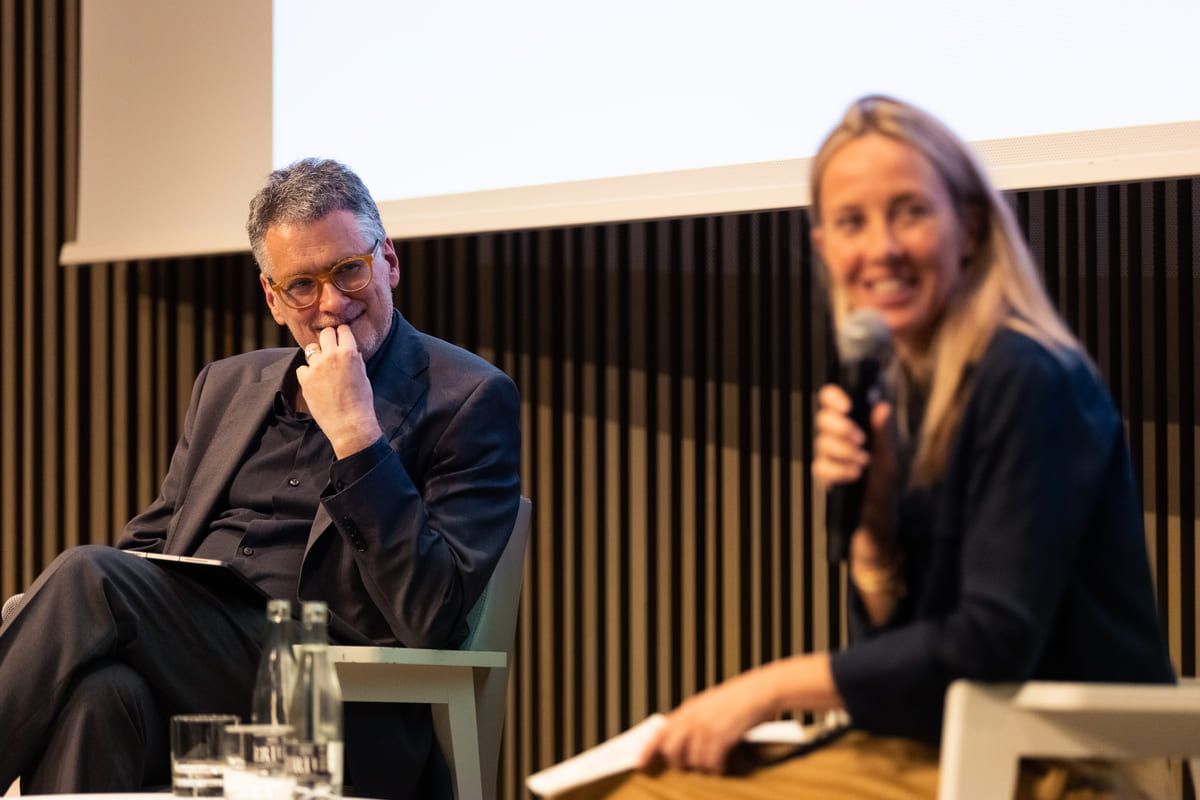
Turning the sock inside out, however, the opportunity arises to bring out true journalistic professionalism, and give wings and greater meaning to a journalism "more critical, more personalized, more authentic, less of a replica, that offers a more personalized product in line with audiences," said the journalist. Not ignoring, as he added, "the great potential of artificial intelligence to spread lies, deepfake, and break out on a large scale, which is creating a situation of real risk," he pointed out.
Nuria Oliver also sees the glass half full in this. In her opinion, "the massive generation of untruthful content, with artificial intelligence techniques, offers media an opportunity to offer truthful information, as guarantors of it. We are going to have to go to reputable media that will have to certify the truth in everything that can be newsworthy." Molina also believes that "it will be highly valued that the person reporting was there ---where the news happens---. He even dared to glimpse some hope for the survival of paper," as a genuine and authentic medium, immune to the danger of digital identity theft as is already happening on the networks.
Nuria Oliver: "We are going to have to go to reputable media that will have to certify the truth in everything that can be newsworthy"The director of Fundación Banco Sabadell, Sonia Mulero, also stated that "learning to identify and discern when a source is reputable or not is going to be very important, because we are going to coexist with artificial intelligence systems that do not necessarily have to have been trained under a framework of veracity". Mulero considers it a propitious context, an opportunity for critical thinking and a form of expression based on disciplines such as art and writing, one more reason to implement critical thinking in education.
Computational thinking
And linking the introduction of critical thinking in the classrooms, Nuria Oliver suggested a transversal education, since human intelligence is multiple and diverse. In an ideal educational reform, she believes that "a subject of computational thinking, not necessarily in front of a computer," would be optimal. Without it ---she points out---, algorithmic thinking can be made known, equally, to learn to solve problems with technology, to know about data, networks, and hardware. "All of this is as important as developing skills that perhaps we are losing, such as creativity, questioning things, and social and personal skills, as well as non-verbal language that we tend to lose." She stated: "If more and more children and adolescents use technology instead of face-to-face interaction, we will lose social and emotional intelligence, because we know that nature is wise and what is not used, is lost."
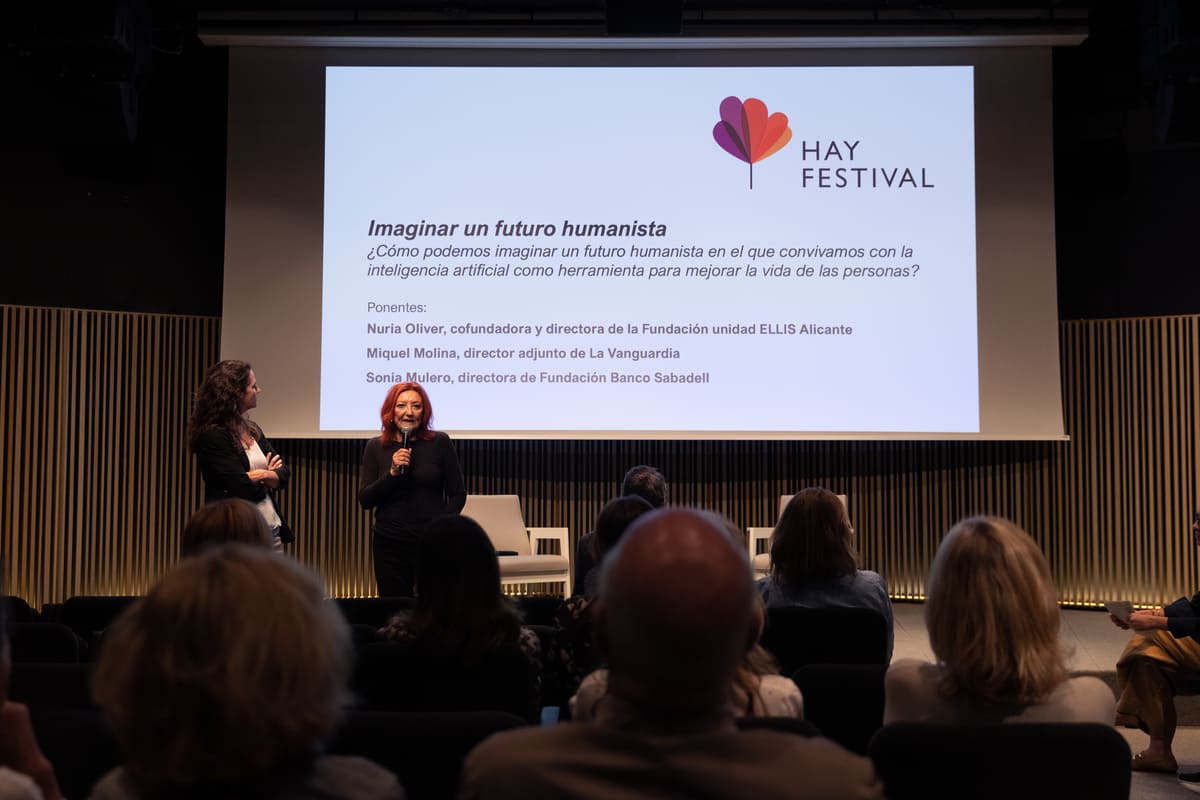
The individual responsibility of users of the online space was not overlooked in the debate. Nuria Oliver specified that "something very important to understand is that humans are generators of the data that artificial intelligence companies use. Without data, applications do not feed or learn. Therefore, it is time to think about what data we are generating and why we are generating it."
Sonia Mulero: "Critical capacity is what will make us win against machines, and education will make us free to know what is true and what is not"Plagiarism, censorship, and algorithmic bias in art and creation of all kinds show an enormously complex panorama for the coexistence of humanism and artificial intelligence. But, in the debate at MACBA, it became clear that, in that complexity, critical capacity is what will make us win against machines, and education will make us free to know what is true and what is not, and the media have the opportunity to preserve that veracity", summarized to conclude the director of Fundación Banco Sabadell, Sonia Mulero.
Add The New Barcelona Post as your preferred Google source for free
Stay informed with the latest news.
