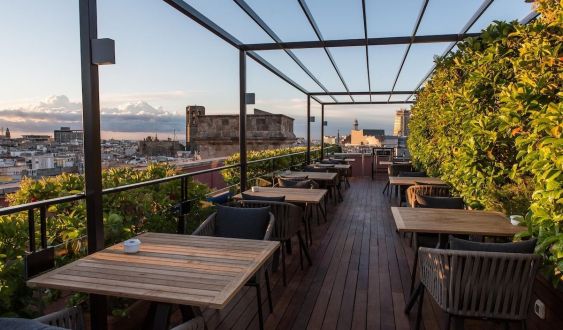
Two weeks ago we had closed chapter 15 of Hotels with History at the door of Le Méridien, at number 4-6 Pintor Fortuny street. For today's chapter, there's no need to go far: just cross to the odd-numbered sidewalk to find the protagonist of this chapter, the H1898, a hotel that opened its doors just over two decades ago, although its history, as often happens with the protagonists of this series, goes back much further and forces us to read the building with a little more calm.
Before delving into the sixteenth chapter, it is worth pausing for a few seconds at one of its corners. At the confluence of Pintor Fortuny and Xuclà, integrated into the facade itself, there is a niche with a sculpture that many see, but few look at: it is Mariano Fortuny, the painter from Reus who triumphed in Italy during the 19th century. The history of this piece, a work by the Oslé brothers, is in itself a small Barcelona story, since the idea of paying homage to the artist dates back to the early 20th century, although the sculpture was not installed until 1942 and, furthermore, not in the initially planned location (neither Plaça Reial nor in front of the Palau de la Virreina), but in this discreet corner, where for more than a decade the niche awaiting the sculpture remained empty.
That urban void, if viewed with a certain perspective, inevitably recalls that of the pedestal in Idrissa Diallo Square, where Via Laietana reaches the port and where since 2018 the statue of Antonio López y López is no longer present, whose name also disappeared from the street directory. His square ceased to be his square.
Antonio López y López, whose full name was Antonio Víctor López López de Lamadrid, was born in Comillas (Cantabria) in 1817 and, like so many others in his time, crossed the Atlantic in search of opportunities in Cuba, then a Spanish colony. Those trips were said to be for "making the Americas," and in his case, the expression accurately describes what happened, as he not only built a substantial part of his fortune there but also consolidated his social position by marrying into the Bru family, established in Barcelona. His figure, reviewed today with a more critical eye, exceeds the purpose of this series, although it is difficult not to keep him in mind when touring the city and recognizing the physical mark he left on it.
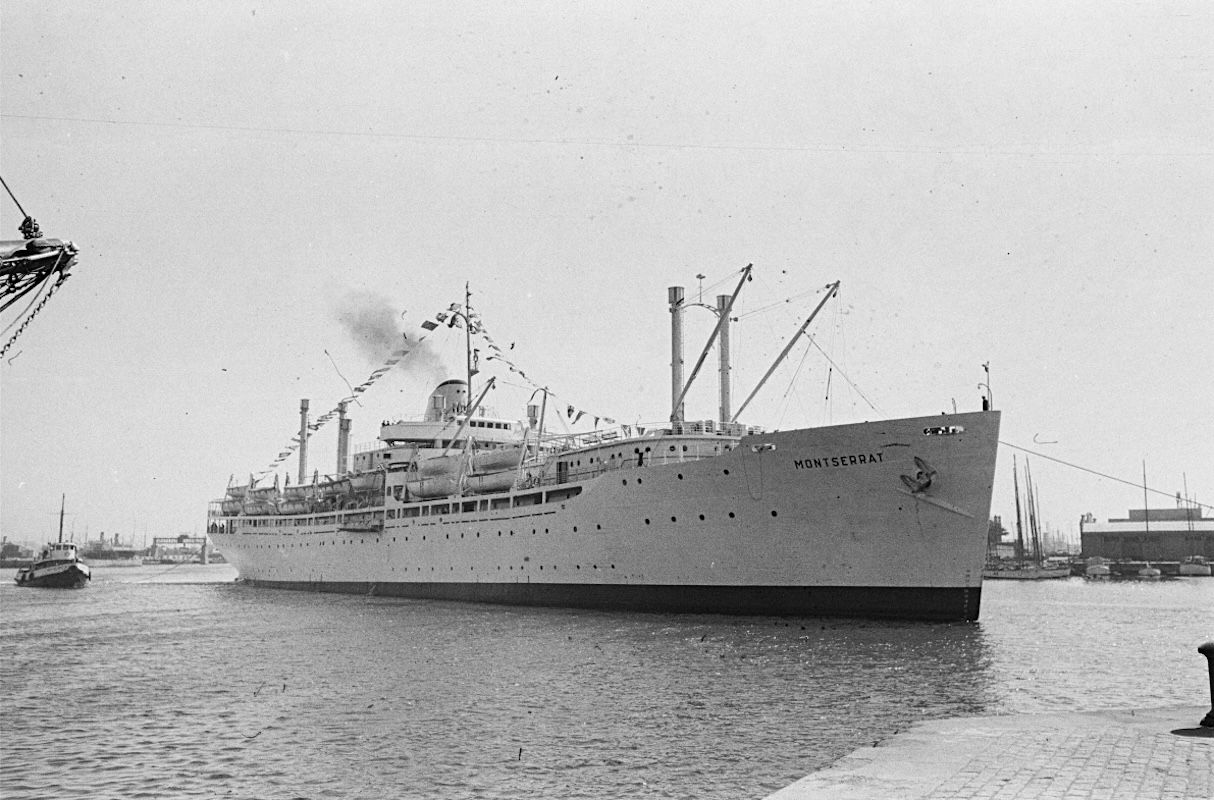
Upon his definitive return, at forty years old, he promoted a shipping company that would eventually become the Compañía Trasatlántica, participated in financial initiatives such as the Banco de Crédito Mercantil and promoted railway infrastructures linked to the Compañía del Norte, in addition to founding the Banco Hispano Colonial, from which he channeled part of his overseas investments.
With this economic framework and the institutional backing granted by the Marquisate of Comillas bestowed by Alfonso XII, López projected his activity towards Cuba and the Philippines, developing businesses linked, among other sectors, to tobacco. When in 1898 Spain lost its last colonies, the historical cycle that had fueled this economic model came to an end, and that same year, later converted into a figure laden with meaning, would end up giving its name to the hotel that today occupies this building and also to this chapter of the series.
This building, erected around 1880 by the architect Josep Oriol Mestres, corresponds to the typology of the urban palace with which the great bourgeoisie of the time made itself visible in the city. Also the author of the completion of the facade of Barcelona Cathedral, Mestres opted here for a sober and contained neoclassical language.
Organized around a central courtyard and articulated by a grand staircase that led to the main floor, the building concentrated on that level the halls where the social and economic life of the family took place. It was not so much about living (López y López lived in the neighboring Palau Moja) as about representing, at a time when La Rambla functioned as one of Barcelona's main urban showcases.
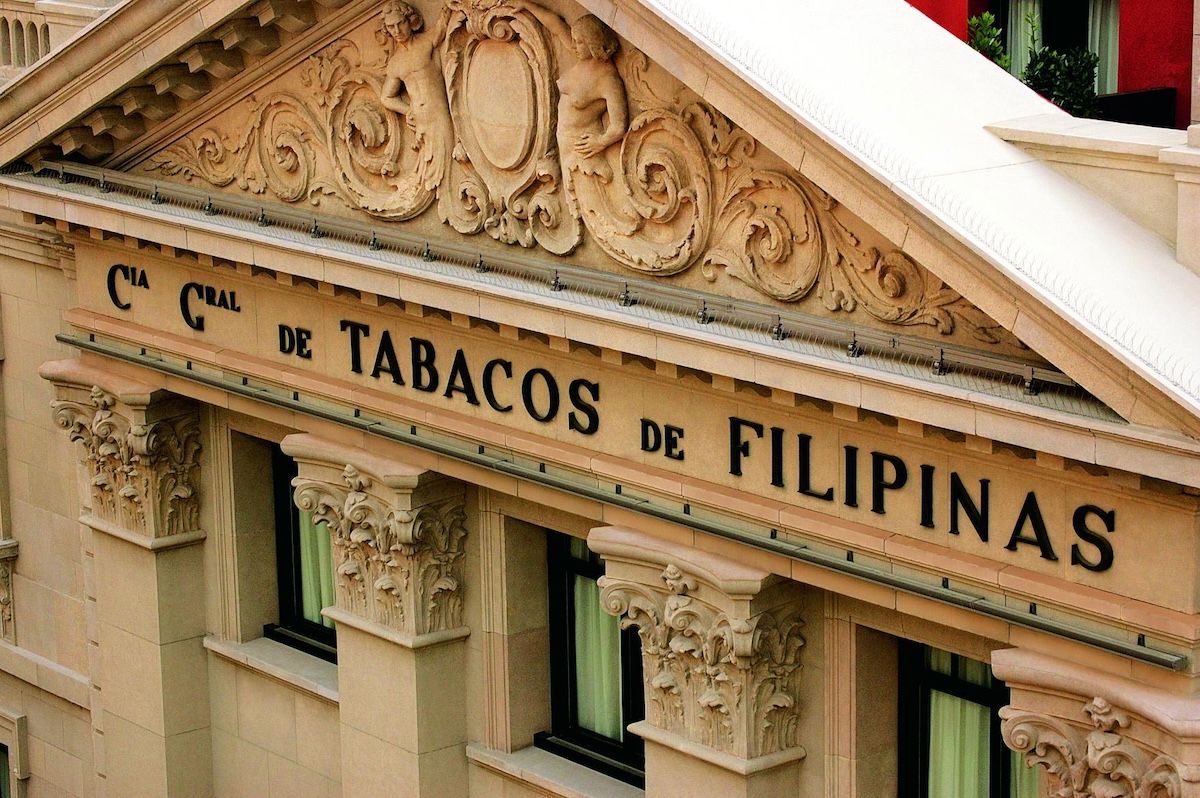
After López's death in 1883, the property remained in the hands of the family, especially his son Claudio López Bru, who inherited both the businesses and the need to adapt them to a changing context. In 1929, coinciding with the International Exposition, it became the property of the Compañía General de Tabacos de Filipinas, one of the main Spanish companies with a presence in Asia.
The adaptation to the new use implied a profound transformation. Under the direction of architects such as Josep María Sagnier, the large spaces were compartmentalized, new facades were opened towards streets like Xuclà, and the building adopted the logic of the office, with offices, meeting rooms, and administrative structures that had little to do with the original layout. For a good part of the 20th century, activities connecting Barcelona with the Philippines and other points in Southeast Asia were managed from here.
Among those who worked in its offices is the poet Jaime Gil de Biedma, who developed a career as an executive in the company while writing some of the most significant texts of 20th-century Spanish poetry. His presence introduces a curiosity into the history of the building, by placing in the same space and person the business logic and the critical gaze of someone who, from within, reflected on the bourgeois world to which he belonged.
In the previous chapter, we remembered Jordi Siracusa, the literary pseudonym of the director of the neighboring Manila hotel. Until his death, he maintained a blog and a magazine in which he mentions his admiration for the poet, whom he had the good fortune to meet at his hotel. Gil de Biedma only had to cross the street to have a drink, enjoy the music, and chat in the Camarote Granados of the Manila.
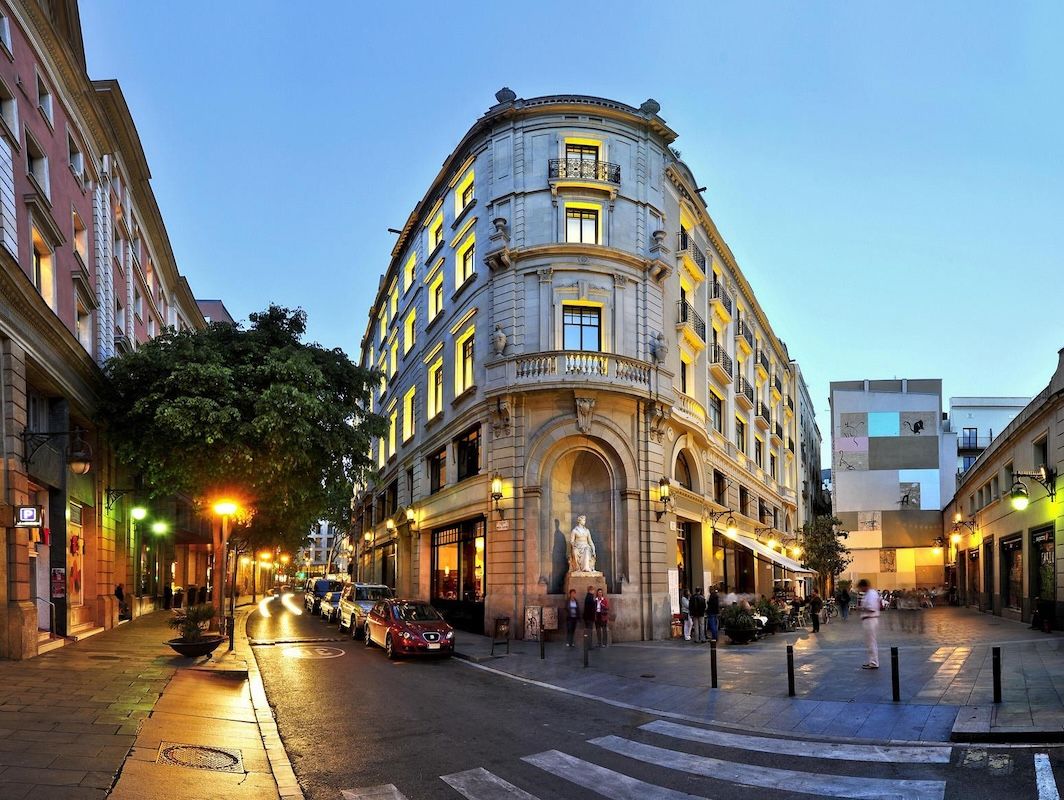
Over time, the building accumulated interventions and lost coherence. Like so many buildings in the center of Barcelona, it was fragmented into offices, housed different companies, and incorporated technical solutions that responded to the needs of each moment, progressively hiding its original architecture. At the end of the 20th century, its situation was that of many historic buildings in transforming urban contexts: too altered to be read as pure heritage and, at the same time, not very competitive against the demands of contemporary workspaces.
The intervention of the developer Núñez i Navarro in the early 2000s marked a new change of stage. Between 2003 and 2005, the building underwent a comprehensive rehabilitation, which meant, in practice, the recovery and renovation of a large part of its interior to adapt it to hotel use, preserving the main facade and some significant elements, although reconstructing most of its spaces. The result was the opening of Hotel 1898, whose name recovers that key year in Spanish history and, at the same time, in the building's own genealogy.
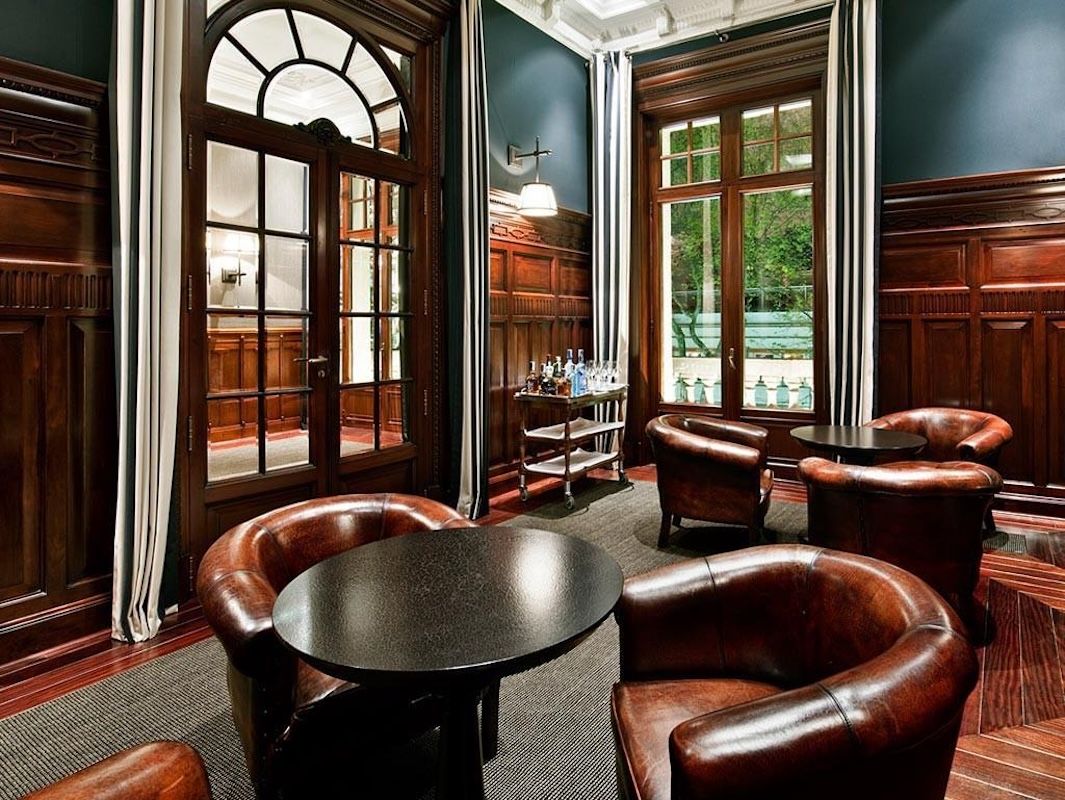
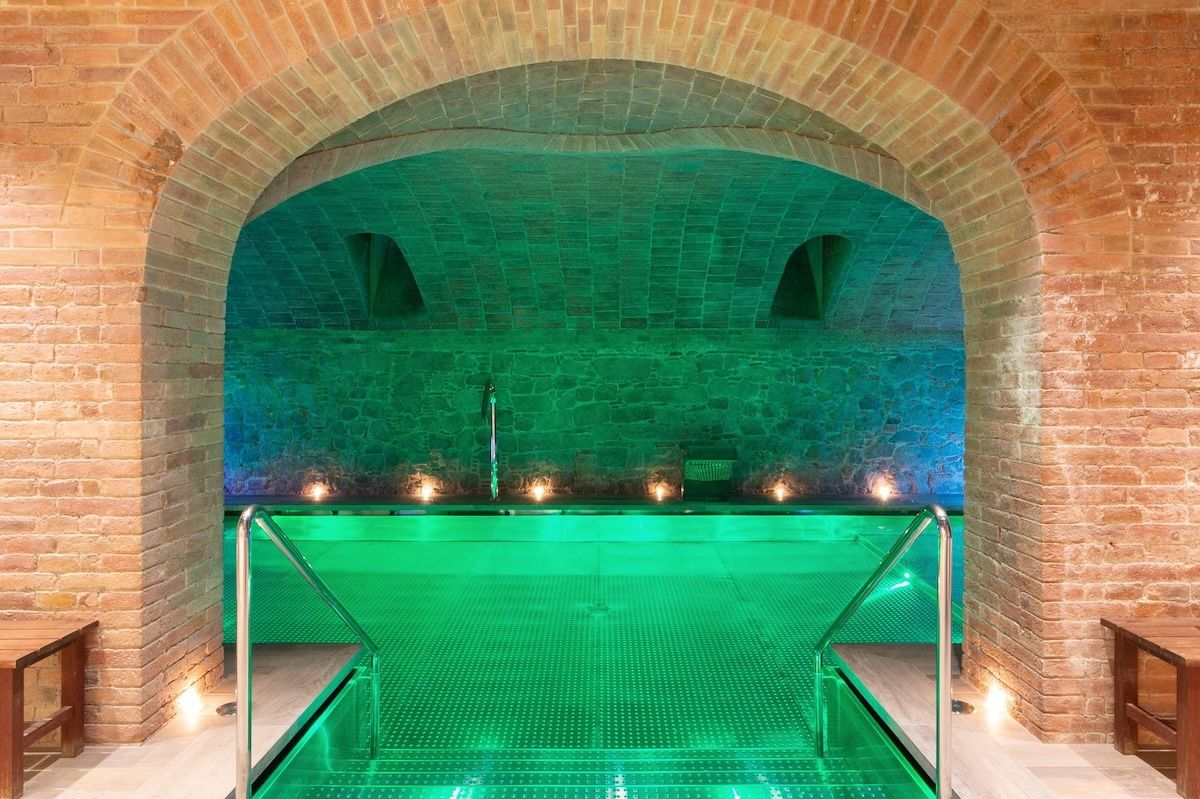
The current hotel, one of the 12 establishments of Núñez i Navarro's hotel division, proposes an interpretation of the colonial imaginary, visible in materials, atmospheres, and references that evoke the Philippine islands and the overseas world with an interesting collection of photos by María Espeus about that Asian archipelago. In this sense, more than a restoration, the intervention proposes a reinterpretation, in which the past becomes a story and an experience for those who spend a few days on the corner of La Rambla with Pintor Fortuny, enjoying the basement spa, the rooftop with a pool on its highest part, or the beautiful library dedicated to Gil de Biedma.
Perhaps that is why it is difficult not to perceive a certain continuity between the different stages of the building. The urban palace of an entrepreneur who consolidated his position through family and economic alliances gave way to the headquarters of a large company that operated on a global scale and, finally, to a hotel promoted by a development group whose own trajectory is also part of a logic of business relationships and shared opportunities. These are different contexts and different cities, although in all of them appears the same capacity to identify where value is generated and how to translate it into architecture.
Today, those who cross the threshold of H1898 do so without needing to know this history, although the building remains there, at La Rambla 109 and on the odd-numbered side of Pintor Fortuny, accumulating layers that go from colonial trade to global tourism and that, as happens with the absent statue in the square (in 1937 the figure of the marquis was also removed), only become visible when one decides to stop for a moment and look closely: on the pedestal it is still engraved "to López y López".
If one follows the topic with a little more attention, other less visible, more discreet, though equally persistent forms of continuity also appear. In the Official State Gazette number 276, of November 17, 2025, an announcement from the Ministry of the Presidency was published in which María de los Reyes Güell y Merry del Val requested succession as Marchioness of Comillas, with Grandee of Spain, after the death of her father, Juan Alfonso Güell y Martos. Since February of this year, she is the fifth Marchioness of Comillas.
Add The New Barcelona Post as your preferred Google source for free
Stay informed with the latest news.