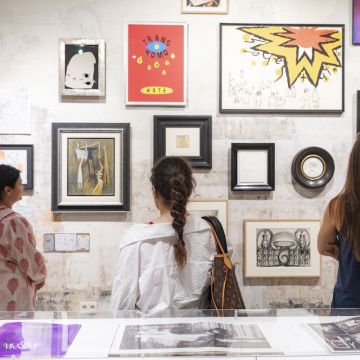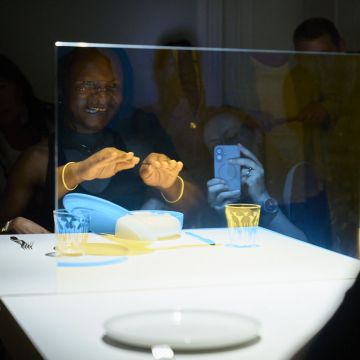
Just two minutes from Barcelona Cathedral, on the city's historic antiques street, Carrer de la Palla, stands a unique project that enriches the city's cultural landscape allows visitors to discover a private collection with a distinctive character and exceptional quality. Located in the old hospital for clerics of Sant Sever, the Hospital de St. Saver is the exhibition venue for the Casacuberta Marsans Collection, inaugurated in November 2024.
A hybrid between home and museum
The Hospital de St. Saver is a unique place: as soon as you enter, you feel it is a welcoming space, with history, perfectly restored, where the artworks speak for themselves, both individually and in conversation with one another.
The historic building, recovered and transformed into an exhibition space by the team of architects Garcés De Seta-Bonet between 2021 and 2023, is organised around a grand staircase that connects the three floors which also functions as an elevated viewing platform. Their intervention was both careful and respectful of the building's history, recovering its heritage value after decades of reforms that had deteriorated its original essence.
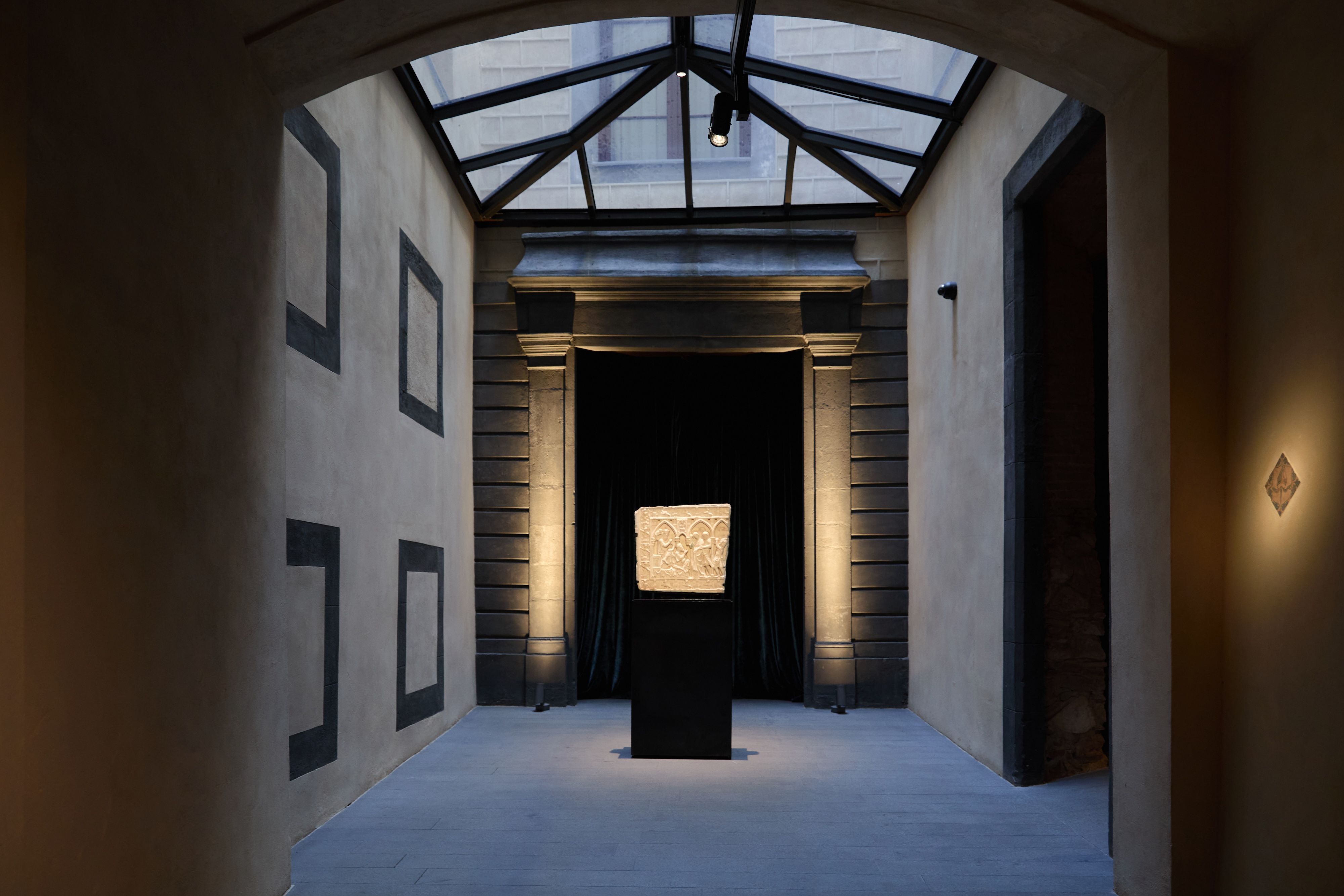
The Hospital de St. Saver is the exhibition venue for the Casacuberta Marsans Collection, inaugurated in November 2024. © Colección Casacuberta Marsans / Nereis Ferrer
A collection with its own character
In a world where many private and institutional collections resemble each other and acquire works by the same artists and from the same periods, the Casacuberta Marsans Collection cannot be seen anywhere else: it is unique. The Casacuberta Marsans Collection consists of more than 300 works, gathered over the years by the marriage of Fernando Casacuberta and Rosario (Coty) Marsans. The chronological scope of the collection ranges from the 12th century to the present day, and within this wide range of works, Hispano-Flemish painting and sculpture and painting from the turn of the twentieth century.
The collection is made up of highly significant works, but not necessarily from their best-known or most commercial period. A good example are the works by Joaquim Mir that we find upon entering the space. To the left, Les velles, two striking works portraying two elderly women with solemn faces, greet the visitor. Celia Querol, Collection manager, explains that "the Collection is particularly drawn to decadence, tenebrism, miserabilism, and also figuration. In periods of artistic modernity, the classical or figuration is usually chosen; the Mir paintings are unusual because they are human figuration, and at that time he was painting landscapes in Tarragona."
The works of Ramon Casas also illustrate this particular interest of the Collection. Upon entering, to the left, we can see Portrait of Elisa Casas. Widow of Josep Codina (1903), a widow with a solemn face, far from the Parisian scenes or the painter's more famous "Julias."
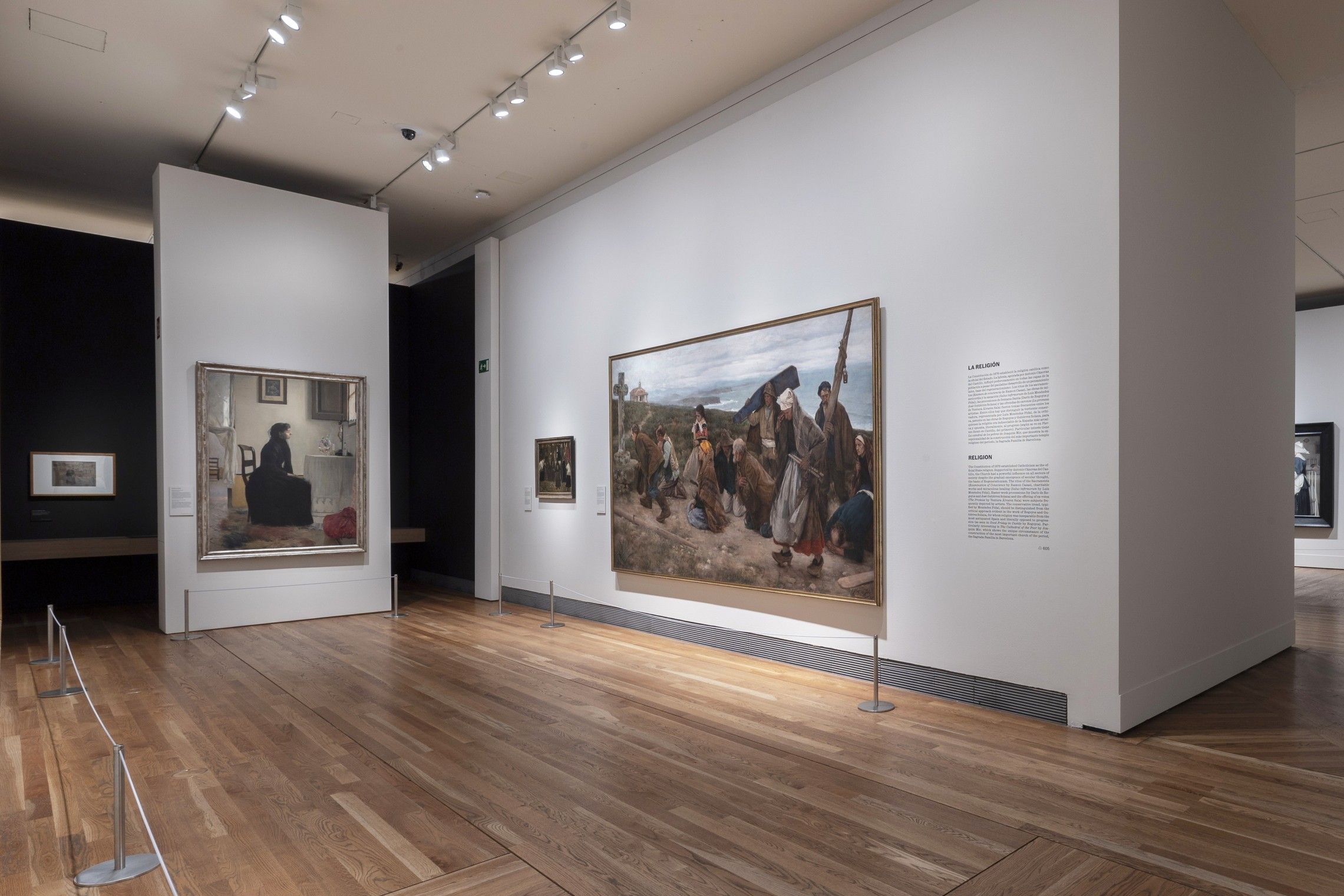
The idea of Black Spain is a recurring thread throughout the Collection, with works by Darío de Regoyos, Ignacio Zuloaga, José Gutiérrez Solana, or Isidre Nonell. When asked about this interest, Álvaro Casacuberta, the couple's youngest son and closely linked to the management of the space and the Collection, explains: "It often happens to us that there are specific stages of certain artists that, although from a stylistic point of view they are not the most commercial, we value enormously." As he points out, this interest arises from the study of the pieces themselves: "When we delve into their works, we discover that, even when they present greater aesthetic complexity, they become particularly compelling and have a profound meaning from a historical perspective."
They are interested in works that represent the the peak of their artistic development, those that highlight their author's great contribution to art history. This is the case of the masterpiece Billiard Players, painted in Paris by Josep de Togores in 1920, when the artist had a contract with the collector and dealer Daniel-Henry Kahnweiler, and was aligned with the new objectivity and Central European magical realism.
A reverse journey through art history
The marriage began by collecting works from the late 19th century, but over time, as dedication and study increased, the Collection also evolved. It was a chronologically inverted evolution: the desire to know the history surrounding the life and work of the authors led to the desire to shed light on works whose attribution remained unresolved, the field of attribution. Since then, the Collection embarked on a second path: first it made the leap to Gothic and Romanesque, leaving a chronological void in between, the one that goes from the Renaissance to the Baroque, which they have gradually begun to fill.
Behind each acquisition there is not a capricious or merely aesthetic impulse, but a commitment to research and the will to deepen our understanding of the works knowledge
Celia Querol explains: "It makes sense that the Collection has a large representation of the 19th century and the medieval period, since it is a collection that is in Barcelona and has more access to these periods, which were more important here; in contrast, the Baroque was more important in Madrid or Andalusia. Even so, it is also important to keep this era in mind." Behind each acquisition there is not a capricious or merely aesthetic impulse, but a commitment to research and the will to deepen our understanding of the works knowledge.
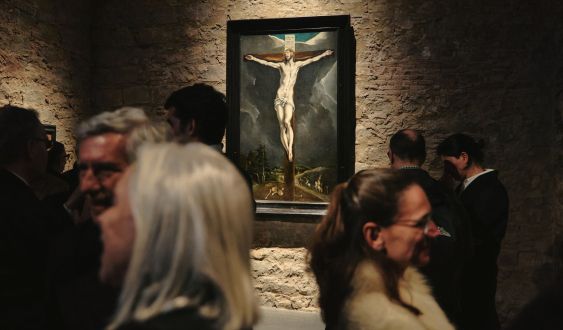
An example of these new additions, which precisely help to fill this gap between the two chronological extremes of the Casacuberta Marsans Collection, is the work Christ on the Cross (178 × 104 cm, 1585-1590) by El Greco. The painting was unveiled in March 2026 as part of the newly reinstalled display of the Collection, which brings together 46 works, most of them exhibited for the first time in this space. This work by El Greco is considered the earliest version of this typology and comes from the collection of the Marquis of la Motilla (Seville), it stands out for its quality, its autograph and its characteristic Cretan mannerism. This incorporation into the Collection and its exhibition in the Hospital of St. Saver raises the number of Grecos in Catalonia to eight, and presents an exceptional opportunity to see a work by the great master in Barcelona.
An ever-changing display: museography and loans
The mission of sharing the collection with the public goes beyond creating the headquarters in the Hospital of St. Saver, but they are one of the great lenders of works of art to museums and institutions around the world.
So far in 2026, more than 15 works have already been loaned for exhibitions. The criterion for accepting a loan, which is always free and means the work is absent from the display for a minimum of three or four months, is that the exhibition contributes to deepening the knowledge of the work or the artist's career. For this reason, the museography of the Hospital de St. Sever space is in constant transformation thanks to the high volume of loans, and there are even months in which between seven and eight object rotations have been made, to which must be added the annual review of the presentation of the collection. "We always try to favor these collaborations and support curatorial projects, because they are very enriching experiences," says Casacuberta.
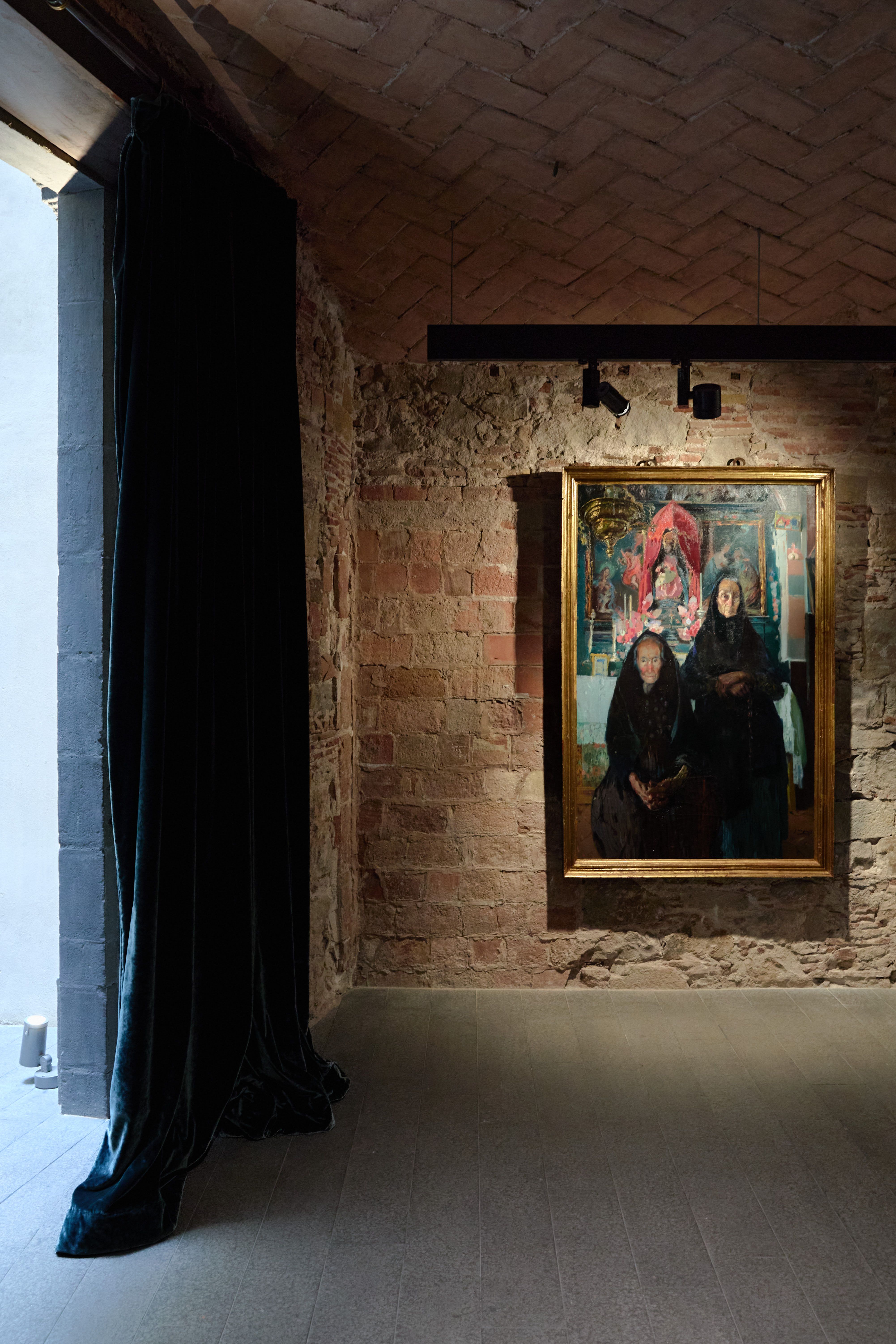
This collection is one of the major lenders of artworks to museums and institutions worldwide. © Colección Casacuberta Marsans / Nereis Ferrer
The aim is to help bring these artists to wider audiences and reinforce their visibility. For example, Examen de conciencia (1890), by Ramon Casas, and Procesión en Toledo (1905), by José Gutiérrez Solana, were loaned to the exhibition Arte y transformaciones sociales (1885-1910), presented at the Museo Nacional del Prado from May 21 to September 22, 2024, which offered a unique opportunity to approach artists' interpretations of the profound social transformation experienced in Spain between 1885 and 1910.
In addition, this October five works from the Collection will travel to Germany to be exhibited in Barcelona moderna. De Gaudí a Picasso, an exhibition on Catalan modernism between 1880 and 1914 that can be seen at the Kunsthalle in Munich and Barberini in Potsdam in 2026 and 2027. Helping to shape the understanding of Spanish art lies at the heart of the project, and Álvaro comments that the most beautiful and unique thing about the initiative is that they do not pretend to be an encyclopedia or a compilation of Spanish art: "We have no problem being seen as subjective, because we are". As they both point out, it is a hybrid between a private house and a museum that the public is fortunate to be able to visit.
Access to the Hospital de St. Sever is by prior reservation only. Visits are held on Mondays and Wednesdays at 11 am and 5 pm.
Add The New Barcelona Post as your preferred Google source for free
Stay informed with the latest news.