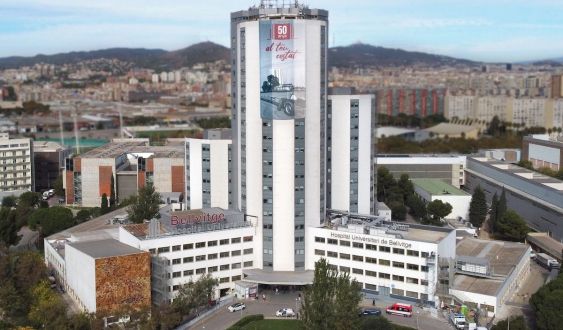
The Bellvitge University Hospital (HUB) is celebrating its 50th anniversary this year. The inauguration of the main building, on November 8, 1972, has been taken as a reference, although the healthcare complex started at half-speed and took years, until 1976, to incorporate specialties and occupy its 20 floors. Its history is one of overcoming adversity, built precariously on the outskirts of Barcelona and neglected by administrations, even more so with budget cuts. Despite everything, it is one of the most cutting-edge centers in the public healthcare system, and members of its daily life, such as nurse Dolors Carbonell and doctor Xavier Xiol, would not have wanted to work anywhere else.
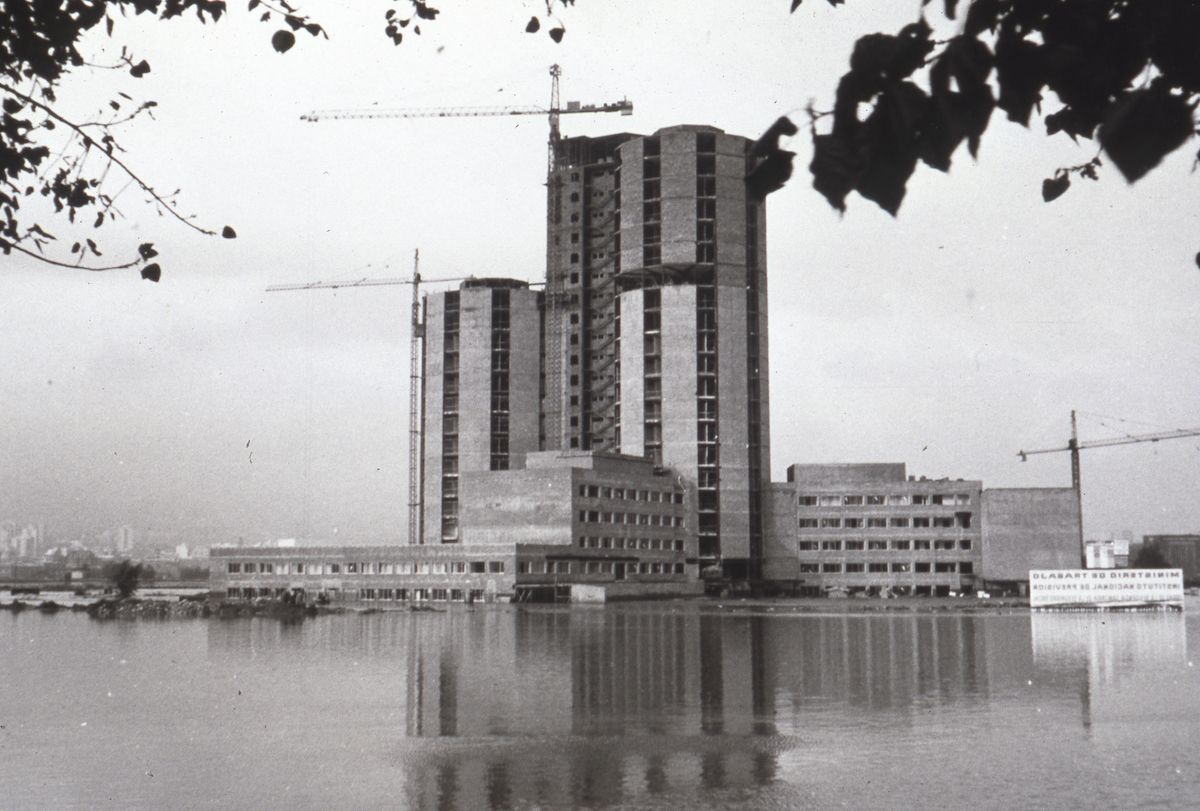
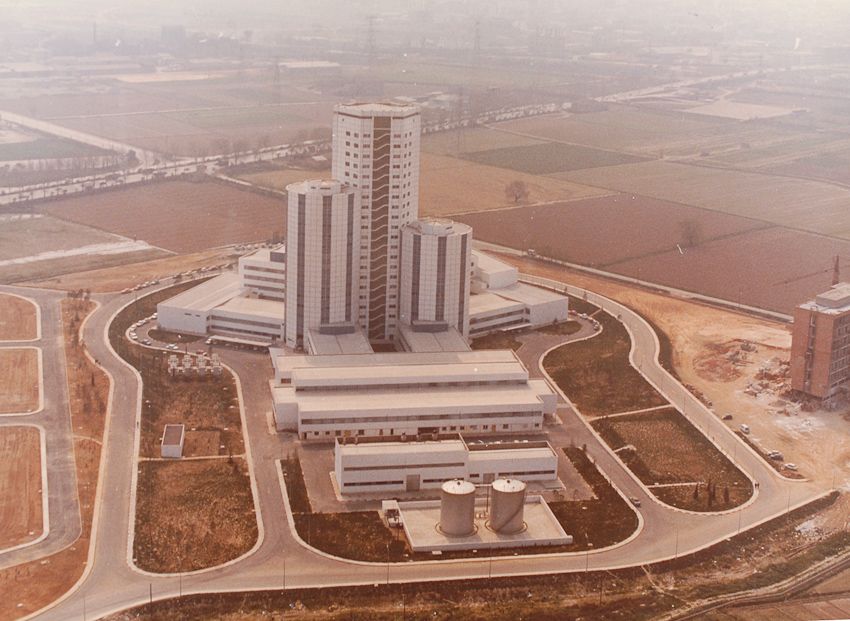
Bellvitge's beginnings were not easy. It was located on cultivated land next to the Llobregat river, previously scouted by Espanyol to build a football field. After arduous negotiations, it was purchased in 1969, at a price of 18 pesetas per square palm, for a total of 78 million pesetas (about 469,000 euros). Dragados y Construcción was the company in charge of the works, which were intended to be finished as soon as possible, considering that at that time the Social Security only had one reference hospital in Barcelona, Vall d'Hebron, and healthcare coverage for the city's population and its metropolitan area was deficient.
The harsh working conditions of the 500 laborers and 200 technicians involved in the hospital's construction, with shifts of more than ten hours, led to accidents, strikes, and dismissals. The 1971 flood did not help either, with a 1.3-meter deluge that collapsed the ground floor of the building under construction, forcing work to stop. The inauguration took place, nevertheless, in 1972, with few hospitalization units open and operating rooms in operation, and most of the accesses unpaved. It was presided over by King Juan Carlos and Queen Sofía, from whom the center was named, originally known as the Hospital Príncipes de España. It remained so until 2002, when it became the Bellvitge University Hospital. The main building still bears the original name.
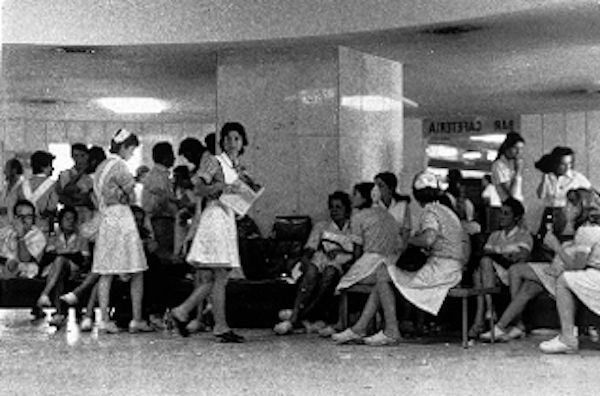
"Many things were missing, but we made up for them by helping each other," says Dolors Carbonell about the early years. She was one of the first nurses to arrive at Bellvitge, where she started working in 1973 and continued until 2015, spending many years on the night shift. Finding enough nurses was one of the hospital's first obstacles, especially considering the complications of accessing the premises ---"it was horrible," the professional remarks---, so a bus had to be enabled to bring workers from Plaza Espanya. They were on the verge of resorting to nuns, as other hospitals did. "It was a modern hospital," defends Dr. Xavier Xiol. And it ended up being one of the first Spanish centers to have male nurses on staff, although female nurses were made to wear dresses, aprons, and caps for many years. "The cap was very annoying. I would put it on at the entrance and then, on my floor, I would take it off. When we switched to scrubs, it was a big change," Carbonell points out.
Xiol, a liver disease specialist, had chosen Bellvitge attracted by the "good atmosphere" he had been told about, with a very young staff and everything to be done. Those were different times. Pay was low and hours were long, so, during night shifts, there were workers who would sell whatever they could, from cheese to clothes. "It was like a flea market," explains the doctor. From those long days, Xiol remembers that there was an ATS (technical health assistant), on the 16th floor, who brought a delicious dinner for everyone. "It was better than the hospital food," he remarks. If his memory serves him right, he was the father of the now world-renowned chef José Andrés.
Also in the early years of the hospital's life, the resident doctors' strike occurred. It was 1975, a key year for the history of contemporary Spain, and the interns of Bellvitge protested to improve their working conditions. The demands were happening all over the country, but in L'Hospitalet they gained strength. So much so that the center became known as the Red Hospital. The "grises" (grey police) settled in the hospital, establishing controls and tapping telephones. "I was afraid to go to work," Carbonell recounts. Almost all residents and also the staff who supported them were dismissed for sedition. They were not readmitted until 1976, after Franco's death. A welcome party was organized when they returned. To this day, according to the current hospital manager, Montserrat Figuerola, nothing of what happened in 1975 is recorded in the files of those involved in the conflict.
Despite everything, as Carbonell says, they overcame difficulties as a team and the hospital soon began to set the healthcare agenda. Born with a clear focus on surgery, in 1974, the hospital performed the first cornea transplant; in 1978, it performed the first kidney transplant, and, in 1984, it was the first in Spain to perform a liver transplant. "The surgical vocation has been maintained over the years and, currently, Bellvitge is recognized as a great surgical hospital for cancer, cardiac surgery, and neurosurgery. But it has also stood out as a transplant hospital, with the first liver transplant in 1984 or the first kidney transplant in an adult three years ago," emphasizes Figuerola.
As medical milestones occurred, the center improved in matters such as the arrival of public transport with the opening in 1989 of the Feixa Llarga metro station, of line 1, a name it kept until 2003, when it became Hospital de Bellvitge. "It was fantastic," Carbonell summarizes. One of the anecdotes Xiol remembers was that during the day the number of patients going to emergencies increased, but when the metro closed, they drastically decreased. In 1989, the darkest chapter in the center's history also occurred, the fall of one of its elevators, which caused the death of seven people, all of them relatives of admitted patients.
The years went by and, with the celebration of its 25th anniversary, the project for the expansion and modernization of the hospital began to take shape. It started in 2001, with the remodeling of the facade and the changing of windows of the large tower. Five years later, the new outpatient building, of more than 14,000 square meters, was inaugurated. It meant giving a respite to patient care in a hospital historically penalized by the lack of space. The discussed verticality characteristic of Bellvitge was also left behind. It was not exclusive to the L'Hospitalet center, as it was the architectural pattern that had marked the National Institute of Social Security. Not only was it impractical for patient transfer but it also generated reduced spaces with little natural light.
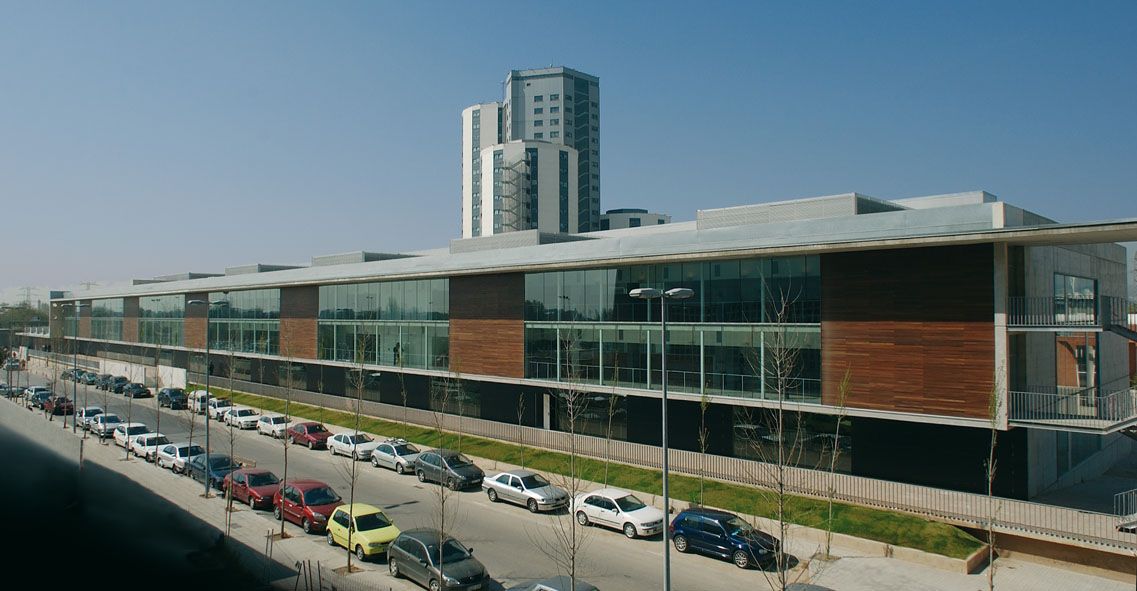
The expansion of Bellvitge was affected by the economic crisis and cuts. Many remember the protests of medical professionals, neighbors, and patients, with catheters included, who cut off the Gran Via every week to defend public and quality healthcare. "Bellvitge has always been a leader in demands," says Dolors Carbonell. The modernization project that began in early 2001 was delayed. The new technosurgical block, delivered in 2012, could not be used until 2014, with the opening of the emergency room on the ground floor. The inauguration of the complete building was staggered: at the end of 2018, the first floor, dedicated to digestive and respiratory endoscopy, was opened; and, in September 2019, 31 new operating rooms were put into operation. But it was not until October 2021, already in the midst of the pandemic, when this long process culminated, with the opening of the Cardiac Semicritical Patients Unit and a new pharmacy service.
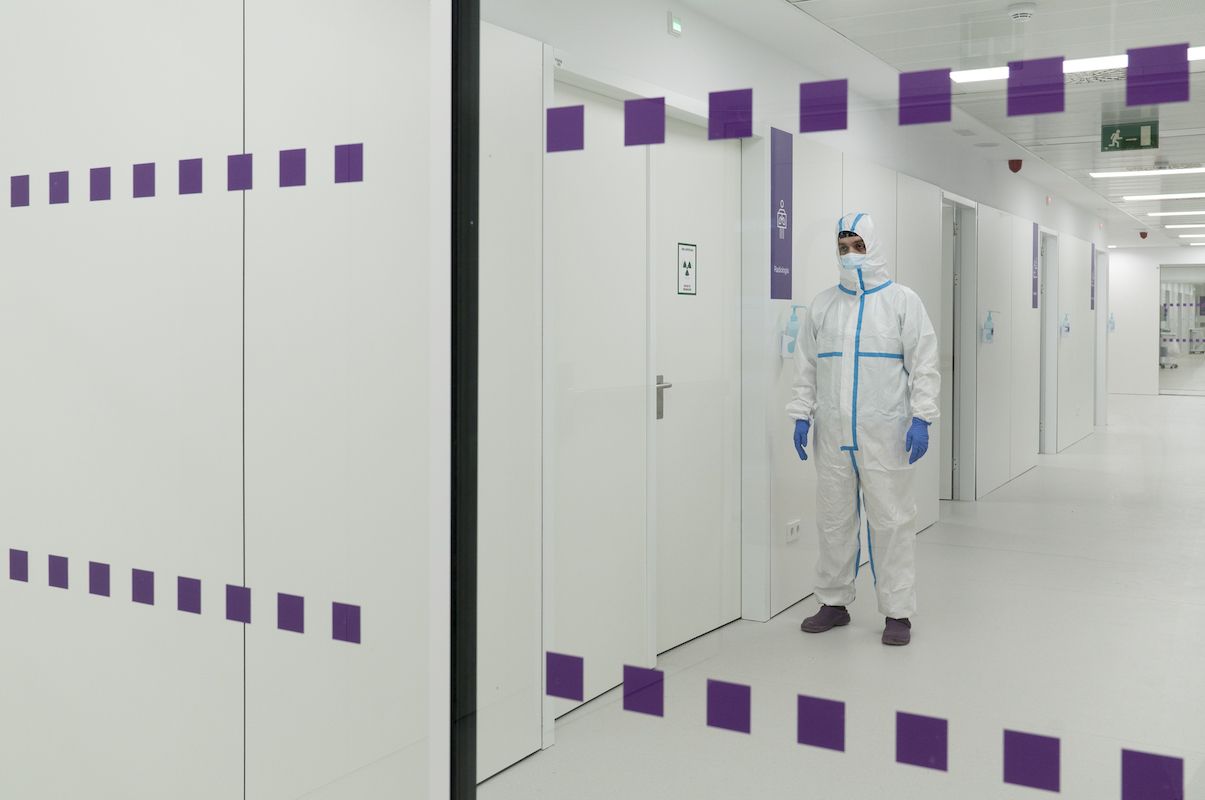
Completing this space coincided with the construction of an annex building to respond to the COVID crisis, connected to the same techno-surgical building by an elevated walkway. The Delta building was built in a record time of three months and 19 days, and was intended for semi-critical and emergency coronavirus patients. These were difficult times, especially for the profession, as Xavier Xiol emphasizes. He was already retired, but his wife was not. Isabel Català, a doctor in Pathological Anatomy, worked near the morgue. "Every day there were more dead," she explains of those days. After the pandemic, the facilities of the new block will be maintained, indicates the hospital manager, and will be dedicated to Neurology patients. "It is a modular and high-quality building. It has helped us gain more space," Figuerola stresses.
Future projects
This is not the only project Bellvitge has in mind for the coming years. As Figuerola indicates, the list is long and some initiatives are already taking shape. Among them, the renovation of the hospital's central building, concentrating hospitalizations on the lower floors and making them more modern. "The master plan is underway and has funding for the complete remodeling of floors 1 and 3. Floor 2 is already being renovated," details the manager. When the work is finished, the upper floors will be mainly dedicated to administration. The plan also contemplates the demolition of the Old School of Nursing for the construction of several pavilions intended for new hospitalization areas that will be connected to the main building.
The list of future projects is long and some initiatives are already taking shape, such as the renovation of floors 1, 2 and 3 of the central buildingAnother of the great hopes for the hospital isthe Urban Master Plan (PDU) of Gran Via, with which the aim is to boost the biomedical cluster around Bellvitge, burying the cars and facilitating the connection between the different agents present, as well as generating new spaces where companies can settlebiotechwho want to innovate hand in hand with medical professionals. "It's an opportunity for all the institutions in the area. A biocluster will not be built. The hospital, the IDIBELL research center, the Catalan Institute of Oncology (ICO), and the University of Barcelona (UB) are already here. Now we will be able to develop our shared vision," explains Figuerola.More in the short term, this very year, Bellvitge will open a High Precision Diagnostic Center.It will be the first public healthcare facility in Spain to bring together the two most powerful diagnostic imaging tools available: positron emission tomography (PET) —the use of a radioactive substance to detect a pathology in the body— with magnetic resonance imaging (MRI). This will mean an improvement in the diagnosis of tumors such as brain and gynecological tumors, and prostate cancer. It is expected to turn Bellvitge into a reference center for Southern Europe in the combined use of these technologies.
Add The New Barcelona Post as your preferred Google source for free
Stay informed with the latest news.
