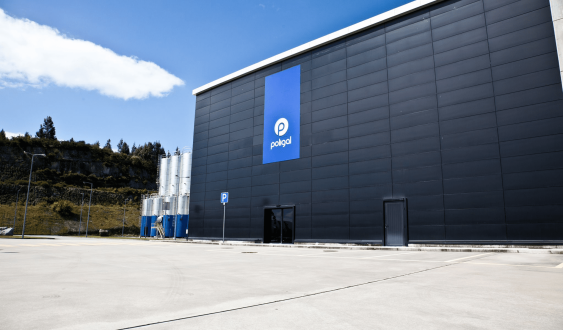
End of Grup Peralada's adventure in the packaging and plastic film industry. The company that owns Casino de Barcelona has sold to Oben Group the biaxially oriented polypropylene (BOPP) and cast polypropylene (CPP) factories it owns in Portugal and Poland, countries where it had concentrated Poligal's activity after the closure of the factory in Galicia. This type of flexible plastic is mainly used in the food sector, as it is the raw material used, for example, in potato or salad bags (BOPP) or in pasta or sliced bread packages (CPP).
According to Peralada, the sale of the Poligal group "occurs within the framework of a strategic reorientation" that involves concentrating on those businesses with greater potential "for value generation." The plastic business is very capital-intensive, as it requires constant investments in machinery and a broad geographical presence to be close to large packaging manufacturers. Furthermore, it is a sector that has undergone a progressive process of concentration worldwide, so Poligal had to compete with large international manufacturers.
For the Peruvian group Oben, the purchase allows it to jump to the European continent, where it previously had no industrial presence. With a production volume of 550,000 tons of plastic film, Oben is one of the leaders in the sector in Latin America, where it has factories in Peru, Chile, Argentina, Ecuador, Colombia, and El Salvador. Now it will also be able to operate from Portugal and Poland, in addition to taking over Poligal's commercial offices in Germany. In total, it takes on a workforce of 275 employees.
Poligal invoices around 80 million and was launched in 1991, when Arturo Suqué decided to diversify the group and start a plastic film factory in Narón (Galicia). Poligal grew in 2008 with the opening of a second factory in Arcos de Valdevez (Portugal) and in 2017 it made the leap to Poland, with a third factory. However, in 2019 the plant in Galicia, which had given rise to the company, was closed.
The CEO of Grup Peralada, Javier Carrasco, points out that the divestment comes after a "necessary strategic reflection" that has advised focusing efforts on the more traditional businesses of the Catalan family company, that is, gaming and wine production. These divisions, however, are also currently being severely punished as a consequence of the pandemic.
Peralada is the company that owns the casinos in Barcelona, Peralada, and Tarragona, in addition to controlling 50% of several casinos located in Argentina, Uruguay, and Chile. In the hotel and gastronomic sector, it owns the Hotel Peralada Wine Spa & Golf, the restaurant of Castell de Peralada, and Finca Mas Solers (Sant Pere de Ribes). Its wine division includes the wineries Castillo de Perelada, Grupo Chivite, Cims de Porrera, Casa Gran del Ciurana, Caves de l'Empordà (Cresta Rosa and Blanc Pescador), Celler Privat, and Oliver Conti, among other holdings. Before the pandemic, the company of brothers Javier, Miguel, and Isabel Suqué Mateu invoiced around 300 million euros per year.
The family also owns Hispano Suiza, a mythical car brand that has now been reborn with the launch of Carmen, a 100% electric high-end supercar with which the company wants to contribute to projecting the Barcelona brand and Catalonia's technological capacity to be at the forefront of electric car production.
Add The New Barcelona Post as your preferred Google source for free
Stay informed with the latest news.
