The world has stopped functioning under the premises we knew. Over the last decades, the rules-based international order, one that championed multilateralism and trade and offered a certain stability and security, even with all its shortcomings and contradictions, has imploded. Great powers today behave like schoolyard bullies, opening an era of open competition in which elements of coercion from other eras return, such as tariffs, control of supply chains, the use of finance as geoeconomic weapons, and even violence and aggression against their own citizens or neighboring and rival countries.
"We are living in a rupture, not a transition," very aptly declared the new Canadian Prime Minister Mark Carney at the recent edition of the World Economic Forum in Davos. A speech that was the antithesis of his neighbor Donald Trump. Carney claimed that it is not only possible, but necessary, to build an alternative order that integrates values such as human rights, sustainable development, solidarity, and sovereignty and territorial integrity. The Canadian premier also emphasized how middle powers, that is, medium-sized countries, are not powerless against great powers, calling for new forms of collaboration in a world that is shifting towards geopolitical fragmentation, the erosion of multilateralism, social polarization, and strategic competition between blocs.
Just as Carney declares that middle powers are an alternative to arrogant and autocratic great powers, new global cities are called to play a central role in the reconstruction of a new alternative global order. Urban reality is a global power in itself, both from an economic, social, and cultural point of view. Its power does not lie in hard power, economic or military, but through what Joseph Nye defined at the beginning of the 21st century as soft power ---soft power--- and above all smart power.
The contemporary history of the world shows that great global advances have occurred more through seduction and collaboration than through coercion. Values such as democracy, human rights, solidarity, and individual and collective opportunities have been the main levers of progress. Today, the challenge is once again to make them perceived as seductive and attractive levers, valuing their functional, material, and emotional benefits against the recipes of illiberal forces that opt for confrontation, polarization, or violence, which have obvious limits and contraindications.
If metropolises, and global cities in particular, have to be the territories from which to build the new coherences of a reconfigured world, cultural diplomacy emerges as one of their strategic tools. States, once leaders in deploying bold and sophisticated cultural diplomacy, are more concerned and occupied with the geopolitical woes of the new international disorder than with deploying empathetic and inclusive cultural engagement and activity. To this, we must add the prioritization of resources towards hard power instruments, such as security and defense, diminishing their capacity to deploy cultural cooperation or solidarity policies.
Around 14% of jobs in the city of Barcelona correspond to what we call creative industries.Culture, far from being seen as a dispensable expense in times of conflict and confrontation, should be considered a strategic ally. Studies such as the World Culture Report show with data, empirical evidence and real cases how culture is a strategic engine that contributes to resilience, social cohesion, economic innovation and urban identity. Investing in culture generates social and economic returns, maintains open channels of dialogue between different people, builds trust in the medium and long term, and allows for the construction of international legitimacy around certain shared values.

It is still necessary, however, to educate on what we understand by cultural diplomacy in 2026. It is no longer solely about artistic promotion activities, cultural exchanges, or the promotion of a country's image or a city's brand. Cultural diplomacy uses culture, knowledge, and shared values to influence, connect, and cooperate in an environment of systemic rivalry. It does so, whether through music, arts, or tangible or intangible heritage, as well as through education, science, language, or the production of thought to transmit memory, democratic values, or protect cultural rights. But it is also a lever for economic competitiveness and the generation of new opportunities and employment. As an example, around 14% of jobs in the city of Barcelona correspond to what we call creative industries.
Cultural diplomacy emerges as an essential asset for new global cities like Barcelona, both to generate development and shared prosperity and to build a common language in a polarized world. A tool to facilitate progress and encounter, respecting plurality and diversity without demanding explicit alignments. Cultural diplomacy facilitates conversations that are almost impossible today in formal diplomatic spheres. It does not deny conflict, but it can make it approachable, without pressure or impositions. A diplomacy that allows for the creation of personal and institutional ties and the generation of new shared symbolic and reputational capital.
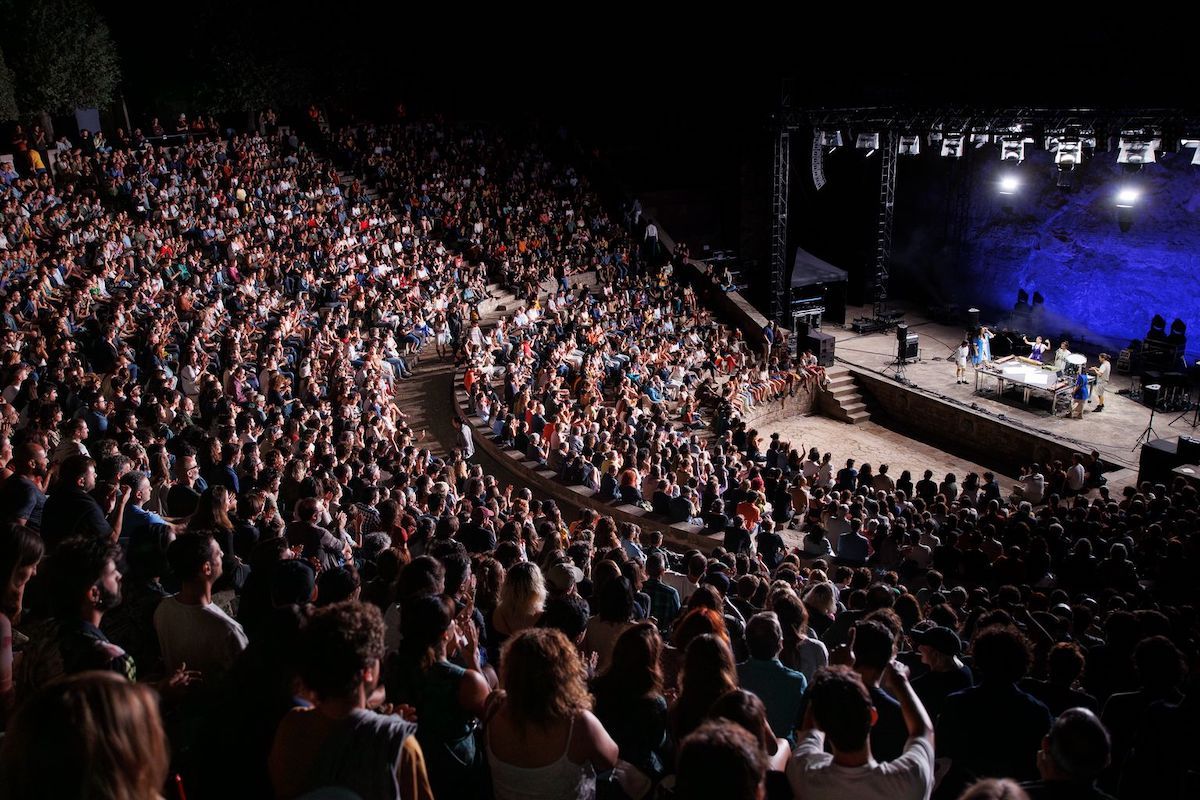
Unlike the temptations and dynamics of great powers, effective cultural diplomacy from a global city like Barcelona proposes but does not impose, does not simplify what is complex, does not engage in propaganda, but rather projects its ideas and values, and invites sincere and respectful dialogue from authenticity. Those metropolises that choose to invest in quality cultural institutions, whether public or independent, can have as much or more impact than the traditional diplomacy of many governments without the need to deploy military or economic power. Cultural diplomacy allows for the projection of new moral and symbolic leaderships that do not compete with governments, but rather overflow them with creativity, intercultural empathy, democratic resilience, and social cooperation.
That may well be the case for Barcelona and Catalonia. Through its cultural foundations, museums and archives, its universities, music festivals, educational networks, and its public diplomacy as the headquarters of the main networks of cities in the world such as UCLG, Metropolis, Eurocities, MED Cités, or the UNESCO global network of Educating Cities, it can deploy a strategic investment in generating local and global trust. A form of value-based leadership that allows for the reconstruction of historical, ethical, and moral legitimacy to put it at the service of building a new global order. None of this will be easy, but we cannot afford the luxury of not trying.
Add The New Barcelona Post as your preferred Google source for free
Stay informed with the latest news.