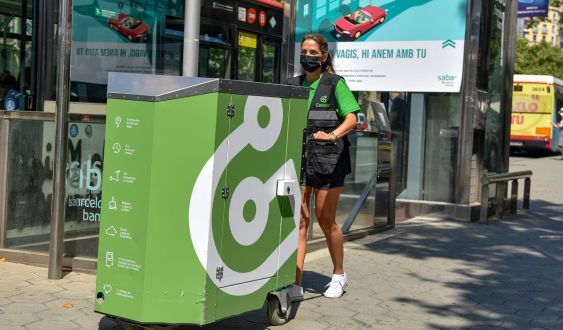
At the end of April, it was announced that Saba, specialized in parking management, was acquiring a stake in Geever, a company dedicated to last-mile delivery. The two companies have been collaborating for years, but Saba wanted to take a step forward with this alliance in its strategy to offer new services in parking lots, which already include sharing, personal mobility, electric vehicle charging, and lockers for order pickup.
This Friday, the terms of this agreement have been finalized. In the new shareholding, Saba has reached 51% of Geever; the logistics company Districenter, 41%; and Geever's CEO, Pere Roca, 8%. Likewise, Geever's new board of directors incorporates Saba's chairman, Salvador Alemany, as chairman.
The agreement has involved an initial capital increase of 1.3 million euros, which will be complemented by further future contributions. The first capital injection is intended to support the expansion that Geever plans to achieve in the short term. The company expects to double the number of orders it registered last year in 2021, with 251,222 deliveries, which generated a turnover of 480,000 euros. Among its current clients are Mango, Nespresso, CaixaBank, and the transport company A tu hora express, which works for Amazon, Zalando, and Zara.
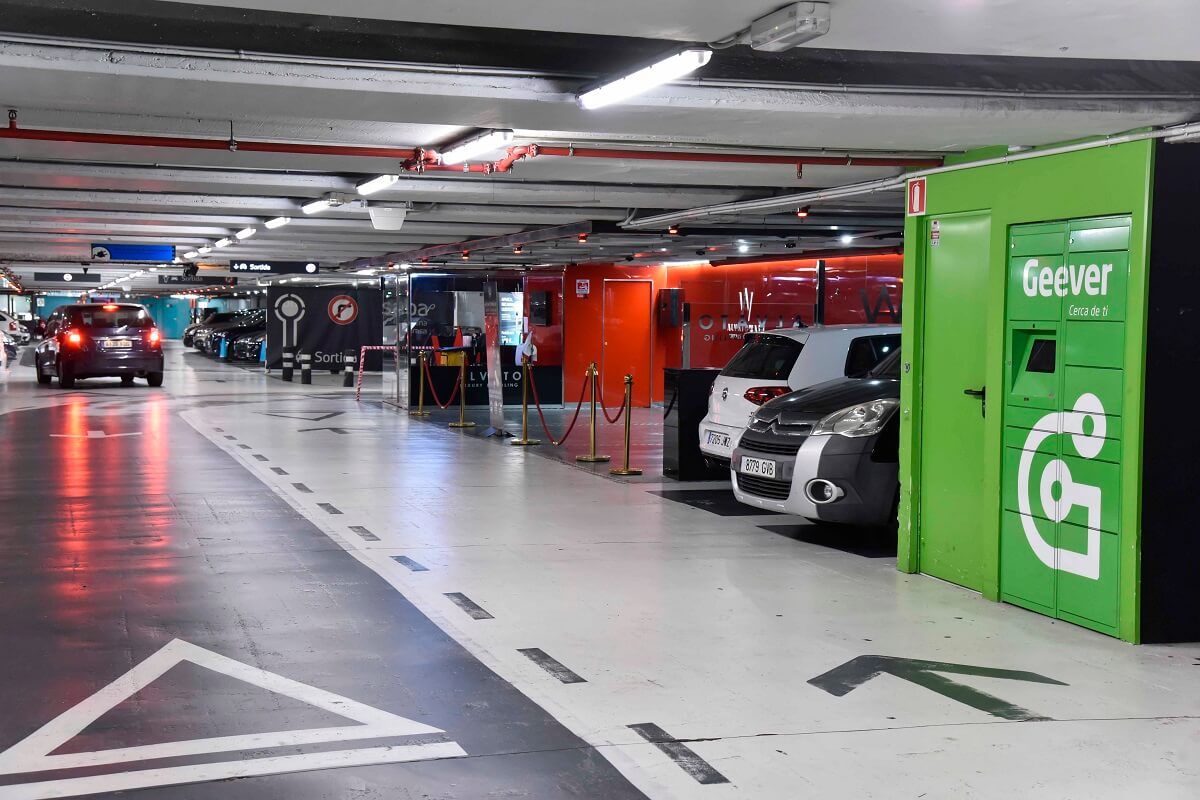
Likewise, Geever's presence in Barcelona will be strengthened. Currently, its network of distribution points consists of 17 Saba, Bimsa, and B:SM parking lots, and 22 storage units. Its goal is to reach 60 points, all of which will be parking lots. The company's future plans include expanding to more capitals, such as Madrid, Valencia, and Seville, but also in the Barcelona metropolitan area and second-tier cities in Catalonia. One of the characteristics these locations will need to have is the presence of more than one Saba parking lot.
Parking lots considered as small urban hubs
The rise of e-commerce, intensified by the pandemic, has filled cities with vans delivering packages at any time of day. Faced with this situation, companies like Barcelona-based Geever want to promote another delivery model that reduces congestion and is more sustainable. Geever's differentiating feature is the incorporation of parking lots as small urban hubs from which to deliver in the last mile.
Specifically, its operation begins at its facilities in the Free Zone, where it sorts packages starting at 10:00 PM. Once this phase is completed, packages enter the city and arrive at parking lots before 5:00 AM, to avoid coinciding with peak hours. When the packages are already in the parking lots, Geever delivery drivers travel on foot or in small electric vehicles within their area of influence, which has a radius of about 750 meters.
This model allows for a 90% reduction in the kilometers traveled by vans ---they only go from the Free Zone to the parking lots---, and a 75% reduction in emissions. Its proximity also means a 10% reduction in failed deliveries, that is, those in which the delivery driver does not find the recipient at home. These unsuccessful trips reach up to nine million in Barcelona and Madrid alone.
Delivery drivers are employed
Unlike other delivery platforms, Geever employs its delivery drivers, who form the bulk of its team, currently made up of about sixty workers. The company's expansion plans include incorporating more staff. In the presentation of the agreement, Roca pointed out that they also want to hire people with disabilities for delivery, as other companies such as Barcelona-based Apunts do.
Add The New Barcelona Post as your preferred Google source for free
Stay informed with the latest news.
