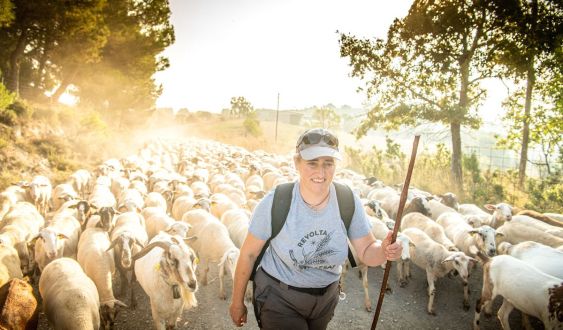
More and more, gastronomy lovers seek to go a step further: not only to taste what comes from the earth, but to see how it is cultivated, raised, and transformed. For this reason, farmhouses, farms, and local producer projects have become authentic centers of discovery, where producers share their daily lives and open their doors to families and curious people who want to reconnect with the rural essence.
These spaces are much more than livestock or agricultural farms: they are community, landscape, and living craft. To discover it firsthand, we propose a route through different charming corners and a very special village in the regions of Barcelona, where you can delve into the world of local producers, taste their products, and learn stories that unite roots and creativity.
Cal Serrats and Mas Buret, two experiences to live the Anoia
Among these farmhouses that open their doors we find Cal Serrats, a family business in Argençola that since 1993 combines agriculture and livestock applying ecological criteria. Josep Maria Taixé and Gemma Clarena are in charge and continue an adventure started by grandfather Pere, with a flock of 600 sheep and 15 goats that graze freely through the fields and forests of their surroundings.
In addition to selling lamb raised naturally and with access to pasture, they have turned their farmhouse into a living space that invites visitors to get to know the rural world up close. They do this through visits and activities such as The Shepherd's Morning, which allows visitors to see how lambs are raised, learn to milk goats, walk among the flocks with the help of a dog, and understand how shepherds work in harmony with nature.
"Raising with access to pasture provides us with incomparable meat, and we want visitors to see and understand it in person," explains Clarena. "That's why we offer experiences that provide a dose of reality: direct contact with the rural world of inland Catalonia, little known and without the bucolicism with which life in the countryside is often painted." And she adds: "We recommend it to reconnect with the origin of high-quality food and with the rootedness to the land that sustains us."

Also in Anoia, the farmhouse Mas Buret hosts a family beekeeping project that today manages some 300 beehives. Their honey is artisanal, from harvesting to packaging, without mixtures or chemicals. Those who want to delve into this universe can book a guided tour to discover the life of bees up close and observe the beehives and the process of honey extraction and packaging. The experience culminates with a tasting of different varieties of Mas Buret honey, a sweet proposal that connects with the patient work of caring for the land flower by flower and hive by hive.
The universe of artisan cheese in Alt Penedès with Xerigots
Xerigots is a project dedicated to spreading cheese culture through activities that invite to explore the aromas, flavors and stories hidden behind each piece. Installed in an old 19th-century winery in Vilafranca del Penedès, they offer tastings, pairings and visits that bring artisan cheese closer to anyone who truly wants to discover it.

"The wines we serve are always from the territory and we select artisan cheeses from all over Europe to bring them to their optimal point of consumption, especially thinking of the hospitality sector", explains Gemma Urgell, co-founder of the initiative. Their star proposal is the Vespreig, a cheese and wine tasting held every Thursday, and they also offer the Visita y comida de quesos (Cheese Visit and Meal), which includes a tour of the facilities and a tasting on Fridays and Saturdays.
In addition, one Wednesday a month they schedule special activities, such as the competition for the best cheesecake in Catalonia or paired Grenache sessions. They also collaborate with the castellers and organize solidarity tastings, whose profits go to the Rebost Solidari de Vilafranca. "Our goal is to spread the culture of artisan cheese and ensure that restaurants integrate it as a valuable gastronomic product", concludes Urgell.
Bauma de les Deveses: wild vineyard and biodiversity in Berguedà
In 2015, Joan Rubió, Carles Flaquer, and Imma Espel launched Bauma de les Devesesin Sant Julià de Cerdanyola with the idea of recovering small abandoned terraces and planting vines. They rebuilt dry stone walls, prepared the land and, surrounded by a unique Mediterranean holm oak forest, began to transform the landscape.Over time, the project has become a living space where nature and cultivation go hand in hand. "I think it's important to get to know the plants in our environment again, to know which ones are edible and how to use them for their medicinal properties," explains Espel. "It's very ancient knowledge that we have been neglecting and that we need to recover."
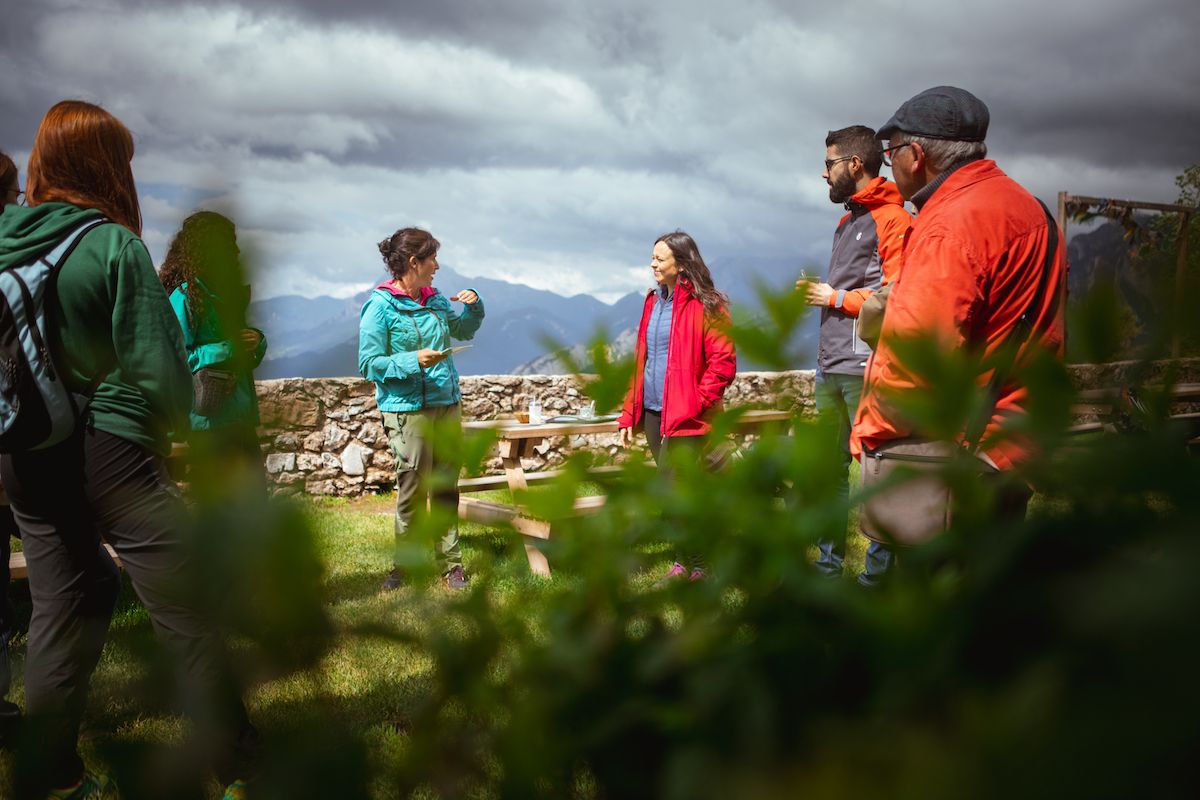
Throughout the year, Bauma de les Deveses organizes activities for small groups with prior reservation, such as the Natural First Aid Kit Workshop, the Perfumes with Essential Oils Workshop, or the Artisanal Liqueurs Workshop, scheduled for September and October. One of the most requested, the Ratafia Workshop, can only be held when there are green walnuts, as it depends entirely on the natural cycle.
Ratafia Bosch and the Centelles Fair: essence of Osona in a sip
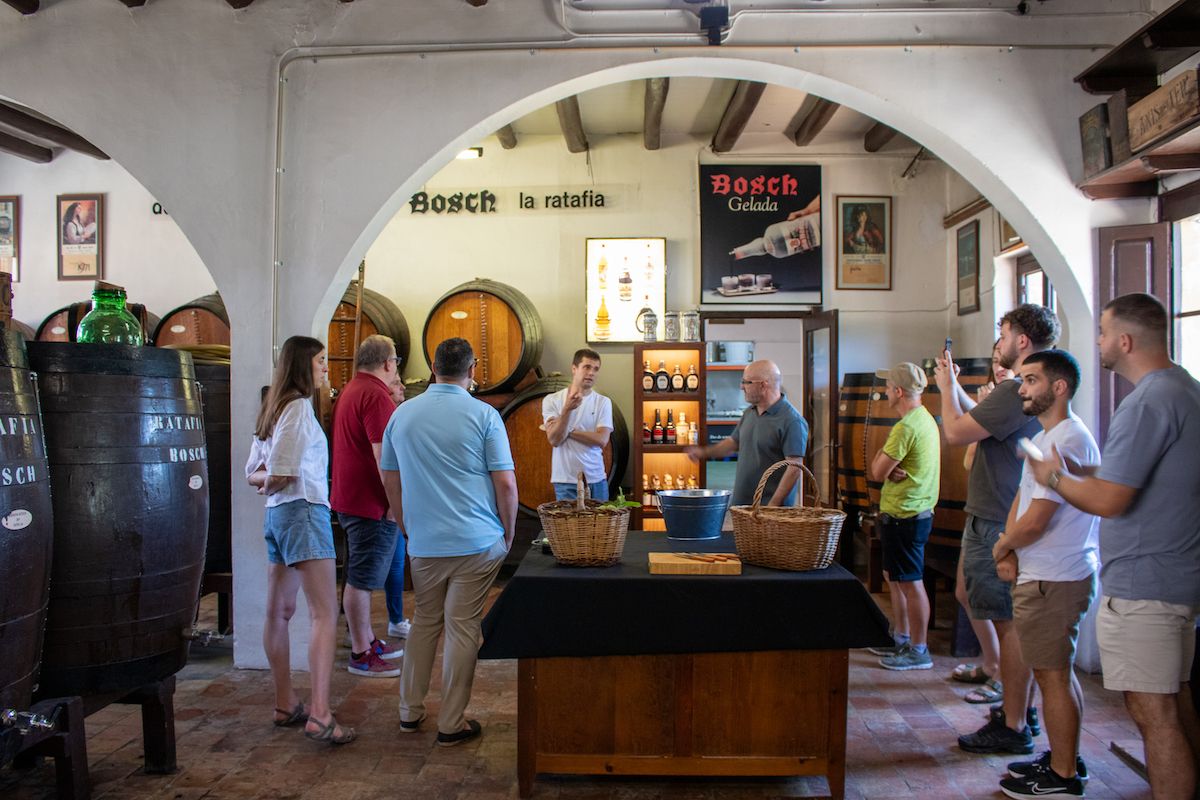
In 1892, Faustí Bosch founded the distillery Ratafia Bosch in Sant Quirze de Besora with a family recipe passed down from generation to generation. Since then, in this corner of Osona, a way of making liqueurs has been kept alive that combines patience, aromatic herbs, and a long aging process in oak barrels.Visiting the distillery is like taking a trip back in time: walking among centuries-old walls that have seen thousands of liters of ratafia macerate, breathing the sweet and spicy aroma of the herbs, and ending with a tasting that explains why this liquor is an emblematic product of the region. Every first Saturday of the month, the house opens its doors with guided tours to share its history and flavor.
A few kilometers away, the Centelles Ratafia Fair gathers producers, enthusiasts, and curious visitors every June in an event that is already part of Osona's festive calendar. The streets fill with aromas and stalls where you can taste homemade ratafias, learn to recognize medicinal plants, and discover recipes passed down from generation to generation. It is a celebration that combines tastings, workshops, and activities, showing the vitality and creativity surrounding this liquor.
Rural tourism and agritourism in Bages and Berguedà
Another way to delve into this authentic discovery is visit towns like Mura, in the Sant Llorenç del Munt i l'Obac Natural Park. Recognized by UN Tourism as one of the Best Tourist Villages in the World, it stands out for its cobbled streets, its stone houses, and a privileged natural environment. Walking through it is reconnecting with the rural essence: natural springs, Romanesque hermitages, and routes that connect with nature, all accompanied by a local gastronomic offer. Mura offers local organic markets on the first Saturday of each month and hosts celebrations such as the Festa de batre el cigronet, which keeps alive the memory of ancient agricultural trades.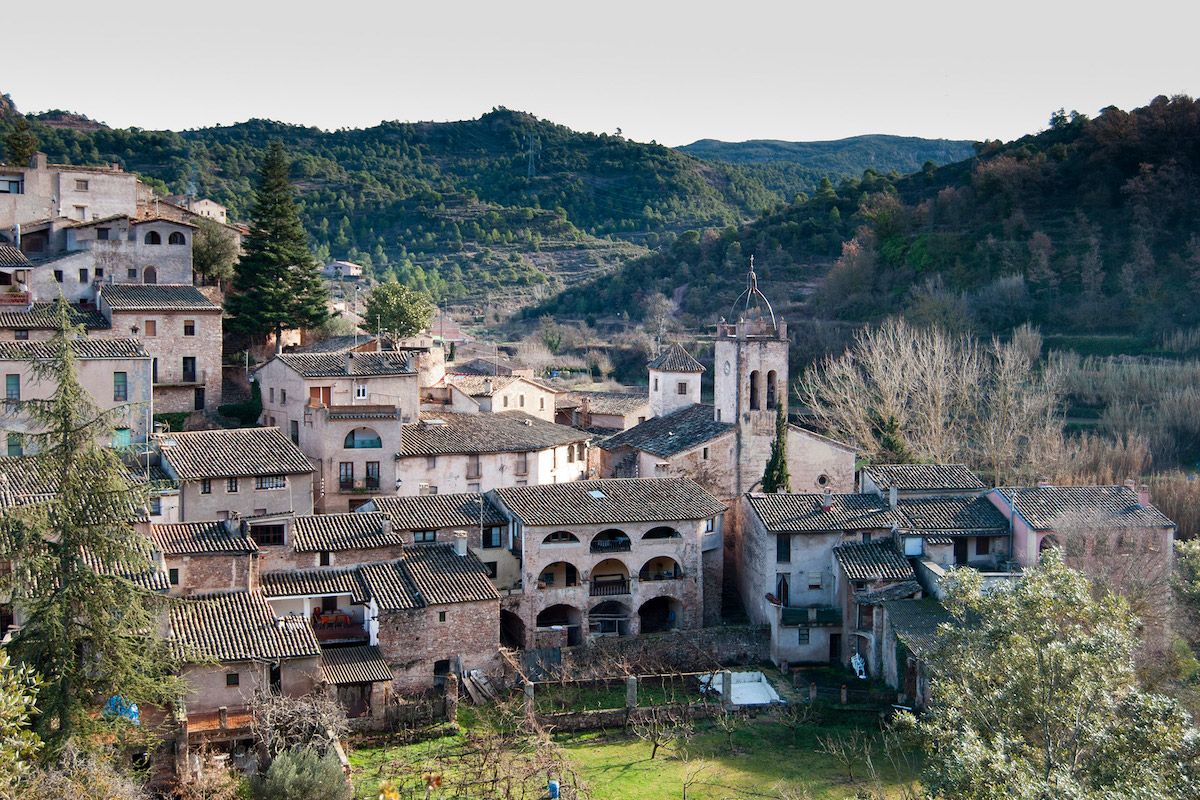
And if what you are looking for is to go beyond the visit and experience the daily life of the countryside up close, rural tourism and agritourism become ideal options. In Berguedà, the farmhouse La Rovira combines cereal and fodder fields with herds of cattle, pigs, and chickens. "We are farmers and ranchers and we process the meat of our animals to create 100% artisanal products," explains Marc Rovira. "We have a restaurant where you can taste everything we make and, in addition, we offer accommodation in our rural house, with routes and guided tours to show our work."
From the tranquility of Mura's cobbled streets to the authenticity of life in La Rovira, these proposals draw an itinerary that connects nature, gastronomy, and tradition with a responsible and respectful approach. A clear invitation to leave the city and discover the regions of Barcelona at a different pace.
More information at:
www.barcelonaesmoltmes.cat/es/vinos-bodegas
www.barcelonaesmoltmes.cat/es/gastronomia
Add The New Barcelona Post as your preferred Google source for free
Stay informed with the latest news.