
This same week, the happy contingency of Barcelona's musical programming has brought together two transcendent concerts at the Palau de la Música where I have equally enjoyed the new and the old. First was the premiere of the happy conjunction between the saxophone quartet Kebyart and the Cor Cererols, two ensembles with a long way to go –from 2014 and 2018, respectively– made up of already mature artists from the millennial generation (with some more veteran voices). We must celebrate this happy encounter between musicians whom we would do well to no longer label as "young" (the urge to infantilize is one of the cruelest tics of this tribe), as their relationship with the sound material already has much wisdom behind it. Following in the wake of the Hilliard/Garbarek family, this new happy troop has doubled down on a magnificent concert that could lead to anthology albums.
I met Marc Díaz a long time ago and in the eyes of that young singer, one could already intuit the sparks of a future remarkable conductor. The dust between the Kebyart and the Cererols has grace because, to the more rogue gesture of the ESMUC school, the usual Montserratine rigor is added. Tremendously in favor. From the concert, I keep the versions of Mendelssohn (Trauergesang Op. 116) and Reger (Nachtlied Op. 138, no. 3), first-world interpretations that could compete with any Teutonic ensemble. To shoot Bach as God intended, there is still much work to be done and, given that the experiment works, the two ensembles would do well to commission more original work from our composers (thus, incidentally, we would save ourselves from insufferable bores like Giya Kancheli's showy Amao Omi). But all this is nonsense, because here the holy news is that the experiment works and fits very well.
In fact, if any music programmers or some wealthy gentleman who wants to do something for the country (beyond watching his heirs absurdly squander his patrimony) read me, I formally ask them to hire this magnificent concert by Kebyart/Cererols and give them some money so they can expand their repertoire. Against what the nostalgic say, the generations born from the 90s onwards and also the younger ones (keep an eye and ear on the Música Z cycle that the Barcelona City Council has initiated in one of its unheard-of, minimally intelligent cultural bets) are giving us artistic projects that look very promising. Whoever thinks that everything in the past was better, in the Catalan musical aspect, is mistaken. Now it only remains for public facilities to get their act together and honor our musicians. That this happens more in the Palau than elsewhere makes us think a lot.
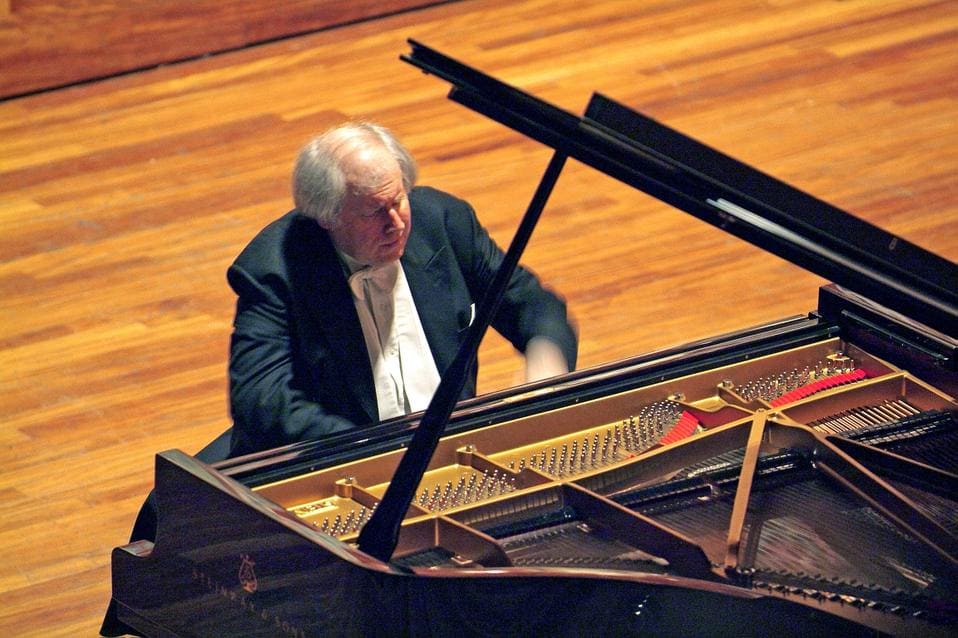
The dust between Kebyart and Cererols is funny because, to the most roguish gesture of the ESMUC school, the usual Montserratine rigor is added"The new exalts me but the old also enamors me" (I had sworn not to quote the phrase, what can we do), and that's how the day after this concert I rushed to the usual appointment at the Palau with the pianist Sokolov. As predictable as it may be, ecstasy is something we must celebrate. Many music lovers were surprised by the program, with a first part entirely dedicated to a seemingly minor repertoire such as Purcell's. But they know little about the beast, because the Russian pianist took advantage of the musical fabric of the suites and melodies of the Westminster genius to crack a single digression in a continuum of pleasure. We may have heard a thousand times the glassy sound of this genius (who still surprises with his effigy of a spa waiter absolutely indifferent to the audience's orgasm), but we are still left speechless thinking about where that percussive keyboard magic comes from, with embroideries of authentic steel.
Purcell's was very beautiful (Sokolov even got a little lost during the Round 0, in D minor, Z. T. 684), but what he did with the Andante cantabile from Mozart's K. 333/315c was out of this world. The Commendatore from Don Giovanni appeared on stage more than once in a low register overflowing with simply delirious harmonics. Not a single piece of nonsense. Not a single effeminate gesture. On the contrary, when the pianist sensed that we might enjoy a melody too much, he would already move on to the next without restraint. Long live Russia despite the attacks of that pesao Putin! How can one play Mozart like this? What a beast. And yes, as you can imagine, once the program finished, a new edition of "Sokolov's third parts" began. And then "fot-li" Brahms, and bring me a little Rach, and "tomba que gira". Seventy-two years old and with the energy of the first day.
The Palau would do well to reserve a soundproofed space for musicians like myself who, in concerts like this, suffer terribly to remain politely seated in the armchair. Because what happened the other day requires a football grandstand, where one can jump for joy, writhe in pain, and even curse providence before a musician who does inexplicable things. I hope they put it in soon, because for me "m'exalta el vell i m'enamora el nou".
Add The New Barcelona Post as your preferred Google source for free
Stay informed with the latest news.