From neighborhood factory to multinational: Damm's trace in Barcelona

Antiga Fàbrica Damm
Antiga Fàbrica Damm

With 150 years of history, Damm has evolved from its origins in 19th-century industrial Barcelona to become a global group, present in more than 130 countries and with a turnover exceeding 2 billion euros, while maintaining its link with the city and the spaces that are part of its history

(Writer at The New Barcelona Post)
may 19, 2026 - 00:18
When Damm began brewing beer in late 19th-century Barcelona, the city was undergoing a profound urban and industrial transformation: the demolition of the walls and the expansion of Ildefons Cerdà's Eixample gave way to a capital that was consolidating itself as one of the great economic hubs of Southern Europe.In this context, not only the urban physiognomy changed, but also consumption habits and ways of life. In a territory still strongly linked to wine, beer began to make its way as a symbol of urban modernity, hand in hand with local projects such asMoritzor Damm itself.

A century and a half later, beer is already a natural part of Barcelona's social life, and Damm has left behind its origins as a small neighborhood factory to become one of the great Catalan multinationals. Thus, the company has grown at the same pace as the city and its economy, consolidating today as a group present in more than 130 countries and with a turnover exceeding 2,000 million euros. A journey that, in essence, follows the same evolution of the Barcelona that saw it born.

A factory in the heart of the Eixample

The history of Damm dates back to 1871, when the Alsatian master brewer August Kuentzmann Damm and his wife Mélanie arrived in Barcelona fleeing the Franco-Prussian War. A year later, their cousin, Joseph Damm, would join them. Both came from Alsace, a region with a long brewing tradition, and decided to transfer that knowledge to the Catalan capital. They did so, first, by associating with the Camps family to found Camps y Kuentzmann in 1872, with a factory in Sant Martí de Provençals and a brewery on the Rambla de Santa Madrona, where their products could be tasted. But it was in 1876 when Kuentzmann and Joseph Damm decided to start their own project, establishing themselves on Viladomat street, where they began to produce beer under the Damm brand.

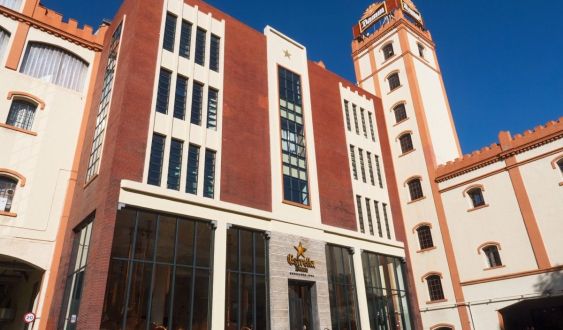
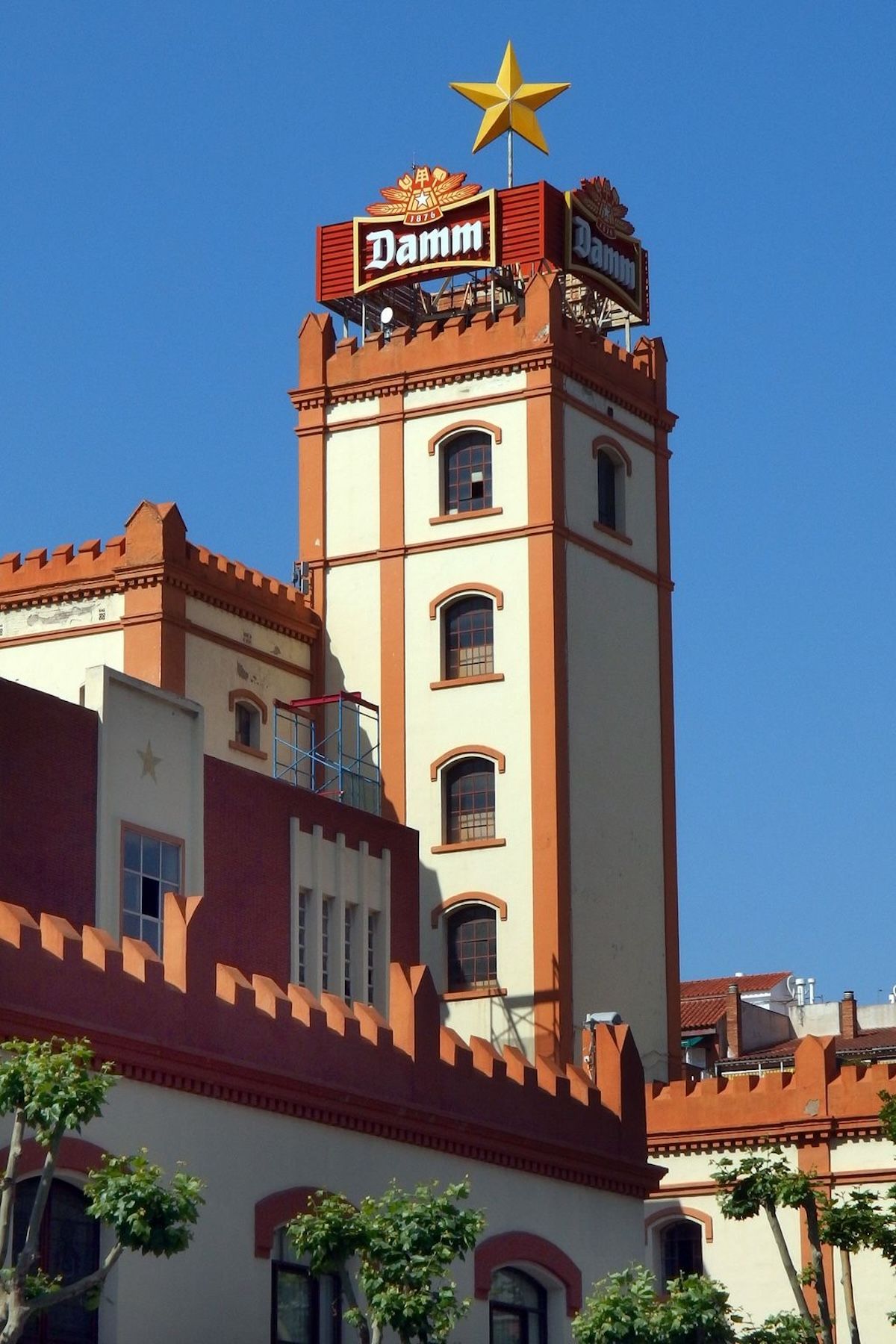
Years later, at the beginning of the 20th century, the Barcelona beer market was already beginning to consolidate and, in 1910, several companies in the sector decided to unite to create SA Damm. The new company established its main factory in La Bohèmia, on Rosselló street, a large industrial complex built between 1903 and 1905 that would end up becoming one of the industrial symbols of the Eixample, with its characteristic brick walls and the large chimney that still stands out over the city today.

But this factory not only marked the landscape of the neighborhood: it also became part of its daily life. Many workers lived in the surroundings and the relationship with the neighborhood was constant, to the point that the underground cellars of La Bohèmia served as a refuge during the bombings of Barcelona in the Civil War. In parallel to this connection with neighborhood life, beer also gained presence among Barcelonans, especially with the company's flagship product: Estrella Dorada (renamed Estrella Damm in 1991), which grew in popularity in the 1920s.

The old chimney of La Bohèmia, the Damm factory, in the heart of the Eixample. © Vicente Zambrano

That neighborhood factory, La Bohèmia, remained central to Damm's history until 1992, when the transfer to the El Prat de Llobregat factory, inaugurated in 1985, was completed. The move reflects Barcelona's transformation in the context of the Olympic Games, with a city in full reorganization and an industry that was progressively moving from the center to the metropolitan area. But it also marks a turning point in Damm's growth, which at that time already needed to expand its production capacity to meet growing demand. Today, the group exceeds 21 million hectoliters annually between beer and other beverages.

A global group with local roots

But today Damm is much more than a beer brand: it has consolidated itself as one of the main multinationals born in Barcelona, with more than 5,400 employees, a turnover of more than 2,000 million euros and presence in more than 130 countries. The company operates with 16 production and packaging plants and exports its brands to dozens of international markets.

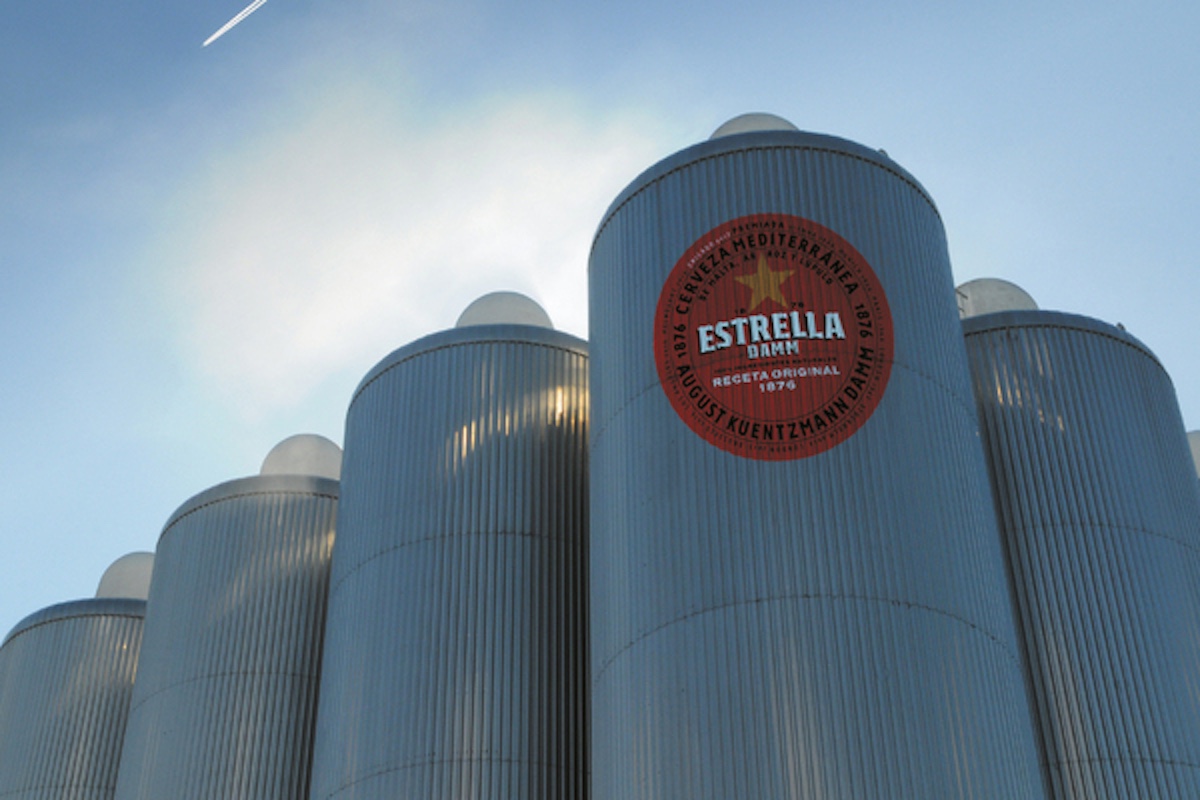
Damm group factory, in El Prat de Llobregat.

In recent decades, the company has also decided to diversify its activity. In addition to the beer varieties that have expanded the catalog—such as Voll-Damm, the non-alcoholic, or Daura, designed for celiacs—other businesses linked to food and beverages have been added. Although the brand is often reduced or exclusively associated with Estrella Damm, the group goes much further: it participates in water brands such as Veri or Fuente Liviana, in beverages such as Cacaolat or Laccao, and in restaurant chains such as Rodilla, to which is added the recent collaboration with Nestlé to produce and distribute Nestea in several markets.

Despite this expansion, Damm maintains a visible link with its origins and with Barcelona's industrial history. La Bohèmia, although it has left production behind, now functions as its corporate headquarters and cultural space. Furthermore, the founding family still has a presence in the company, with figures such as Ramon Agenjo, great-grandson of Joseph Damm and one of the last descendants of the founding family, who remains linked to the group as secretary of the board of directors and director of the Damm Foundation.

However, today a large part of the shareholding is concentrated in the hands of the Carceller family, through the energy group Disa. This family has historically been linked to the company, and continues to lead the group with Demetrio Carceller Arce as executive president. At a recent gala at the Gran Teatre del Liceu on the occasion of the 150th anniversary, Carceller synthesized this trajectory of growth and continuity with a clear idea: "At Damm, we have known how to evolve without losing our essence, maintaining a way of doing things based on quality, innovation, and proximity to society."

The factory as a cultural space

Beyond the institutional celebration at the Liceu, Damm has promoted various initiatives for its 150th anniversary. Among them, BOHEMIA stands out, a special edition of the beer that pays homage to the group's trajectory and Barcelona's industrial history. Its own brewing process recovers this idea of slow time: a cellar beer, with prolonged maturation and natural ingredients, that evolves until it reaches its final balance.
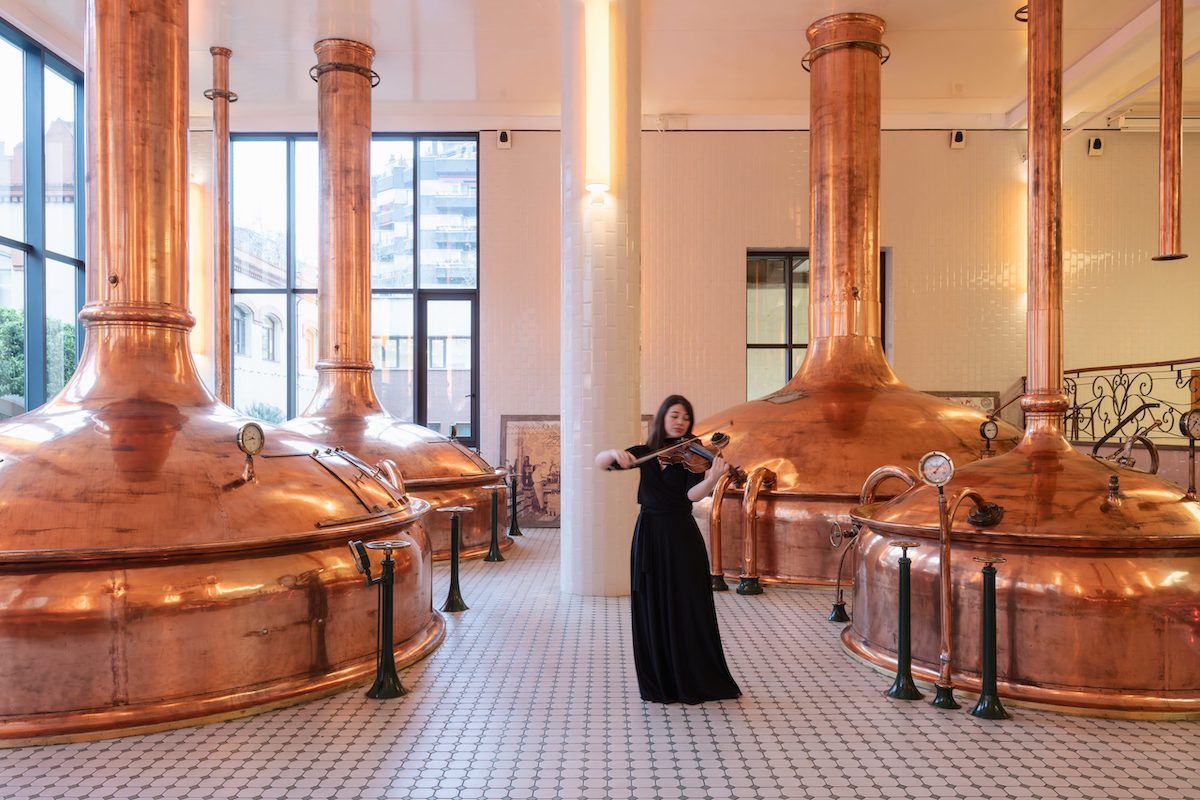
Concert at the Old Estrella Damm Factory.

This old factory, although it has left industrial production behind, remains a key part of the brand. In 2010, part of the La Bohèmia complex was rehabilitated, including the mashing room —with old copper stills—, the multi-purpose room, and the venue's lobby. Thus, today it functions as a corporate and cultural space, reinforcing the link between the company and the city.

This link is especially visible in the cultural sphere, especially in music, with a constant presence at festivals such as Primavera Sound, Sónar, or Cruïlla, as well as at events such as La Mercè or Sant Jordi. A sample of this connection was experienced in the Parc del Fòrum during the celebration of the 150th anniversary, when more than 30,000 people attended a concert with Oques Grasses, Love of Lesbian, or The Tyets. The atmosphere, festive and open to the city, connected with the image that the brand has been building through the "Mediterráneamente" campaign for more than a decade.
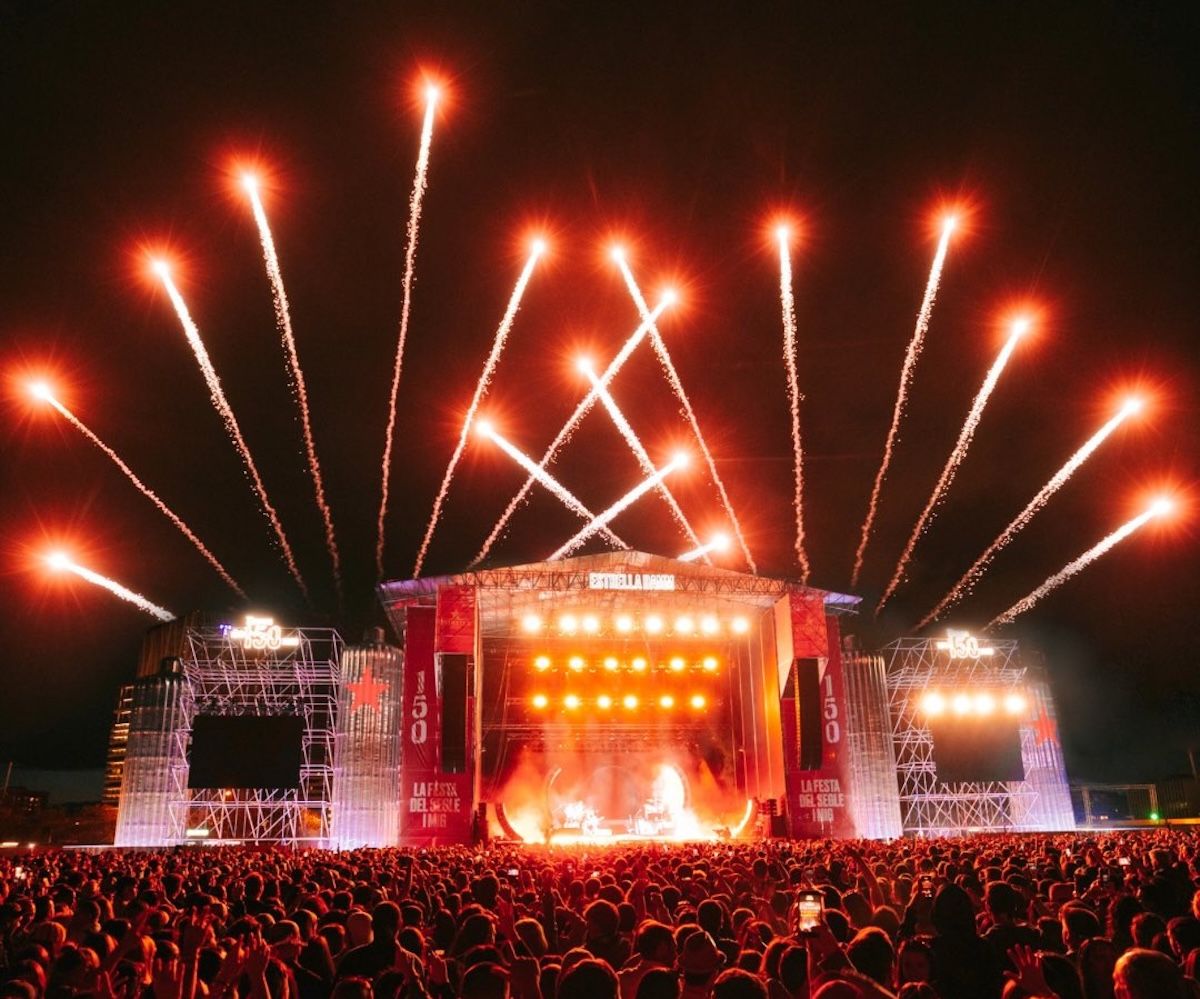
Estrella Damm 150th anniversary concert.
Beyond music, sport also occupies a central space in this relationship with the city. Through the Damm Foundation, the company promotes social and educational projects focused on the sports training of young people. Its most emblematic project isthe CF Damm, a historic grassroots football club founded in 1954 —initially linked to the company's workers— that has trained hundreds of male and female players throughout its history.

Add The New Barcelona Post as your preferred Google source for free

Stay informed with the latest news.

Activate now

About the author

Ainara Valadez
Ainara Valadez Medina

Writer at The New Barcelona Post

View biography