Entering the Boqueria market, at least for a few years now, has become an experience almost entirely reserved for tourists ---despite the market's desire to attract local visitors---. And it is true that its stalls ---as also happens in other markets in Barcelona and in other urban destinations like Paris--- have been adapting their offer and even their appearance and structure to the customer who enters as a great attraction, to try good things, more or less typical things of the place, and to feast their eyes and take as many photos as they find attractive motives and angles to do so.
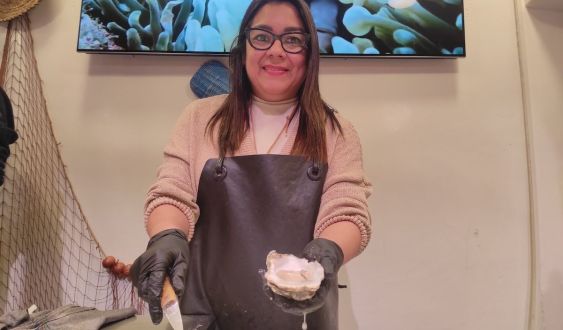
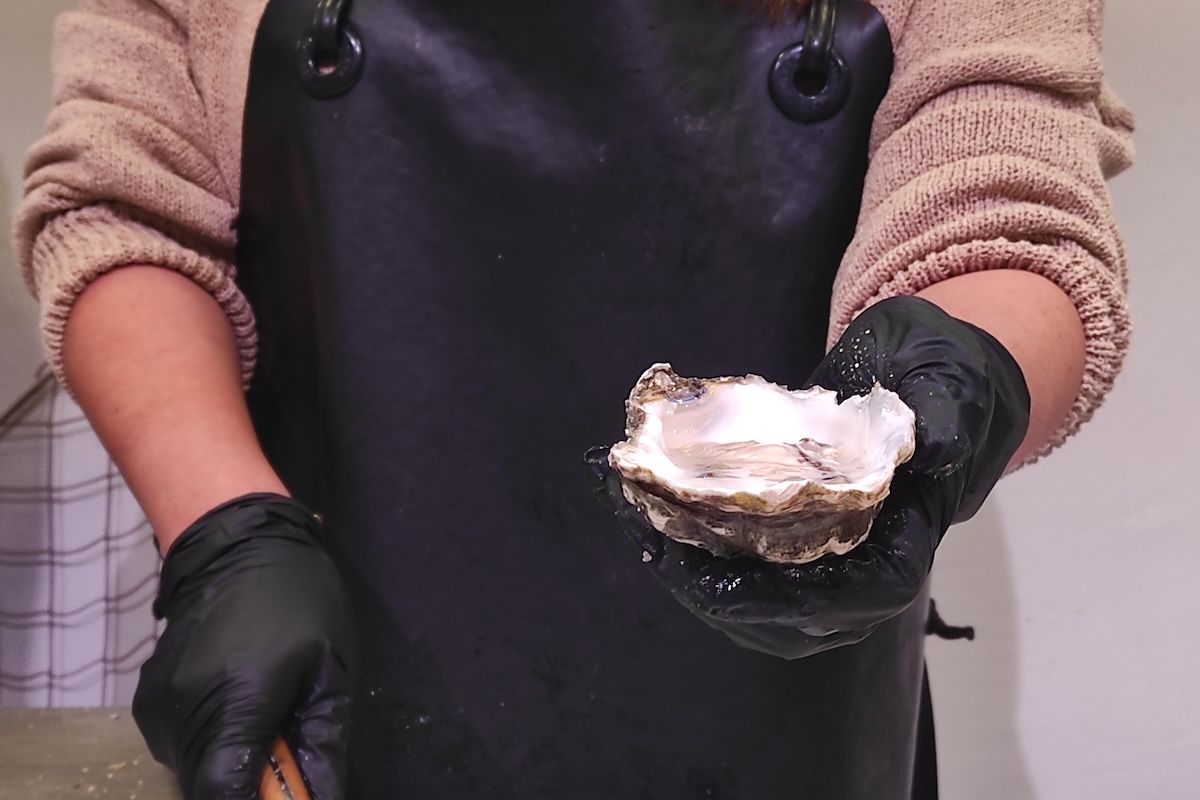
This is also the daily life in the Boqueria. The word-of-mouth advice that those who land and disembark in Barcelona carry is that you have to go in and take a walk among its stalls. It is the most visited market in the city, an unavoidable chapter in travel guides, both paper and digital. Today, we enter, but we do so to spend some time observing the activity, specifically, at the OstresBCN stall. Behind the counter, Soraya Neciosup is already wearing her black apron, and, while in one gloved hand she holds the oyster knife, in the other she already has an oyster. Ready to insert the tip of the knife, so strategically, that she can immediately feel the click that allows her to release that fleshy treasure gestated in the sea, enclosed in its two wild-looking shells. As wild as the way to swallow this soft and slippery mollusk, with a strong taste of the sea.
Opening the oyster, placing it in a cardboard container, and the option of adding a squeeze of lemon on top, mignonette sauce, or Japanese ponzu. Bringing the dataphone to the customer, picking up the knife again to start another round of oysters. This is the continuous activity at the stall that Soraya started a year ago. Well, the stall ---which are two stalls together--- were already dedicated to selling oysters when she bought them. When she least expected it, the possibility arose to acquire this point of sale in the emblematic Barcelona market.
From customer to stallholder
"I used to come to La Boqueria at Christmas to buy more special things, or when I had to prepare a different dinner well. Here I always found that extra detail that made me look very good," she says. Now it is she who, behind the counter of a stall, opens and hands oysters to people to eat them right there, standing, or walking through the Boqueria market, which is now a giant showcase of all kinds of culinary desires, sweet and savory, cold and hot."Oysters are in fashion," comments Soraya. "For those who like them, it's a delicious and accessible product that can be eaten quickly while on the go." Let's talk about oysters, then. "The fame of French oysters is incredible," she says, "but at the stall, the most successful ones are the Galician oysters. Those who already know them ask for them directly and repeat, because the Galician oyster is more intense, less salty, but with a powerful, very marine taste." Of the French ones that come from Normandy, she comments that they are fleshy and juicy, fine in taste, with a sweet and slightly mineral note.
However, selling oysters is not her only dedication. Nor is it her main job. She studied Business Administration and Management (ADE). In fact, when she decided to take over the oyster stalls a year ago, she had to find someone to teach her how to open them. And she found a good teacher, the European oyster-opening champion, Ferran Sentís.
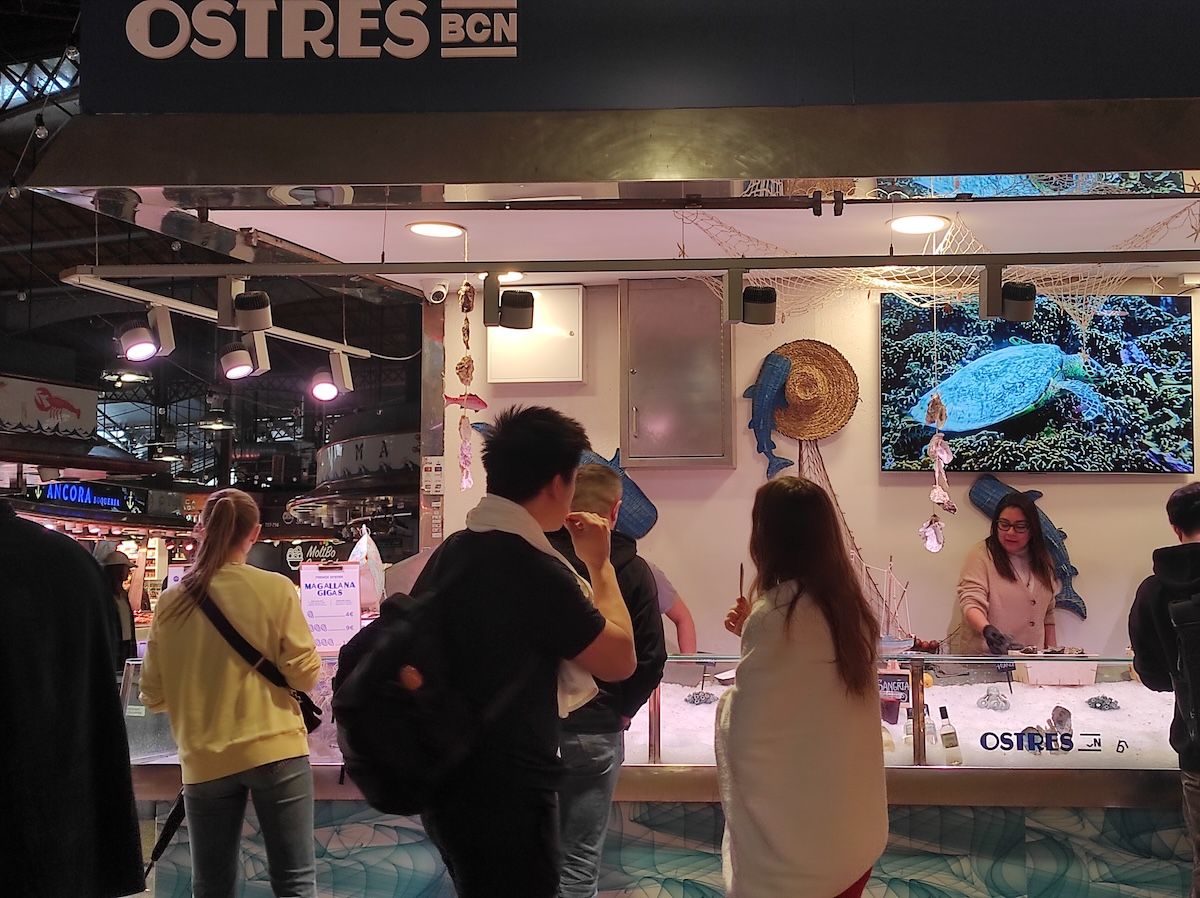
And, to the question of whether anyone asks for oysters, in Catalan, Soraya's answer is quick: "Yes, it happens, but unfortunately, very rarely. Sometimes we serve people from Valencia or Girona, but very few locals come."
Also, from time to time, someone asks for ceviche, a typical dish from her country, because Soraya was born in Trujillo (Peru), and arrived in Barcelona in 2004. Ceviche is a gastronomic preparation based on raw fish, red onion, lemon juice, and a type of chili pepper, known in Peru as 'ají'. It is excellently prepared by Bruno, who is also Peruvian, and who, along with Pipe (short for Felipe), share the shifts with Soraya to attend the stall. Sergi, the other member of the OstresBCN team, is in charge of the commercial part.
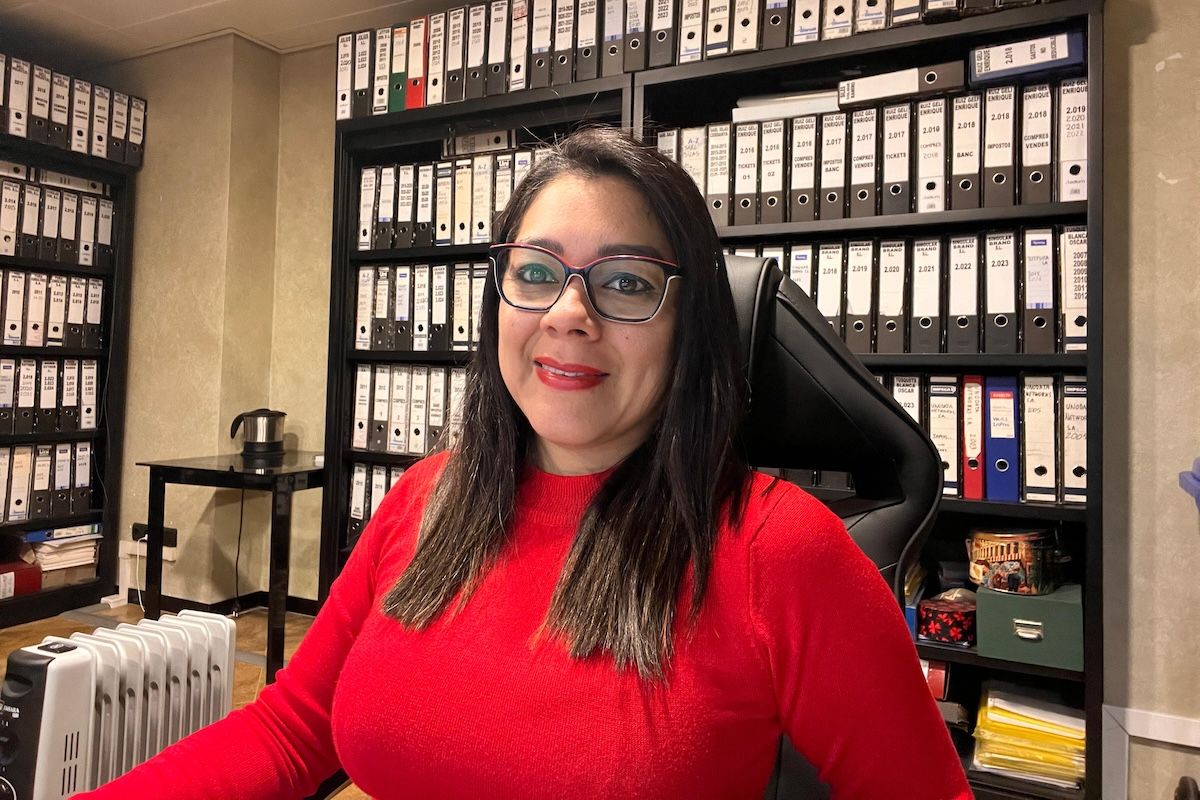
Soraya's workday, in reality, begins in the office of the company where she has worked for twenty-one years. When she finished studying ADE, some work matters led her to meet Marc Sala, a Barcelona businessman who saw in her all the values that any good business owner would appreciate. He believed in her.
Confidence that strengthens
Soraya always says that the faith placed in her by someone who saw her as so capable made her capable. Capable of getting ahead with work, family ---she has two daughters and now a grandson---, and when we say work, we mean diverse jobs in which she develops with total professionalism. 'Not putting all your eggs in one basket' is what she does. "I value knowledge a lot and knowing a little bit about everything makes me feel good and confident that I can develop in more than one sector. And this also allows me to help more people with my knowledge of different trades. Whoever needs advice, help, also personally, will find me better prepared. There is a part of me that feels very proud to embrace different aspects and types of work," she expresses.Soraya is responsible for accounting in the tax department of a consultancy. Additionally, she advises on real estate transactions, here and on the other side of the Pyrenees. "I like it very much," she says. She made her first sales ten years ago, and also manages rentals. "I like it because you are in contact with people, buyers and sellers and tenants, different profiles with whom you apply psychology, you get an idea of what they are looking for, and what would suit them well," she explains. And, she points out that, in the case of rentals, "I advise owners to think about stability, I recommend that they opt for habitual residence rental."
Effort and determination, a fighting spirit and great optimism make Soraya, rather than just working, untie knots in every matter she deals with. When it's time to settle accounts with the Treasury at the office, to escape the stress and collapse of income tax declarations, she delves into the hustle and bustle of tourists at La Boqueria, and that works as a balm for her. Because, deep down, in La Boqueria, every day you breathe the spirit of the holidays that we all carry with us when we travel. "The tourist tells you what country they come from, if they arrived by cruise... and the happiness of their holidays, that smile of discovering flavors and exchanging conversations in different languages is contagious," says Soraya. "Besides, if it weren't for them, what would become of us? Local people don't frequent small businesses much, they shop in large supermarkets, or have things delivered to their homes through large platforms."
"We lack awareness as inhabitants of this city that is losing its small businesses and, with them, the relationship with those who serve and advise, whether it's for shoes or cooked legumes"Soraya loves Barcelona. She felt good here since she arrived. "Before coming, I already knew that another language was spoken here, because I knew people who already had family here and they told us: if you don't go to Madrid, in Barcelona you will speak another language, you will have to study it, it won't be very easy. And indeed, I had to study," she recalls.
It was 2004, and she combined her working hours as a teleoperator with Catalan classes at the Consorci de Normalització Lingüística (CNL), next to the Llucmajor metro stop, in the Nou Barris district. "At first I understood practically nothing, but I am very diligent," she says. She remembers it was the time of the advertising campaign for Dona corda al català, with Queta, the mouth that sang "Parlo sense vergonya, parlo amb llibertat, i si m'equivoco, torno torno a començar" (I speak without shame, I speak with freedom, and if I make a mistake, I start over again). And, without correctors yet, in the office, Soraya dared to write in Catalan. "Language is super important, but also the desire to work, the disposition, the effort you make to integrate, how you get involved, all of this people value a lot."
From everything Soraya does, she gets good juice, also from her travels, whether she travels far or on the long trips she tries to make once a year. Last August she was in Japan. "I like to discover cultures, to see how a society different from ours develops," she comments. Also on getaways to the French Cerdanya and in towns on the Catalan coast she makes her discoveries.
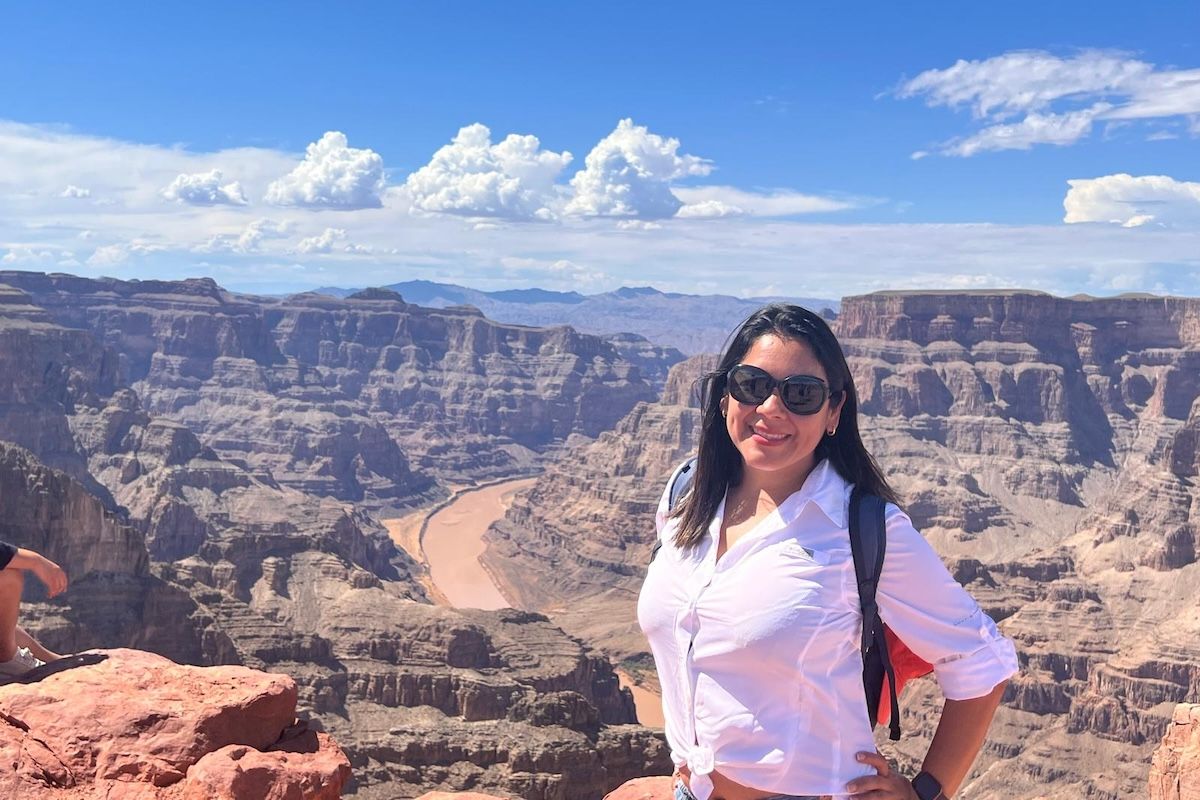
Opening oysters in the Boqueria, she also has her way of traveling. She listens to tourists who explain where they come from. "Some stay a while to talk, others are more time-limited because they are following an organized group. Those who have disembarked from a cruise, arrive in waves. There are people from all countries, and you feel that, suddenly, you are coming into contact with the whole world."
Soraya recognizes that, for people who live in certain neighborhoods very frequented by tourists, not being able to walk calmly without crowds in such emblematic spaces as La Rambla or in the vicinity of buildings that everyone visits like Casa Batlló, La Pedrera or the Sagrada Familia, the tourist becomes uncomfortable. But, she insists that "for merchants it is an open door, because with the local public, let's not kid ourselves, today you can no longer count on them. Everyone fights to defend their interests, but we lack awareness as inhabitants of this city that is losing its small businesses and, with it, the relationship with those who serve and advise, whether it's shoes or cooked vegetables."
Add The New Barcelona Post as your preferred Google source for free
Stay informed with the latest news.