Totò must be about six years old, he is intelligent and mischievous, and he is the son of a mother who was widowed during the Second World War. He lives in Giancaldo, a small village in Sicily, where he spends much of his time at the Cinema Paradiso, fascinated by the films and everything that happens behind the screen. There he meets Alfredo, the projectionist, who first becomes his friend and, over time, his mentor. Between reels of celluloid and afternoons in the projection booth, Alfredo transmits his passion for cinema to him and teaches him to look beyond the limits of his small village. But Totò grows up and, when he reaches adolescence, it is precisely Alfredo who encourages him to leave and pursue his dream, despite the difficulties. A dream that —forgive me the spoiler— will eventually come true: Totò will become a successful film director in Rome. And he will do it because someone, at a certain moment, believed in him.
And this Monday evening, the Phenomena Experience cinema in Barcelona had something Sicilian about it. A certain atmosphere of Cinema Paradiso (1988). And not only because it is also a space where passion for the seventh art is breathed, but because, for a few hours, the Fundació Catalunya Cultura reminded the attendees of La nit de l’empresa i la cultura that behind any project that ends up making its way there is someone who, at some point, has believed in it. Like Alfredo with Totò. And like the companies, institutions and people who support cultural projects so that they can grow, reach further and transform society.
And one of the projects that this Monday found someone who believed in it was Open Brains, winner of the IMPULSA CULTURA 2026 Award, which this year has doubled its economic endowment, up to 30,000 euros. The initiative, promoted by cognitive and experimental neuroscience doctors Daniel Duque and David Bestué, has a clear mission: to take neuroscience out of laboratories and bring it to the streets to foster critical thinking. A proposal that understands culture as a tool to awaken consciences, question what we take for granted and combat disinformation.
During the project presentation, the two entrepreneurs gave a practical demonstration of how much our brain's biases can condition the way we interpret the world. And to combat this, Open Brains deploys two main lines of action: one in-person, with workshops and shows that reach about 6,000 students each year, in addition to training for companies; and another virtual, through games, applications, and audiovisual content. Among the latter is Les mil cabòries d'en Carles Biaixat, an animated series that explains, with humor, how cognitive biases can distort our perception of reality.
The award should now serve to grow the project in two directions: to create a scholarship program for educational centers that allows them to expand the number of students they reach and to boost their audiovisual commitment. And, in fact, it is not the first time that Open Brains has received recognition from the sector: within the framework of the Demo Day, organized by the Fundació Catalunya Cultura, the project received the The New Barcelona Post Award, valued at 10,000 euros.
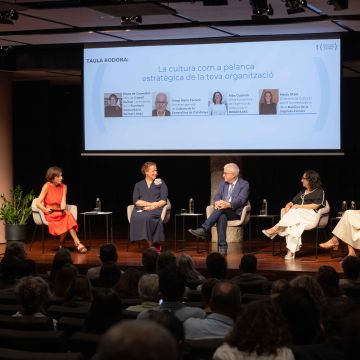
Open Brains' victory this Monday was one of the central moments of an evening hosted by Bibiana Ballbè at the Phenomena Experience hall, which brought together representatives from the business, cultural, and institutional worlds to celebrate the complicities between two areas that have often advanced along parallel paths, but which increasingly have more things to build together: "Business without culture is not business, and culture without business does not have enough resources," Ballbè stated. The event was attended by the Minister of the Presidency, Albert Dalmau; the Minister of Culture, Sònia Hernández Almodóvar, and the Minister of Business and Labor, Miquel Sàmper.
Bibiana Ballbè: "Business without culture is not business, and culture without business does not have enough resources"
The journalist defined culture as that which gives us identity, criteria, and future, and left one of the phrases that best summarize the spirit of the meeting: "A country without culture is a country without a soul; but a country that bets on culture is a country that knows where it is going." She also recalled that more than 340 cultural initiatives have already passed through the Fundació Catalunya Cultura, a trajectory that demonstrates the will to turn business support into a lever for the growth of the sector.
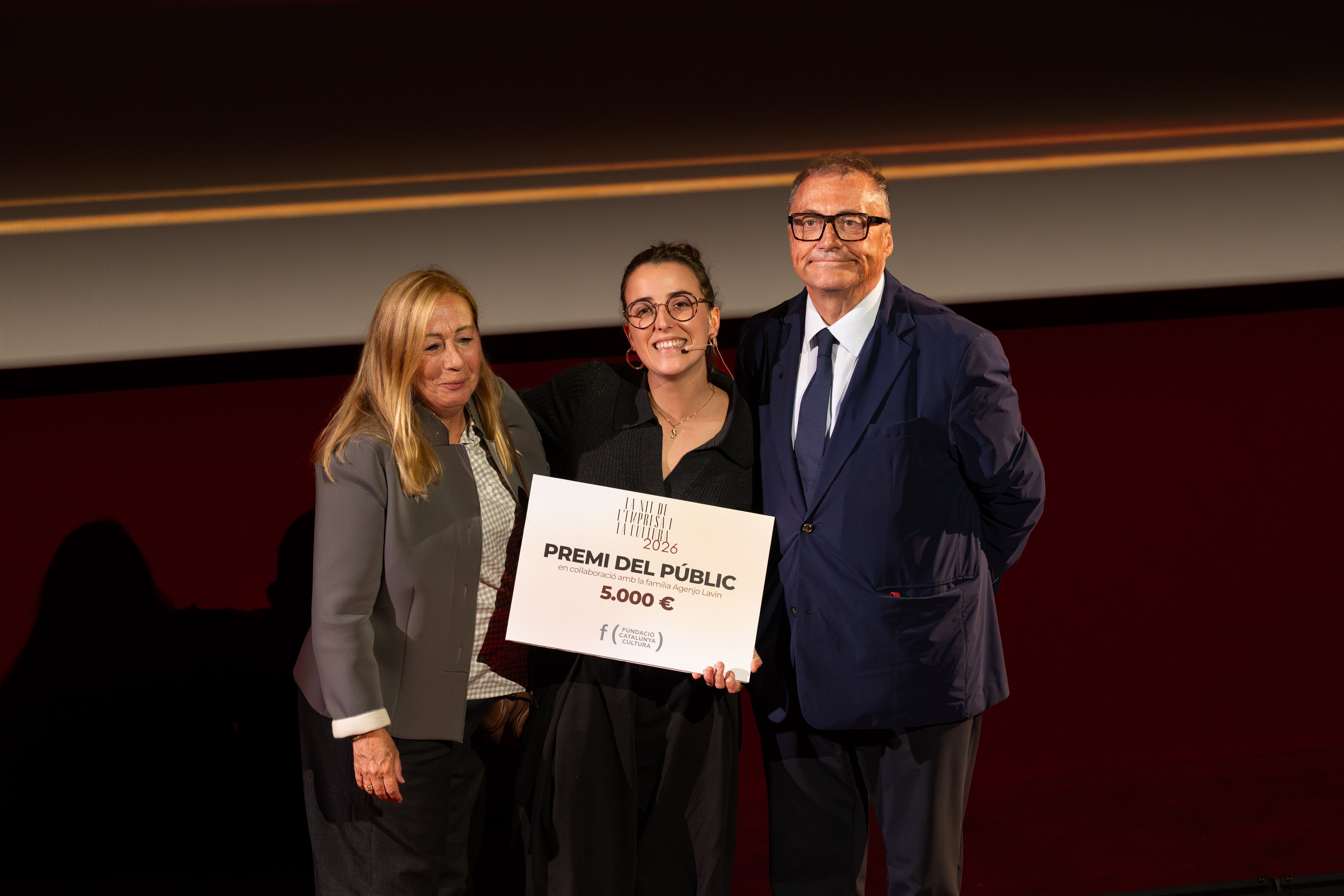
Beyond Open Brains, the night recognized other initiatives that work to make culture a driving force for transformation. The IMPULSA CULTURA Award had gathered five finalists: the Culture Area of the GironaEst Foundation, Arts en Salut, IP2U, Open Brains and OMAC (Orchestra of Root Music of Catalonia). Precisely, the Culture Area of the GironaEst Foundation won the Audience Award, one of the novelties of this edition, endowed with 5,000 euros and chosen through the vote of the attendees.
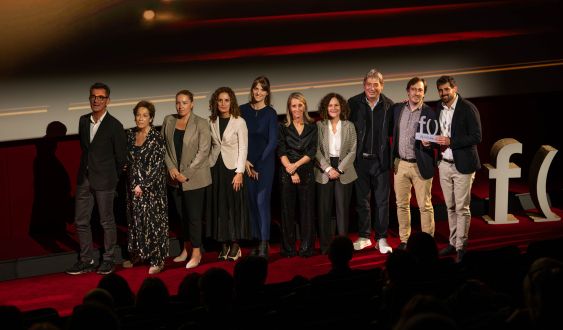
The Catalunya Cultura Foundation also presented the EMPRESA CULTURA Award, which distinguishes companies that incorporate cultural commitment into their activity. In the large company category, the award went to Cuatrecasas, for having integrated arts, music, literature, heritage and popular traditions into its corporate identity, as well as for putting its legal knowledge at the service of the cultural sector. And in the small and medium-sized company category, the award went to Grup Vesta, recognized for its commitment to music, arts and heritage, and for its willingness to bring culture to the territory, especially through free proposals in rural environments and with the involvement of the neighborhood.
But the evening also reserved a space to look back and recognize the people who have made this alliance between business and culture a reality today. One of the most emotional moments was the tribute to Enric Crous, a key figure in the history of the Catalunya Cultura Foundation and in its work to involve the business world in the financing and promotion of culture.
The director of the foundation, Maite Esteve, was in charge of dedicating a few words to him. With an emotional voice, she reviewed the beginnings of that project shared by eight people, among whom were Xavier Gramona, Crous himself and other representatives of the business and cultural world, who were convinced that uniting these two worlds could do great things. But, as Esteve humorously recalled, there is always someone who ends up being more of a protagonist than the rest. And that had been Crous, who year after year had managed to convince councilors, businessmen and institutions that that initial idea made sense and that it was worth continuing to bet on it.

Esteve ended up turning the tribute into a small Oscar ceremony. He went up the stairs of the hall, prepared the audience and made a large part of the attendees pronounce the famous phrase "and the Oscar goes to...". The response was unanimous: "Enric Crous!".
The entire room stood up as the honoree received the statuette. Visibly moved, Crous thanked the recognition and brought back one of the ideas he has defended throughout his career: "Rich countries are cultured countries." "And we want Catalonia to be a very cultural country," he added.
The vindication of culture as an essential part of the country's project was also present in the institutional interventions. The president of the Fundació Catalunya Cultura, Eloi Planes, emphasized the need to continue working to achieve a patronage law that facilitates private involvement in cultural funding. The foundation has been working in this direction for twelve years and the proposal has already reached Parliament with broad political support.
Eloi Planes: "May Catalan be the language of our life and also of our dreams"
But Planes wanted to remind that, beyond the legislative framework, what really makes projects possible are people. He also claimed the responsibility of preserving the Catalan language and ensuring that it continues to be present in all creative spaces: "on stages, in books and in cinema." "May Catalan be the language of our life and also of our dreams," he demanded.
The Minister of the Presidency, Albert Dalmau, closed the event with a reflection on hope, commitment and the need not to fall into pessimism in the face of present challenges. In a world marked by wars, uncertainty and discourses that seem to take any setback as inevitable, Dalmau vindicated the collective capacity to continue building the future. "Never has any personal, business, or country project been built from pessimism or skepticism," he stated.
Dalmau: "Never has any personal, business, or country project been built from pessimism or skepticism"
He also defined the work of the Catalunya Cultura Foundation as a form of "active militancy" not only with culture, but with a certain way of understanding the country. Because talent needs opportunities, yes, but it also needs someone who believes in it. Someone to accompany it, to help it grow and to encourage it to pursue its dreams. Whether in Cinema Paradiso or in the Phenomena room.
Add The New Barcelona Post as your preferred Google source for free
Stay informed with the latest news.