
The (true) cliché says that theater is the artistic space where the tensions of the collective imaginary are exposed and in which we try to renew the assumptions that solidify the social contract. It is no coincidence, therefore, that the Barcelona premiere of a work like The Producers (a musical that ironically questions the role of production and the context of critical reception of a theater piece) has led to weeks of heated controversy throughout the country. First, due to the Spanish language version of the libretto and, secondly, due to the decision of its artistic team not to offer free courtesy tickets to theater critics.
To be brief, I have already written elsewhere that the consolidation of a musical industry in Barcelona (woven, as is the case, almost entirely by Catalan artists) and an audience accustomed to the genre requires a process of loyalty that, for now and unfortunately, cannot be done in our beloved language. It is precisely because el team at Nostromo Live has worked tirelessly creating Yankee-style shows, practically from scratch and with local people (contrary to what happened before, when shows were imported from Madrid with minimal nostrada presence), that sooner than we think, it will be possible to premiere productions like Les Misérables or The Sound of Music in Catalan. This achievement will be the work of people like Àngel Llàcer, Manu Guix and Enric Cambray and not thanks to the pack of small-time Twitter users and opinion-makers who have spewed shit against this show without having the decency to see it.
Regarding the criticism, I simply believe that Ángel has made a mistake with his tantrum. I understand that he harbors a lot of ill will in his soul due to the comments he has seen on the X network and that he is fed up with the lessons from the dime-a-dozen patriots who accuse him of being a botifler, when he has been doing theater in Catalan for thirty years. But one thing is the imbeciles – and there are many of them, in astonishing numbers – and another is the normalized relationship of fair play that an artist should have with the reception of their works. It is not true that critics have always judged his work poorly and, if they did, they would have every right to express their opinion in that manner. A very different matter is that (with the rise of networks and digital publications) we should rethink the craft of criticism, the legitimacy of some criticasters who monopolize it, and, while we're at it, the miserable working conditions in which said task is performed.
That said, let's debate everything that needs to be debated... but let's finally celebrate that The Producers is in Barcelona in a production that, we can say from the outset, is absolutely first-world. This servant attended as a guest at one of the preview performances (09/21) and the show still felt quite hampered by some microphone problems in the voices during the first fifteen minutes of the run, small misalignments absolutely understandable in the excellent choreography by Miryam Benedited, and also in the (devilish) dialogue between performers and the magnificent ensemble directed like clockwork by Gerard Alonso. I understand that the canonical demands speaking first and foremost about the protagonist duo... but what Mireia Portas does with the character of Ulla is literally out of this world. Our actress has a dazzling comedic flair, oozing seduction and visceralness in equal measure. An imperial barretada creation.
Let's go to the protagonists, then. Ricky Mata delivers an anthology-worthy Leo Bloom and it's not easy for him, because the Madrid actor plays the card of emulating the gestures with which Matthew Broderick forever sculpted the role. Mata knows how to sculpt a self-made man who is as rebellious as he is naive to perfection; his whitish tenor voice fits the 50% altar boy, 50% crooner required by the score and he moves with enviable naturalness in the dance scenes. The main amendment of the cast comes from the other side and it's painful to write, because Armando Pita literally leaves his guts on mythical scenes like Betrayed and does everything possible to approach Max Bialystock properly. But, alas, this is an extra-difficult role, associated with a very particular type of scoundrelly New York cheapskate (yes, I confess to having Nathan Lane in my head!) and his overly peninsular tone of voice fatally blurs the essence of the role.
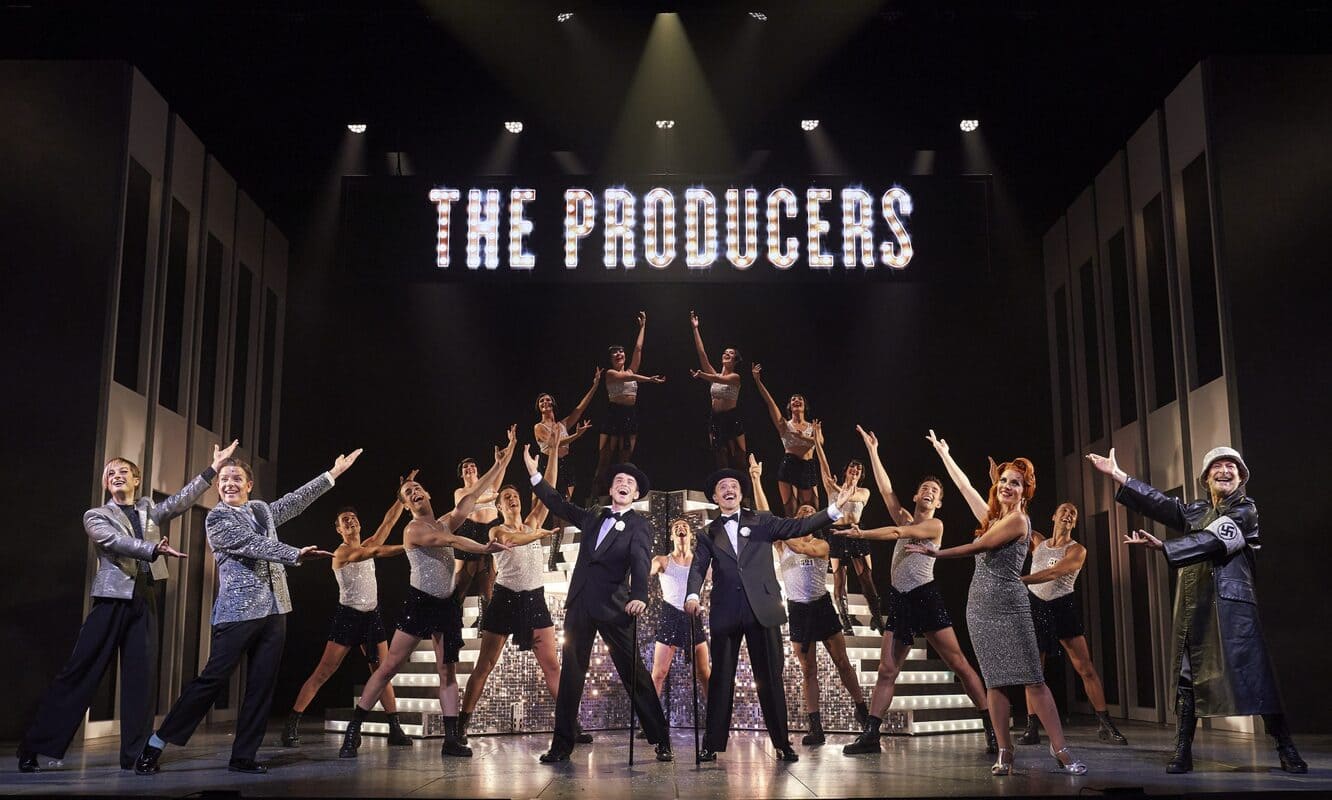
But all this is nitpicking, even more so if we consider how well José Luís Mosquera (he does make good use of the Spanish baroque theatrical imaginary to bring it to Franz Liebkind), a fantastic Oriol Burés as Roger de Bris, an androgynous and immaculate Bittor Fernández playing Carmen Ghia, and a group of dancers who seem born in Times Square finish the job. Marc Goméz's textual adaptation is notable and will be better appreciated if the actors (I know I'm asking too much, but if we play in the big leagues we must be demanding) work a little more on their diction and internalize the trepidation of the text more without this implying a reduction of the velociraptor temper of the show. This work is for brave marathon runners, and we are now just at the beginning of the race. The good news is that we have The Producers in Barcelona and that, thanks to all these people, we will soon be able to do musicals of this caliber in Catalan.
And all this will not be thanks to the envious, the professional tweeters, nor the third-rate critics like myself. It will be thanks to the artists, who are the ones who do the real work in this whole shebang. Of course. We can do it!
PS.- I'm looking forward to seeing Ángel on stage. If the producers (the real ones) invite me, I'll come back. Otherwise, we'll go to the box office, despite having the account in the red.
Add The New Barcelona Post as your preferred Google source for free
Stay informed with the latest news.