Barcelona this October is the epicenter of a movement that has been brewing in the margins for years and that, finally, is beginning to claim the prominence it deserves. The first The Change Congress — The voices of change landed at Palau Macaya on October 6 with a clear objective: to make visible, promote, and transform the role of women in sports. And it did so from a city that has already become accustomed to being a capital of change, not only cultural or social, but also sporting.
This congress is born from the meeting of three women from three different continents, linked to sports: Begoña Villarrubia, a journalist with a long career and editor at Mundo Deportivo, where she is responsible for women's football, in addition to being the coordinator of the European Women's Football Gala; Ana Cristina Maye, general coordinator of the Equatorial Guinea Football Federation and FIFA Guardian; and Jennifer Seefoo, journalist and member of the International Football Hall of Fame Committee. At one point, the three consider how to make visible and empower female talent through sports. They also collaborate with clubs, federations, foundations, public entities, and companies to promote equitable access to sports and highlight stories of overcoming that serve as role models.
During the day, pioneering athletes, executives, researchers, and sector leaders shared experiences on equality, visibility, and the future of women's sports. And this congress is not just another event. It is a meeting space, yes, but also a declaration of intent. Here, the women who are leading, managing, playing, and fighting from within sports share their stories and experiences with the common ambition of changing the narrative, and with it, the rules of the game.
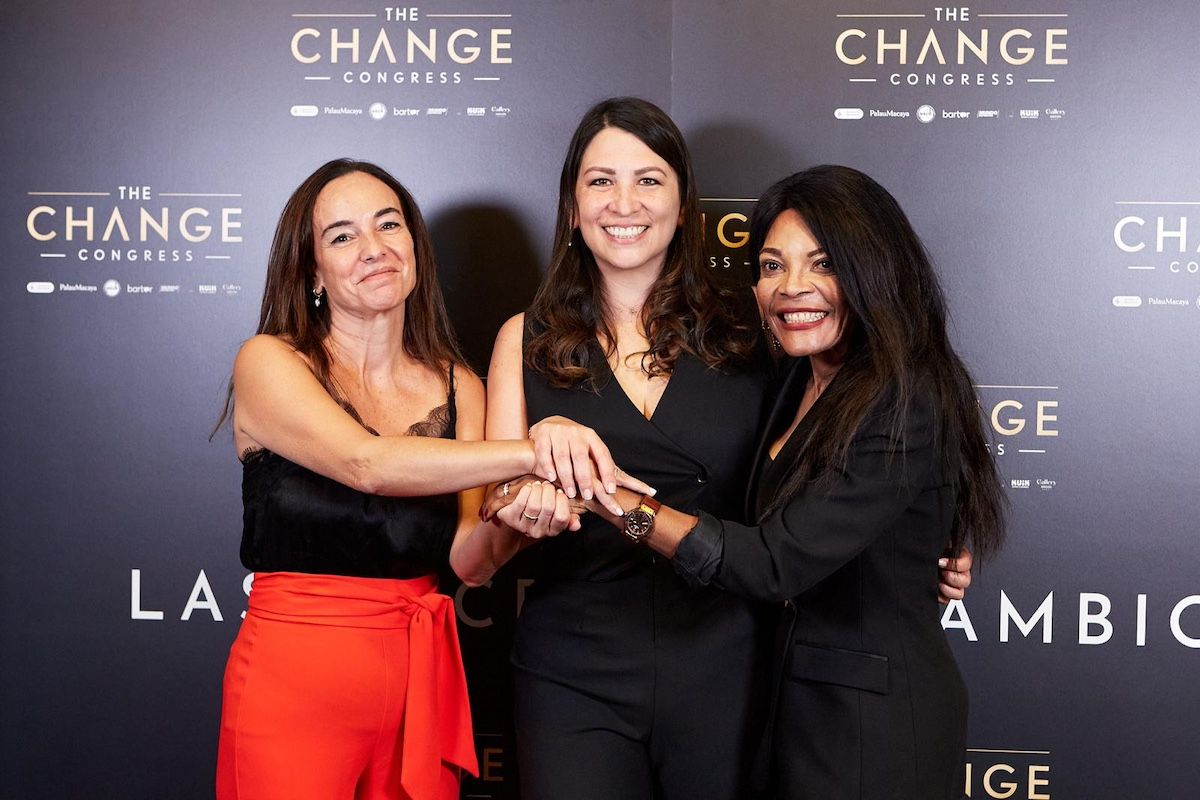
The congress began with a welcome from Maye, co-founder of The Change, accompanied by Josep Ollé, director of the Palau Macaya of the La Caixa Foundation, and Carme Bastida, from the Consell Català de l'Esport. Journalist Irati Vidal was in charge of leading the event, bringing dynamism and closeness to each intervention.
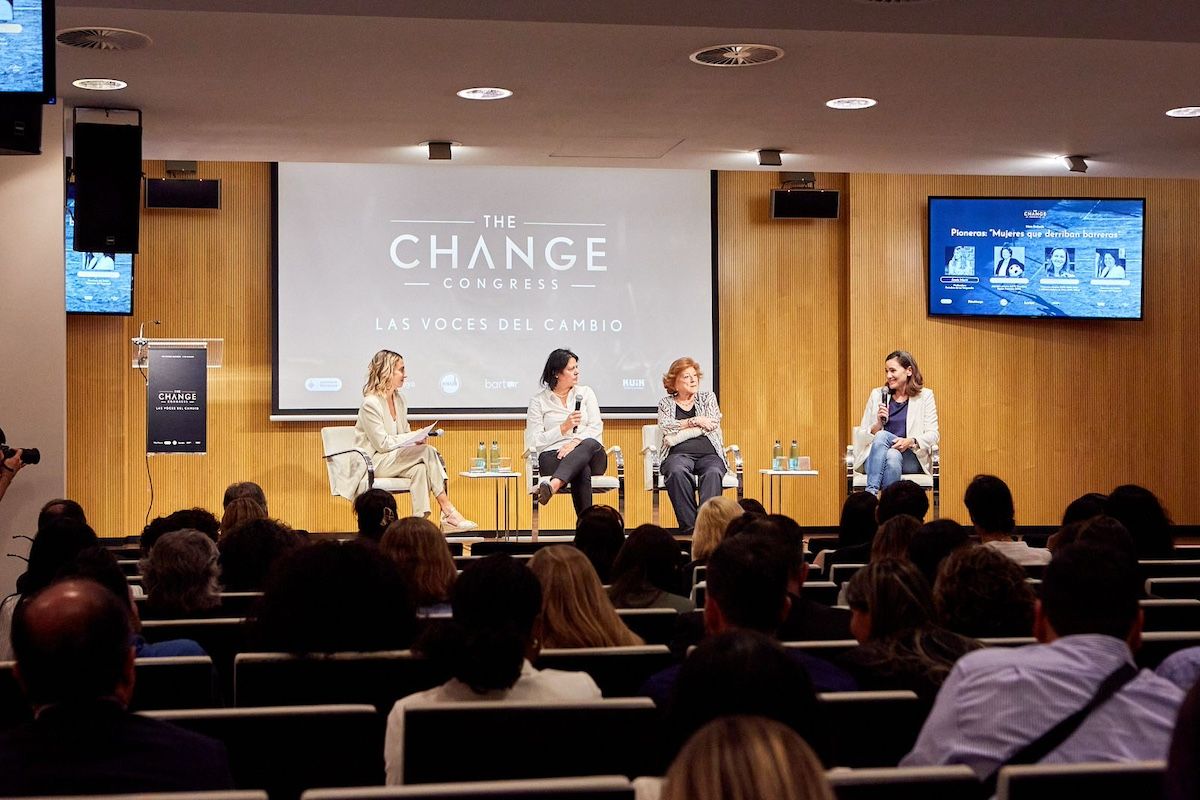
What has differentiated this congress is its vocation for transcendence. It is not about filling headlines for a day, but about weaving networks, conversations, and commitments that endure. The event's agenda combined round tables with key figures in women's sports —such as Carme Nieto (a Barça historical figure), Dolors Ribalta (RCD Espanyol), or Olympic sailor Natalia Vía-Dufresne— with debates that transcend the scoreboard: How is women's sports financed? What barriers still hinder women's access to sports management? How to break invisible ceilings?
The great protagonist of the opening of the day was Kathrine Switzer, the first woman to officially run the Boston Marathon in 1967. Her gesture —running when women were forbidden to do so— made her a global symbol of equality, and Switzer recalled how that moment marked her life and gave rise to her 261 Fearless project, which today empowers women through running around the world.
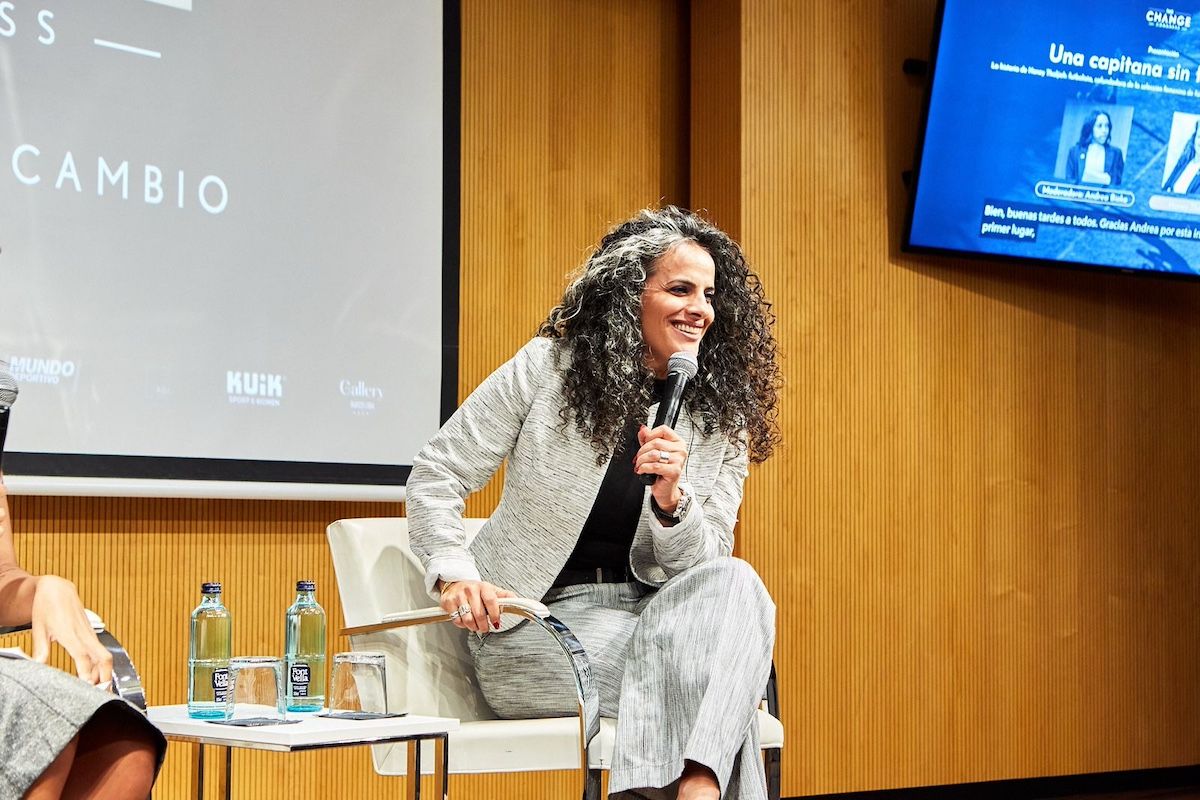
The stage was filled with emotion with Honey Thaljieh, co-founder of the Palestinian women's national team and current FIFA executive. Thaljieh shared her story of resistance and hope, explaining how football became for her a tool for peace in one of the most difficult contexts on the planet, and how she has translated her experience into practice to create safe spaces for girls to share and free themselves from the trauma they experience every day. Her message is clear: Playing is an act of freedom. From her position at FIFA, she continues to work to promote football among the most disadvantaged women in the world.
The subsequent debate panel had two key protagonists: Pati Roura, director of the Cruyff Foundation, who explained how sport can be a tool for social inclusion; and Marta Perarnau, new president of Futpro ---the first union of professional female footballers---, who presented a truly surprising study on how menstruation affects the performance of female athletes, with information and measures to accompany and reverse the situation that many athletes may suffer due to the lack of knowledge on the part of the staff regarding the impact of these factors. She demanded the need to specifically research women's health in sport.
It is no coincidence that the congress was held in Barcelona; the city has historically been a fertile ground for social and cultural changesAnd although the focus is on sport, the background is much broader. The Change Congress is, in reality, a conversation about power, representation, opportunities, and justice. A conversation that for too long has taken place on the margins and now seeks to occupy the center.
The business panel featured Alejandra Domínguez from the Women's Sports Institute, who states that there is a customary inertia that must be reversed based on knowledge not only of sport, but of the ecosystem where it is located; to be knowledgeable about the political sphere in which it operates. Andrés de la Dehesa, president of AFYDAD, defended collaboration between brands and federations to promote more sustainable leagues. And Natalie Batlle, founder of Juno House, emphasized that the consumer is female and holds the power, but that we forget about it. That we must make better use of the available media and create role models, without forgetting the importance of mental health. All three agreed that it is necessary to invest in women athletes to activate change.
It is no coincidence that this congress was held in Barcelona. The city has historically been a fertile ground for social and cultural changes. From the '92 Olympic Games, which transformed its physiognomy and self-esteem, to its recent leadership in equality policies, Barcelona has shown that sport can be a catalyst for profound transformations.
Hence the example of the centenary Fundació Tennis Barcelona, presented by Anna Turull, its director. A project based on helping young people at risk of exclusion through learning tennis. An exciting and moving story, an example of how it is possible to generate change. And also that of Clara Lapiedra, CEO of KUIK Sport, who presented the innovative products they develop in her company of food supplements to support women's health and sports performance at different vital stages of women.
Awards for inspiration, values, and excellence
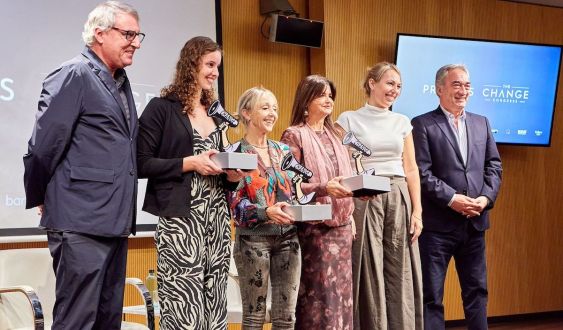
There was also space for awards. The Inspira trophy went to theFundación Fútbol Club Barcelona; the Values trophy went to the Barcelona City Council projectWomen with Impact,and the third award, the Excellence trophy, went to the swimmerIris Tió. The design of these awards has come from the creative mind of the urban artistTV Boy, known for murals such as the one of Alexia Putellas as a superheroine.The strategies presented here are real strategies, uncomfortable questions, and concrete proposals to accelerate a change that is already underway. Therefore, this congress is an essential platform to keep the pulse. To move from inspiration to action. And to ensure that those voices of change—which for so long spoke in a whisper—are now heard loud and clear.
Women's sports are experiencing an unprecedented moment of visibility. Audiences are growing, sponsorships are starting to arrive, and girls, finally, are finding role models on the court. But it is also a fragile moment. Advances run the risk of being diluted if they are not accompanied by solid structures, sustained investment, and political will.
Maye's closing, The Power of Utopia, left us with some gems like "what we see is a horizon that moves with us (...), let them applaud us for shining, not for existing." If anything was made clear by this congress, it is that the future of sport cannot be built without everyone's help. And not only as athletes, but as coaches, managers, communicators, investors, and role models. That is why we ask the question: And now, what?
Add The New Barcelona Post as your preferred Google source for free
Stay informed with the latest news.
