
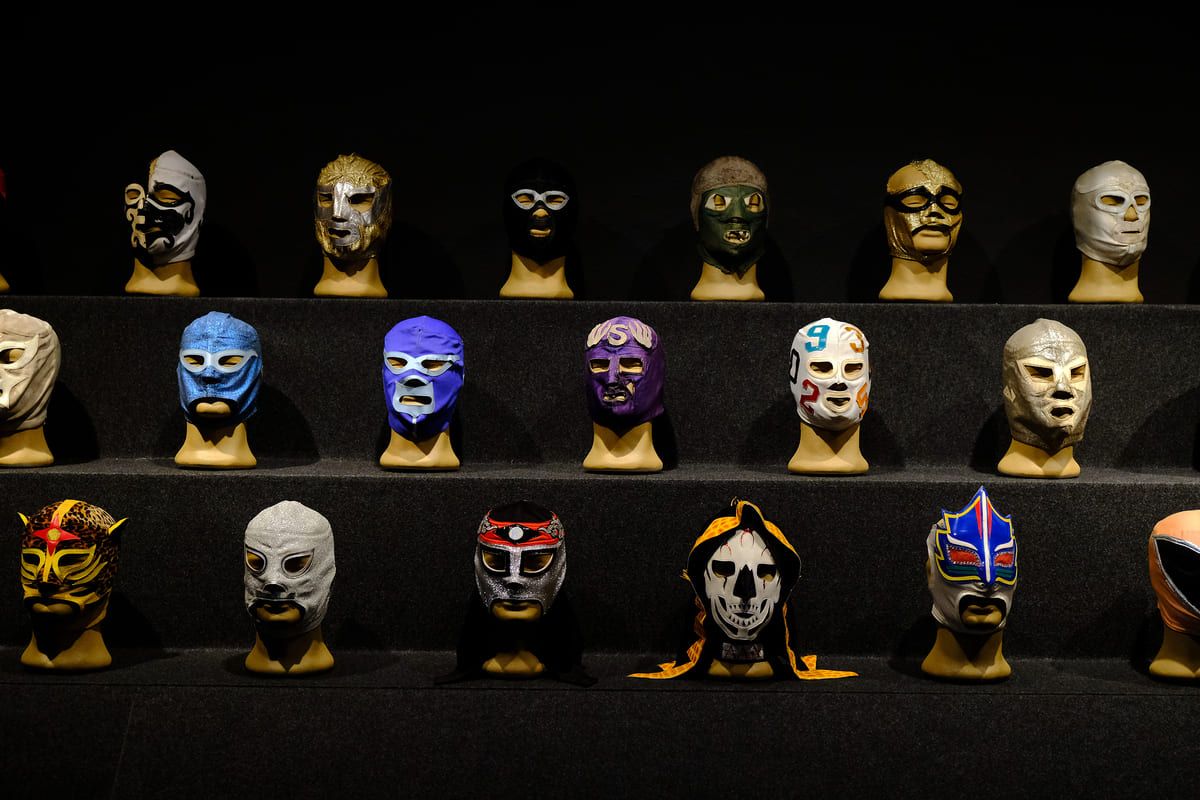
The act of covering one's face is as old as the face itself. Western culture has hidden and philosophized about masks since Euripides' The Bacchae and the figure of the god Dionysus, the stranger, the disguised, the disruptor of civic customs. The human impulse to hide and protect oneself extends to our days, a time that – beyond the deaths, the restrictions on freedom, and the new pandemic world that awaits us – will basically be remembered as a faceless era, of covered faces. It is understandable, therefore, that the curators of this exhibition, Servando Rocha and Jordi Costa, have not fallen into the pretension of exhaustiveness of the cultural phenomenon of the mask and, despite the usual archival and almost cloying ambition of can CCCB, have chosen to delimit some aspects of the masked tradition read from the current Covidian present.
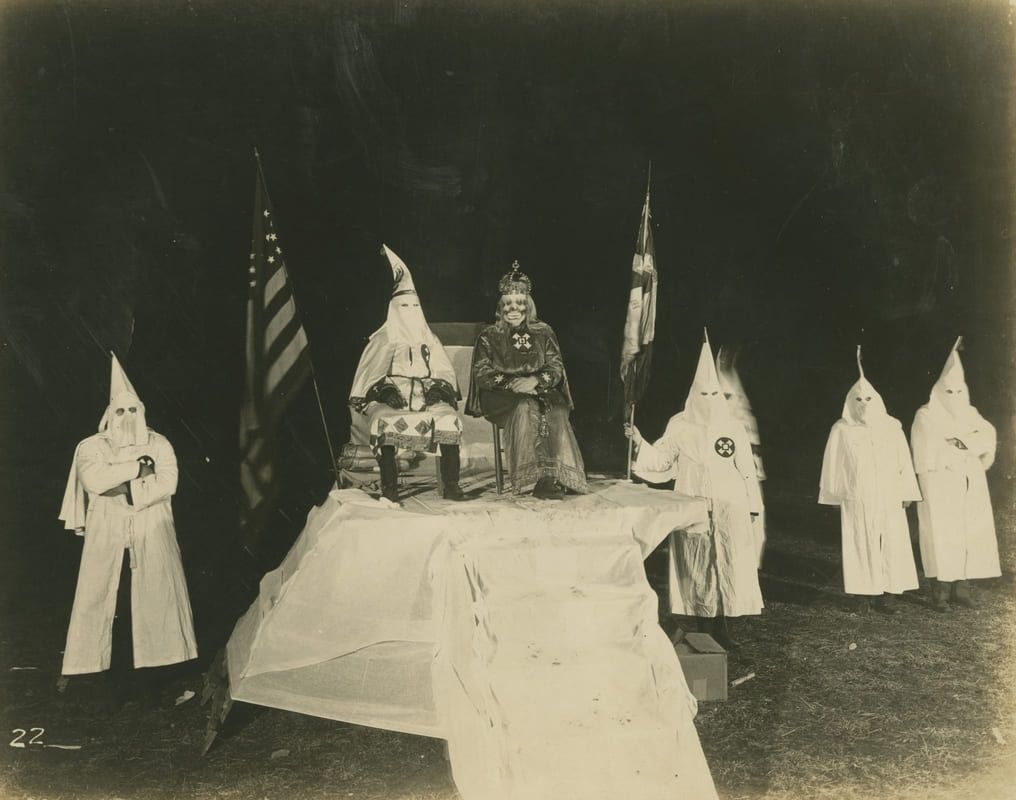
I have been particularly interested that Rocha and Costa risk starting the journey of the mask with the macabre costumes of the first Ku Klux Klan. The harlequins of the American racist sect and the laughable attire of terror express very well the ambivalence of the mask; on the one hand, the act of covering one's face preserves the immunity of a supposed purity (racial, viral, cultural...) but, nevertheless, under the act of hiding, some form of terror always remains latent. In turn, the Klan perfectly explains the ritualistic element of the object we are dealing with, a purification that allows man to recreate himself in his own fiction, symbol and "a form of immortality" (Costa himself explains it well in the very useful catalog that accompanies the expo). As the Greek tragedians knew, the mask propels our ethical condition; however paradoxical it may seem, the condition of opening ourselves to the world requires us to become unrecognizable.
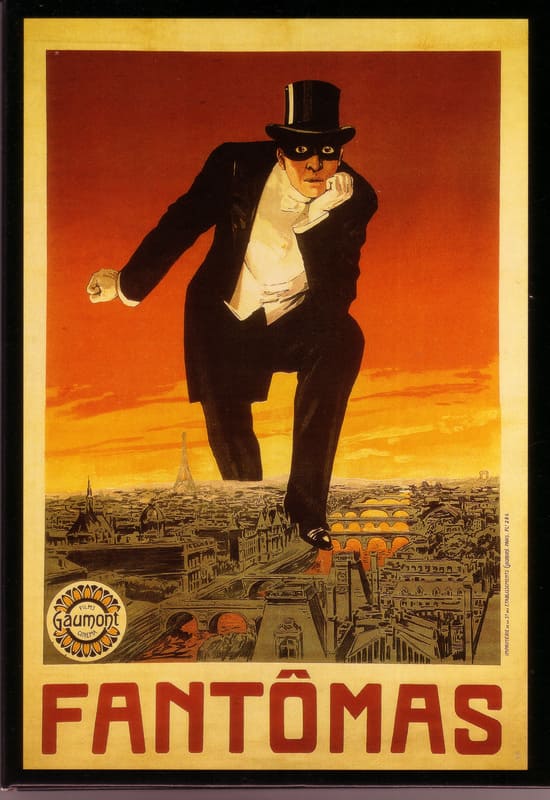
The visual exemplification of all this philosophizing leads directly (and somewhat hastily) to the criminal culture of the Fantômas paradigm, imported from France in the serialized version by Marcel Allain and Pierre Souvestre. It is rightly explained how, especially in the country of our northern neighbors, the figure of the delinquent – who uses the mask to place himself beyond the law and who evades the increasingly perfect facial recognition objects devised by the cops – derives into the surreal avant-garde culture of all artists who use the mask to hide or disfigure their subjectivity. The criminal, in effect, is the skillful and surviving person who absorbs the collective desire to subvert order. The idea is tempting and, again, very current: from being an apparently individual and transferable piece of clothing, the mask transitions to becoming a symbol of a collectivity, whether in the rebellious musketeer or in the everlasting fabric of Subcomandante Marcos.
All this, of course, we read from the present and, it is opportune to remember, that the culture of facial recognition and the pretense of controlling us through the face is not an exclusive invention of that bore Mark Zuckerberg. I believe that Rocha and Costa, in addition to compiling, have devised (as it could not be otherwise) a rather ideological exhibition, and the emphasis on figures like the brilliant Léo Taxil leads me to think that their approach is purely ironic: sooner or later order will force us to wear and live with a mask and, therefore, the most viable solution is that from this faceless existence we extract some form or another of creation. This is certified by the space dedicated to cabaret culture, a muse of masked existence that the creators of the invention rightly link to the imagery of faces deformed by bombs in the First Great War. The mask generates terrible beauties that fascinate us.
Every election is ideological, I insist, and it is symptomatic that La màscara no menteix mai emphasizes the collective/political character of the masked act and forgets the importance of the covered face in aristocratic and libertine culture (when choosing classical harmony, Mozart's Die Zauberflöte is chosen over Don Giovanni, and a somewhat simple vision of Freemasonry is presented, also forgetting the world of the seducer or the flâneur), a path that could have led them to a claim, who knows, perhaps too liberal or right-wing in the eyes of the progressive Barcelona "cultureta". Also, in this exhaustive journey, and even more so if we consider that the CCCB's institutional motto is to connect the city's culture with the planetary one, one cannot help but be surprised that the authors have not dedicated even a piece of wall to remember Catalan anarchism, Joan Brossa's transformism, and the importance of pop occultism in post-Franco Barcelona.
I write amendments of the typical know-it-all who finds it hard to be happy and satisfied… but who is surprised by the fact that appeals to national culture are almost always considered as something dispensable. However, this journey through life without a face provokes thought and is cathartic, and for that alone, one must move their butt and travel to the Raval to wander through its nooks and crannies; even more so, I insist, when our time, which was supposed to be one of total visibility of faces, screens, and objects, has hastily become the occultism imposed by the pandemic.
One cannot help but be surprised that the authors have not dedicated even a piece of wall to remember Catalan anarchism, Joan Brossa's transformism, and the importance of pop occultism in post-Franco BarcelonaRush masked to CCCB, of course, that you will leave the exhibition with a few high-level questions. By the way, curators, regarding the final room of the exhibition; at home, we like to ask ourselves the questions; we don't need academics and programmers to chew them for us as if we were kindergarten children. Please remove the giant mask and the post-its,por favor.
Add The New Barcelona Post as your preferred Google source for free
Stay informed with the latest news.