
The residents of the Gràcia neighborhood, and anyone who has recently passed through Milà i Fontanals street, have been able to witness the transformation of the building on the corner with Monistrol street. The removal of the scaffolding after half a year of work revealed a facade in a color between terracotta and pink, freed from cables and air conditioning units, with double-glazed windows and frames made with natural beige pigments, applied by hand.
It is a building that has survived thanks to its gradual adaptation to different eras and professional occupations. Its owners have always sought the best meaning for its existence at all times, generating economic activity. Today, it houses more than fifty technology companies and companies from the world of design, publishing, architecture, and art. The Acidh Foundation and various Catalan clusters are also there, on a busy corner of Gràcia, with more than 1,200 employees, many of whom live in the neighborhood.
That was the idea of the property owners: to update the facilities to the needs of a constantly changing professional world. And to foster proximity to the neighborhood, especially from the seven street-level premises the building has. A big step in this direction has been the opening of the Aldi supermarket chain's commercial space, replacing an old, gray industrial garage that had practically become inactive.
After six laborious months of work, carried out by the architects of Traçat and the facade specialists VSA Comunicación, the quality and solidity of a construction in which a large segment of Barcelona's labor history has been written have been revealed.
More than two centuries ago
In 1812, on the plot where the building stands, Mariano Juliá Valls acquired a property that included a farmhouse, registered in the old town of Gràcia, as the Vila de Gràcia was not introduced as a neighborhood of the city of Barcelona until the year 1897. In 1848, the same family built a factory where hundreds of workers, mostly women, prepared silk thread for sewing and embroidering, and also fishing nets. When these activities declined, the factory was transformed. The next generation of the Juliá family adapted it so that workshops for various activities could be installed in that same structure, such as bicycle repair, toy manufacturing, and glass workshops, among other trades.
Years later, the noise of those industrial activities left the city, and the building's spaces were converted into offices. This was already the era of the current owners, Javier, Alicia, and Mauricio Juliá, who now manage ---as Grupo Inmobiliaria Monistro--- an innovative concept of work environments for about fifty companies, which have common rooms for meetings and complementary activities to their dedication, and concierge service.
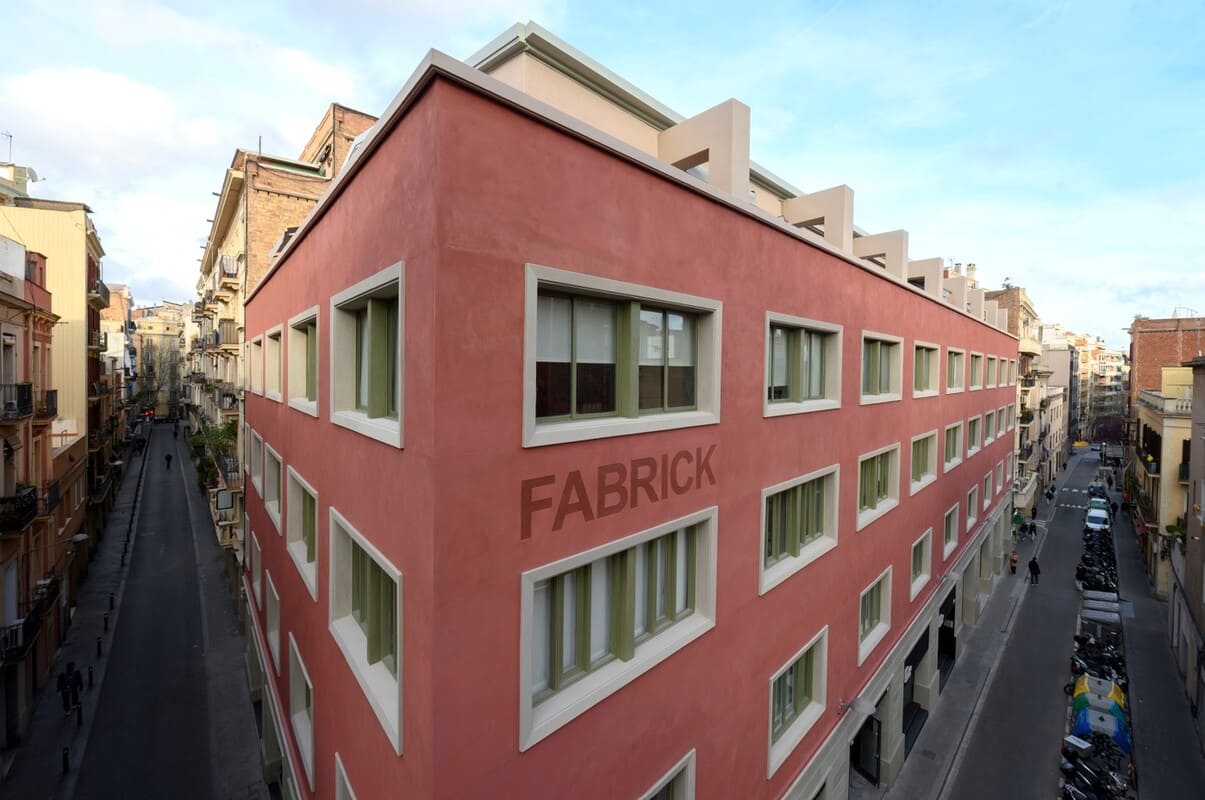
The three siblings leading this project still remember when, as children, they visited their grandparents' factory. Today, they have taken over from their parents in a new transformation of the facilities in harmony with the current business concept, where activity is carried out in a more horizontal and shared manner among all members and collaborators of a company. Spaciousness, light, clarity, and minimalism in the furniture, in large open-plan areas, without pillars, provide quality of life to these workspaces.
They have named the building Fabrick Gràcia, thus respecting and venerating its origin as a thread factory. The hand-stuccoed finish around the windows, on the new facade, is another nod to that past, both familial and neighborhood, in historical and patrimonial recognition in that corner of Gràcia.
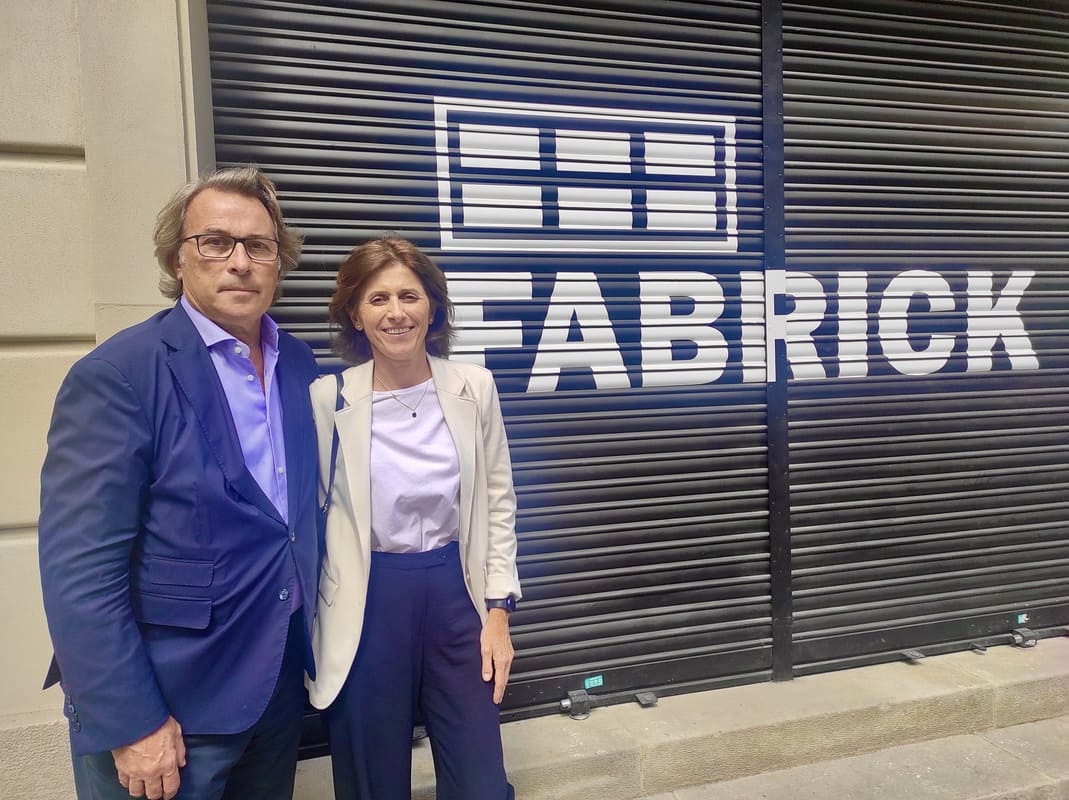
The Inmobiliaria Monistrol Group has invested 500,000 euros in the exterior remodeling, with the intention of doing the same operation soon on the facade of that same property located on Santa Eulàlia street. The building comprises a total of 8,000 square meters distributed over eight floors and commercial premises.
Faithful to the family legacy
Seven street-level premises have been made available for businesses, professional activities, or offices that can serve the neighborhood. Generating, in addition to economic activity, neighborhood relationships. A team of architects is already working in one of them. A bench at its door is the detail that already points to the intention of establishing these neighborhood ties. "The idea is for all our premises to bring warmth to the neighborhood", specify the promoters of an operation that goes beyond an update and material transformation of a physical space. Hence, they meticulously select their tenants. A painting workshop where classes in this artistic discipline are taught is the activity already destined for another of the premises, and a painter has also established her creative space in another of them. "For us, this is more than an investment in a work, it is a documented legacy from the year 1812 in our family", explains Javier Juliá. "We are from here and we like the city, and this is our contribution to it, to improve the legacy we have received and give it shape, with transformation and evolution," adds Alicia Juliá.
One of the actions that the three siblings have carried out to bring the Fabrick project closer to the Gràcia neighborhood has been a guided visit for the councilors of the Gràcia district so that they could get to know the building from the inside and its tenants. Throughout the year, some of the common spaces in the block are used to invite people to jointly celebrate important dates such as Christmas, La Castañada, Easter, Sant Jordi, or Sant Joan. The sensitivity of the owners, therefore, is not only appreciated in the conception of pleasant spaces to work, but also in their close relationship with the people who daily use the facilities in the different companies.
The will of Javier, Alicia, and Mauricio Juliá is to replicate this model of reconciling past and future, and work environment with neighborhood life, recovering other historical spaces of industrial activity that were protagonists of the industrial revolution in Barcelona.
Add The New Barcelona Post as your preferred Google source for free
Stay informed with the latest news.
