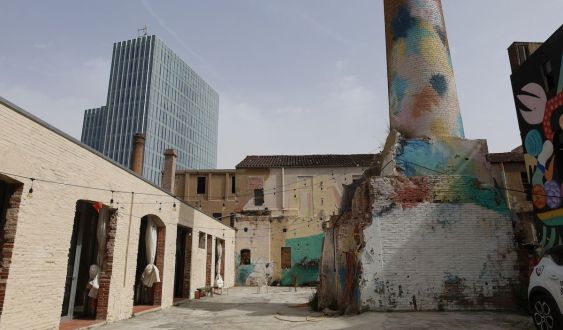
In the heart of Barcelona’s tech district, Poblenou, among offices, coworking spaces, and universities, old chimneys still rise above the modern buildings, and industrial warehouses still survive. La Escocesa is one of the most striking reminders of a time when Poblenou, before becoming the 22@ technological district, was home to a large share of Barcelona’s manufacturing activity.
Despite retaining the large warehouses, glasswork and iron structures of its industrial past, the activities taking place at this former factory complex have had little to do with industry for years. In fact, the former textile factory is now entering a new phase of its transformation, with an ambitious project that will last until 2029 and will transform the complex’s more than 11,000 square meters into a space where art, housing, social economy, and food innovation will coexist.
This new stage, however, does not start from scratch. For years, a part of La Escocesa has functioned as a Fàbrica de Creació de Barcelona, managed by the l'Institut de Cultura de Barcelona (ICUB), more than 30 resident artists work there regularly, in workshops and artistic production spaces. Artistic activity, however, only occupies a part of the more than 11,000 square meters of the complex. The rest of the complex, which the city council has progressively acquired until it currently manages 93% of the whole. It is here that the next major phase of La Escocesa’s transformation will take place.
The ambitious project, which is due to be completed in 2029, was presented today by Barcelona mayor Jaume Collboni at a press conference. With a planned investment of 51.8 million euros —27.2 million contributed directly by the Barcelona City Council and the rest by the project partners, including organizations such as Mercabarna, Fundació AMPAS, or the Generalitat de Catalunya—, the plan aims to breathe new life into the complex’s more than 11,000 square meters.
The new La Escocesa will bring together a range of uses under one roof. Artistic creation, which has been part of the venue's identity for years, will coexist with new housing and facilities focused on social inclusion, such as a new Social and Solidarity Economy hub, and a food innovation center to promote new projects and businesses in the sector. An ecosystem that, according to the city council's forecasts, will also create new economic activity and jobs: more than a hundred direct jobs and about 500 indirect ones, as Collboni detailed.
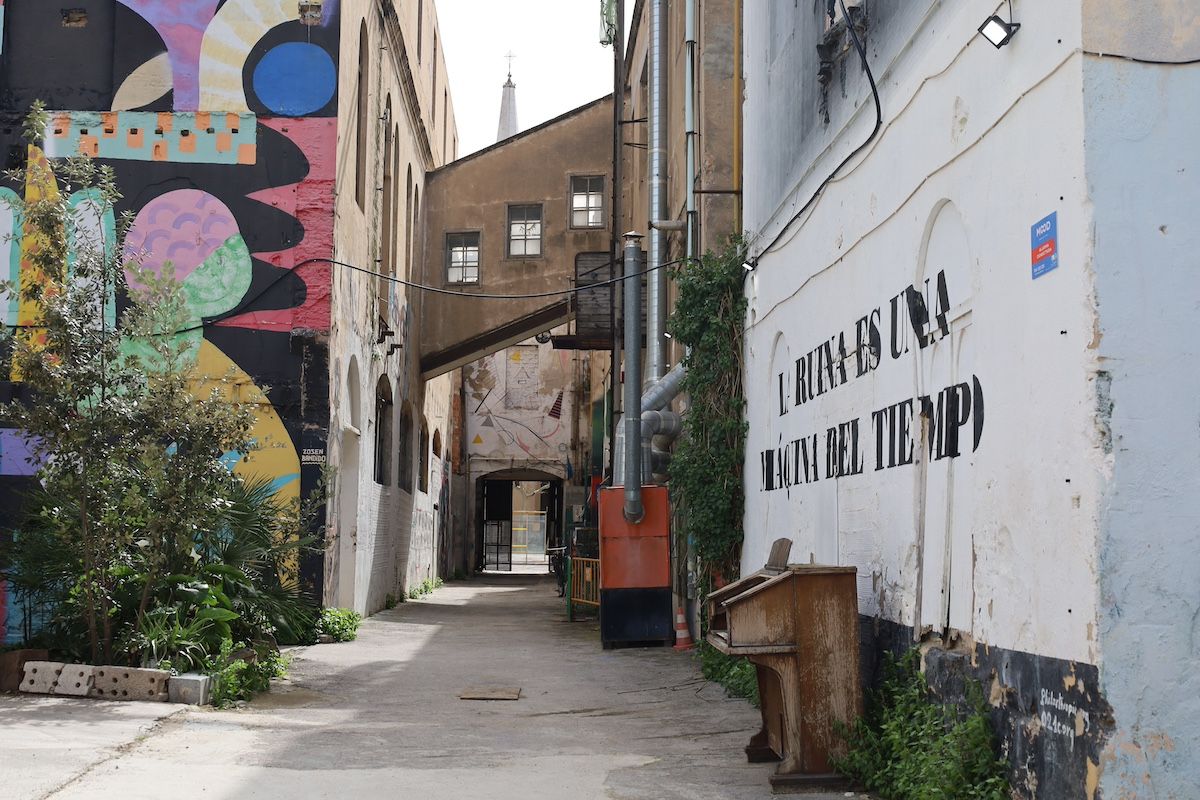
The objective is that these new uses do not function as isolated pieces, but rather relate to each other and share spaces, talent, and opportunities. A model that will begin to materialize this year, with the first procedures and actions, and that will take shape during the works planned for 2027 and 2028, with the aim of having the entire complex fully operational by 2029.
170 years of history and a second life
But to understand what this new stage represents, we must go back more than 170 years, to the origins of what is now known as La Escocesa. The history of the factory site dates back to 1852, when a factory producing chemical products used in textile printing was installed there. The complex grew and its industrial activity evolved until, at the end of the 19th century, Johnston, Shields & Co. arrived, a company based in south Glasgow specializing in the manufacture of tulle curtains and lace curtains. The company established itself in Poblenou with nearly 40 Scottish workers, who trained the first local workers. Their arrival brought not only new ways of working and Scottish customs, but also the name that would eventually give the factory its enduring nickname: La Escocesa.
For almost a century, the factory remained active in the textile industry for almost a century, until it closed in 1984. The warehouses then fell into disuse, but they soon found a new lease of life thanks to a group of artists who, in the late 20th century, understood the potential of the factory as a creative space. That group of artists managed to reach an agreement with the owner of the site to to set up their studios in the old warehouses in exchange for a symbolic rent.
The artistic community gradually became established over the years, despite changes in the ownership of the premises, until the Barcelona City Council began to intervene directly. In 2008, the council acquired a first part of the space and made it available to the artists it , an activity that would end up consolidating as one of Barcelona's Fàbrica de Creació. It was not until 2017 that the council acquired practically the entire complex, currently managing 93%. Since this acquisition, the City Council has been laying the groundwork for the complex’s second life, which now enters its decisive phase with an eye on 2029.
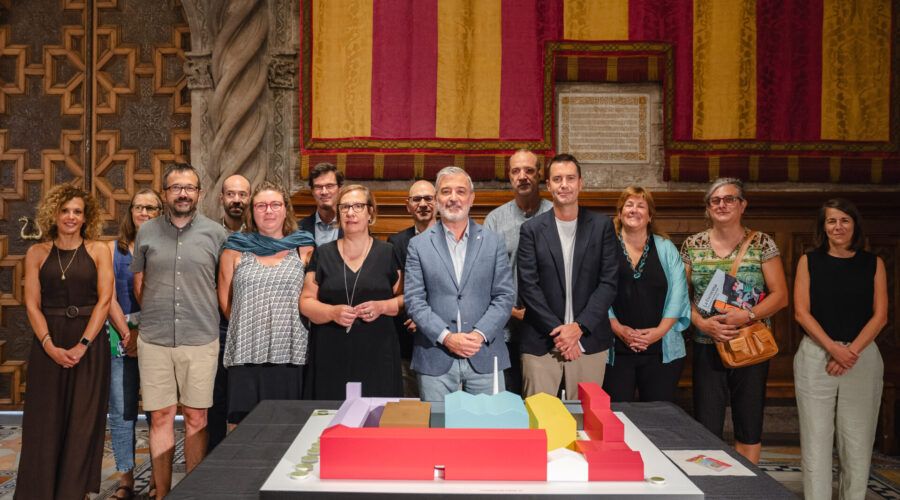
The future of La Escocesa, building by building
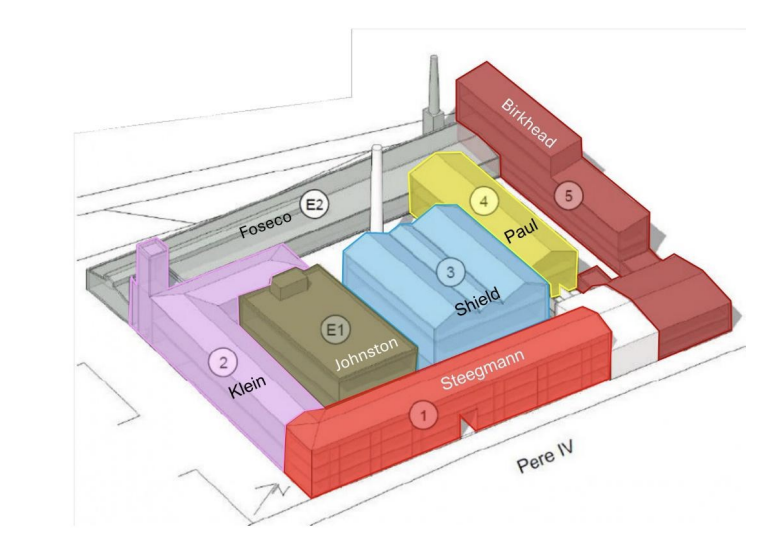
This transformation will unfold across the different buildings that make up the complex, which spans more than 11,000 square meters. Each will serve a different purpose, but they will all be connected as part of a single ecosystem, where art, housing, social economy, and food innovation will share space, knowledge, and opportunities.
On the one hand, the Johnston and Foseco buildings —the latter recently rehabilitated to improve accessibility with an investment of 4.3 million euros—, which occupy about 2,267 square meters between them, will continue to house artistic activity, as they have functioned as an ICUB's Fàbrica de Creació network for years. The Associació d’Idees EMA manages these spaces, where more than 30 resident artists and host individual and shared workshops.
This artistic activity will be joined in the coming years by the Paul building (849 square meters), that will renovated between 2027 and 2028 to become a new inclusive art center promoted by the AMPANS Foundation, an organization specializing in supporting and promoting the inclusion of people with intellectual disabilities and in vulnerable situations. In this new center, creators with intellectual disabilities will be able to work and create together with other artists, exhibit their works, and take part in art therapy projects.
Inclusion, however, will not be limited to the artistic sphere. social dimension of the project will also extend to housing and employment, with the Steegmann and Birkhead buildings as the main spaces for this new dimension of La Escocesa.
In the Steegmann building (1,756 square meters) —where works will also be carried out before 2029—, the upper floors will be allocated to housing for around 30 people with intellectual disabilities, with the necessary support services so they can live independently. The ground floor, on the other hand, will incorporate activities such as a café-bar or a shop-exhibition, which will also serve to generate employment opportunities for these residents.
For its part, the Birkhead building, with about 1,800 square meters, will also be transformed before 2029 to become housing for 42 people, mainly with intellectual disabilities, but also from other vulnerable groups. Between the Steegmann and Birkhead buildings, therefore, the project plans to create 72 places in social housing for people in vulnerable situations.
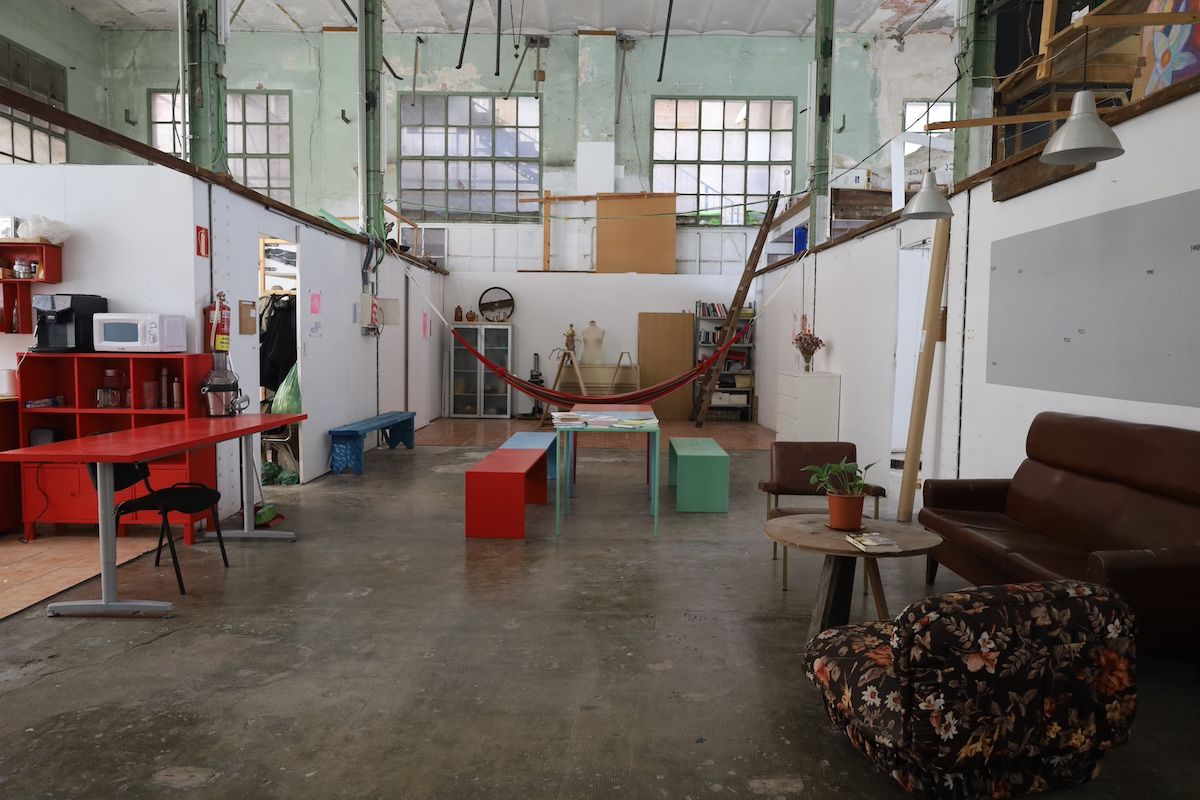
The final component of this social side of La Escocesa will be the Klein building, which will become a a 1,391-square-meter Social and Solidarity Economy hub. The project will be integrated into the network of economic activity hubs that the city council has been developing for months in different areas and neighborhoods, such as the XRLAB audiovisual hub or the Digital Talent Hub in Parc Tecnològic de Nou Barris. In this case, the new space in La Escocesa will cater to cooperatives, social entrepreneurship projects and other initiatives of the social and solidarity economy.
For now, however, the entity that will manage the new space has not yet been chosen, as the proposals submitted in the public tender are still being reviewed.. Once resolved, the organization that takes on the project will have a 40-year concession and will receive a €2.5 million municipal grant to rehabilitate the building, in works that will involve a total investment of 7.5 million.
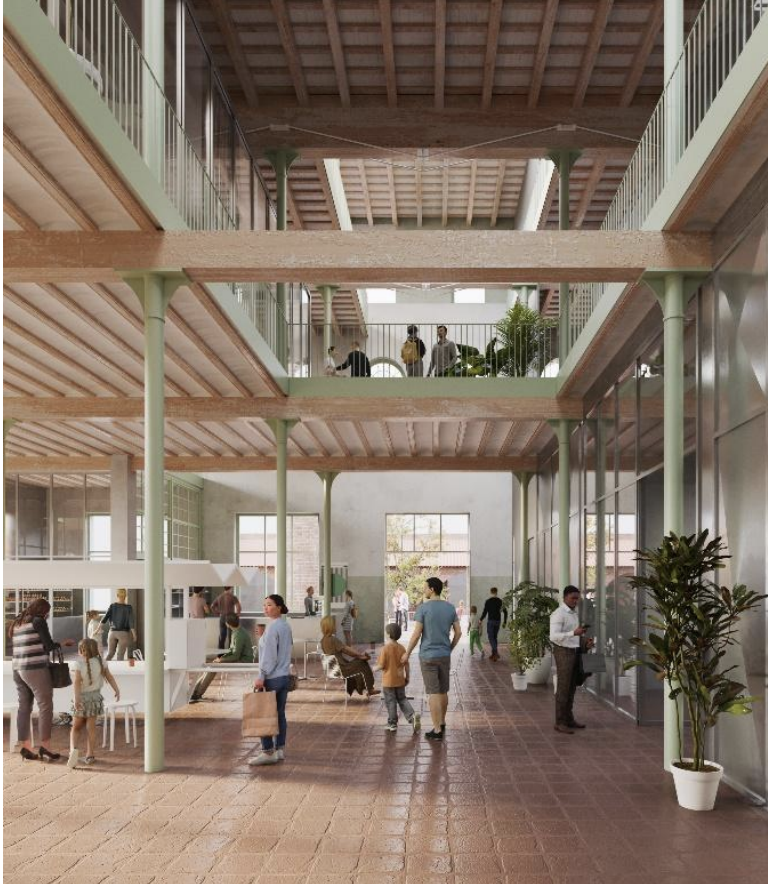
The final major transformation will the 2,170-square-meter Shield building, which will become home to Barcelona FoodLab, a pioneering incubator, accelerator and research center in the field of agri-food technology and gastronomic innovation, led by the Barcelona City Council, through its economic development agency, Barcelona Activa, together with Mercabarna and the Generalitat. The space will support this innovation through a combination of training rooms, coworking spaces and business units, as well as areas for developing and testing new agri-food products and projects.
Add The New Barcelona Post as your preferred Google source for free
Stay informed with the latest news.