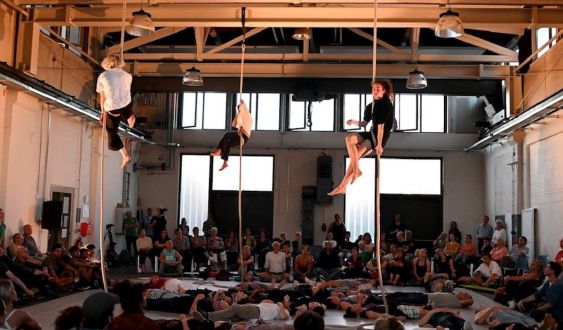
Access to culture is considered a fundamental right, even enshrined in the Universal Declaration of Human Rights. Even so, often, when thinking about cultural rights, one usually looks from the spectator's point of view, when they visit an art exhibition or observe a theatrical performance. However, this right also implies guaranteeing that anyone can contribute to culture and act as a creator. To promote art and support creative processes, in Catalonia, artistic production centers have proliferated in the last three decades, already totaling more than fifty throughout the Catalan territory.
These centers stand as necessary infrastructures that, just as accelerators or incubators facilitate the emergence of startups, play a fundamental role, in their case, in the cultural field. "Artistic production centers are the kitchen where art is cooked. As when a recipe is made, in addition to having the ingredients and passion to make it, a kitchen and an infrastructure are required; the same happens with creators who, without a space and resources, cannot carry out their artistic work," defends Mireia Llunell, director of Estruch, a public facility in Sabadell dedicated to the creation and dissemination of contemporary live arts.
Estruch, inaugurated in 1995, was the first artistic creation center in Catalonia. The Sabadell City Council bought the building of an old dye factory in 1991, and carried out a rehabilitation to convert it into an artistic creation center, given the local community's need for such a space. Currently, the facility has 8,600 square meters to support the artistic creation of live arts, such as theater, dance, or even circus. In fact, since 2015 it has a circus tent, ceded by the Generalitat, in its facilities.
Three decades after its inauguration, El Estruch is no longer an exception, but rather part of a network of more than fifty centers spread throughout the Catalan territory. These facilities, whether publicly or privately owned, encourage artistic creation through residency programs and calls for artists to have spaces for documentation, rehearsal, and creation of their pieces. In addition, these centers also provide economic resources to artists, in the form of fees, so that they can focus on their practice, and also have exhibition spaces to publicly display the work of these creators to the citizenry.
Of these centers, 51 are associated with Xarxaprod, the professional network of creation and production spaces in Catalonia. Established in 2006, its mission is to ensure good practices in artistic creation, as well as to accompany and advise these centers, fostering shared projects among the different facilities and working to professionalize Catalan artists, also ensuring that their works cross borders.
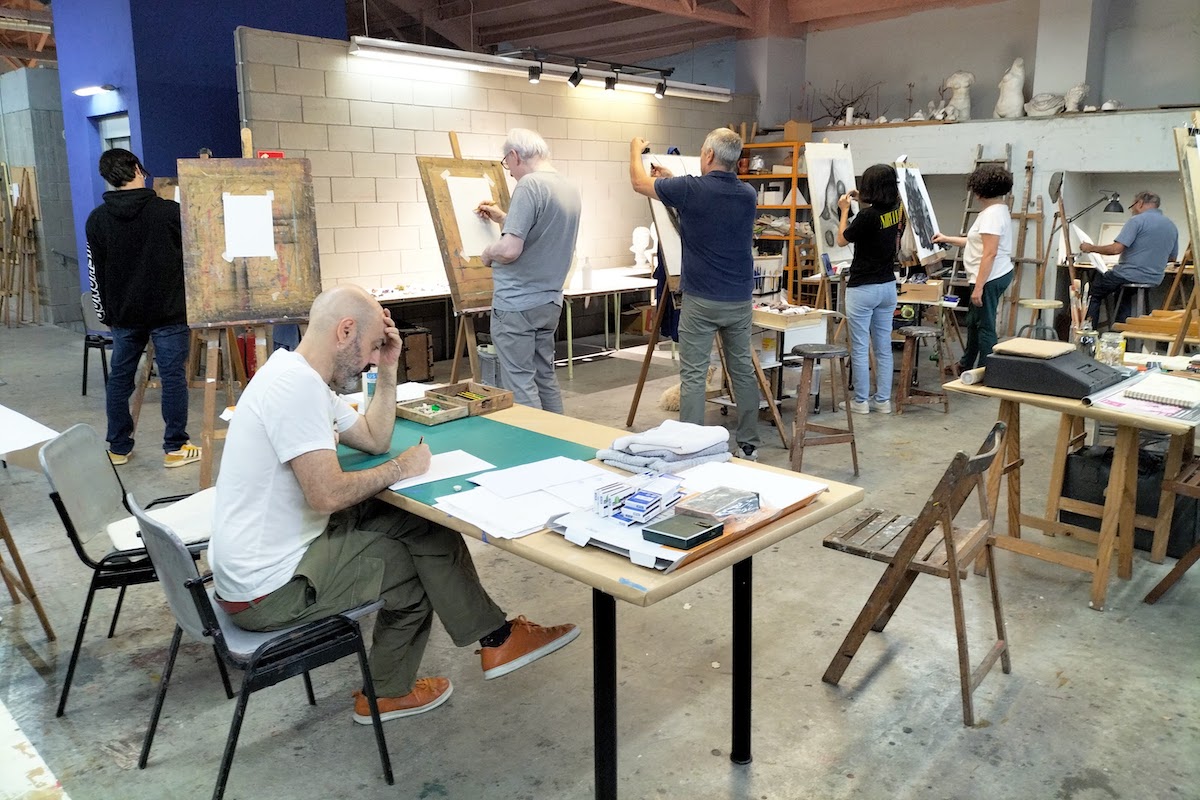
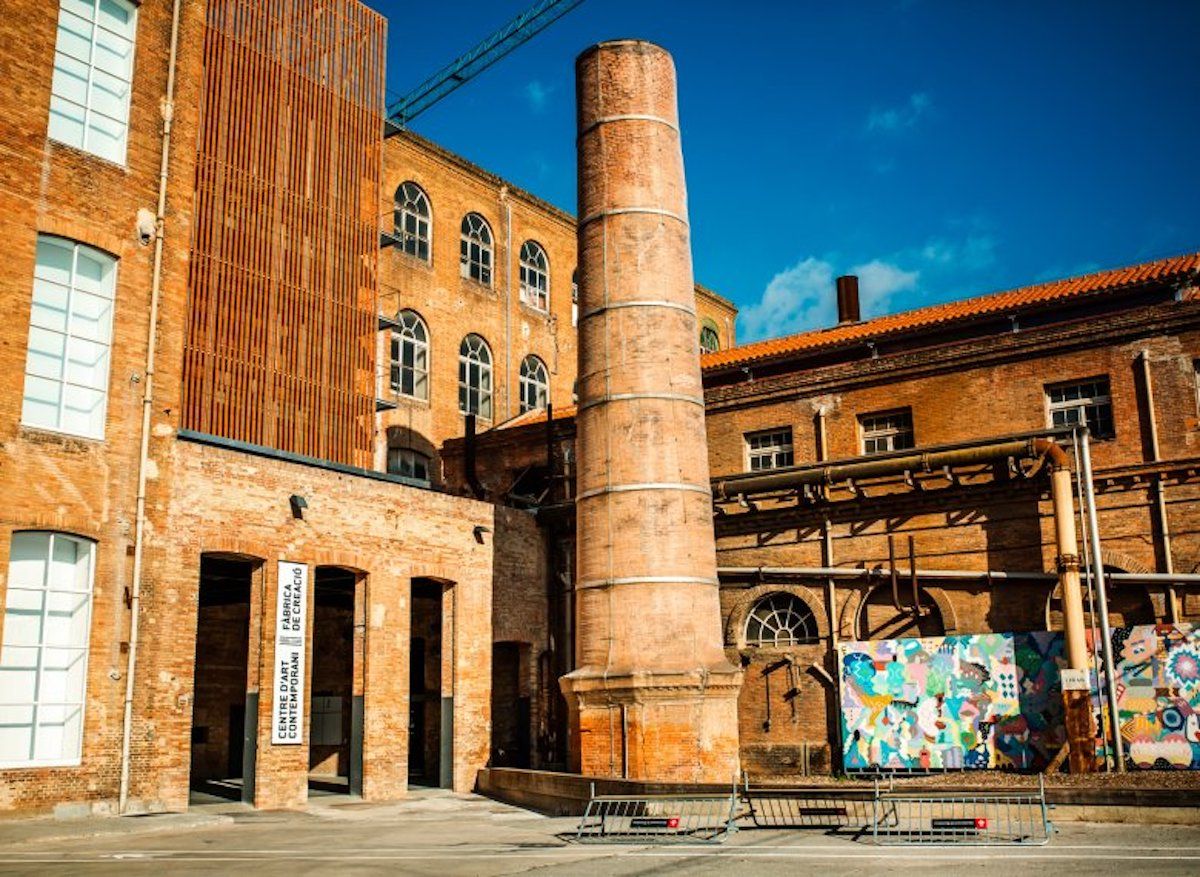
Even so, these fifty centers are unevenly distributed throughout the Catalan territory, since most of them, especially those that are publicly owned, are concentrated in Barcelona and its metropolitan area. In fact, since 2007, the Catalan capital has had the public program of Creation Factories, through which a total of eleven old industrial buildings in various neighborhoods have been rehabilitated and converted into artistic creation centers.
A total of 30,000 square meters of factories have been converted into production spaces, which support different contemporary practices, from dance or painting, to performance or video art. These are public facilities managed by external entities linked to a specific artistic field, except for the Fabra i Coats factory, which is directly managed by the Institut de Cultura de Barcelona (ICUB).
Outside Barcelona, however, there are only four public centers for artistic creation: el Estruch (Sabadell), el Canal (Salt, in Girona), Roca Umbert (Granollers) and el Convento de las Artes (Alcover, in Tarragona), meaning the province of Lleida does not have any public center to support creation. One of the few facilities in rural areas is the Centre d'Art Contemporani i Sostenibilitat El Forn de la Calç (CACiS), located in the municipality of Calders, in the Moianès region.
The center emerged from the initiative of visual artist Roser Oduber, a resident of Calders who in 2007, taking advantage of the fact that the old lime kilns in the municipality had a water leak and needed to be rehabilitated for their conservation, decided to install an artistic creation center in these facilities. The center was born as a hybrid space between art and science, focused on artistic practices with a clear ecological perspective, and promoting research and dissemination of a more sustainable and climate change-aware art.
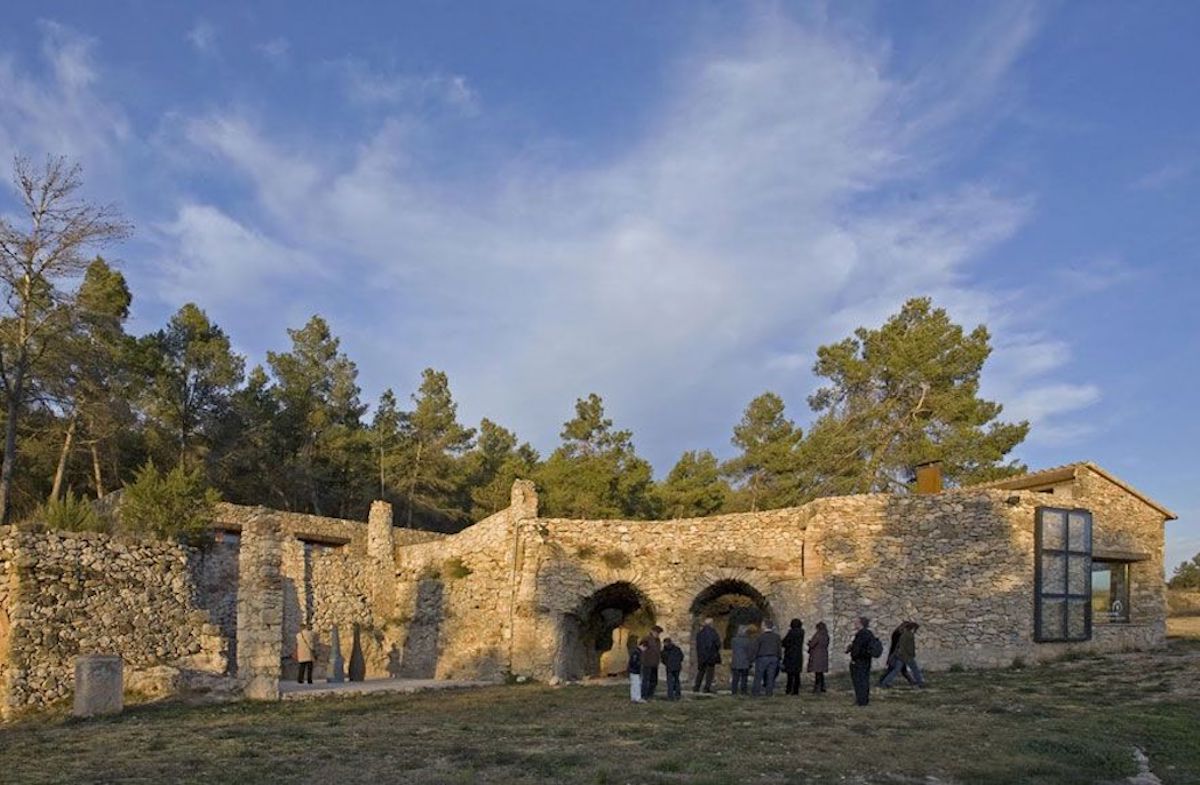
Since its foundation, more than 200 artists have worked at the center, and annually ten creators are in residence, creating, and even sleeping, in its facilities. "It seems that culture necessarily has to go through Barcelona, but from the center we defend that artistic practice can also be developed from Central Catalonia and from the rural world," defends Oduber, also deputy director of Xarxaprod.
"It is true, however, that without a network of advice and support, as well as public resources that invest, rural projects have little chance of survival," acknowledges Oduber. For this reason, Xarxaprod was fundamentally created to support these rural centers, "accompany them in their development and ensure that initiatives are consolidated outside Barcelona as well," emphasizes Laia Casanova, manager of Xarxaprod.
Until the last decade of the 20th century, a large part of the cultural activity in the Catalan territory was in the hands of private or associative initiatives, and it was not until 1995, when Estruch was born as a cultural center, that public policies began to be encouraged for the creation and proliferation of these spaces. Even so, it is especially as a result of the pandemic that there is a boom in public calls and private initiatives for artistic creation. The Malpaís cultural center emerged, precisely, in 2020, from the need of three artists —Joan Pallé, Cayetano Truyols and Nil Safont— to have a studio.
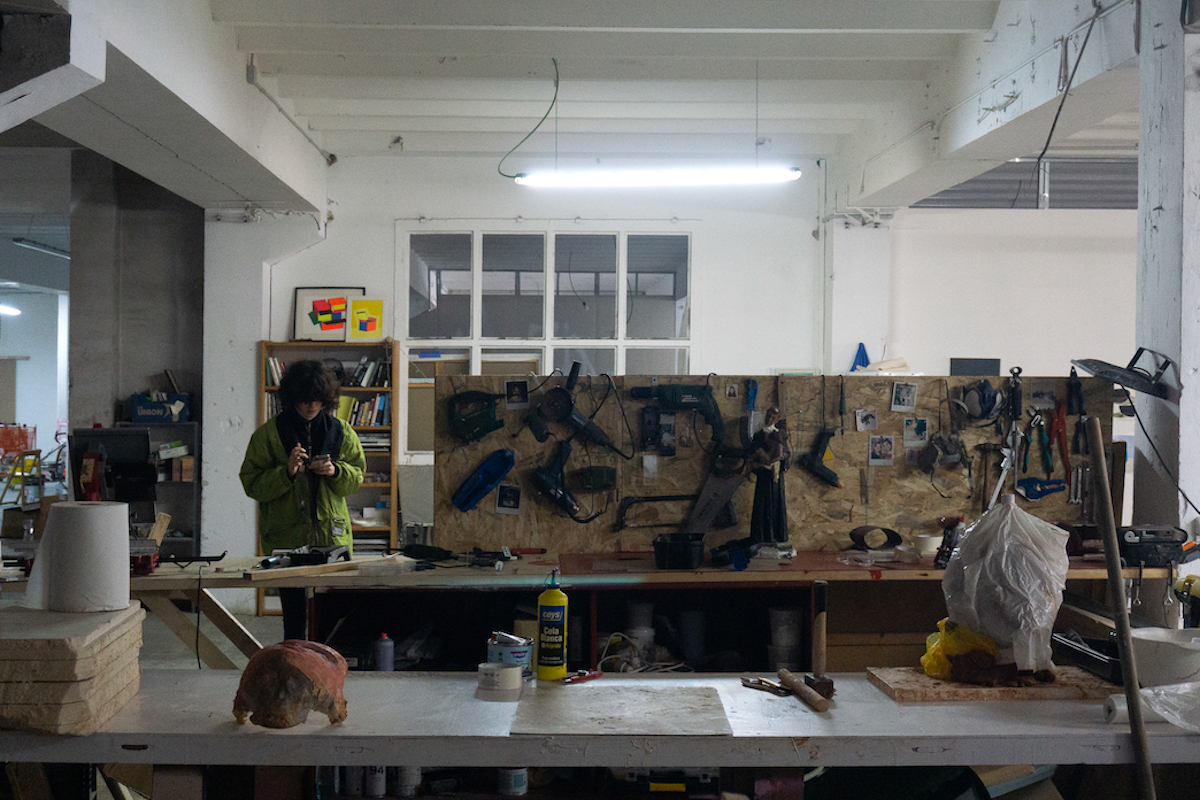
"For the artist figure, having a studio is extremely vital because, otherwise, their trajectory is always linked to precariousness, to moving from one place to another," laments Pallé. The center, located in the Marina del Port neighborhood of Barcelona, grew and now has more than fifteen artistic creation spaces where about twenty visual artists work, beyond its founders, who are mostly young and emerging creators working from sculpture to textile or plastic installations.
The objective pursued by its founders was also for artists to be able to establish themselves long-term, since most artistic creation support centers, especially those publicly owned, operate through annual calls and short residencies, although some of these centers do offer long-term artistic residencies. Barcelona's eleven creation factories, for example, annually award a total of 32 grants, each with an endowment of 6,000 euros, to facilitate the conceptualization, documentation, or rehearsal of works.
Strategies to open up to the citizenry
Although there are increasingly more calls for artists and centers of these characteristics have proliferated in Catalonia in recent years, these spaces lament that they are still unknown to most of the population, and even to their neighbors. "Contemporary art, unfortunately, is not an easy language for the general public," laments Oduber.
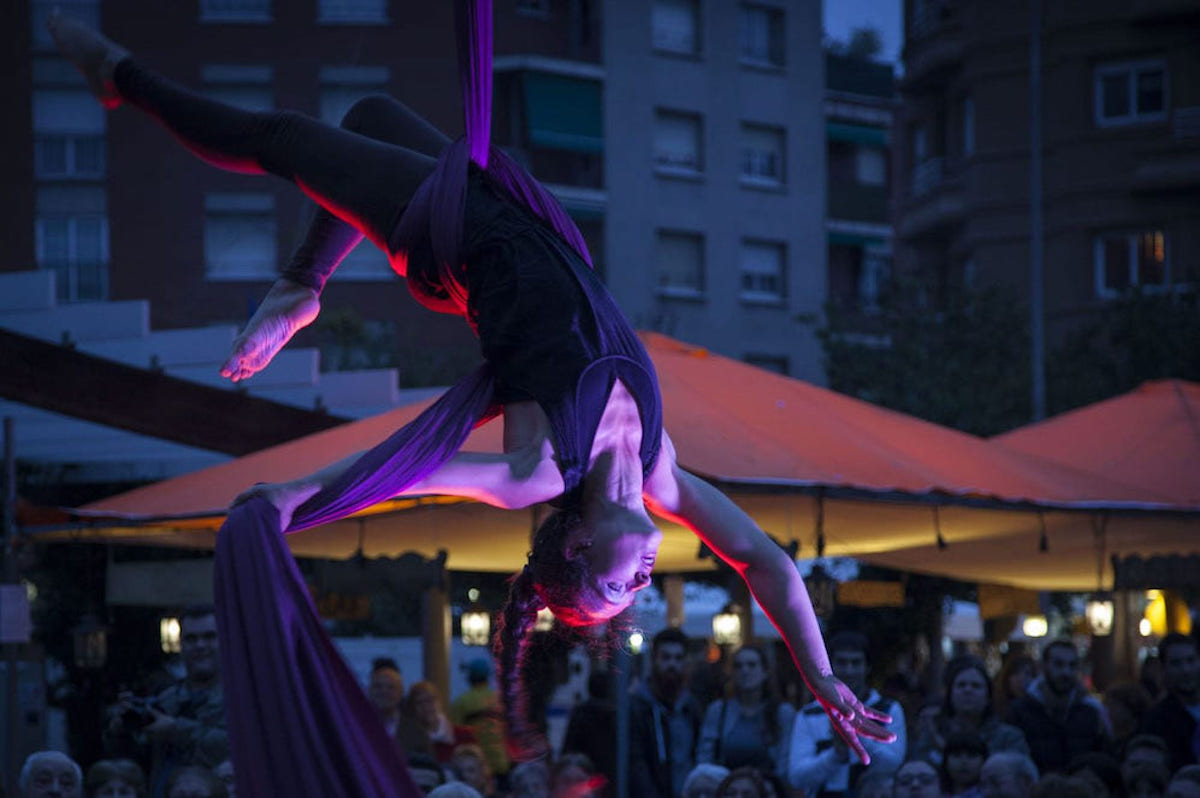
To reach more people, the centers organize open rehearsals, exhibitions, or even take charge of curating festivals. From the Forn de la Calç center, for example, they organize the Jardins de la Llum festival, which is held during Manresa's Festa de la Llum, and the ephemeral art festival Microscopies, to reach new audiences through them. "We always try to ensure that they are not only visually attractive proposals, but also have a background linked to our hallmark, sustainability," defends Oduber.
In addition to the festivals, the facility also has an extensive mediation program with city schools. Along these lines, Xarxaprod has created a training recognized by the Departament d'Educació so that teachers can understand the work process of a creator and incorporate this training into the classrooms. With this same objective, Xarxaprod will also organize this year, for the first time, an open house program in 43 of these creation centers that will last until November, and during which the centers will also organize special activities and shows.
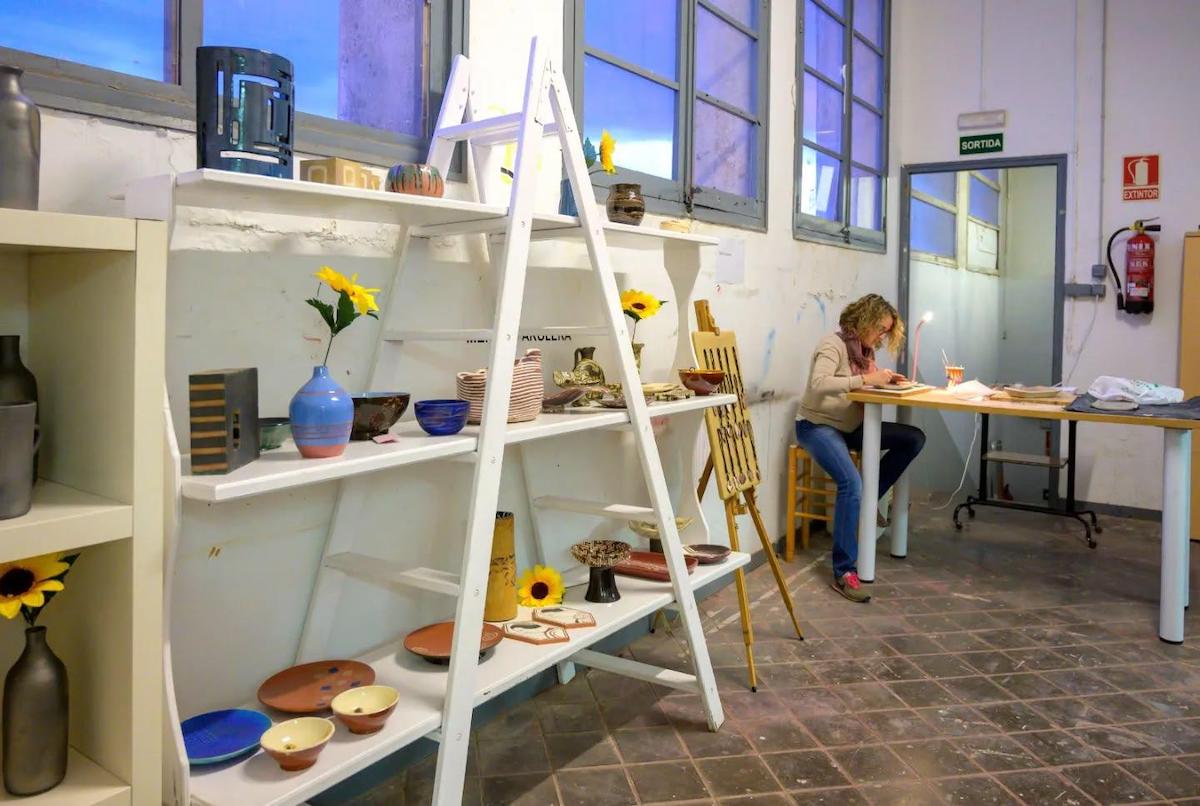
"The objective is for the centers to be able to connect with their closest context, so that neighbors can learn about the inner workings of the creation processes and be aware that they have these spaces in their neighborhoods or cities, as well as for artists to also see the richness of the centers and the available resources," defends the manager of Xarxaprod. A need to get closer to the population that is also defended by Estruch, since, although about 800 people pass through the center every day ---also because they have a popular bar in their facilities---, they detect that the residents of Sabadell still do not know the work of the center or the artistic productions that are cooked within its four walls, despite being a space widely used by local companies and creators.
With an annual budget to carry out its activity of about 316,000 euros, the space annually calls for residencies for a total of 200 creators and artistic companies, of which 125 are for local creators. Professional artists from all over the world, from Japan to Canada, coexist within the space with local amateur companies, with the aim of creating synergies between these creators.
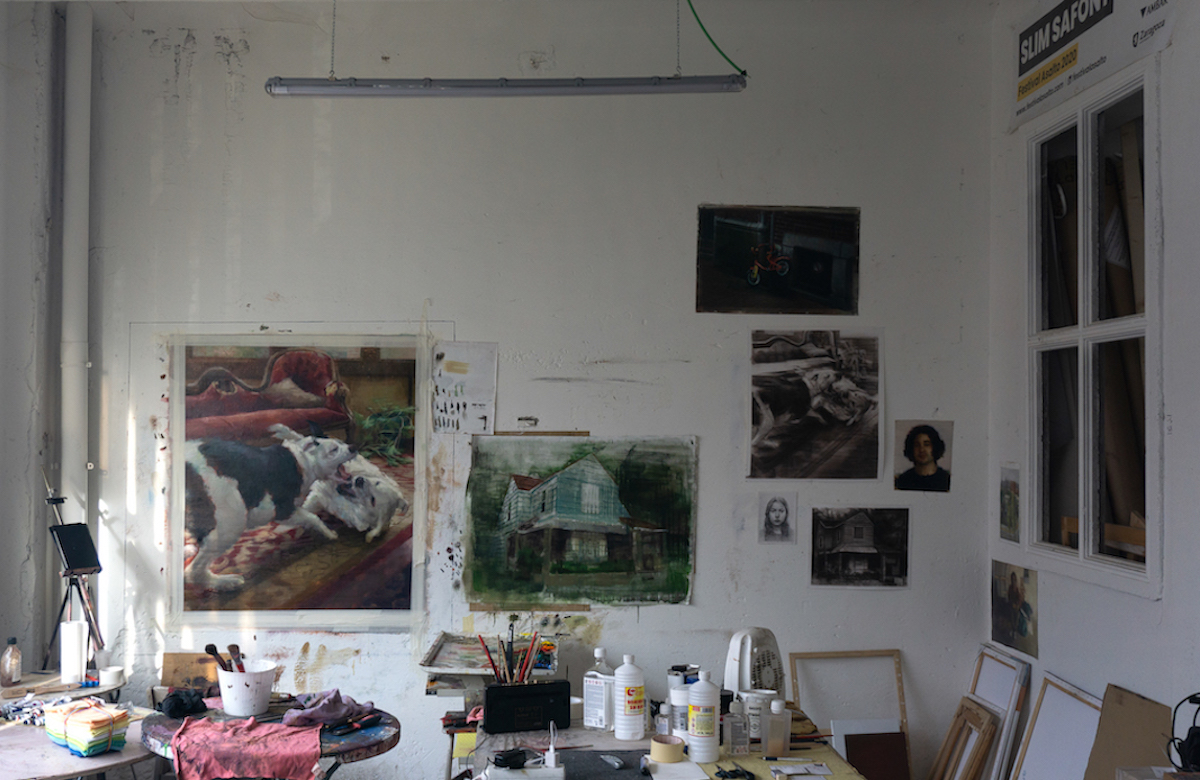
In addition to the lack of public awareness, the centers identify that another challenge for the sector and these spaces is the professionalization of artists. "Society has to understand that investing in culture is not an expense, but a public policy that must exist, just like healthcare or education, and that culture has a value that also has to be paid for," defends Casanova, who acknowledges an effort by the public administration to subsidize these projects, especially in recent years.
For the professionalization of the sector, the centers also have their sights set on the international arena, not only by opening residencies to artists from all over the world to come and work in Catalonia, but also by working jointly, especially with the network of artistic centers in Occitania, called Air de Midi, and in the Balearic Islands, RESIB. "One of Catalonia's pending issues is for artists to be able to grow not only within Catalan territory, but also to cross borders," defends Pallé.
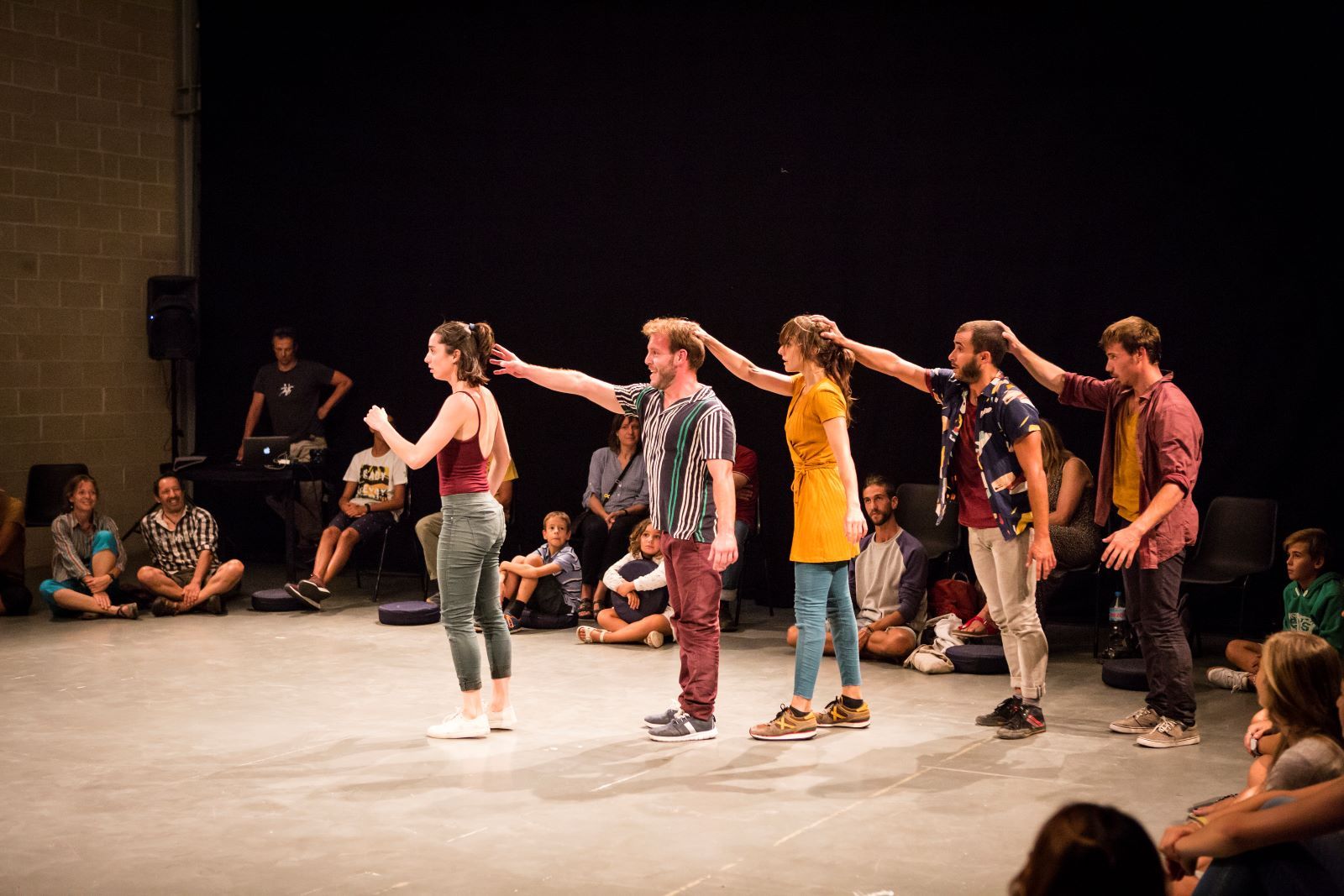
Although especially in recent times, centers supporting artistic creation have proliferated throughout Catalan territory and there are increasingly more calls and public subsidies, they warn that these centers are unprotected. While theaters and auditoriums are integrated under the Sistema Públic d'Equipaments Escènics i Musicals (SPEEM), the Generalitat's network to consolidate and distribute cultural activity homogeneously throughout the territory, production centers are not included in an equivalent body.
"There is a very great creative power in Catalonia, but it is still difficult to defend that public support is needed to foster these creative processes, which are the basis of art and which, in some cases, involve more than five years of work," defends the director of Estruch. "Unfortunately, there is still the consideration that culture is dispensable, even though, without culture, no other service can be developed, and cultural facilities are the first to notice political uncertainty," laments Oduber.
Add The New Barcelona Post as your preferred Google source for free
Stay informed with the latest news.
