
Foreign professionals living in Barcelona and working in one of its increasingly numerous startups or multinational companies continue to see it as a cosmopolitan and attractive city to move to. The so-called expats value its quality of life, climate, location, healthcare system, public transport, and cultural, gastronomic, and sports offerings as positive points. However, they remain dissatisfied with the administrative procedures they have to complete to settle in, such as obtaining the NIE, and the taxes they have to pay, considering them too high compared to other capitals. They also believe that the political situation has improved compared to previous years, although they still consider it somewhat bad.
This is according to the sixth edition of the Talent International Monitor, a biennial survey conducted by the Barcelona Global association in collaboration with Banco Sabadell. More than 1,000 people from 90 countries participated in the report, in addition to some 200 companies, research centers, universities, chambers of commerce, and cultural institutions. The different aspects evaluated are scored from 1 to 7: scores are negative from 1 to 3; neutral if they obtain a 4, and positive from 5 to 7.
All the factors mentioned above facilitate the attraction of international talent to the Catalan capital, which is increasingly demanding technological profiles that local universities cannot generate to respond to the boom in emerging companies. According to the study, satisfaction among expats regarding the ability to hire workers from other countries has improved, going from 4.9 out of 7 in 2019 to 5.2 in 2023. In this sense, the recommendation they make to other colleagues to move to the city remains stable, with 5.2 points out of 7. And, in addition, 48% of respondents say they have no plans to leave.
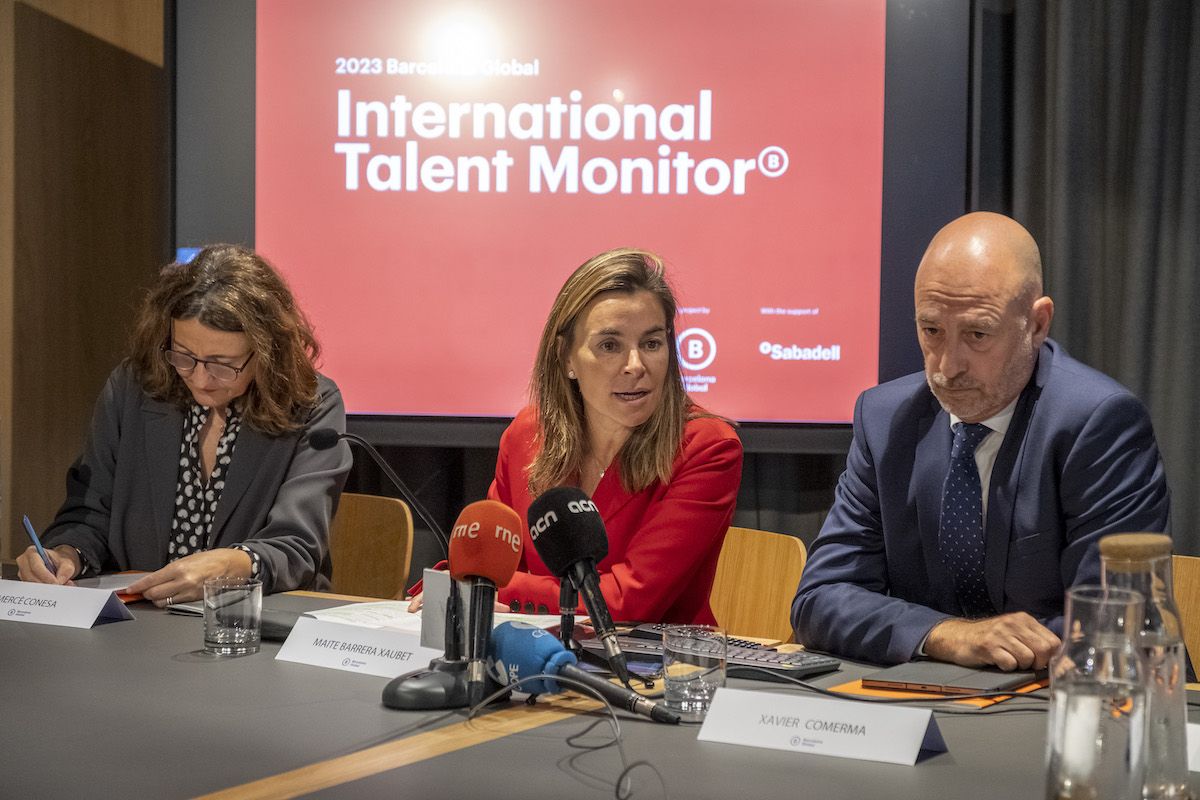
Even so, foreign professionals surveyed by Barcelona Global are beginning to encounter the same difficulties as locals. "In reality, there isn't much distance between what many of these international residents think and what Barcelona natives born here think, because once they live in Barcelona, they suffer the same problems," remarks the president of the business lobby, Maite Barrera.
'Expats' also reject mass tourism and find it increasingly difficult to rent or buy an apartment, giving this issue the lowest score in the study (2.6). According to the report, 78% of respondents live in the center of the Catalan capital, an option that has long been unrealistic for Barcelona residents when they want to become independent. Adding inflation, their assessment of the cost of living is worsening, going from 3.8 in 2019 to 3.3 in 2023, a more pronounced drop compared to 2017, when it obtained a 4.1. In addition, 74% are not happy with their salary. The study indicates that 49% have salaries above 50,000 euros, far from the average salary of all residents of the city, which stands at 32,000 euros.
What has also considerably worsened is their perception of safety. If in 2017 it achieved a good score (5.1), this issue worsened in 2019 and 2021 (4 and 4.3, respectively), and has dropped even further this year, standing at 3.7. Both this issue and the difficulties in finding a home are beginning to slightly affect their general opinion on living conditions in the Catalan capital, dropping from 5.5 to 5.4.
"There is not such a great distance between what international people think and what Barcelona residents born here think," explains Maite BarreraDespite the bad scores in housing prices and safety, theexpatsBarcelona continues to score very well, even in those aspects sometimes little valued by locals.An example of this is public transport: they see it as efficient within the city and improve their opinion of it, going from a 5.6 out of 7 in 2019 to a 5.9 in 2023.Satisfaction with the city's international connection through its airport has also increased, reaching a 6, the highest score in the report prepared by Barcelona Global.
Furthermore, one of the main concerns of professionals surveyed by the business lobby is the city's air quality, an issue included for the first time in the Talent International Monitor. They rate it with a 3.5, showing some dissatisfaction, which is why they urgently request public policies to reduce pollution and positively value initiatives promoted by the City Council such as superblocks. They also ask to improve public transport connection between Barcelona and its metropolitan area, even more so if housing prices in the center continue to rise, and to promote sustainable mobility solutions. 58% of respondents use public transport, and those who use cars and bicycles are almost tied, with 18% and 15%, respectively.
Measures to be taken
Based on the opinions gathered in this survey, Barcelona Global guides its actions and demands to the administration. The objective is to continue attracting what the association calls "impact talent," that is, "generous and not selfish professionals who want to contribute to society and are concerned about issues such as the environment and air quality," in Barrera's words.
Firstly, the association demands to improve taxation and the simplification and digitalization of administrative procedures, as well as to make existing measures in that area more widely known, such as the International Welcome Desk. It also advocates for fostering public-private collaboration to address rising housing costs, generating more supply to curb price increases.
The report recommends promoting sectors such as sustainability, culture, technology, and the startup ecosystem, but also education. In this regard, the business lobby sees it as a priority to promote an affordable international school and increase the internationalization of universities.
Add The New Barcelona Post as your preferred Google source for free
Stay informed with the latest news.
