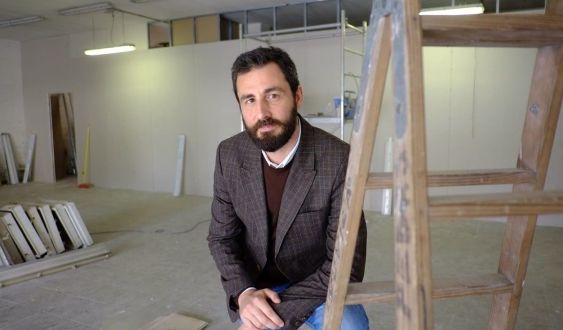
Two proclamations are very finely woven throughout his talk: a) diversity, b) proximity. The first is inherent to art, "because it offers you the challenge of questioning yourself. The conservative can keep looking at the corner, but whoever wants to learn, let them see art. Art is a window open to new possibilities, a liberating experience that provides a broader vision of the world," he maintains. The second of his proclamations we owe to the state of things (SARS-CoV-2), "which has reconciled us with our immediate surroundings, discovering a spirit of proximity that we hope will stay with us."
Each gallery (in Abe there are already 34) has a different vision behind it, an artistic ecosystem that corresponds to the eye of the gallerist, with which one can feel affinity or not, because diversity is one of our fundamental values." But, wasn't the gallery a business? The museum exhibits and the gallery trades, isn't that right? "We don't forget that we are a business, of course, that provides work for many people, from an administrative assistant to a framer or a transporter; there are many specialized professions that live around us. And it is a business of trust: we help to form the artistic vision of those who come to visit us, and to create art collections. We are not opaque or hermetic places: people leave with the feeling of having learned. I like to say that you leave a gallery transformed."
I like to say that you leave a gallery transformedThey have managed to get the ICEC (Catalan Institute of Cultural Companies) to finance a campaign disseminating their cultural work. Because, is culture a basic necessity? "It is an essential good, as stated in the Constitution.Without culture there is no civilization, it is an intrinsic part of the human beingWe are many who need culture as much as the air we breathe."
And against the restrictions of the moment, imagination. "The first initiative that the pandemic has driven is the return to proximity. We had neglected local art in favor of internationalization at all costs, but we have been forced to stay home and we have realized that, hey!, not all is lost: we have rediscovered local art, and the public has responded very well. International art can now be bought online, if you understand, of course. And right now, who wants to live on a plane again, visit seven international fairs a year, wait, I have a dinner in Kiev and tomorrow I'll be back... Not me, certainly. Besides, we have finally realized that something like this is unsustainable: we have to measure our strategy very carefully."
Who wants to live on a plane again, have dinner tonight in Kiev and then return? We have rediscovered local art and the public has responded very wellAnother initiative by Abe has been to launch a program for the training of gallerists"This profession is not learned anywhere. We are self-taught, but we need professional training to improve. An essential value of the gallerist is intuition, but also, indeed, this is a business, and one cannot neglect the economic aspect, in which we have frequently been amateurs. The profession must be organized."
Álex Nogueras came to gallery work through Art History, which he studied at the University of Southampton, England. Previously, he had graduated in Business Management and Administration in Barcelona. His first job in art was as a guide at a medieval castle, then he joined the La Caixa Foundation as an exhibition coordinator, and subsequently worked for a gallery; until in 2004 he founded his own with Rebeca Blanchard, first in Barcelona and then in Madrid.
Public investment and international projection
Major Spanish museums report having lost up to 80% of their audience during the pandemic. "We haven't evaluated it yet, but as a business, I can say we've saved the year. We've reduced many expenses and, although we've invoiced less, this is compensated by an increase in margins. Realize that just one international fair costs us up to 30,000 euros. Of course, this is to the detriment of artists, because their work travels less abroad, but this international projection of local creators corresponds to public administrations. Every country must have a collection of its own contemporary art, and for that, it must buy it at the right time, when it is emerging. Now is not the time to buy a plensa or a barceló, it was in the 80s. It is a duty of public culture to acquire work that in 50 years can explain the first decades of this 21st century, which in turn makes it possible for artists to dedicate themselves to their work with freedom and professionalism, without having to resort to part-time jobs as teachers or waiters."
Now is not the time to buy a plensa or a barceló, it was in the 80sThey have managed to get the Catalan Government to triple the budget it dedicates to the acquisition of local and emerging art, but the amounts continue to be ridiculous (400 euros annually). They have not managed to get the Spanish Government to reduce VAT, so a gallery owner travels to Perpignan and, in just a few kilometers, pays 5% in taxes instead of 21%. Abe is also responsible for gallery owners having formed a real guild, gaining a voice with the administration and the public, mainly through two annual events,Barcelona Gallery WeekendandArt Nou, focused on emerging art, in addition to the Contemporary Art Circuit platform. "In these four years as president of Abe, I have felt that we are listened to seriously and taken into account when generating new policies.We have managed to unite and for the association to be considered a valid interlocutor, when traditionally we had been a cultural segment easy to please and individualistic.
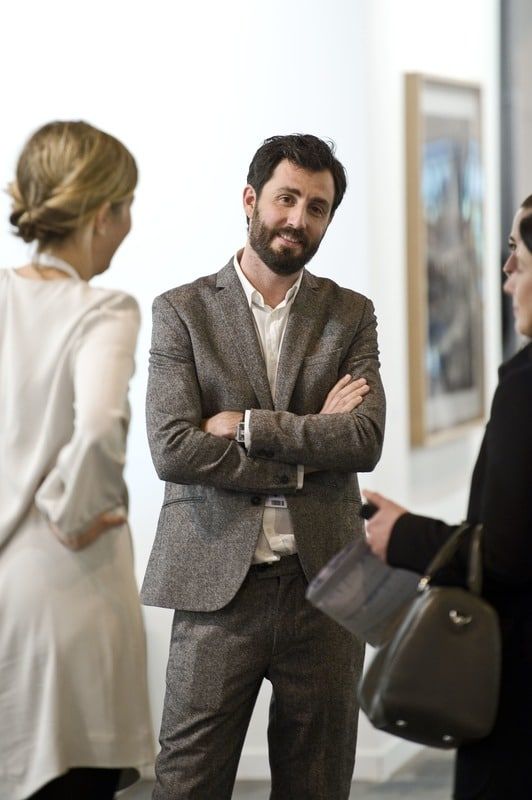
Has Barcelona ceased to be an artistic reference? "No, there is a very strong and very active breeding ground. It may be that Macba no longer has the international visibility it once had, but the museum does not define Barcelona's art scene. It has been the specialized galleries that have reactivated younger art, which even lacks resources, providing them with the necessary freedom to create."
Art and culture can combat polarization and division (social), reads the manifesto of an imminent international art biennial that is beginning to take shape in Barcelona these days. Do you agree? "I don't see why they should. Art generates diversity of opinions, and it's good that it does."
Add The New Barcelona Post as your preferred Google source for free
Stay informed with the latest news.