
Internationalization and specialization. These are the two engines guiding the growth plan of Esteve, a Barcelona-based family-owned pharmaceutical company that in 2023 managed to exceed 700 million euros in turnover and is on track to celebrate its centenary in 2029. Six years ago, the company launched a new strategic plan that incorporated various decisions, such as the sale of its generics business (Pensa) to the Japanese Towa, the acquisition of the German pharmaceutical company Riemser, the entry of the German investment group Lubea into its capital (with a 26% stake) and, a few weeks ago, the acquisition of the French pharmaceutical company HRA, which allows it to take a step forward in the business of medicines for rare and serious diseases. In parallel, Esteve has strengthened its industrial structure with the purchase of the Unión Química Farmacéutica (Uquifa) factory in Lliçà de Vall (Barcelona) and, now, with the announcement of the upcoming construction of a new active ingredient plant in Celrà (Girona).
Staffan Schüberg, CEO of Esteve, leads the company with the ambition of turning it "into a leading international pharmaceutical company in specialized medicine areas." To achieve this, in addition to acquisitions, it is crucial to have new self-developed medicines that reach the market ---such as the recently launched Inbrija, for Parkinson's, and Velyntra, for acute pain--- and that allow the group's vision to be fulfilled: improving people's lives. Thus, investment in R&D reached 38 million euros last year, a budget that can be largely financed thanks to the good performance of Esteve's business dedicated to the production of pharmaceutical active ingredients for third parties (contract manufacturing or CMO, in industry jargon).
This division, which has large multinationals as clients, grew by 18% in 2023 (446 million euros) and already generates 62% of Esteve's total revenue, which last year reached 710 million, up 10%. Much lower was the advance of the proprietary pharmaceutical products business, with sales of 259 million, up 1.6%. The medicines from the group's 110 brands, linked to therapeutic areas such as oncology, the central nervous system, pain, and ophthalmology, reached nearly eight million people in the 50 countries where the company operates, which has its own subsidiaries in France, Germany, Italy, Portugal, and the United Kingdom. Combining the two business areas, the weight of the Spanish market is now only 25%; the rest of Europe generates 49% of the turnover and the rest of the world ---especially the United States--- 26%. All three geographical areas experienced growth last year.
The manufacturing of active ingredients for third parties soared as a consequence of the COVID-19 health pandemic, a fact that has translated into an average sales growth of 14% in the last four years (in 2020 Esteve invoiced 476 million). Much more pronounced, and also thanks to the CMO business, has been the improvement in profitability, with an average annual increase in EBITDA of 28% between 2020 and 2023. Thus, in the last year, EBITDA has risen to 128 million (+1%) and net profit has reached 60.6 million, with a 6% increase, as explained this Thursday by Esteve's new CFO, Roser Gomila, who joined the group from Reig Jofré.
"Our goal is to ensure a future based on profitable growth that allows us to generate the resources we need to be able to invest," highlights Gomila, who states that the plan also contemplates the possibility of continuing to grow inorganically with acquisitions thanks to the strengthening of the balance sheet achieved with the incorporation of Lubea into the capital. According to Schüberg, this investment by Lubea is long-term and, for now, there are no plans for this stake to increase or decrease. "We are very happy with the relationship with our new shareholder," said the CEO, after pointing out that, currently, there is also no timetable for going public, although he does admit that it is one of the future options the company has on the table. In fact, Esteve already operates internally as if it were a listed company in terms of corporate governance and financial reporting. "When the board deems the IPO appropriate, we will be ready, but, for now, there are no deadlines or timetable," Schüberg asserts.
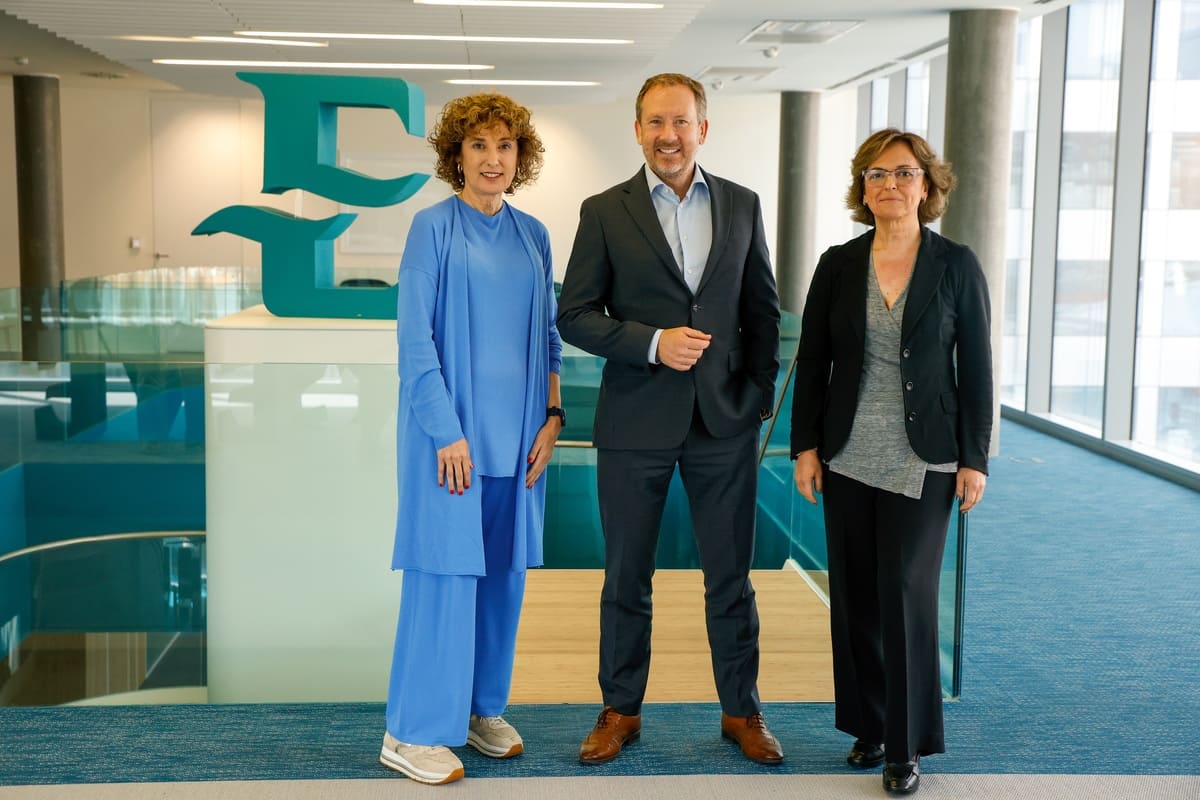
In a meeting with the press, both executives admitted that the strong growth of the CMO division has caused the group "not to be able to satisfy all the demand for APIs (active pharmaceutical ingredients)" that they receive, making it necessary to invest in expanding production capacity. In this regard, Esteve has just launched Lotus, a project whose central element is the construction of a new plant for active pharmaceutical ingredients in its industrial complex in Celrà, which will increase the group's global production capacity by between 10% and 15%. The company has not wanted to disclose the investment it will allocate to the new plant or the details of the project, which it explained it plans to specify throughout June. Currently, Esteve's CMO business production capacity is 1,000 m³ thanks to five factories located in Catalonia (Celrà, Lliçà, and Banyeres del Penedès), Mexico, and China, where it has 350 employees. The group also owns a production center for pharmaceutical specialties in Germany and an R&D center in Barcelona.
The company chaired by Albert Esteve has a good financial situation to face this investment plan, since at the close of 2023 it had a cash position close to 400 million euros (387 million compared to 90 million in treasury at the close of 2022). In addition, its volume of debt is only 112 million, fundamentally linked to a long-term loan with the EIB.
After hiring a hundred people in 2023, Esteve's workforce exceeds 2,000 employees, from 28 nationalities. Women in leadership positions account for 47%. Esteve already uses 100% renewable energy in all its centers and has set itself the goal of becoming a zero-emission company by 2050.
Add The New Barcelona Post as your preferred Google source for free
Stay informed with the latest news.
