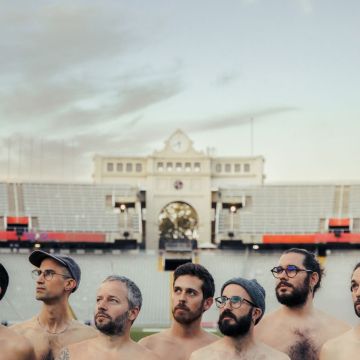
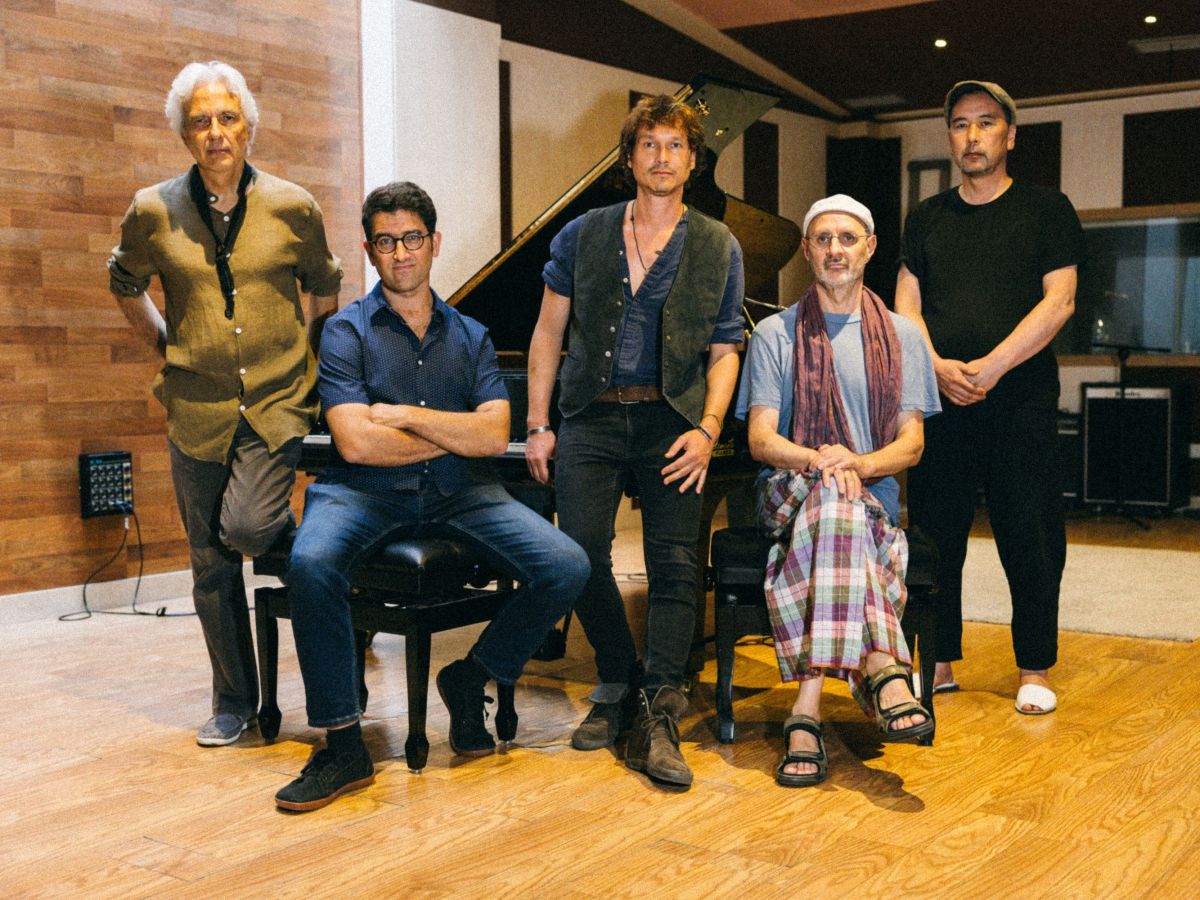
Ramon Mirabet has taken a new turn on his latest album, Ramon Mirabet All-Star Jazz Project - Songs I Heard. The artist set out to revisit the musical roots of his childhood home and, surrounding himself with top-flight musicians such as Perico Sambeat, Albert Sanz, Doug Weiss, and Jordi Rossy, has unveiled a distinctly jazz-inflected record.
As part of the Barcelona Jazz Festival, Mirabet will present the album live at the Palau de la Música Catalana on 28 November with a show billed as All-Star Jazz Project. It promises to be a tribute to the songs of his childhood, to the figure of his father, and to the music that forms the soundtrack to so many lives. We speak with him about the creative process, recording without prior rehearsals, and his upcoming November concert.
— This sixth album emerges from a deeply intimate place and pays tribute to your father, a trombonist and passionate jazz lover. At what point did you feel the time had come to make this record rather than any other?
— The idea of making an album like this had been on my mind for years, because I really wanted to sing the standards I used to hear at home with my parents when I was a boy, and to surround myself with my father’s fellow musicians, who were practically like family. I had always envisioned putting together a big band reunion with all of them, even more so when my father was already ill, could no longer play, and would come along to my concerts.
In life, however, we are always being pushed forward and there are things you keep putting off, just as happens with a trip or asking for forgiveness. When my father died, things were left undone, and his loss made me rethink time entirely – a reflection I also explored in the book Per sempre a més – especially upon turning forty-two and watching how swiftly the years pass. Added to that was a certain disillusionment with a music industry where I increasingly see more industry and less music. On one side lay my own experiences and the things that genuinely excited me; on the other, a relentless cycle that pushes you to churn out records non-stop.
I felt I needed to make this jazz album right now, to close a circle with my father – who loved jazz deeply and never got to record an album in his lifetime – and to do so alongside some of his peers.
I feel a certain disillusionment with a music industry where I increasingly see more industry and less music
— The line-up features names like Jordi Rossy and Perico Sambeat. Were they friends of your father’s, or did they play together? How did they react when you approached them?
— Jordi Rossy and Perico Sambeat took their first musical steps alongside my father in the early days of democracy, when for the first time in conservatoires and schools people could begin studying modern music, jazz, or rock. My father stayed behind here, whereas they were able to move to the United States very young and grow alongside the great American masters.
I knew of them because my father and his friends often spoke about them with admiration and a touch of longing, for having lived the dream of dedicating themselves to jazz over there, though I had never actually met them. When I cold-called them, after my father had already passed away, I wasn’t sure how much they would remember. As soon as I told them my name was Ramon Mirabet, they immediately recalled my father with a smile, and when I explained that I wanted to make this record – a tribute to my father, yet above all a tribute to my childhood, which also owes a great deal to my mother and my grandmother – their response was immediate and extraordinarily warm purely because of the story behind it.
— How did you feel on the first day you began rehearsing together?
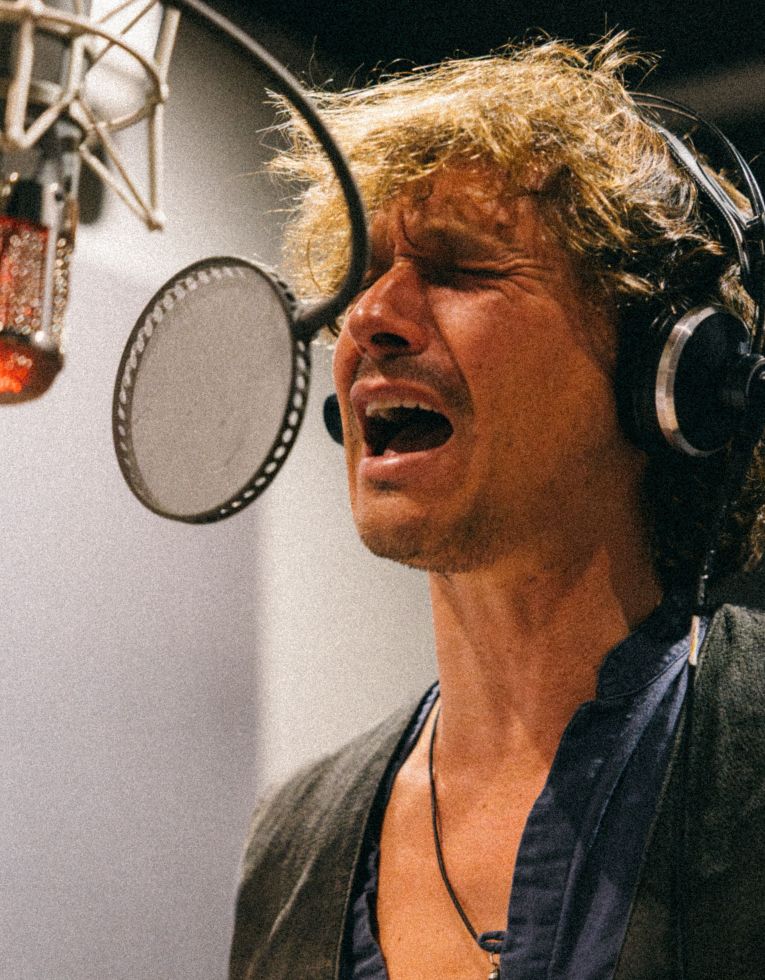
— In fact, we didn’t rehearse at all: we went straight into the studio to record the album. I am drawn to the most spontaneous kind of jazz, the kind born of an uncontrived gathering, and one of the ground rules I set was that there would be no prior arrangements or rigid cues – just walk in and play.
I am drawn to the most spontaneous kind of jazz, the kind born of an uncontrived gathering
— And how was the record captured in the studio?
— We recorded it in two days, which is very little time for an album. We laid down three or four takes of each song, from start to finish, with no edits and everyone playing simultaneously, and we kept whichever take carried the strongest feeling. The record is an exact document of what happened in the studio, and the live show will be no different – we won’t be rehearsing for the concert either, not least because everyone lives in a different place: I am the only one living in Catalonia, and Doug Weiss, who is American, didn’t even play on the recording; I will meet him for the very first time right on the stage of the Palau. This is the jazz I love most: visceral, organic, intensely alive, and emotional.
— What is magical – and what is risky – about recording in that way?
— Having these musicians is like having Iniesta, Xavi, Messi, and Busquets playing a match: they possess immense talent and an instinct to anticipate things fractions of a second ahead, communicating musically with every touch. The magic lies in that constant dialogue, heightened by the fact that we recorded simultaneously in separate booths so the microphones wouldn’t bleed, without any visual contact to cue the ending of a track.
At the close of songs such as I Get Along Without You Very Well, when everything hangs suspended in mid-air and there is total freedom, you wonder how on earth it is going to wrap up, and they find the way out entirely on their own. The risk for me is having to stay hyper-focused so I know where I am at every instant, because although I don’t feel like a tourist, it is not the musical language I inhabit on a daily basis.
Having these musicians is like having Iniesta, Xavi, Messi, and Busquets playing a match
— You revisit songs by Sinatra and Billie Holiday that you heard at home as a child. Today, when you make them your own, what weighs more heavily: childhood memory or what you uncover now as a performer?
— Two things carry tremendous weight. Ninety-nine per cent of it consists of the images and memories each song awakens in me: moments shared with my parents or my grandmother; every track carries a story beneath it. And then there is the influence of having absorbed them when I was very young – Billie Holiday’s raw visceral power, Sinatra’s control, or what lived inside Ray Charles, Nat King Cole, and Chet Baker – which acted as an unwitting school. I have no ambition to imitate them, because I want to sing in my own voice, yet in every song I recognise elements I drank in from those sources.
— Audiences strongly associate you with a more pop-folk sound, yet here you turn towards the roots of jazz. How does it feel to sing this repertoire?
— Until now my records haven’t been jazz albums, though I have always flirted with African American music, soul, and blues. I wanted to steer clear of that cliché of the typical pop singer cutting a crooner record with a big band; here it is a quintet, everything stripped right back, and ultimately it is an album of songs situated within a genre as vast as jazz. I have felt completely at home, not like an outsider; perhaps I feel even more natural on numbers closer to soul or blues, like Ray Charles’s Hard Times, yet on the rest of the material I have also felt entirely at ease, like someone taking a short trip to visit family.
I have no ambition to imitate them, because I want to sing in my own voice
— Amid all these standards, you slipped in Grace by Jeff Buckley. Why that song, and how did you adapt it to a jazz idiom?
— Most of the quintet didn’t know the song; we listened to it and played it by bringing it into my own musical world. I was inspired by the way contemporary pianists like Brad Mehldau – with whom Jordi Rossy also plays – weave covers of Radiohead or The Beatles into their albums, introducing a curiosity drawn from a realm outside jazz. I wanted one piece that, instead of hailing from childhood, came from my adolescence, when I first left home and discovered bands like Nirvana, Pearl Jam, Soundgarden, and Jeff Buckley. When I heard Grace again, it was immediately clear that it was the one, and I was thrilled to discover there were no prior jazz versions of it and that ours was born right there on the spot, without a single rehearsal.
— With every new record, there is often pressure to outdo yourself or create something never heard before. How did it feel to let go of that burden?
— I would like to qualify what I said earlier about the industry: in Catalonia we are enjoying a remarkable moment, with extraordinarily talented young artists and a vibrant, barrier-free scene of which I feel deeply proud. When I critique the industry, I am referring to a wider social dynamic where everything is measured in numbers and social media metrics, which sometimes dehumanises us and ends up dehumanising art as well.
With this album I have felt genuinely liberated because I am not chasing forty or fifty tour dates or millions of streams: I made it simply because I wanted to, knowing that twenty years from now it will still stand there. I don’t want to live with my back turned to the industry, because that is where I have to earn my living, yet neither do I want to live with my back turned to my own life or my emotional priorities.
In Catalonia we are enjoying a remarkable moment, with extraordinarily talented young artists and a vibrant, barrier-free scene
— On Saturday 28 November you present this project at the Palau de la Música Catalana as part of the Barcelona Jazz Festival. It is a stage that commands respect and demands attentive listening. How do you picture the night unfolding?
— I have sung at the Palau several times already, and back in 2019 I played a show launching my third album that I still remember as one of the loveliest nights of my life. Unlike a venue such as the Liceu, which is grander and imposes itself in a different way, the Palau possesses something that cradles you and makes you feel at home. I don’t like imagining concerts too vividly beforehand because I want to let myself be surprised by spontaneity, though I am certain that in the moments just before going on I will have my usual butterflies – may they never go away! – and straight after I will feel embraced by the room.
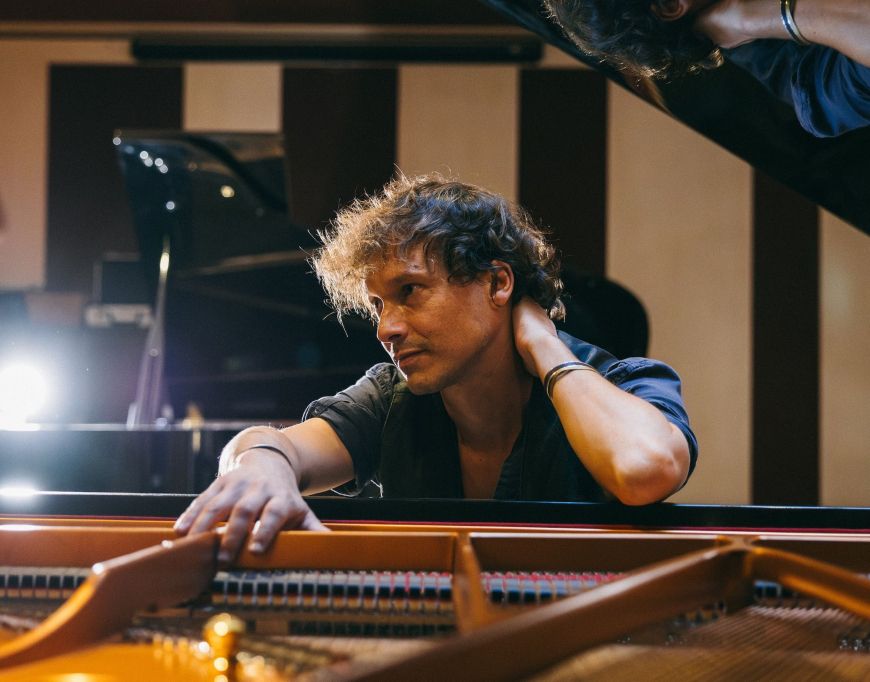
— One of the defining traits of jazz is that every concert is unique, resting on improvisation and interplay. What can audiences coming to the Palau expect compared with what they have already heard on the record?
— There will be more songs, and the story behind the project will come into sharper focus. Recording an album serves to document a moment in time, whereas this music is meant to be experienced live. In an era of massive productions packed with pre-recorded backing tracks, the audience will watch five musicians genuinely playing together and hear nothing beyond that, performing classics that already resonate deeply with so many people. Simply seeing the musicians sharing the stage with me makes a trip to the Palau worthwhile.
This music is meant to be experienced live
— How have the fans who have followed you from the very beginning responded to this shift in register?
— It is a very welcoming jazz record, conceived to appeal both to devoted followers of the genre and to non-specialists alike, because we have crafted a deeply song-driven album. Those who have followed me for a long time know they come to see me beyond any single style, as I have never boxed myself into one label. They have grown used to every concert being a distinct experience – such as when I have performed at Santa Maria del Mar or with choirs and an orchestra – and that gives me tremendous freedom to try new things without resorting to contrived conceptual experiments, because my music remains organic and recognisable.
— You started out busking on the street, where everything unfolds live and eye-to-eye with passers-by. What do you still carry with you from those days?
— This jazz album was born precisely to reclaim much of the essence of the street: impulsiveness, pure freedom, and the rebellious spirit of playing without a permit for six years. Jazz is a fiercely rebellious music that constantly breaks moulds, and this project reconnects me with that young lad starting out who simply followed his instincts. I needed this energy so as not to get bogged down in day-to-day inertia or turn my back on myself.
Jazz is a fiercely rebellious music that constantly breaks moulds
— You now have six albums under your belt and a journey that has carried you from street corners to filling major venues. Where would you say you stand right now as a musician?
— I am still finding myself, and I will probably be eighty years old and still finding myself. Along the way you take a few knocks trying things out, and those stumbles gradually help you learn who you are. Even though it has been nineteen years since I began playing on the street, I feel as though I am right at the beginning, standing on the threshold of discovering why I make music, what my message is, and who I am – and that fills me with genuine excitement to keep moving forward.
— Finally: if your father could sit in the stalls of the Palau de la Música this Saturday, what do you think he would say to you as you stepped off stage?
— He wouldn’t say anything at all. He always used to arrive first, watch the soundchecks, and sit wherever he pleased, never being the kind of father who constantly tells you what to do or picks everything apart. My parents always gave me the freedom to act and make my own mistakes, offering advice only when I asked for it and standing quietly behind me, and that has given me enormous confidence. Once the concert ended, I am sure he would give me a kiss, though he would probably head straight over to chat with the musicians rather than sit down to dissect the performance with me.
Add The New Barcelona Post as your preferred Google source for free
Stay informed with the latest news.