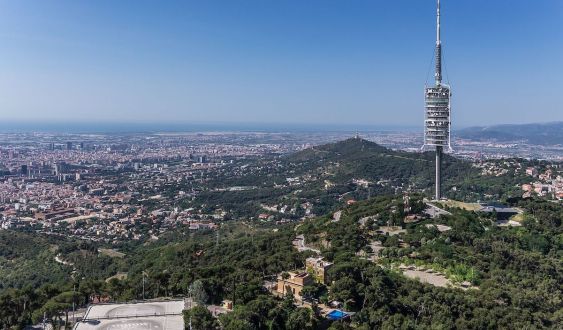
Optimal conditions and eight hours. That's all a fire would need to consume a good part of Collserola. On an extreme day, a fire can travel the equivalent of 800 hectares in an hour —yes, 800 football fields in 60 minutes— and, in a scenario conducive to fire, 70% of the Barcelona mountain range could burn in what lasts a working day.
These figures come from calculations, graphs, and forecast maps about fires that are increasingly, precisely, less predictable. Today, the sub-inspector of the Generalitat Firefighters, Asier Larrañaga, gives voice to these figures, in a setting and with an audience far from the usual: a winding room in La Pedrera full of environmental analysts and communicators gathered around a reflection: What if Barcelona burns?
The also deputy director of the GRAF —or, in other words, the elite unit specialized in forest fires— outlines the challenge by resizing the problem: the number of forest fires and burned hectares has drastically fallen in Catalonia in recent years, going from an average of 12,000 hectares burned per year in the 80s and 90s to about 2,000 currently. So, where is the problem? In the virulence. "Now, when a fire manages to escape our control, it becomes very large, very violently."
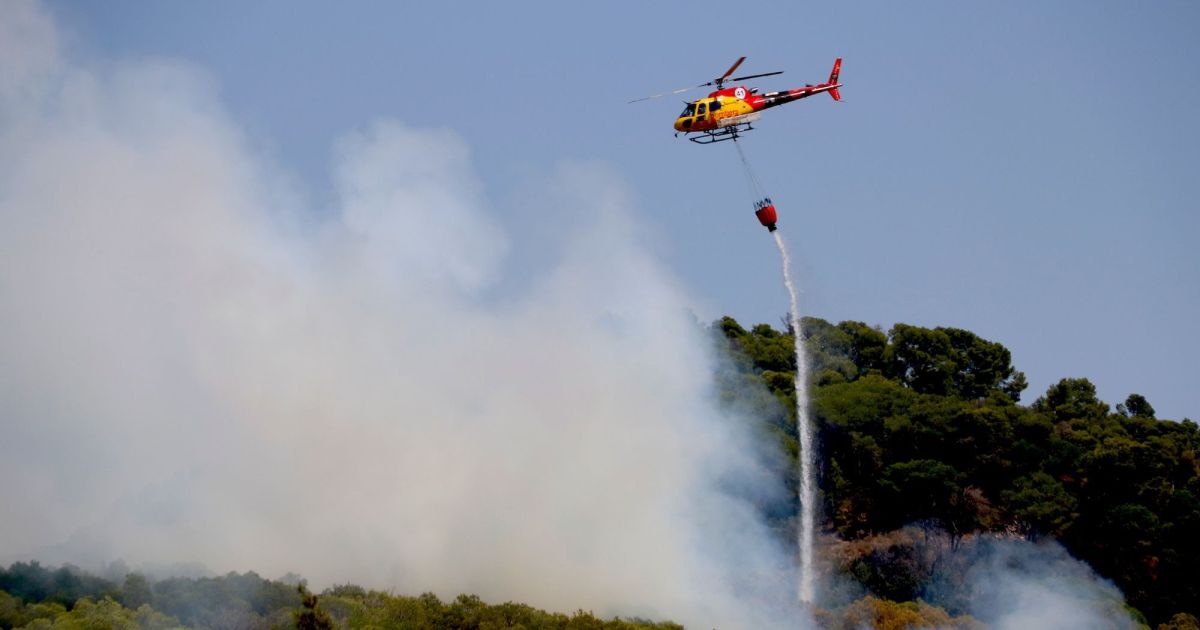
"Large forest fires used to have a propagation ratio of about 345 hectares per hour. Now they can reach 800," with growth that can vary unpredictably and suddenly shift without possibility of control. These are sixth-generation fires, a terminology widely used internationally among experts, which originated precisely in Catalonia: they are fires so powerful that they are capable of altering the atmosphere around them, generating extreme phenomena and behaviors difficult to predict. They can change direction abruptly, expand suddenly in the form of pyrocumulus clouds, and even spread fire not only through flames, but through clouds of burning smoke that ignite everything in their path. "It's like watching the sky fall to the ground."
And why do fires grow with such aggressiveness? They feed from above, but above all from below: atmospheric conditions can be favorable to them, but they need something basic to grow: "fuel on the ground." This translates into large amounts of biomass, in poorly managed forests that can feed the fire in case a spark ignites it.
"Since the post-war period, we have changed the way we manage forests" and, in fact, the progressive abandonment of agricultural and livestock activity has allowed the forest to gain ground, with more fuel for a fire and fewer barriers that can stop its advance: "We are giving space to fire." Similar situations have already had consequences in California and Australia, and in increasingly closer points and in landscapes very similar to that of the surroundings of Barcelona, such as Greece and Portugal.
"Fire is a problem, but it can be a tool if used in a controlled way"
Given this scenario, the Firefighters "do not ask for more trucks or more extinguishing means," as highlighted by the director of the Fundació Catalunya La Pedrera, Marta Lacambra; what they ask for is to focus on forest management, and to look at the problem not only when there are flames. The entity has been working especially in this regard since it was alerted by the fire that originated in Pont de Vilomara in 2022 and ended up burning more than 1,700 hectares, reaching the gates of Món Sant Benet, which the foundation manages. The entity interpreted it as a wake-up call, and began to allocate resources to the prevention of forest fires. This is explained by the head of Sustainability and Nature of the Foundation, Miquel Rafa, in one of the working groups organized during the meeting at La Pedrera, convened by the entity and by the consultancy beBarlet.
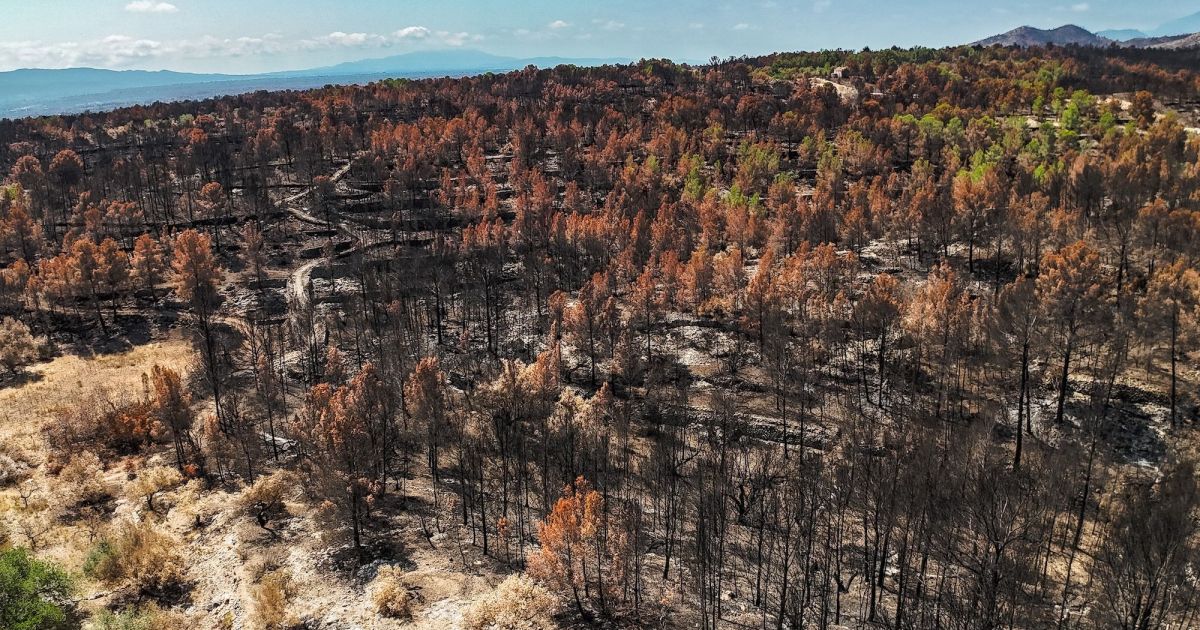
From the objective of reducing the risk of large fires, the entity focused on what firefighters ask for: managing the territory so that it does not become fuel for fire. Selective felling of trees, pruning, activities linked to the territory and even controlled burns are ways to achieve that same objective: "Fire is a problem, but it can be a tool if used in a controlled way," Larrañaga points out.
Part of these paths go hand in hand with returning to the origin, recovering activities such as extensive livestock farming and agricultural spaces. The sheep and goats that have grazed in Collserola at the initiative of the Barcelona City Council for several summers respond to this strategy and, more than being an anecdote, play a strategic role in preventing large-scale fires. Agricultural activity adds to this in the same sense, although they also share a problem: the lack of professionals interested in these activities.
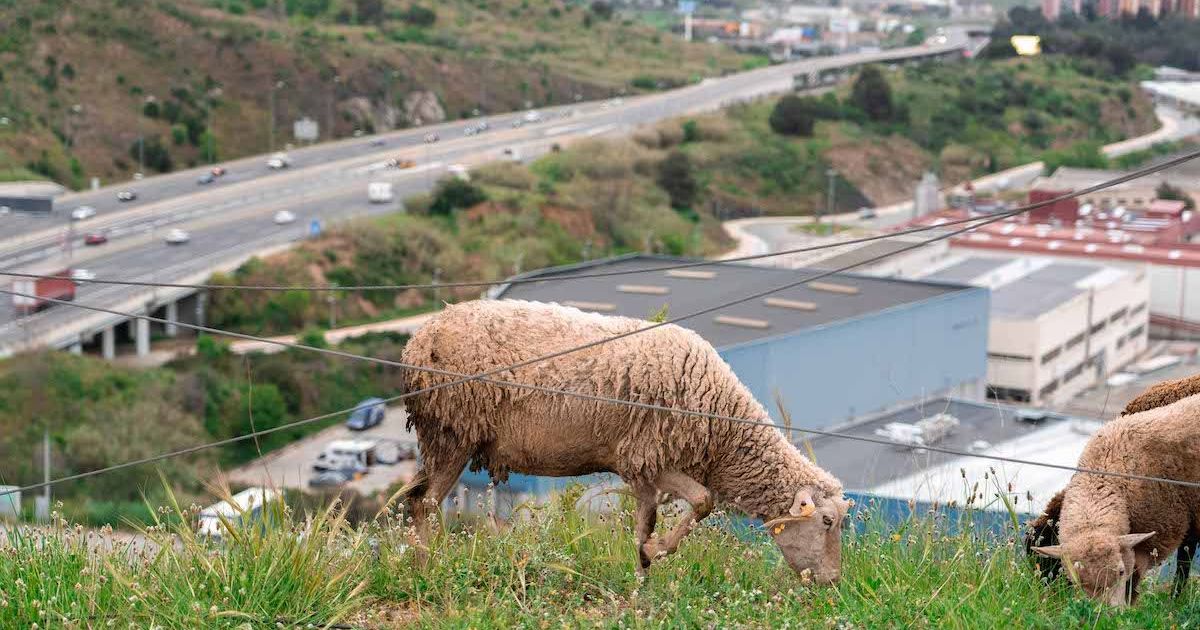
"Too many forests and not enough farmers" has been one of the conclusions of the Pedrera's pseudo-think tank. And this is where the work of entities like its foundation gains strength, as it has been reducing the biomass —or combustion load— of Catalan forests, including Collserola, for years. From its strategy in the Barcelona mountain range, something else has also emerged as a result: an oil, from olives born from 160 hectares where the forest was replaced by olive trees. The first harvest has become this oil, and the project plans not to stop there: "We are considering creating a mill to produce the oil, and we are studying extending it to the Garraf area," Rafa explains.
Thus, based on olives and herds in the heart of the metropolis, new (or old) ways of relating to the forest are outlined that contribute to reducing the risk of large fires capable of devouring Collserola and reaching the cities that surround it. The strategies are broad and can take diverse forms; what is clear is that the time to define them is while looking at the fire in graphs and forecast maps, and not in the forest.
Add The New Barcelona Post as your preferred Google source for free
Stay informed with the latest news.