"Si pogués fer-me escata i amagar-me a la platja per sentir sons i tardes del passat..." (If I could become a scale and hide on the beach to hear sounds and afternoons of the past). It has been almost forty years since singer and poet Glòria Cruz and musician Càstor Pérez Diz composed this habanera that was born near the sea, inspired by the landscape of the Costa Brava, the nights of Calella de Palafrugell and the tavern where they gathered to sing. She wrote the lyrics, an intimate poem that breathes nostalgia, calm and takes refuge in the sea and the past; and he set it to music; he made it a habanera.
Years later, Vestida de nit would become one of the most beloved songs of Sílvia Pérez Cruz, her daughter. In 2017, the singer-songwriter revived it, named one of her most celebrated albums after it, and projected it around the world —at this moment, I recommend you put it on in the background while you read the report. Would you do me the favor?—.
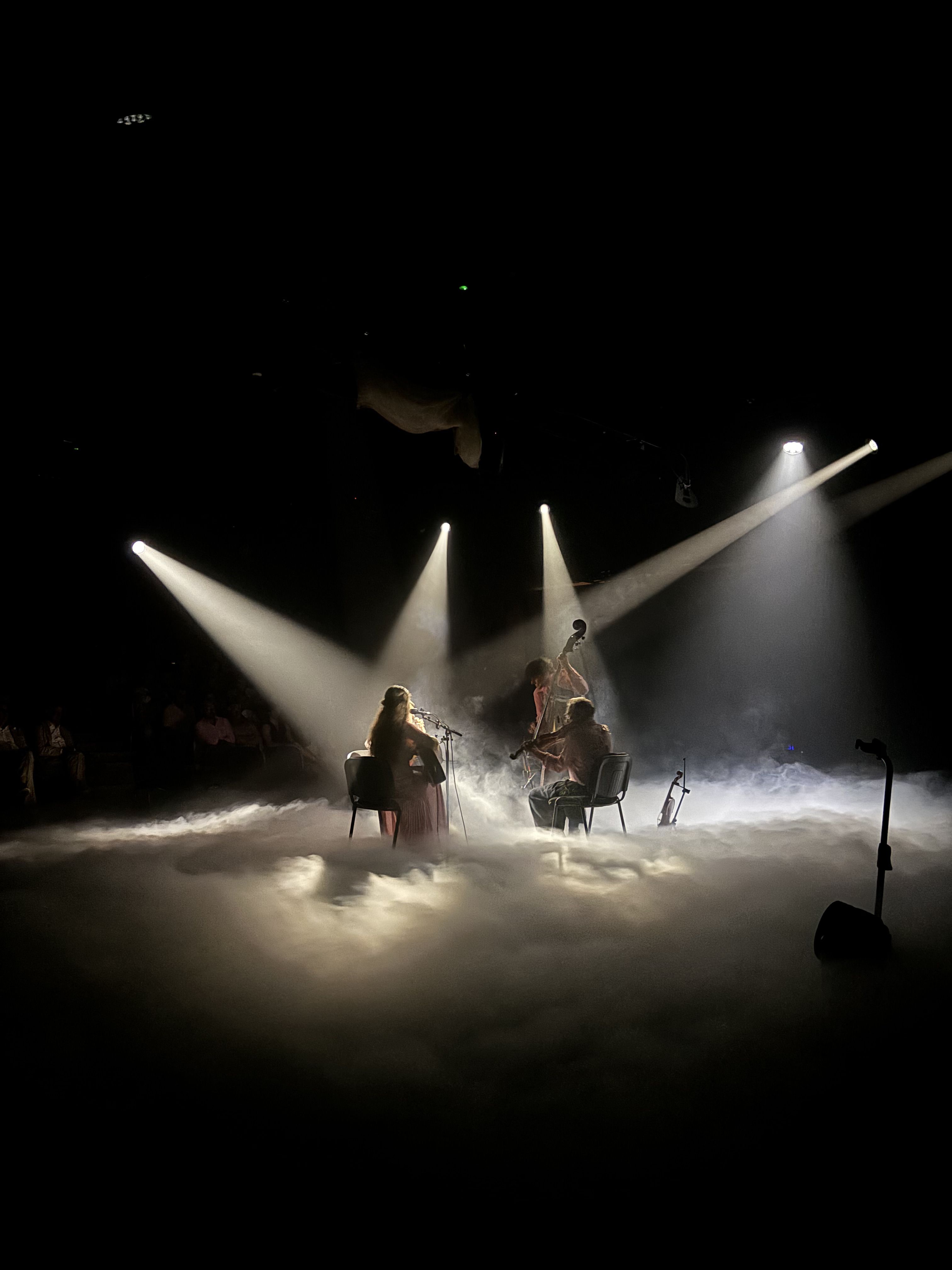
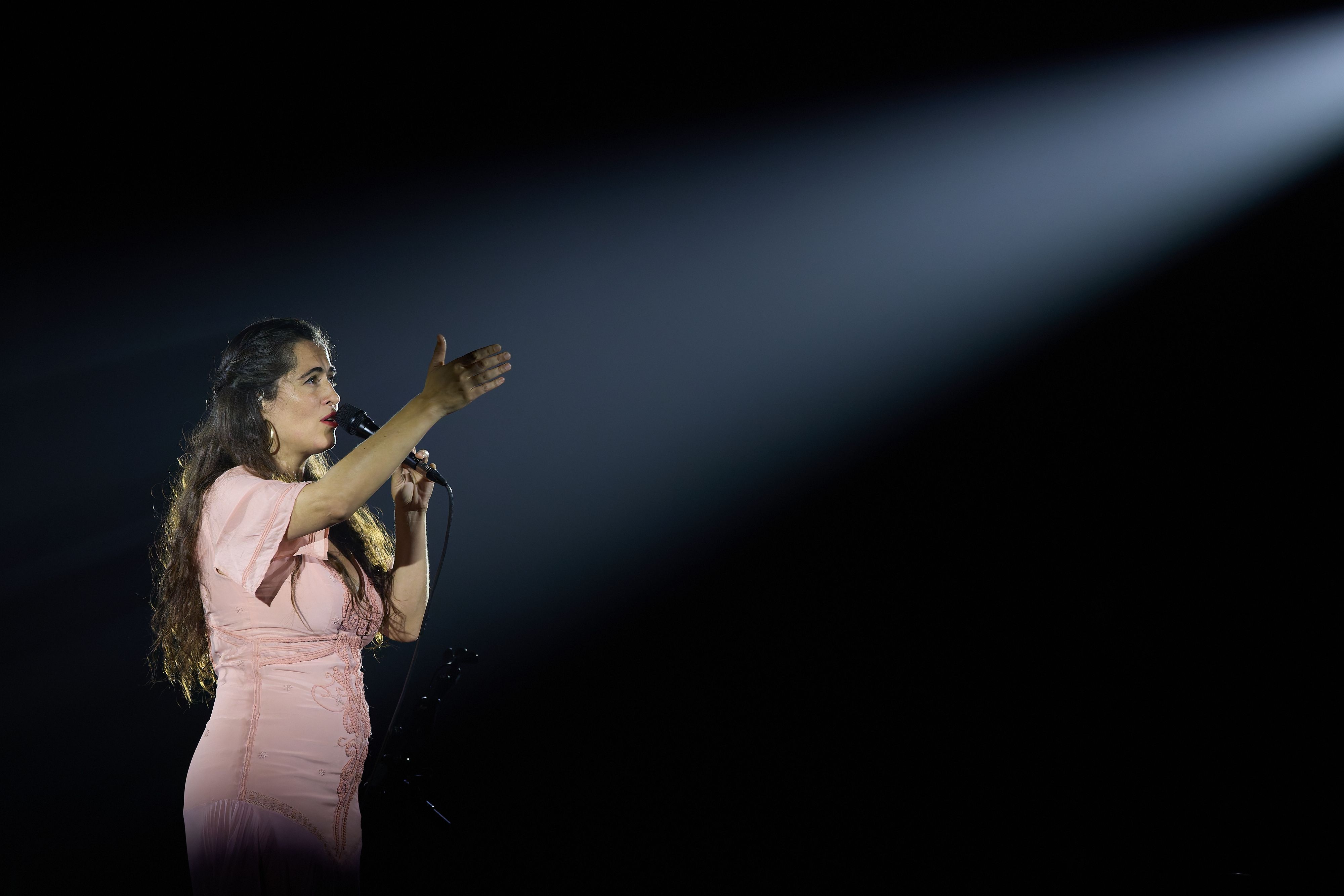
These days, Sílvia Pérez Cruz's voice —a voice, by the way, of extraordinary sensitivity— has once again turned memory into present by performing Vestida de nit at the Perelada Festival, with views of the castle and with about 380 spectators, in an intimate performance framed within the celebration of the festival's 40th anniversary.
And it's hard to imagine a more fitting song to open this story. Because, after all, Peralada also speaks of this: of preserving the past without getting trapped in it, of turning legacy into a living experience full of art, and of demonstrating that there are moments that, far from fading, continue to transform us many years later. Specifically, forty years later.
The artist's return to Perelada has become one of the most anticipated events of this 40th edition of the Perelada Festival, which will continue until August 9 and culminate on August 29 with the extraordinary concert by the Bayreuth Festival Orchestra, under the direction of Pablo Heras-Casado, at the Palau de la Música Catalana, in Barcelona. An event that will also celebrate the 150th anniversary of the Bayreuth Festival.
And 2026 is a year full of anniversaries and celebrations for the people of Perelada. The Festival celebrates forty years; the hotel, twenty-five; and the Castell Peralada restaurant, a decade. "If we add them up, it's like seventy-five years," jokes Eugeni Llos, general director of the Peralada Resort. But the coincidence is almost anecdotal. What truly makes this place unique is not the accumulation of anniversaries, but the sum of everything that coexists within it.
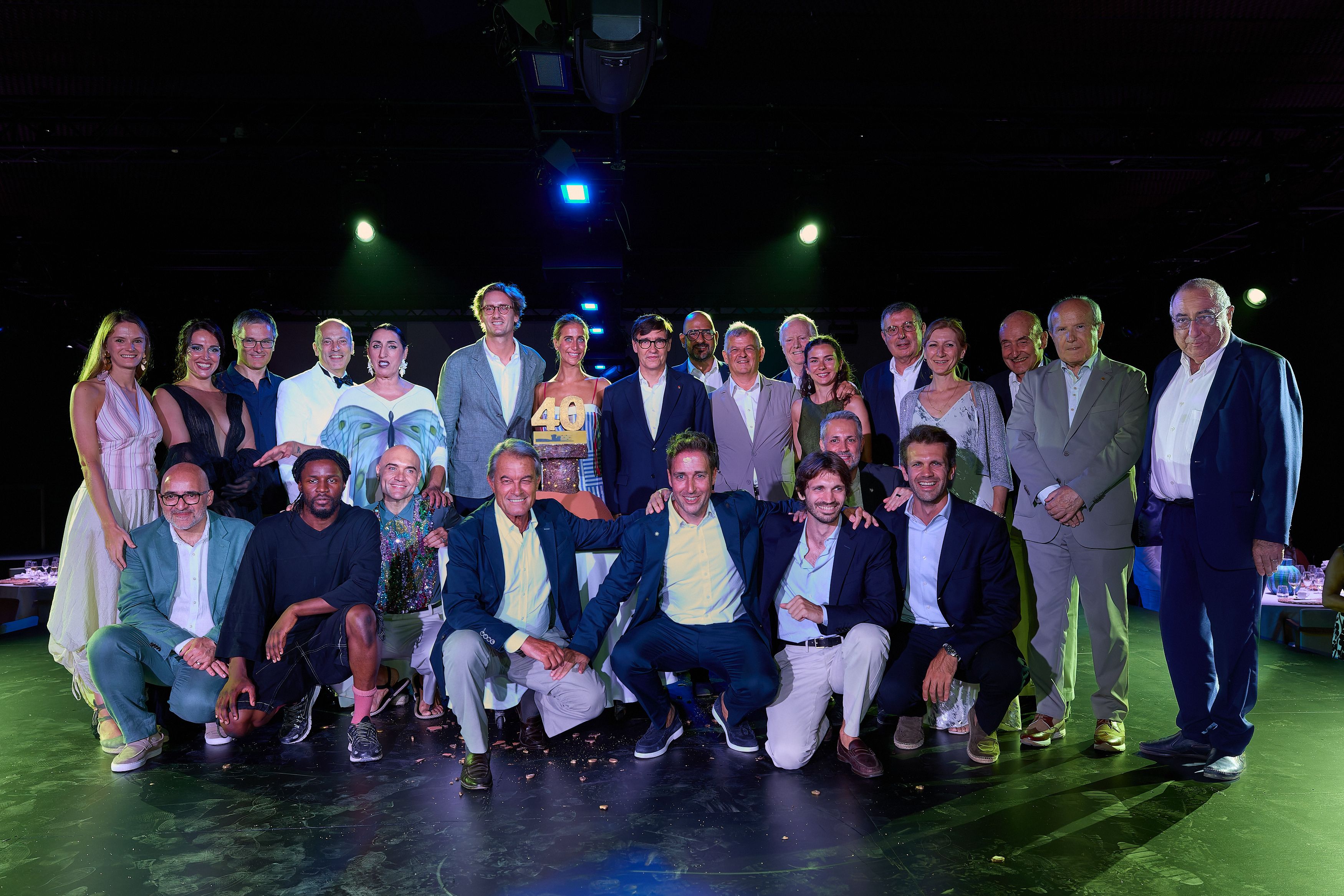
"There are five-star hotels everywhere. Museums too. Gastronomic proposals with a Michelin star, too. And castles, and artistic and musical festivals, and wineries... But the sum of all this is almost impossible," reflects Llos, who is also director of Celler Perelada and president of the Catalan wine employers' association, the Associació Vinícola Catalana (AVC).
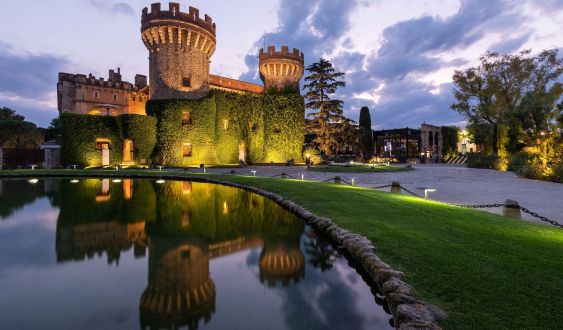
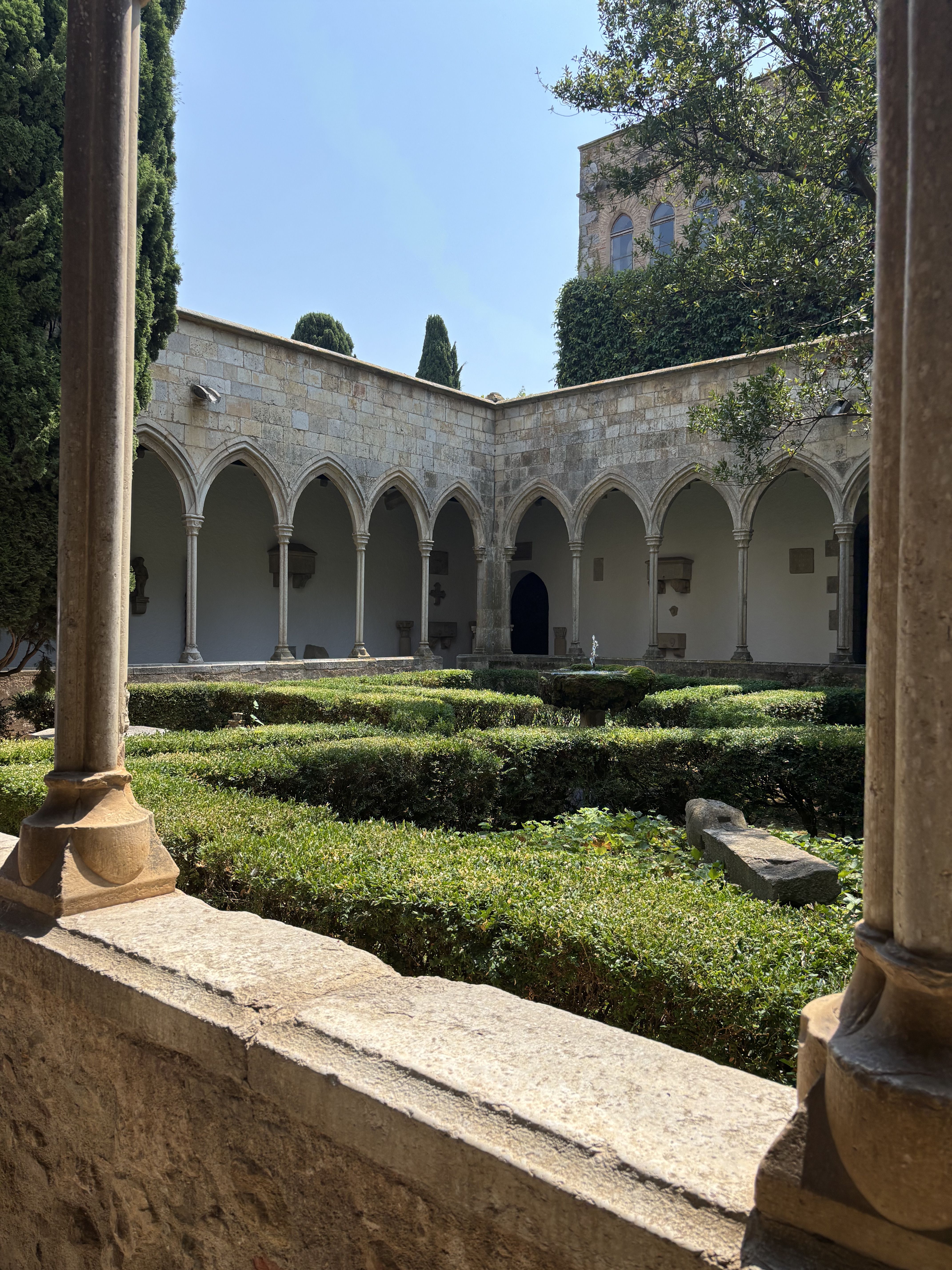
And it is here that the extraordinary nature of this privileged place lies. Within a few meters, a medieval castle coexists with a Gothic church and cloister, one of the most important private libraries in the country, a glass museum, and another wine museum, a contemporary winery, a Michelin-starred restaurant, an internationally renowned festival, a golf course, a resort with a spa, and a hospitality project that has made art and wine its way of understanding hospitality.
A journey through three centuries
The history of Peralada Castle dates back to the Middle Ages, but much of what is experienced there today originated in the 19th century, when the Rocabertí brothers recovered the old Carmen convent after the disentailment. They could have continued living comfortably in Paris —their father had been Spain's ambassador to the French capital—, but they decided to return to Empordà to recover the family heritage and promote an unusual patronage project for the time: a free school of arts and crafts where music played a central role. That legacy, in fact, would eventually give rise to the cobla La Principal de Peralada and would turn the convent into a space for training and cultural life long before the Festival existed.
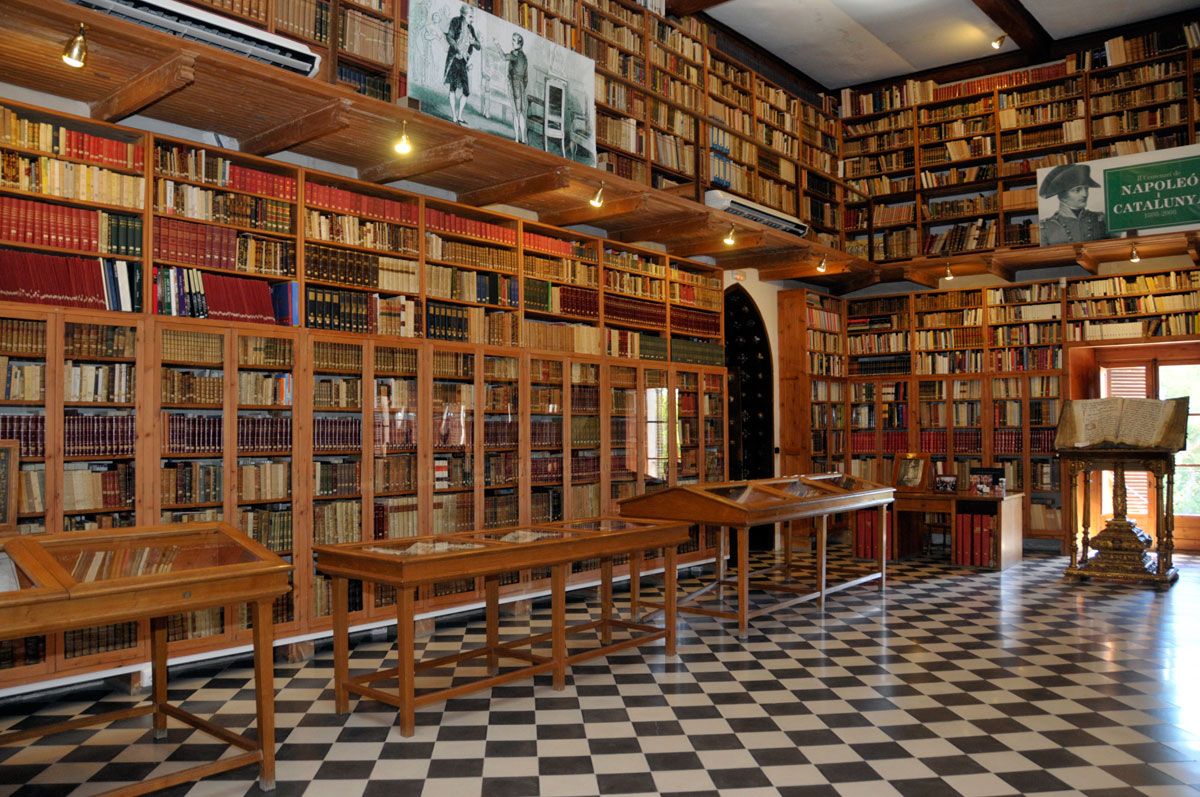
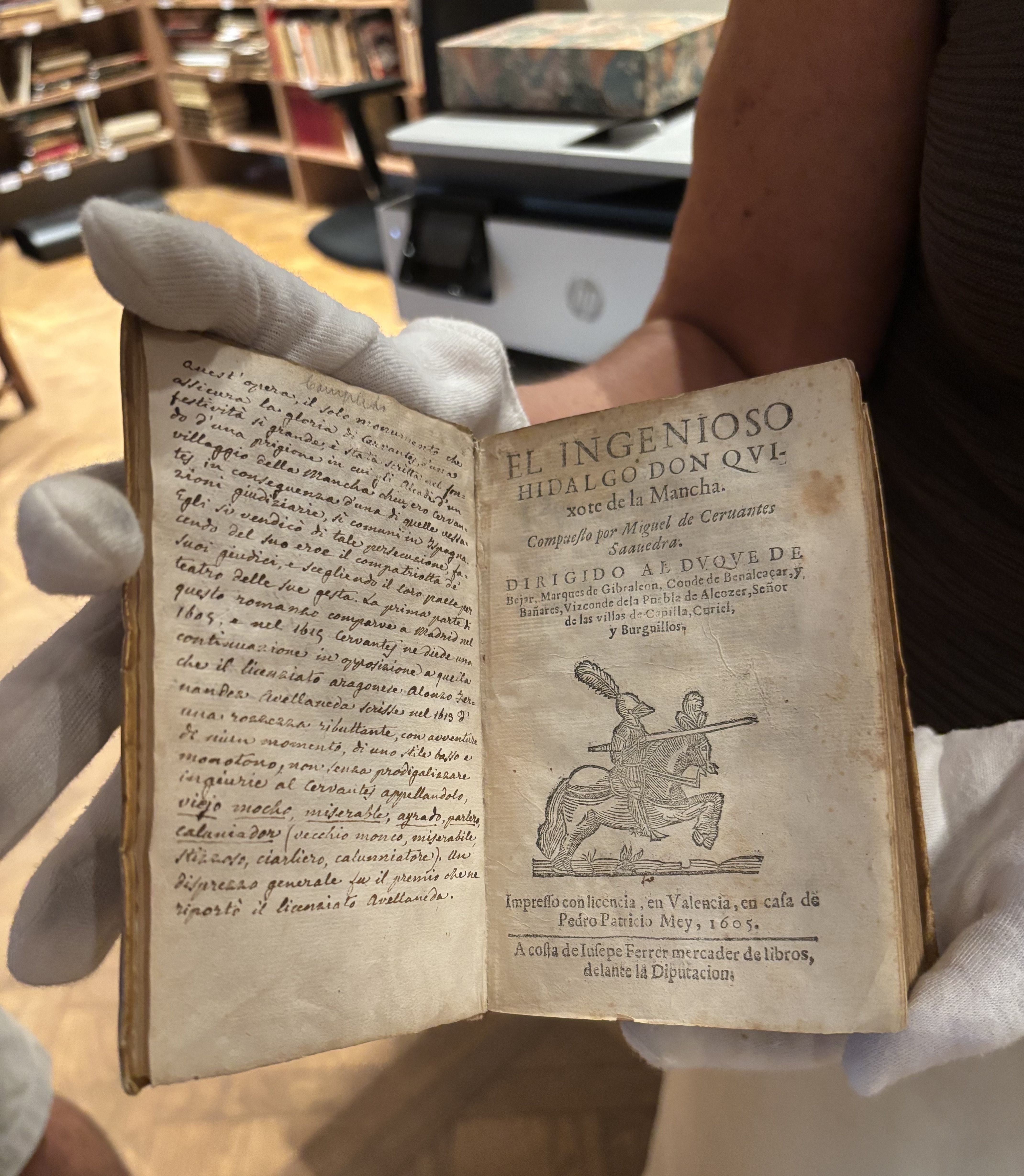
The next great transformation would arrive in 1923, when the businessman and collector Miquel Mateu acquired the castle. Passionate about history, books, and the arts, he turned Perelada into one of the country's great heritage refuges. For decades, he gathered there a library of nearly 100,000 volumes —with one of the most important private Cervantine collections in the world, which preserves a first edition of Don Quixote from 1605—, hundreds of incunabula, documents dating back to the year 823, an extraordinary collection of glass and works of art that still fill the halls, rooms, and cloister of the castle today.
When Miquel Mateu died in 1972, his legacy passed to his daughter, Carme Mateu. And if the father had been the great collector, she would become the great cultural promoter. She founded the Peralada Festival and understood that the best way to preserve that heritage was not just to conserve it, but to fill it with life. Four decades later, her children and grandchildren have maintained this same idea: heritage only makes sense if it continues to be a space for creation.
A space for creation, and a journey through centuries, that begins in the Gothic cloister, continues through the old Carmen church, and ends in a library that seems straight out of a fairy tale. The dark wood, the infinite shelves, and the smell of old books make the first reaction almost always the same: silence. And a wide-open mouth.
But with every story that Susana García, conservator of the Peralada Castle Museum, tells you, admiration grows. And between stories, Susana walks to the back of the library and opens a small wooden door that would almost go unnoticed. To the right.
On the other side of the door lies one of Peralada's great treasures: the Cervantine collection. Five thousand volumes dedicated to Cervantes, more than a thousand different editions of Don Quixote, and among them, a first edition from 1605. Susana turns the pages, with white gloves and with the delicacy and admiration of someone who knows they are holding an unrepeatable piece.
Among the pages and editions, she laments that an exhibition of this collection has been held in Madrid, but not yet in Barcelona. But she is clear: "Sooner or later this exhibition will have to be in Barcelona."
Montserrat Caballé and 40 years of moments
Also, among the library shelves, this summer another story is hidden. Coinciding with the Festival's 40th anniversary, an exhibition reviews four decades of music, dance, and opera. But it does so in an unusual way. There is no chronology or emblematic concerts: there are instants.
"Making a summary of the forty years made no sense," explains Oriol Aguilà, director of the Peralada Festival. "What we wanted was to highlight those instants that have changed the course of the Festival's history."
The sparks of this story begin when Montserrat Caballé convinced Carme Mateu that that castle deserved to be part of the great European circuit of summer festivals. Also inspired by Rudolf Nureyev, that dream would end up becoming a project with its own unique identity.
In fact, four decades later, the event can boast of not being measured solely by the names that have passed through it, but by the decisions it has made —by its instants—: the decision to create an international festival far from the great cultural centers; the commitment to produce its own operas when it would have been easier to limit itself to programming them; the opening of the stage to contemporary creators like La Fura dels Baus; the impulse to dance, new composition, and young talents; or the will to recover musical heritage while commissioning new works.
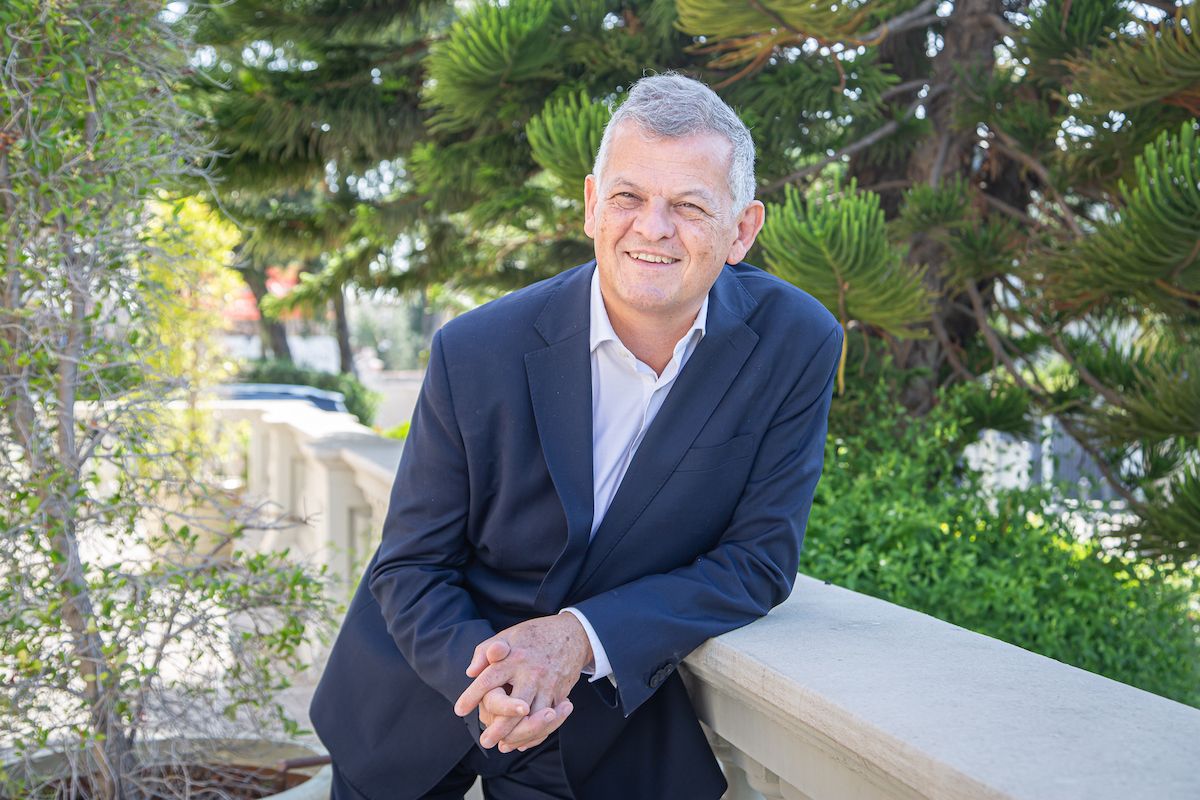
"A festival must be discovery. It must be a space for thought, beauty, aesthetics, and innovation," summarizes Aguilà. And that radically differentiates them from the long list (and growing longer every day) of festivals that run along the Catalan coast in summer. And perhaps this is the best definition of the Peralada Festival. Not that of a stage that programs concerts, but that of a place that continues to create and that also commits to fostering local talent, with an infinity of initiatives that they have carried out since its foundation.
Oriol Aguilà: "A festival must be discovery. It must be a space for thought, beauty, aesthetics, and innovation"
And next to the cloister… we return to collecting
And going down the stairs, leaving the library and next to the cloister, there is a glass museum, which is the most important in Spain, as a collection made by a single owner, and one of the most significant in the world among private collections. It has more than 2,500 pieces of ancient glass ranging from Pharaonic Egypt to the 19th century.
Without the great collectors and patrons of the 20th century, this heritage would hardly have survived to this day. Without those of the 21st century, it probably wouldn't continue to be so vibrant either.
The Suqué Mateu family has made this heritage not just a museum piece. They have transformed it into a space for creation, hospitality, and artistic risk, where a medieval manuscript can coexist with a contemporary opera or an award-winning cheese board. Or a 15th-century painting by Hans Memling can be a few meters away from another by Javier Mariscal, in which a wild boar and an octopus make love in Cap de Creus. Sea and mountain.
A philosophy: being a good host
After hours surrounded by books, manuscripts, and works of art, lunch arrives. And in Perelada, this is not a change of register either. Only the language changes.
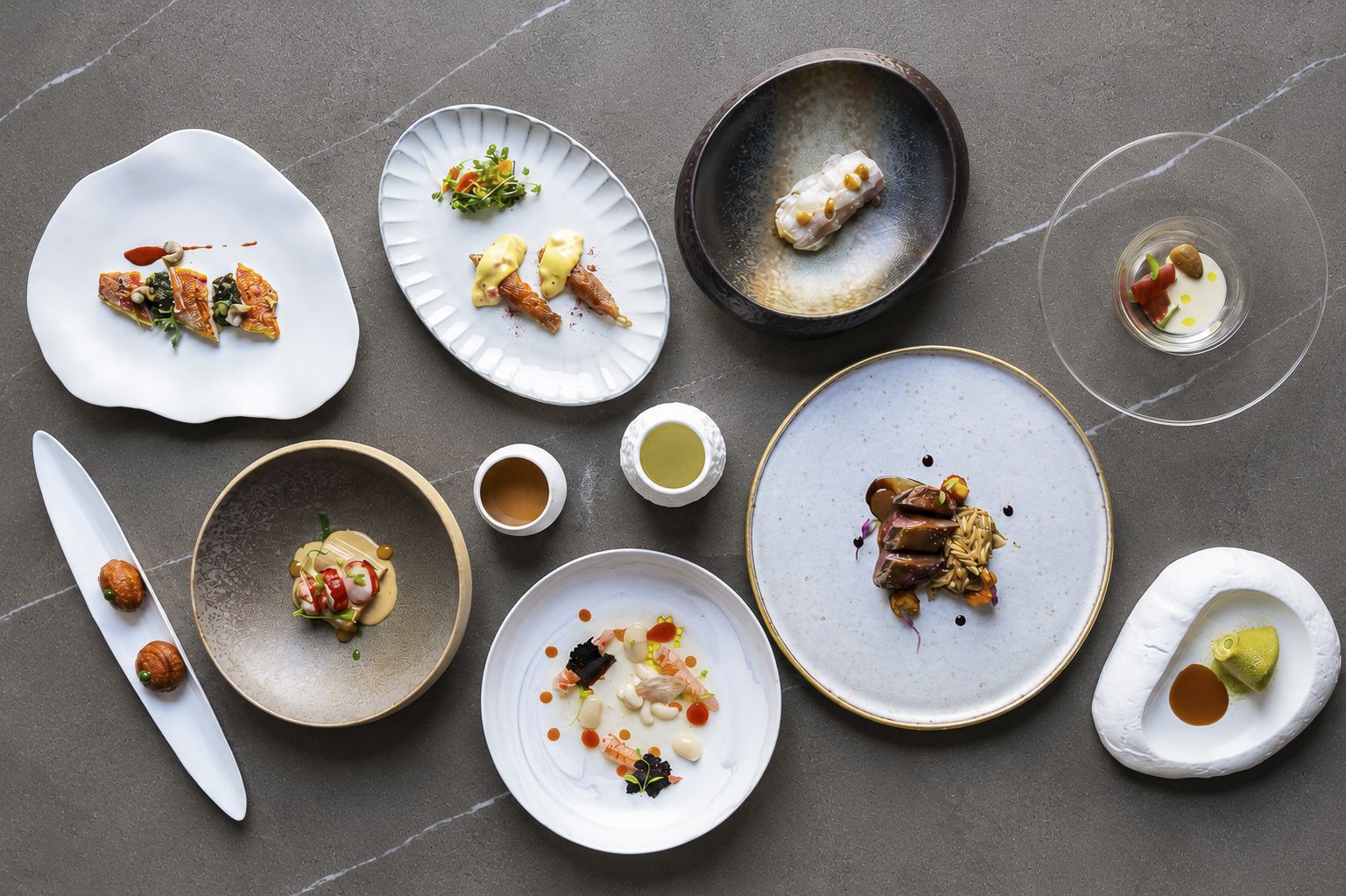
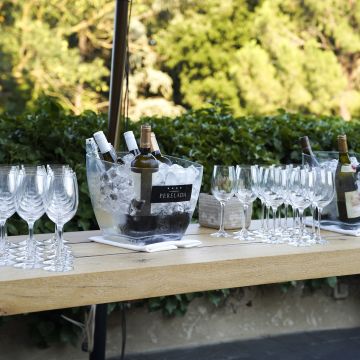
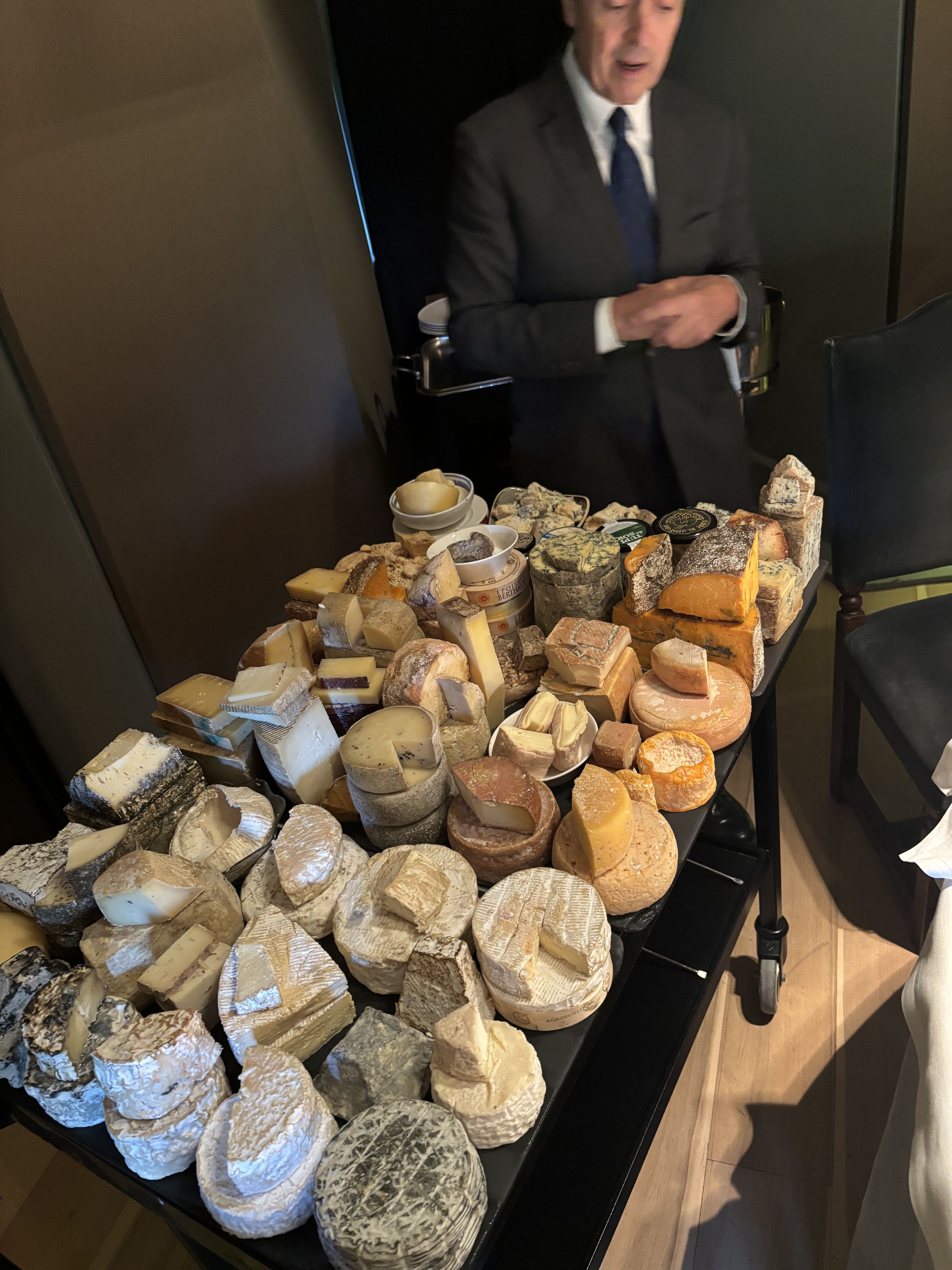
At the Castell Peralada restaurant, which celebrates ten years this year and maintains its Michelin star, heritage is also explained from the table. Chef Javier Martínez has taken over from Xavier Sagristà, the man who opened the restaurant and defined its essence, and continues to champion a cuisine deeply rooted in the territory. But part of the show arrives when Toni Gerez appears with his legendary cheese cart.
More than 300 references pass through his pantry each year, about seventy of which are part of the daily service. Each piece has a story, a producer, and a landscape behind it. It is no coincidence that Gerez has been recognized by the Michelin Guide with the award for the best front-of-house service in Spain and Portugal. As Susana did with books, he turns each cheese into a small story.
The spirit is the same at the resort, which this year celebrates its 25th anniversary. With 64 rooms, a spa, a golf course, and a contemporary winery designed by RCR, the complex has gone far beyond accommodation. "May we be remembered for how we welcome people," summarizes Eugeni Llos. It is an idea inherited from Carme Mateu and one that still today marks the way of understanding hospitality. Perhaps that is why, more than a five-star hotel, Peralada ends up seeming like an open house where wine, art, music, and gastronomy are part of the same experience.
For the sounds and evenings of the past
When Glòria Cruz writes that she would like to "hear sounds and evenings of the past," she is not expressing a desire to go back. She is talking about something else: the need to keep alive what has made us who we are. Perhaps this is the idea that runs through all of Perelada. A castle that continues to fill with music. A library that continues to open and rediscover books. A festival that continues to take risks. And a place where the past is not a destination, but the starting point for continued creation.
And if you still have Vestida de nit playing in the background, surely now it is a little better understood why it was the best way to start this story. And also to end it, "adorning the memory with palm trees."
To many more years, Perelada.
Add The New Barcelona Post as your preferred Google source for free
Stay informed with the latest news.