
About three weeks ago, Ada Colau viralized one of her famous Aló Alcaldesa Instagram sessions in which she answered her followers' questions on the network. Reconverting traditional propaganda into a feel-good exercise, with poses and youtuber jokes included, the mayor said she would address citizens in Spanish to communicate with "the maximum number of people," also emphasizing that she was willing to answer questions in Catalan "so, naturally, nem fent." In this way, Colau relegated the native language of the capital she represents to the exceptional (or, even worse, to the aforementioned nem fent, which is similar to anar-hi anant and even de més verdes en maduren), stamping the municipal seal of approval on the unstoppable process of linguistic substitution that Catalan is suffering in Barcelona and its Metropolitan Area, translated into this curious tendency to consider Spanish a common language—that is, one that everyone can understand—distancing the Catalan language from this mysterious gateway to global comprehension and, therefore, to "the maximum number of people."
[subscribe_newsletter_esp]
The linguistic choice is surprising and not politically irrelevant. If we consult the latest Enquesta d'Usos Lingüístics de la Població published quinquennially by Idescat, the last one in 2018, we will see that 94.4% of Barcelona's citizens say they understand Catalan (85.3% read it, 78.7% can speak it, and 60.6% are able to write it), which means that, if it's about addressing Barcelonans, Colau or any municipal representative could perfectly do so in our language with the objective certainty that practically all of her constituents would understand her without problem. But, precisely because of the nem fent process (that is, the false naturalization of conceiving Spanish as naturally inclusive and Catalan as a factor of comprehensive distortion), the same survey tells us that Catalan has become the habitual language of a mere 29.3% of Barcelonans, a percentage that drops to 27.5% in the metropolitan area. Among all the study data, there is one that speaks for itself: only 16.5% of Barcelonans always start a conversation in Catalan.
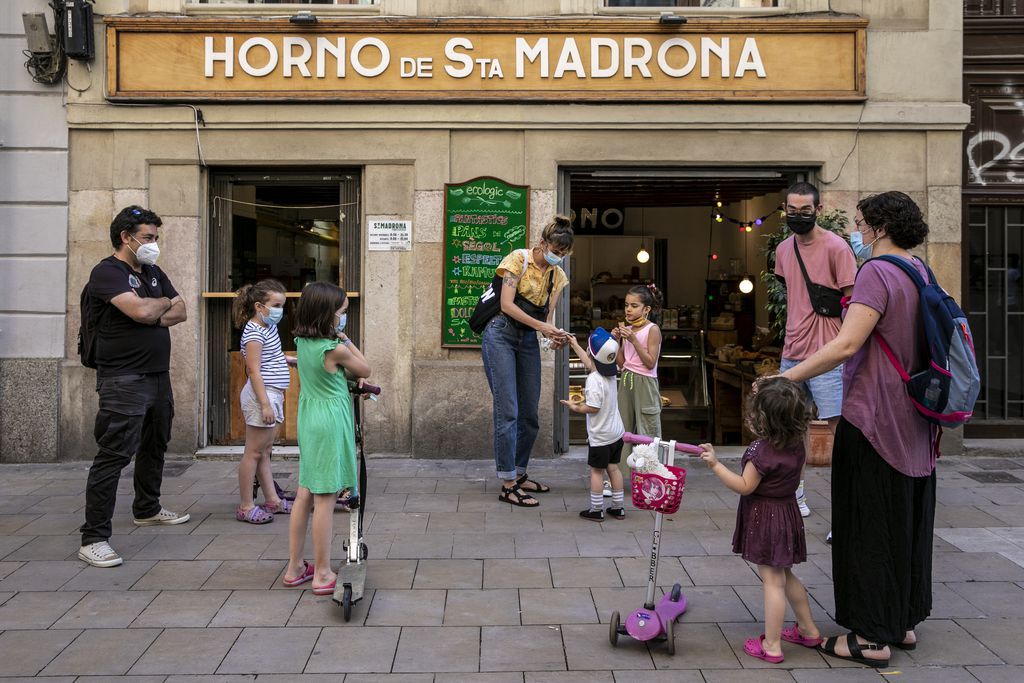
Aside from being a communicative channel between speakers, language is also a market factor, and its vitality is measured by the demand to know and use it in important economic sectors such as commerce, administration, or the service sector. I don't intend to bore (or depress) with an excess of data, but from this perspective, it's frightening to see how in Barcelona, the use of Catalan is prioritized only in 15.4% of the state administration, in 11.6% of large shopping centers, in 13.1% of shops and small businesses, in 24.4% of banks and savings banks, and in 20.6% of medical personnel. That is to say, and not to rub it in, that there is not a single aspect of a Barcelonian's socioeconomic life where the Catalan language is not treated as an exceptional factor. In other words, and to know it, no surveys are needed, just ears, that it has become normalized for the country's own language to become secondary. Catalan in our city is, in short, an understandable language but in gradual decline.
Catalan in our city is, in short, an understandable language but in gradual declineIf the reader thinks I am exaggerating, I will remind them that linguists usually set the death threshold of a language at 20%. As has reminded us ad nauseamthe philologistCarme Junyent,the most common fact when one remembers the disappearance of a language is that misfortune always takes its speakers by surprise. Catalan is by no means in a situation of extinction, but if the evolution of these figures in the country's capital (that is, in the natural place where our language should have its center of prestige and use) continues the same, the approximation to said percentage is not science fiction. In fact, in the study I am commenting on, something worse still subsists: for reasons that escape most researchers on the subject, Idescat has always refused to make the matrix data of its survey publicly available (as the CEO does, for example), so we still don't quite know what the preparatory "kitchen" of the study is. For those of us of a certain age, when one hides information with opacity, it is not usually a prelude to good news...
In parallel, as Jordi Martí Monllau has rightly pointed out, the total universe of the EULP 2018 does not include the habits of up to 1,213,000 people under 15 years of age, which represents 16% of the child population and a key sector of the population concerning the evolution of the language, which is essential at a time when most of these young people are susceptible to the influence of online content where Catalan still battles with difficulty. In the magnificent study Català, youtubers i instagramers (Un punt de partida per promoure l'ús de la llengua), Marina Massaguer Comes, Avel·lí Flors-Mas and F. Xavier Vila have warned of the process of digital diglossia suffered by Catalan adolescents, mainly on Youtube and Instagram, where most young people in the country consume and produce content predominantly in Spanish. In the case of Youtube, Spanish multiplies by 400 the total number of views published by Catalan youtubers (690 million against 1.7) and on Instagram, the average number of followers of accounts in Spanish multiplies by 17 that of accounts in Catalan.

When Colau plays at being an Instagrammer in Spanish, I insist, she naturalizes the digital diglossia that will soon become a new factor in the Hispanization of Barcelona's teenagers. Again, this phenomenon does not need surveys: it is enough to see young Catalan speakers educated in Catalan sharing most of their content in Spanish online, which again naturalizes Spanish as a language of exchange, leisure, and distraction. This habit has caused the use of Catalan among teenagers in the Metropolitan Area to fall to 16.9%, which, plain and simple, implies that the country's youngsters disengage from our language as a factor for exchanging cultural content. As Juliana Canet rightly said in an interview with the ineffable Rufián on his self-promotion program for the third way (which is conducted in Spanish, naturally), renouncing a human right such as the use of language in a sphere like the Internet can perfectly be equated to cultural genocide. It is not an exaggeration, therefore, to say that a linguicide is taking place in Barcelona.
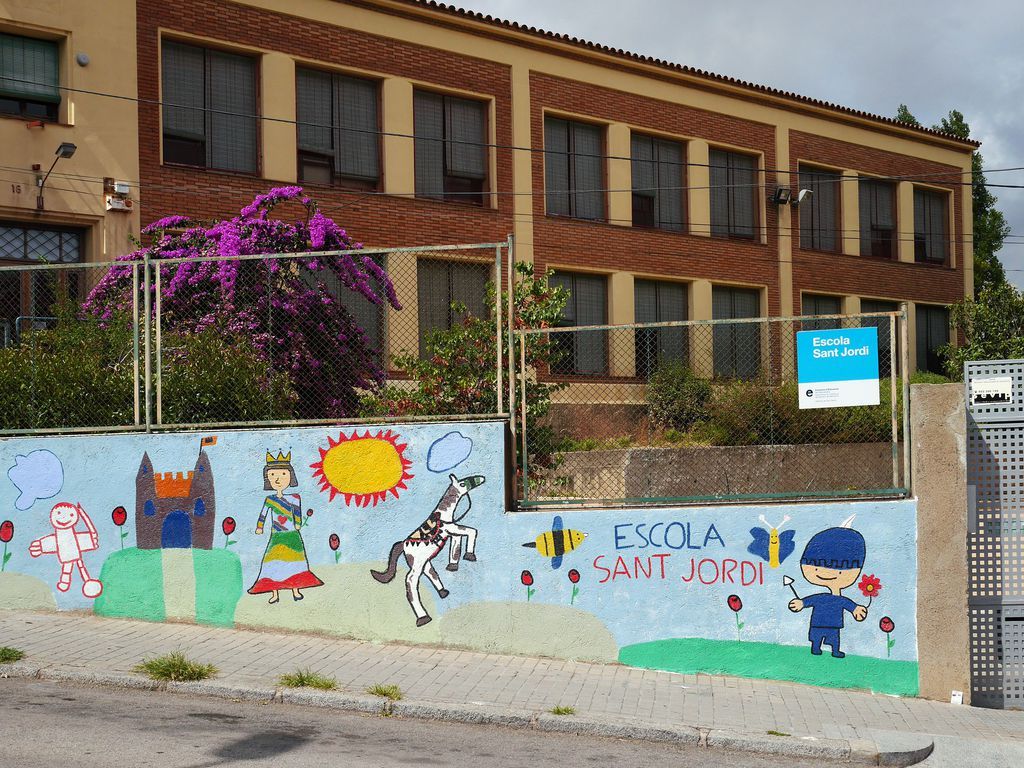
It is not an exaggeration, therefore, to say that a linguicide is taking place in BarcelonaThese data that I share are public, although opaque, and configure a desolate panoramar that not only intensifies and grows with the famous not upColauista, but with the prejudice and petulance of many of our representatives when it comes to defending the validity of the linguistic immersion model. Again, most readers will not need surveys to verify how there are many high schools in Barcelona and its surroundings where the vehicular language is not Catalan. In the same way that we have defended our healthcare system for many years, with provincial narcissism, as if it were the best in the world (something that the irruption of Covid has proven false), the country's politicians have been sustaining for decades the false platitude of the validity of immersion in Catalonia.Let's say it again: it's false, Catalan is not necessarily and obligatorily the vehicular language of education in the country and maintaining this fiction may cure our bad conscience, but it does the language a very poor favor. Lying and hiding data, in general, never usually leads to good results.
Spanish is a language that Catalans understand, speak, write, and that we admire and love because it is also ours, of course it is.Does Barcelona speak Catalan?, the article's title asked. Although it may be hard to accept, the answer is no, andour capital begins to ooze a linguistic climate similar to Alghero, Alicante, Valencia city or some areas of La Franja
El presidente de la República, Gabriel Boric, se refirió este lunes a la conmemoración de los 50 años del golpe de Estado, que se cumple el próximo 11 de septiembre, y a la polémica que se ha generado en torno a la fecha.
En ese contexto, el Mandatario hizo un llamado a “no empatar las responsabilidades” entre quienes “quebrantaron la democracia” y quienes “la defendieron”.
“No es aceptable, no es aceptable, que se relativice o se justifique el golpe de Estado. No es aceptable que se relativice o se justifique la violación a los derechos humanos”, dijo Boric en un punto de prensa en el Palacio de La Moneda.
El jefe de Estado enfatizó que “no hay dos bandos, no hay dos bandos, no hay dos bandos. Hay quienes defendieron la democracia y quienes la quebrantaron”.
“Y eso es algo que tenemos que tener muy claro, muy claro, muy claro. Y no podemos empatar las responsabilidades”, añadió.
Boric también se refirió a la propuesta de la oposición de firmar una declaración conjunta en la que se condene el golpe de Estado y se defienda la democracia.
“Nosotros estamos disponibles a firmar una declaración conjunta, pero no a cualquier precio. No a cualquier precio”, sostuvo.
El Presidente explicó que “no vamos a firmar una declaración que relativice o justifique el golpe de Estado. No vamos a firmar una declaración que relativice o justifique la violación a los derechos humanos”.
“Nosotros estamos por la verdad, la justicia, la reparación y las garantías de no repetición. Y eso es algo que no vamos a transar”, sentenció.
Las declaraciones de Boric se dan en medio de la polémica que se ha generado en torno a la conmemoración de los 50 años del golpe de Estado, que ha generado un fuerte debate entre el oficialismo y la oposición.
La derecha ha criticado al Gobierno por lo que considera una “instrumentalización” de la fecha, mientras que el oficialismo ha acusado a la oposición de “negacionismo” y de “justificar” el golpe de Estado.
En este escenario, el Presidente Boric ha buscado marcar una postura clara y firme en defensa de la democracia y los derechos humanos, en un intento por cerrar las filas de su sector y evitar que la polémica escale aún más.
We must demand from our representatives something as simple and understandable as having a linguistic militancy identical to that of Spanish politicians, who never discuss the comprehensive and common condition of their language, a language that Catalans understand, speak, write, and that we admire and love because it is also ours, of course. But naturalizing the act of speaking Catalan is also something we must demand of speakers, because if we are equally militant and do not renounce the human right that speaking our language in our city represents, perhaps the figures will move away from agony. But there is something very clear: this aboutnot abovewill end up killing Catalan.For now, Barcelona no longer speaks it. Like it or not.Add The New Barcelona Post as your preferred Google source for free
Stay informed with the latest news.