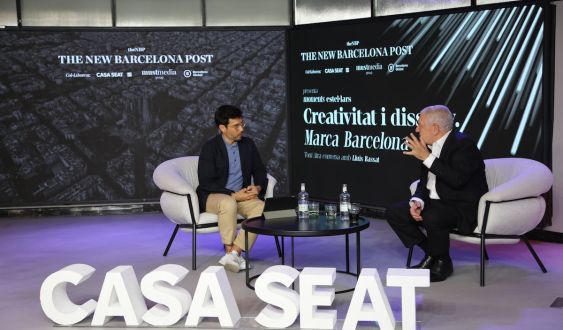
Lluís Bassat, as an advertiser, has achieved everything. It is not in vain that he is one of the Barcelonians (re)known worldwide in his sector. As a Barcelona fan, he failed to achieve the presidency of Barça. However, now, with the perspective of time, he confesses that the members ended up doing him a favor because he, as president, would not have allowed the Barça club to participate in a series of dynamics that have the world of football rampant at many levels.
In the conversation I had with him at Casa Seat, Bassat offered these reflections without me having to press him much. This year he will turn eighty-one, but no one would say so. I would sign up to reach sixty with his physical shape (always elegant, impeccable, active) and with his mental agility. His eyes still sparkle with curiosity and anticipate a smile.
And yes, he spoke little but forcefully about Barça. Implacable against annexing the name Spotify to Camp Nou: "Instead of FC Barcelona we will end up calling ourselves McDonalds!", he ironized with emphasis. It might surprise, from an advertising man like him, such a refractory view of sponsors entering the world of football at that level. But his position on the matter could be summarized with that classic image that warns about people you invite into the kitchen and end up sleeping in your bed.
And this feeling of protection regarding Barça and its brand (which, after all, are values) he applies with even more passion when it comes to talking about "the city that bears the name of our club," as he recalled that Barça president used to say, whom imitations ended up making endearing (undeservedly).
Barcelona needs to regain its self-esteem. If he, an expert in the field, had to create a slogan for the city now, he would go this way. With the use of emotional arguments above all, of course, not rational ones. It is surprising how well Bassat has thought about what the city is, what it has been, and what it could be.
He assumes that now Madrid (and even Malaga in terms of the art sector) is outperforming us. We have been left behind, like those cyclists who leave the group behind, in a flurry. Money has helped a lot, but he also keeps in mind the unforced errors of the Barcelona municipal authorities in recent years.
Is there an alternative? For Bassat, this would imply having an idea. An idea that improves the very good "product" that Barcelona already is. An idea similar to that of Pasqual Maragall who in 1983, on the way to the electoral campaign that was to ratify him as mayor, explained it to him to recruit him communicatively. Bassat only had the option of working for Maragall individually, asking for a period of hiatus from his company. And, to decide, he asked Maragall if he had an idea about what he wanted to do as mayor. Maragall replied: "Do you have three hours?"
Bassat's 'yes' translated into a conversation that made him fall in love with the idea the mayor had for Barcelona at that time and for the decades that would follow. "I want the light to re-enter the Chinese quarter." He already had the Rambla del Raval in his head. And so many other things that, beyond the '92 Olympic Games, transformed the city, making it a better city for people and propelling it into the world like never before. And Bassat gave communicative form to the inauguration of that great stellar moment of contemporary Barcelona. It started from a great idea, and derivatives.
Now he has a few ideas for Barcelona. I asked him if he was aware that several parties are looking for candidates and that there is already one from his generation. He doesn't see himself in this role, but he makes himself available to the mayor who emerges from the polls in 2023. Counting on him would indeed be a good idea.
Add The New Barcelona Post as your preferred Google source for free
Stay informed with the latest news.