
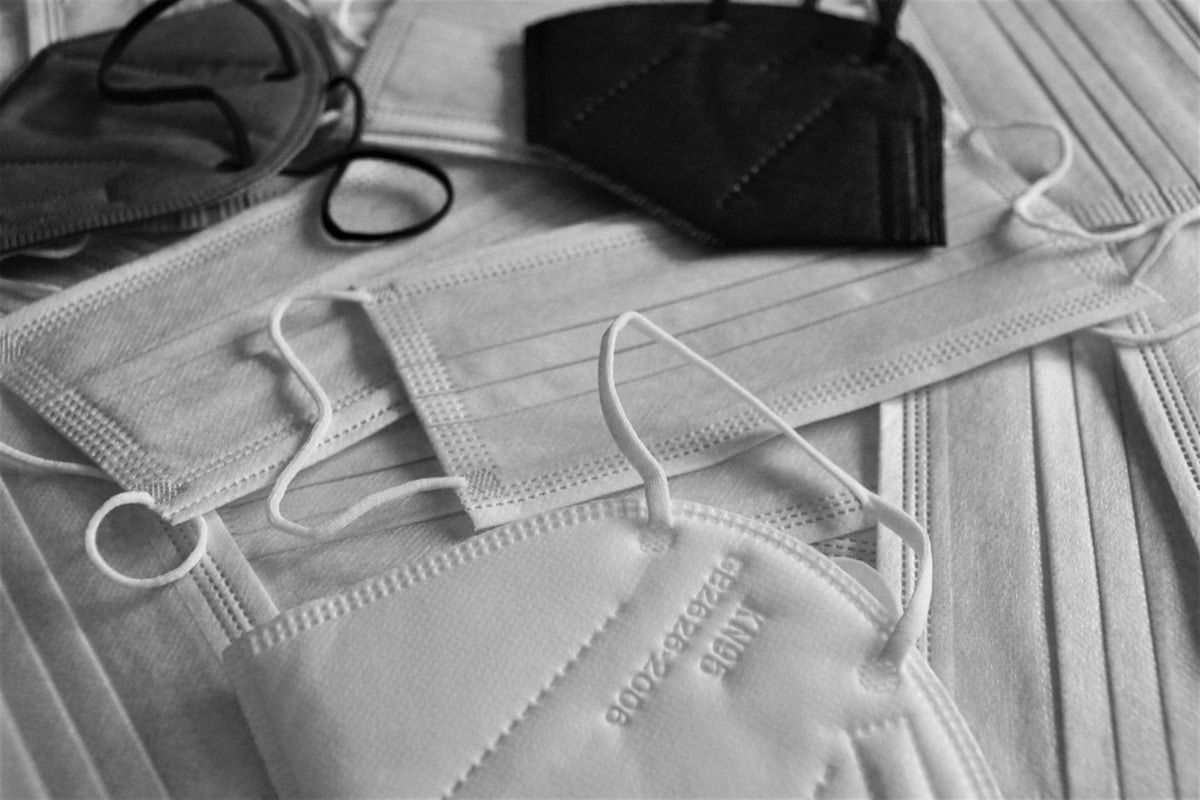
Pandemic iconography has erected the mask as its undisputed star symbol. As of today, this immune rag (later converted into a fashion object or even corporate-political identification, with the respective business slogan and national flag stamped on it) will no longer be mandatory on the street, and this arbitrariness of the stopwatch is already quite symptomatic of how state politicians have enjoyed playing the Caesarism of bio-power. This business of ending a prohibition when the day ends, as if saying goodbye to the covered face outdoors were something like New Year's Eve chimes or a Yankee-style graduation with masks thrown into the sky, is already a mockery that further infantilizes society. So was the mere existence of a measure that all epidemiologists, and it is rare to obtain total consensus in science, admitted as unnecessary because outdoor contagion is as improbable as winning the lottery.
I suppose that today fellow citizens are dying to squeeze their respective masks tightly in their hands to give them a digital middle finger or step on them with the contempt of someone jumping on a Nazi flag, as if this poor piece of plastic, certainly uncomfortable in any activity that requires breathing, were the ultimate cause of all the suffering with which Covid-19 has pawed our existence. René Girard says that societies only become peaceful when they manage to find a scapegoat to channel all their angers. The mask would be, in this sense, a monument to repression that, especially in a culture like the Mediterranean (in which there is the shameless custom of looking at the face and body of the other without excessive qualms), strongly demands the anger of the repressed. This is one of the victories of repressive politics: that today you want to burn the mask and not a ministry.
Your humble servant would take a deep breath and give a little more life to the object in question, and not only because it is still mandatory indoors or outdoors with a risk of overcrowding, nor because, as the corny ones say, "the mask has come to stay" in non-places like the subway, but because symbols have a power of remembrance that is worth preserving in a kind of museum of memory. The mask is synonymous with constriction, certainly, but it has also been the object that reminds us of our docile and submissive character when it comes to obeying the dictates of the scientific police. Catalonia, as always, is a curious place, and in a short time, the common citizen has gone from believing that "everything is yet to be done and everything is possible," burning containers in Urquinaona Square, to following pandemic regulations point by point with an almost military level of obedience and lack of discussion.
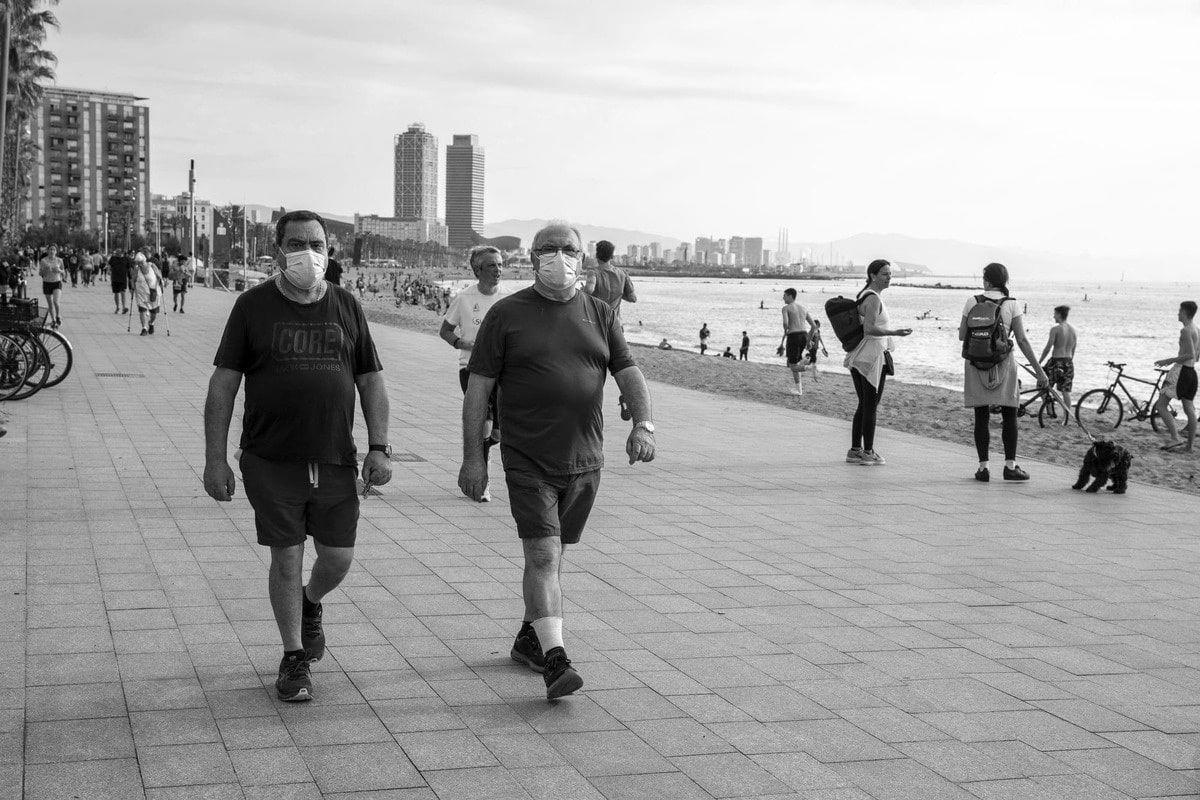
The mask will be a good reminder of our exemplary capacity for uncritical obedience and also of how this has too often been justified by the scientific basis of some restrictive measures on mobility or contact, as if the visions of epidemiologists were the new Midnight Mass (when, in fact, if anything this crisis has shown, it is science's ability to adapt its discourse to a reality it does not always understand, as when the illustrious Fernando Simón defined the coronavirus with the fortunate phrase "this is like a flu"). After European citizens have suffered a rise of technocracy in politics, which, if we remember, caused undemocratic government changes in countries like Italy, the character of science as an objectifying foundation for prohibition should have been problematized much more than our sluggishness has done.
The mask will be a good reminder of our exemplary capacity for uncritical obedienceDespite this adaptation of circumstantial scientific truths to prohibitive politics, it must be said that many scientists and transnational organizations (see the The Global Risk Report 2019of the World Economic Forum) had already warned of viral contagion as one of the most worrying dangers for humanity in the coming decades. The temptations to abandon the mask can be very strong, and offer today's man a shred of freedom with which he is easily content, butif futurologists are not deceiving us, it would not be apocalyptic to believe that what was born in a small market in Wuhan, coming to intimidate the rest of the world in a few months, could be repeated in the quite immediate future. That said, the fact that most rich countries have controlled the virus does not mean that Covid-19 is not still biting hard in many of the countries that cannot access mass vaccination.
On the other hand, and although it may seem exaggerated, in a present where facial recognition (and the Google-mapping of the world with ubiquitous surveillance cameras) is already a common fact, I would say that the mask and other elements that prevent the recognition of the other will have a longer life than we expect. When contemporary psychology warns of the fear of abandoning the mask, especially common in more introverted people and those who were already comfortable going unnoticed in times of collective stress, and even recommends that humans develop a kind of ritual of abandoning the object, the fact that the mask can be revalued as one of the new ways to preserve one's face from an increasingly dangerous exterior is overlooked. By ironies of the future, Westerners may end up developing an almost jihadist taste for the privilege of going with their bodies partially covered.
By ironies of the future, Westerners may end up developing an almost jihadist taste for the privilege of going with their bodies partially coveredWhat I am telling you may seem delusional, just as it seemed delusional to say decades ago that we would end up wearing electronic microchips embedded in our skin, but if something the philosophy of the 20th century has taught us is to see how corporeality (and more specifically faciality) is the testing ground where fashions and also the fears generated in the mental imaginary of the West are exercised. If I were you, dear readers of this Punyalada, I would not throw away the masks that have accompanied us and that we have so often detested this last year. Because, much as it may pain us, perhaps with time we will end up loving them much more than we thought.
Add The New Barcelona Post as your preferred Google source for free
Stay informed with the latest news.