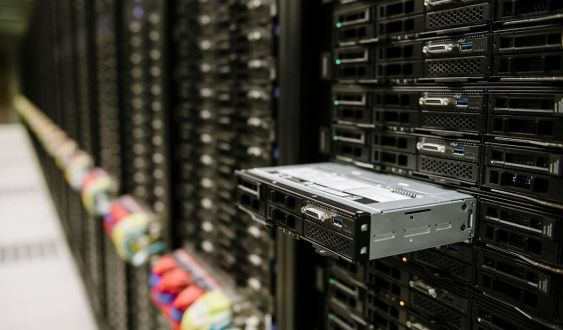
Booming worldwide ---especially in the United States, Japan, China, Singapore, and the United Kingdom---, the number of data centers has not stopped growing in recent years due to the increasing importance of proper data management and, therefore, the digitalization of companies that require ever-greater resources for storage and processing. In this race, Spain and Catalonia are taking positions. According to the German consulting firm specialized in market data, Statista, the United Kingdom is the country with the most data centers in Europe in 2021, with a total of 452. In second place in the ranking is Germany, with 443. For its part, Spain is also among the top ten countries on the list, specifically sixth, with 122 data centers.
Such is the interest of the private sector that the report Data Centers in Spain, by the consulting firm Savills Aguirre Newman, determines that according to the estimation of the giants of the data center business operating in Spain, in physical infrastructures alone, new direct investment could reach 3,000 million euros in the next five years, which would place Spain at the same level as the FLAP markets (Frankfurt, London, Amsterdam, Paris) and make it the main digital hub of Southern Europe. Madrid is the main location with 43% of the total facilities, followed by Catalonia (mainly Barcelona), with 25%.
New projects
Private investors will increasingly resort to alliances to enter the data center market. An example is the latest projects announced by Merlin Properties and Renta Corporación. Merlin Properties has partnered with Edged Energy, a subsidiary of the American technology firm Endevour, to develop a plan for the construction of data centers in Spain (Barcelona, Madrid, and Bilbao) and Portugal (Lisbon).
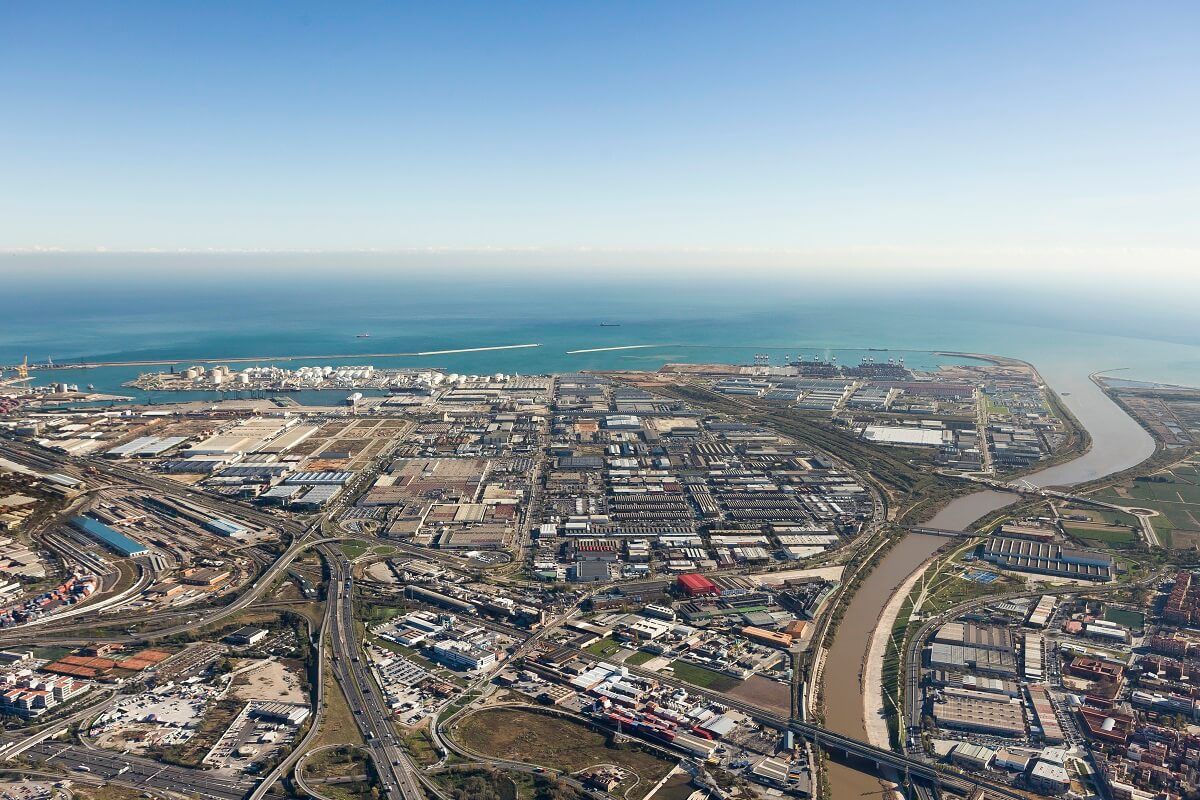
The one in Barcelona already has a location, the Zona Franca Logistics Park (it will occupy a plot of 23,000 square meters), will start next year and will involve an investment of more than 100 million euros, with an initial capacity of 16 megawatts (MW) and potentially reaching 24 MW. As Savills Aguirre Newman consultants remind us, unlike other real estate assets, the size of data centers is measured in MW instead of square meters, although, being buildings, reference is also made to the surface area. Large data centers, generally owned by internet giants, can occupy about 10,000 square meters.
The Madrid and Barcelona locations will have an approximate capacity of 20 MW each, and the data center campuses located in Bilbao and Lisbon will have the necessary infrastructure to build hyperscale facilities with more than 100 MW of capacity each (20 MW in the first phase). "Our team has been building data centers for the last 25 years, and these are some of the best locations we have seen from the point of view of access to fiber and renewable energy," explained Jakob Carnemark, founder of Edged Energy, recently.
Also next year, Renta Corporación will start the construction of a data processing complex in L'Hospitalet de Llobregat (Barcelona) with the aim of building a data center ---with 10,000 square meters--- and three industrial warehouses ---with 6,000 more square meters---, a logistics project in which it will invest a total of 14 million euros.
Increasingly, more local infrastructures with more adjusted design and dimensions are being imposed, in an enclave with high levels of connectivity. This happens because data centers are not exempt from new challenges: energy consumption and cost, and the sustainability of their structure, in addition to increasing digital security. It is in cybersecurity where sector experts demand greater involvement from the Administration.
Thus, the main challenges for the promoters of these infrastructures are the design of a secure installation that allows business continuity and cost optimization, eco-responsible management, and regulatory compliance, says Nicolas Blasyk, CEO of Nuubb, a Spanish technology company specialized in cloud services for businesses.
More suitable facilities
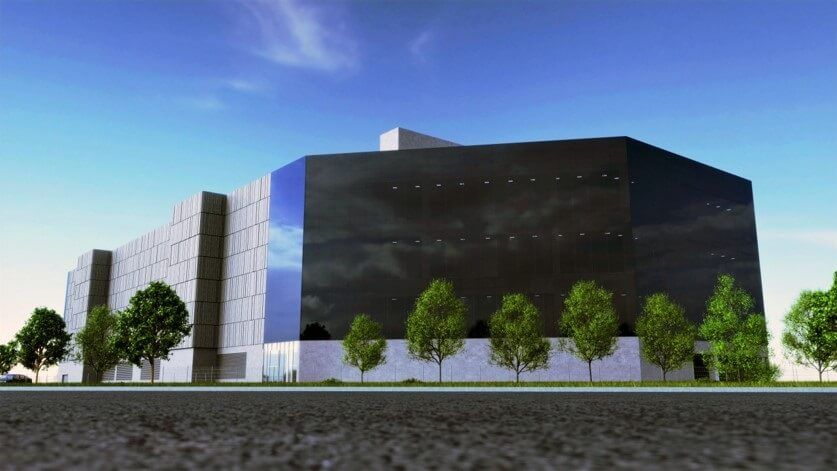
Blasyk explains that "next-generation data centers are technologically more advanced and, above all, ecologically more sustainable, because the future involves more local facilities and in areas where industry and services are established, with very powerful infrastructures and high levels of security." "It's about compacting the infrastructure more so that costs are also reduced," he points out.
"It's about compacting the infrastructure more so that costs are also reduced," says Nicolas Blasyk, CEO of NuubbIn the same vein, the president of the Digital Cluster of Catalonia, Albino Campo, expresses that "it is better to create local infrastructures that allow managing smaller facilities." Campo recalls how important it is to act against the carbon footprint, especially after the pandemic's emergence, which has exponentially accelerated the use of the Internet. That is why he mentions the reports that warn of pollution from digitalization. In this sense, there are references in the studies by Jon Koomey, a professor at Stanford University and a scientist at America's Lawrence Berkeley Laboratory, which indicate that the energy impact of using all the elements that configure the functioning of the Internet accounts for between 8% and 10% of global energy consumption. As for data centers, the figure would be 1.5-2%.
Similarly, other reports, such as that from the consulting firm Gartner, state that the information and communication technology (ICT) industry generates 2% of global CO2 emissions, a figure that could be equated to the environmental impact of aviation.
A growing sector
ICTs are therefore a sector still in full expansion worldwide. In the case of Catalonia, its importance is paramount: it is made up of some 17,000 companies, which employ more than 120,000 people, and have a turnover of some 18,000 million euros, representing 7.3% of Catalan GDP. "Putting this in context implies that there is a very clear commitment from the Government to try to boost the ICT sector throughout the country," says Campo, president of the Digital Cluster of Catalonia.
Campo explains that the creation of a technological ecosystem that favors both the establishment of companies and the creation of startups is promoted, and he corroborates this as there are 400 emerging technology companies that have decided to establish themselves in Barcelona and the data center segment has a very important boost.
ICTs are a sector still in full expansion worldwide and in Catalonia their importance is paramountOne of the objectives of Merlin Properties' project is to become a neutral operator, a characteristic that would differentiate it from the rest of private infrastructures and of utmost importance for the sector because it enhances connectivity. In Catalonia, the CATNIX neutral connection point has been operating for two decades, an essential tool for the implementation of data centers in the territory, specifically in Barcelona, as it favors connections with minimal latency and greater speed. The great handicap of data centers.
5G and the submarine cable
Also paramount at this time are the development of the 5G network and fiber optic submarine cable connections. Barcelona is a leader in 5G projects thanks to public-private collaboration; it has been the first open 5G laboratory in Catalonia since 2019, a pioneering initiative throughout Europe that will turn the territory into an open space to experiment and validate new services with 5G technology in real environments.
Likewise, the Government has promoted the construction of a submarine cable port on the beach of Sant Adrià del Besòs, the Barcelona Cable Landing Station. This is an initiative of the Catalan company AFR-IX Telecom with a key infrastructure that will be the arrival point for high-capacity fiber optic submarine cables from the Mediterranean and will link cables from Asia, Africa, and the Mediterranean that want to connect with the United States via the fastest possible route.
Currently, in the Mediterranean, Marseille gathers the arrival of the largest number of submarine fiber optic cables, and saturation and the need for other landing stations like Barcelona Cable Landing Station are evident. Barcelona thus becomes "one of the best-connected points in Southern Europe," concludes Campo.

Add The New Barcelona Post as your preferred Google source for free
Stay informed with the latest news.
