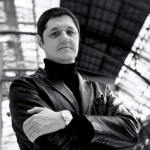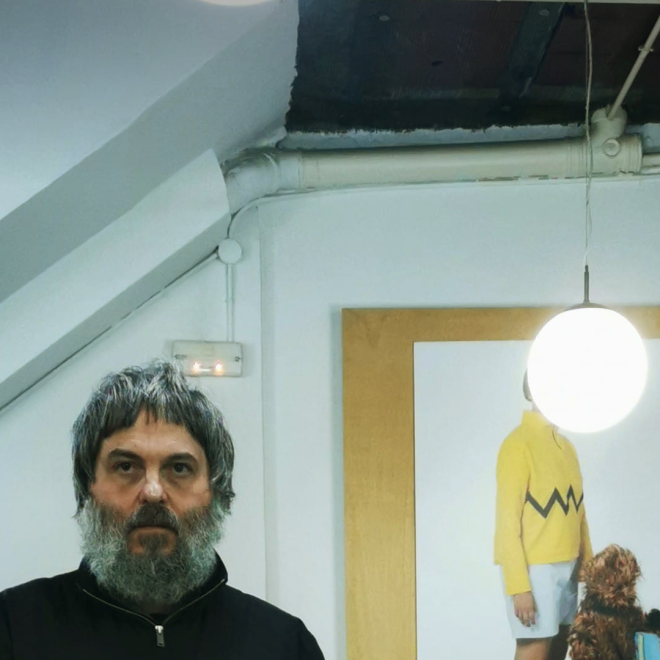
"I am contemplative, I can get hung up, fascinated, admiring a painting, an aesthetic detail or listening to a song." Quod erat demonstrandum, the elegant rhythm of Les Baxter's Copacabana Surf Board accompanies the evening atmosphere of the Bar and, leaning against the bar, Dani Montlleó gets lost in its notes while sipping a beer. "A hairstyle I like can abstract me, and it can end up saving my day," he adds with a mischievous soul's smile peeking out from under his beard.
A multidisciplinary artist capable of mixing music, design, figurative art and text understood as something more than an explanatory support for each work, as a child he was the typical one who saturated notebooks with drawings of quality inversely proportional to his academic performance. At fourteen, his world was the Beatles, Pop culture and that residual subcultural substratum that broke with the landscape monotony of Mataró in the early 80s. "I finished BUP with the idea of wanting to dedicate myself to art which, yes, I have always understood as an activity comparable to any other, just another trade, without pretensions," but he soon left it to become an apprentice in a hair salon.
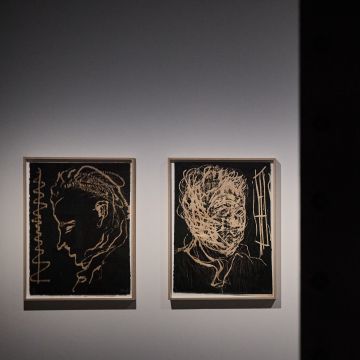
"I've been making a living cutting hair for almost twenty years with my partner, Susana Rodríguez, but it's something I don't consider an art, but rather I combine it with my artistic activity." Projects like El gafe i la revolució, The Stuarts, Pompeu the martian or Otto Bloch (Pete Townshend's shirt) combine music, documentaries, books, painting, figures, illustration or video. Pop and Modern Art, in a 21st century of soft postmodernity and gray liquidity. "My first exhibition, KF59, was very inspired by Basquiat, then I was nourished by more influences like Peter Blake and, for some time now, architecture and urbanism are clear influences in my work."
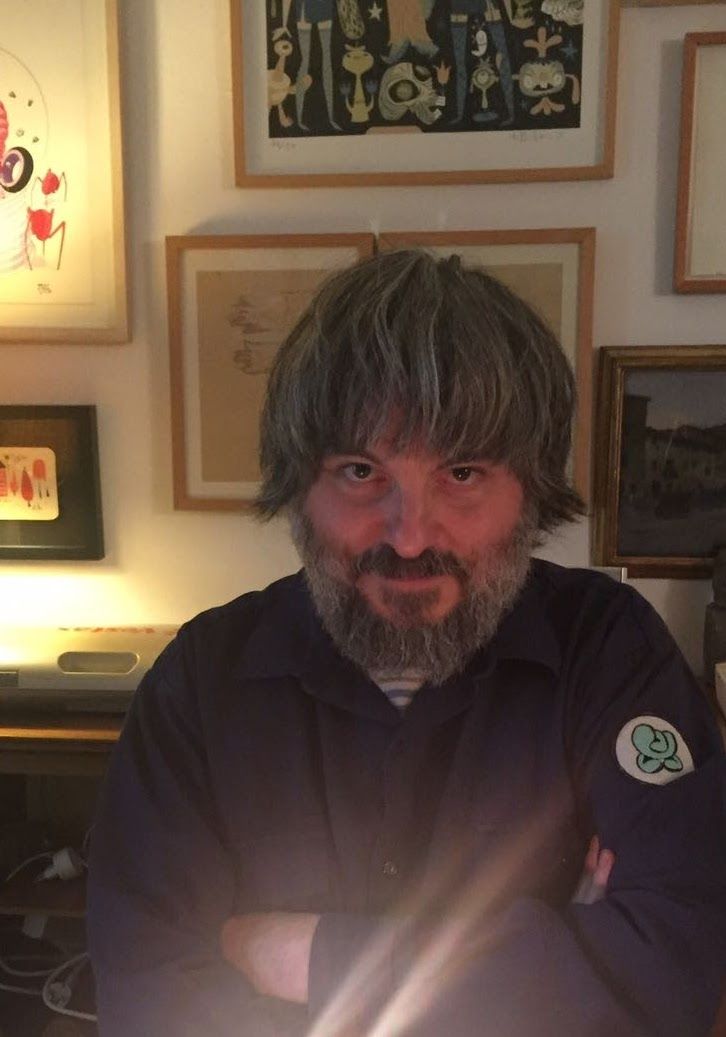
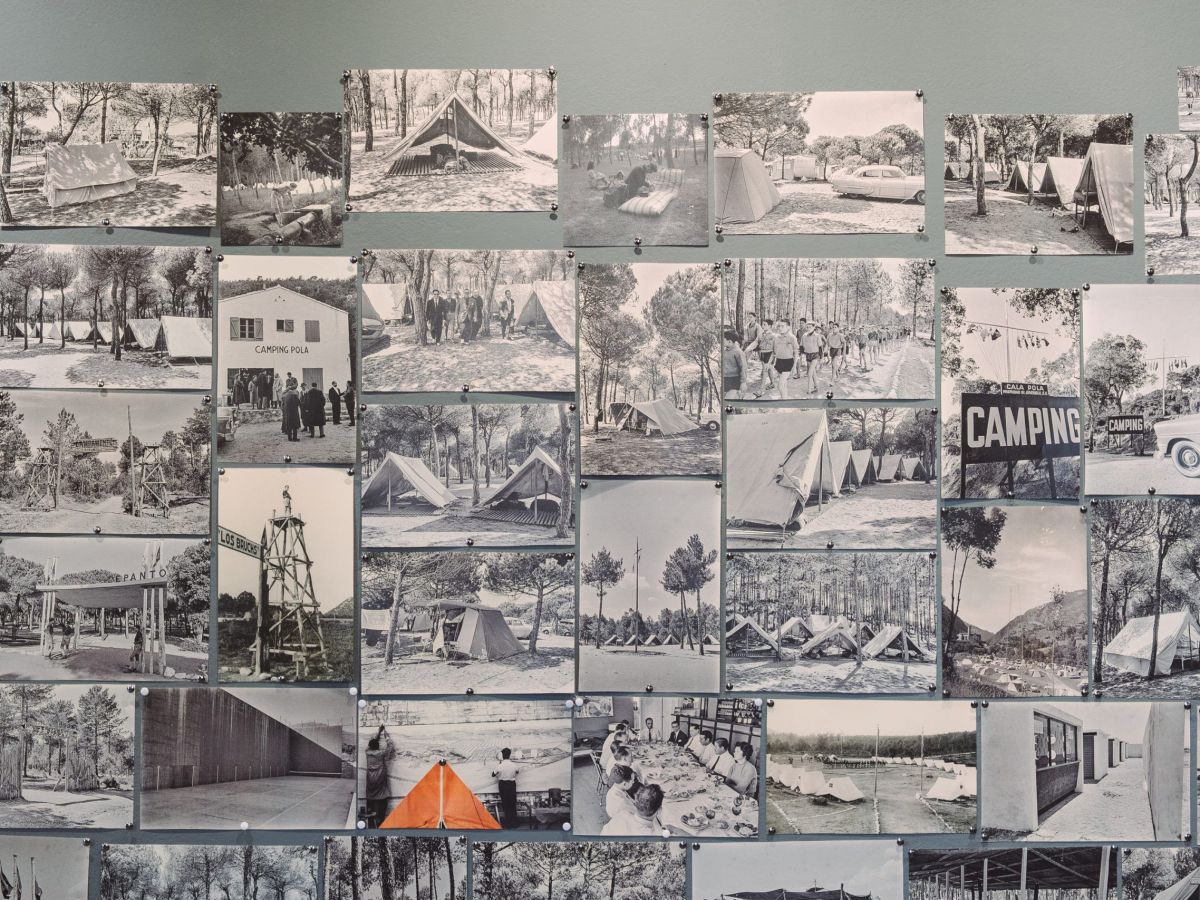
Projects such as Döppelganger Goldfinger, which connects architecture with cinema, literature, design, music, and some revolutionary and subcultural movements, attest to this. Or, also, the research works on local architects of the rationalist movement, carried out with Domènec and Manuel Guerrero under the name of Modernitat amagada, with which he makes visible little-known buildings such as the Casa Capell in Mataró or the Sert pavilion in Arenys de Mar. "Right now we are working on a new installment of the series about several houses that Josep Antoni Coderch built in Caldes d'Estrac," he announces.
Hair and details
Although Dani Montlleó's activity as a hairdresser has been separate from his artistic work, it cannot be said that both worlds have always run in parallel. The link between both disciplines may lie in the figure of Tito Díaz. "He was the rogue hairdresser of 1980s Barcelona, a singular character who, one day, left everything and went to live in a village to dedicate himself to art," from then on he became a known artist "for his passion for organic processes. In particular, for his sculptures made with human hair, among other works in different media." Dani would have been about seventeen years old when TV2 dedicated an episode of Un día en la vida de… to Díaz. And something clicked inside that kid convinced that perfection was Stu Sutcliffe's hairstyle.
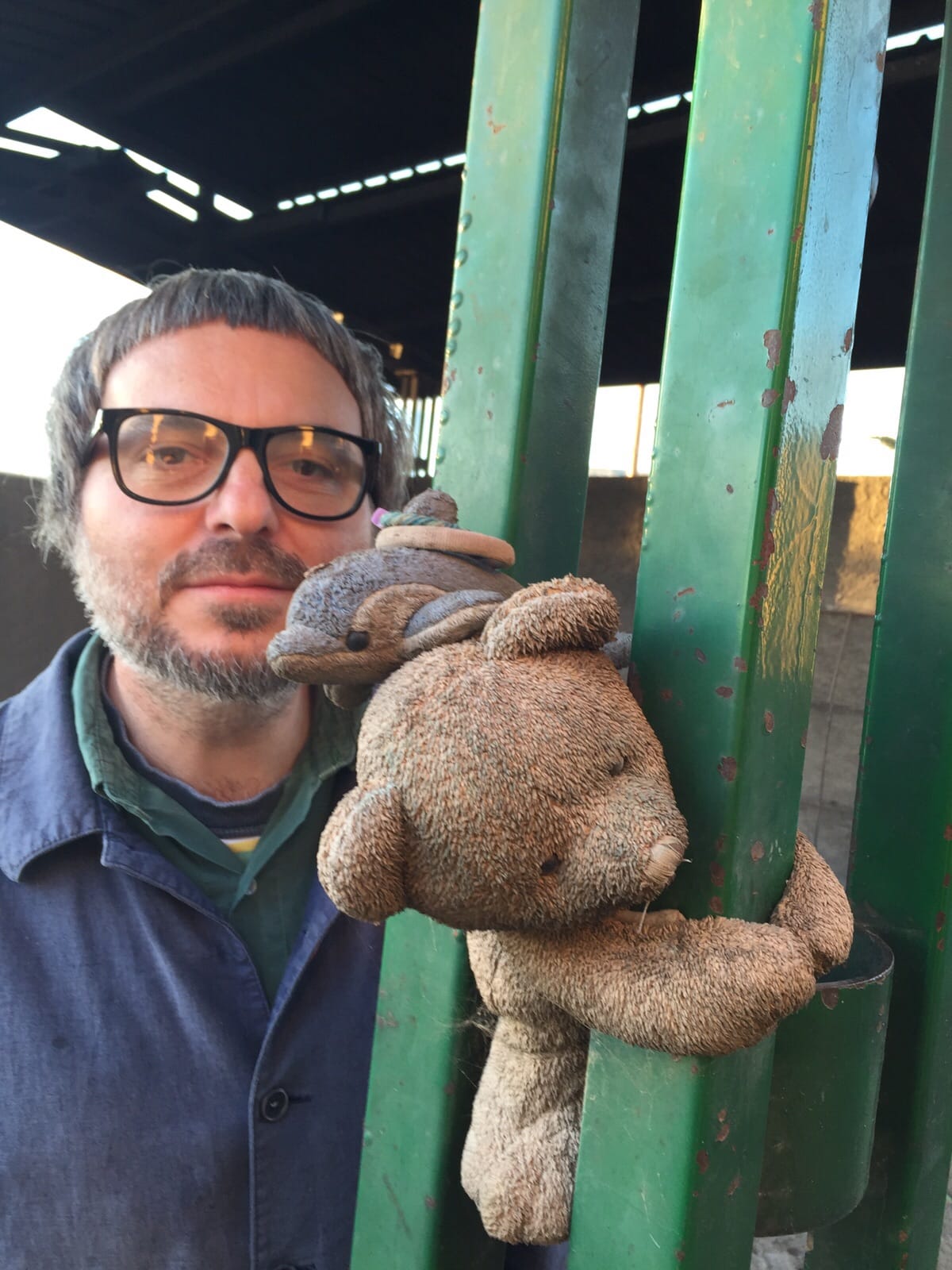
"Years after watching that program, I wanted to know what had become of Díaz, who seemed to have been swallowed by the earth. I investigated and that's how Tito, the phantom monk came out," a documentary that rescued the artist from obscurity through his work, his words and those of other friends and admirers, such as Enrique Sierra, from Radio Futura, or Miquel Barceló.
This is not the only time hairdressing has intersected with Dani's artistic work. The project Del Weimar-cut al Googie-cut, for example, proposed a small journey through utopian moments and movements of the 20th century, through the analysis of their haircuts. And in autumn, a book written by four hands with Oliver Mancebo about hairstyles and urban subcultures of the last century will see the light, thanks to Colectivo Bruxista.
Cartesian city
For the artist, his quintessential Barcelona stage is the Gothic Quarter, where he used to go as a young man, in search of extraordinary music, aesthetics, and sensations. He remains in love with its bars, its taverns, with streets like Avinyó, where for a time he ran a hair salon. "In Barcelona there was that subcultural ecosystem that barely took hold in Mataró, which had its good side, and that is that the four of us who were involved in some underground scene converged in the same square."
He feels from Mataró, "but without being an activist of the place," although closer "to the somewhat wild spirit of Maresme, which clashes a bit with the excessive rationalism of the people of Barcelona, who seem very Cartesian to me. This city is, all of it, Cartesian," he concludes, taking the last sip of his beer.
– What ignites passions even among the most rationalists is our cuisine. Dinner time is approaching, and perhaps you can be tempted with some tapas or the menu…
Dani Montlleó hesitates. Tapas would be a good option, but he decides it's still too early for dinner. "That later," he says, "now I'll have a peppermint frappé." Like Saura's film. Like Los Canarios' song. The most Pop Art drink one can order in the 21st century. The artist smiles again, before becoming captivated by the notes of Les Baxter's Silver Sand.
Add The New Barcelona Post as your preferred Google source for free
Stay informed with the latest news.