
I am one of the lazy ones who waited to see Creatura via platform; I include myself in this shameful tribe because Elena Martín's film and screenwriter Clara Roquet's work is so beautifully crafted that it deserves to be seen and heard on the big screen, far from the tyranny of the pause and the passivity of the sofa. Format issues aside, it is necessary to celebrate this magnificent film that certifies ---first and foremost--- our excellent roster of female directors; most of them, and that also deserves loud applause, are spokespeople for a strictly American cinema, in the sense that their art is based on emotions to then turn to the realm of philosophy (if I were them, I would urgently flee this tediously boring Catalonia of ours and go to Hollywood, because there they will help them give birth to auteur cinema as practiced in the first world, with a lot of millions of euros on the table).
Creatura is a work of art slowly crafted, with a very elaborate score and very careful physical symbolism. Despite the choral symphony of voices, the viewer is forced to put themselves in Mila's shoes (if Víctor Català collected royalties in the afterlife, he could commission a golden pantheon) and the traumatic evolution of her experience with sexual desire from childhood to her thirties. The grace of Creatura lies in the attempts of its creators to distance the story of a woman's castration, born at the end of the last century (therefore, subjected to real experiences such as aesthetic pressure, discomfort with her own body, or the vulgar harassment of perpetually adolescent males) from any moralistic discourse, fleeing antagonisms and portraying lives ---especially masculine ones--- that are so due to a cumulus of ancestral inheritances and misunderstandings.
This game of small shared catastrophes is especially manifested in the character of Marcel (if Creatura had been filmed overseas, Oriol Pla would already have a bald statuette in his bathroom), a man in a deconstructive process who does everything possible to understand the painful castration of the one he loves. From my gender perspective, it is amusing to witness the lament of a male overwhelmed by the impossible odyssey of assuming his partner's wound. The thing has its humor because, perhaps against the will of its creators, the relationship of this couple demonstrates a fact as undeniable as that ---no matter how much empathy and shared breathing exercises we perpetrate--- men are incapable of understanding women for the simple fact that our sexual desire does not represent any kind of philosophical problem for us and, when the beloved otherness questions it, we prefer to leave the house to smoke a cigarette.
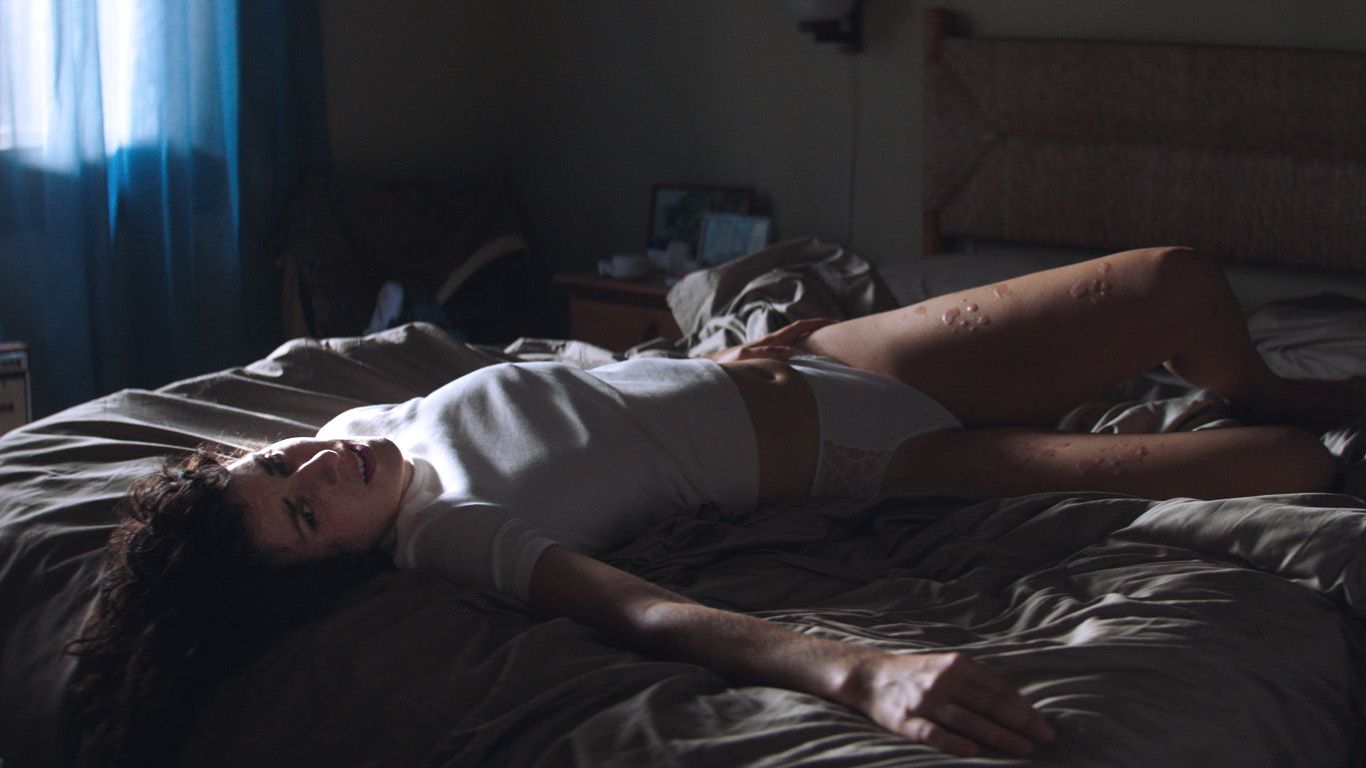
In this sense, and if you allow me to disguise myself as a Marxist for a single paragraph, the profound moralism of this film lies in the systemic portrayal of castrated relationships where the only catharsis ends up being the exposure of the trauma-wound in a dangerously twin form of addiction. Here we must appeal again to the figure of Marcel, a man who does everything possible to dress himself as a feminist (listening with a very empathetic face of attention to his partner and, however paradoxical it may seem to him, pretending to have a great time while Mila wants to hook up with the village waiter or wants him to spank her buttocks while they fuck) when the only problem he has is openly recognizing that he will never understand what the hell is happening to his wife, also due to another unquestionable fact: she is more interested in suffering it in silence than telling him little by little or paying for good therapy.
In fact, it is also very funny (especially given the very young age of the mothers of this sublime invention) that the only source of peace Mila ends up finding is through a kind of mystical communion with nature, in which her hives are slightly mitigated by the salt of the sea. As a biped born in the late seventies, I find it very curious that there is a generation of women born around the urban globalization of Olympism who (through Català and Rodoreda) have ended up buying into such a romantic and conservative idea as the mystification of natural elements. I, on the contrary, would like to read Creatura as a confirmation of the fact that sexual desire ends up being the primary cause of the breakdown of the social contract. Much as my time is Wagnerian, and I live delighted to exhibit the wound, I have the flaw of continuing to look at the world from the 18th century.
The only obligation of a work of art is to make you think. Creatura fulfills that condition very well. I must also tell you ---for all this about showing the wound and not finishing sharing, explaining, or even healing it--- that it is one of the most profoundly Catalan works I have ever seen in my life.
Add The New Barcelona Post as your preferred Google source for free
Stay informed with the latest news.