The Santa Mònica Art Center hosts The Assault of Illusion, a choral exhibition by various artists and disciplines, which analyzes how art has contributed to constructing what we understand as reality and aims to uncover the visual traps we find in the media and in the era of post-truth. The exhibition, which can be visited until September 27, is made up of a constantly changing space. We find mirrors, fabrics, movable walls, and other elements that cause the environment to transform as reality does. Since there is no constant in this reality, this fact directly affects our perception of this reality.
From a perspective far from exclusivity, the proposed mix of artists and practices raises an evident tension between the point of view and the mechanisms that produce images, and thus, also discourses, narratives, and what they communicate.
The exhibition is composed of sections:
- Visual seduction: the space does not attend to reason, but to seduction, to illusion.
- Mechanisms: Revelation. It shows how reality is manipulated to achieve the desired effect.
- Critique: A questioning. A reflection by artists against the machine of deception production.
- Historical reading: A recapitulation. Journey and historical and practical examples.
To show and not to show. To deliberately hide. To create an illusion of reality. To prepare something to be docilely consumed. The true purpose of the exhibition is to reflect deeply on how these discourses are structured from spheres of power. Thus, it is necessary to reveal the what and the how.
In the proposed space, painting, photography, and video coexist. Each language, each discipline, in this exhibition, constructs and confers a new reality.
Art is a tool that produces deceptions, and these have shaped our desire and modified what we understand and intend as reality. If what makes us human is the ability to create myths, the ability to invent realities that seem more real than reality itself, shouldn't art also unmask these deceptions, the techniques, the mechanisms that construct these fictions, and even more so, considering the postmodern world, post-truth discourses, and an environment of fake news and message oversaturation?
Through the proposed, dynamic and polymorphic scenographic journey, the spectator of The Assault of Illusion participates in the exhibition, sometimes disoriented, at times entering and exiting, with one foot in reality and the other in illusion. The deliberate breaking of this line is one of the successes of the exhibition when this act is not evident.
In January 1964, psychoanalyst Octave Mannoni published an article in "Les temps modernes" on the denial of reality. The genocide in Palestine, climate disasters, or the rise of the far-right in the West are current media examples. Knowing that something is not real or true does not diminish its power at all. Society seems unprepared to know the whole truth of what is happening and why, especially in the eyes of states and governments. According to this discourse, information must be sweetened and pleasing, as we would do with a child. And yet, the modern individual sometimes prefers not to know. It is preferable to buy a lie that sounds good, because the alternative is terrifying. Facing discomfort, realizing that we have been deceived or that we have been betrayed by ideas and discourses impoverishes us, shames us, and makes us look foolish. The production of intentional discourses and narratives to generate illusions of reality is more active than ever.
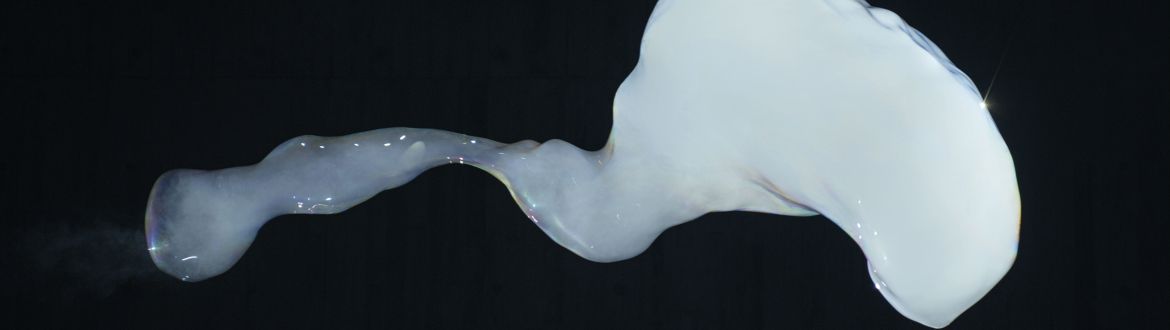
A. A. Murakami (Azusa Murakami and Alexander Groves) present Beyond the Horizon, an installation that challenges the relationship between appearance and reality. Clouds of real appearance are located within the space of representation, inside a space. This fact generates a shock in the spectator who witnesses an impossible with astonishment.
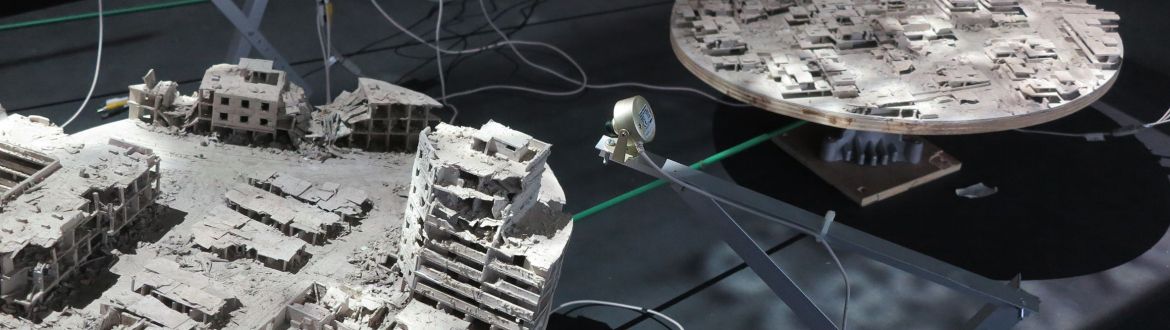
Alain Josseau in Automacin war, proposes a fictional newscast that covers the war in real time, with all the disinformation and propaganda typical of armed conflicts, something that is familiar to the viewer. Within what is to be expected, the pernicious codes of television language are revealed, which question the true value we give to the credibility of journalism and official versions in our postmodern society. Through a large screen, a false report is shown in which news of a robotization of war is given in a period from 2017 to 2026. Real speeches are used with archive images or taken out of context. There are false live connections, as is also common in our reality, and all this coexists with a model representing cities in ruins and images generated by artificial software. The cameras are robotic. The war is fictional, but the narrative is generated from real stories and testimonies compiled and orchestrated by artificial intelligence.
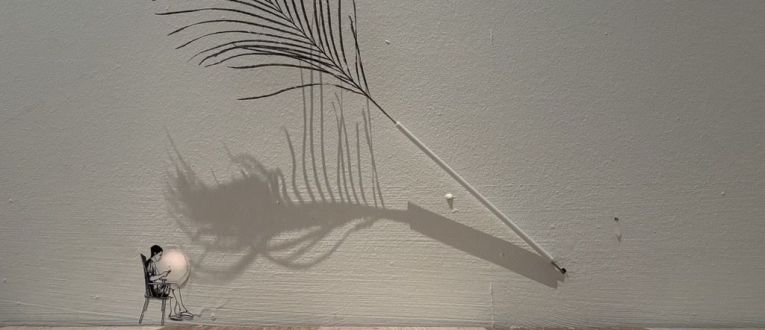
Chico Amaral, for his part, presents automatic images that seem to be generated by chance, raising the conflict between our demand for meaning and coherence in relation to the images we consume, and the reality that tells us that these are generated randomly, spontaneously and without meaning.
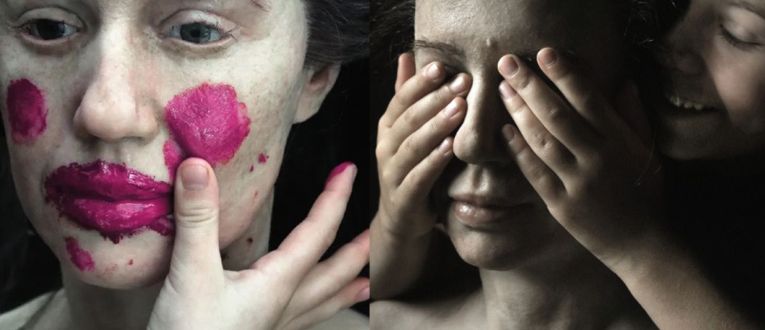
Mama, by Aneta Grzeszykowska, is a photographic series in which a girl seems to play with her mother. The maternal figure is actually a wax statue made in a hyperrealistic style. The image questions our subjectivity and disturbs us. Reality versus desire. How will we relate to robotic figures? Who and what will they resemble? What roles will they have in our society? Will we replace human and real affections with artificial and simulated affections?
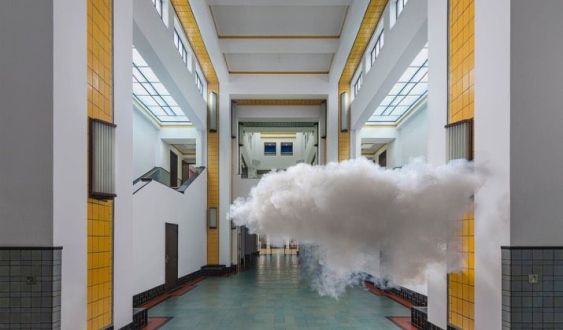
Nimbus Kunstmuseum Hal, by Berndnaut Smicde, presents us with another type of cloud. The cloud as something that fades, something unattainable in the heights. Vaporous material that makes an appearance in a real environment. The cloud appears as a magical element from our childhood, from idealization and children's stories, leading irremediably to daydreaming, to disconnecting imagination from reality. We are adults, yes, but we continue to want to see clouds, to be, literally, in the clouds. This is, of course, one of the most notable works in the exhibition and endowed with a captivating hypnotic force.
The illusion of one's own apartment, by Madrid-born Manuel Calderón, is a miniature model with peepholes that create the illusion of a spacious apartment and rooms. There are impossible connections, corridors and phantasmagoria that put on the table the illusion of accessing a home with reasonable dimensions, a fact that the work proves impossible with the play of lenses and perceptions.
Isolation, by Fabian Knecht, presents a thirty-two square meter piece of Horta park at the end of a corridor. The introduction of a natural space into an environment as artificial as the exhibition generates frustration. The viewer wants to enjoy this nature, but cannot. It seems like an entrance to nowhere. A perfect metaphor for a post-natural era. The deliberate reconstruction of artificially situated green areas to adorn the advance of cement in large cities; the destruction of nature for the sake of civilization, and then the reconquest of this nature by the very one who destroyed it.
Upon leaving the exhibition, the witness must confront, once again, the current gap between what is proposed by artists and the average citizen's usual consumption of information in the world. Perhaps the mere act of showing the mechanisms of propaganda and how we are deceived with the saturation of manipulated images, discourses, and information is no longer enough. One should now ask, what are the weapons with which we can confront these constructions? How to deal with this today.
In Why Has Critique Run out of Steam? From Matters of Fact to Matters of Concern (2004), by the philosopher and scientist Bruno Latour, the author suggests that we have been saying for a long time, perhaps too long, that every discourse is, in reality, a social construct. That this social construct shows that behind what we naively accepted in the past as real, there were powers, discourses, and interests that were, and continue to be, embodied through the society of the spectacle and an intentional production or overproduction of the image.
Today, this idea, which produced a critical intellectual effect of great and necessary depth, this great unveiling of hidden interests, this demonstration that reality involves a dense and complex construction, is finally used by a gentleman or lady on YouTube to say that the earth is flat, that the snow falling in Madrid in the middle of a pandemic is artificial, that the pandemic itself was a lie invented by the government to control us, that chemtrails or smoke trails left by planes as they pass through the sky, what they really do is spray chemical products or aerosols for mind control, or even that Australia does not exist.
If in society we have climate change deniers, conspiracy theorists, and flat-earthers, we must ask ourselves if the idea or tool of saying: "distrust everything," is what is needed today.
Add The New Barcelona Post as your preferred Google source for free
Stay informed with the latest news.