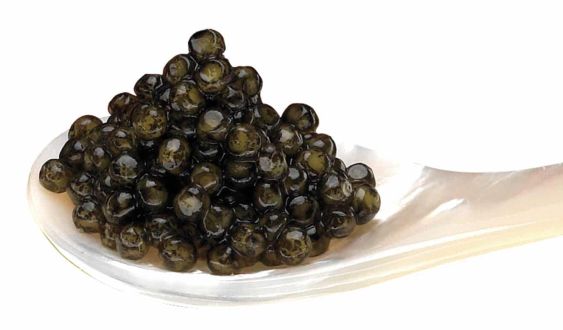
If I tell you the word "caviar," you will surely think of an elitist product that millionaires eat by the spoonful, which you might never be able to try because it's extremely expensive. You'll say: "Caviar is not for me." Many of us may have tried salmon roe, or the roe of that fish we've never seen, called "lumpfish," which spawns exclusively for the sandwich bread canapés in bakeries.
[subscribe_newsletter_esp]
But what if I told you that in Barcelona you could have a caviar tasting with a glass of cava for twenty-eight euros for two people? Caviar, like truffles, like ham, like foie gras, like sea urchin, like Palamós prawns, we won't eat every day. It's a celebratory product, for once a year. In fact, caviar, like other seafood today considered "luxury" (I'm thinking of lobster or sea cucumber), was what fishermen (who know a thing or two about stomach matters) ate when they went out to sea.
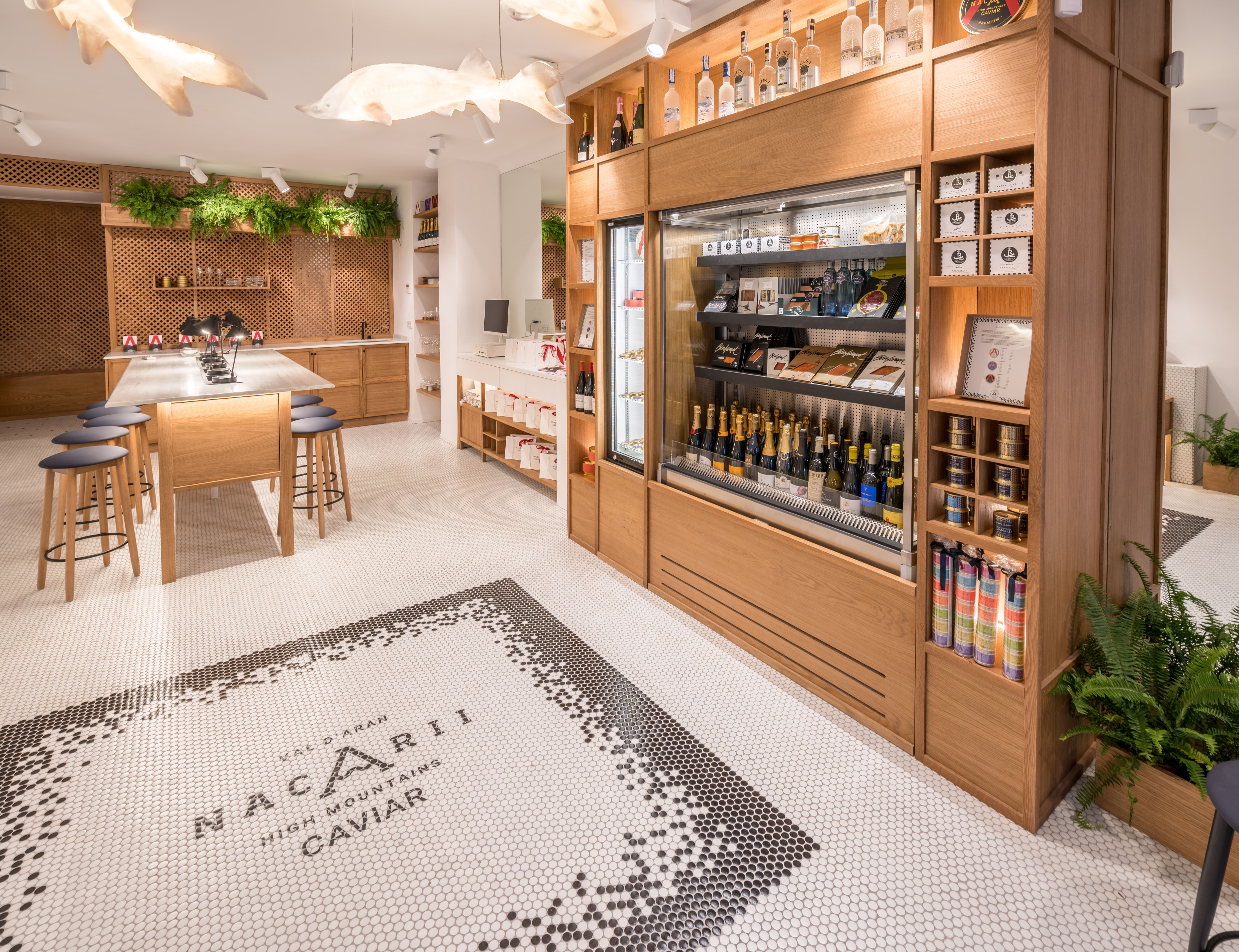
In Barcelona, on Bori i Fontestà street number 4, you'll find the Nacarii store, selling caviar from the Arán Valley. Now I'll tell you. I pass by almost every day on my way to Catalunya Ràdio, and one day I went in and met Laia Cisquella, the person in charge of the Nacarii Stores space (that is; the soul of the establishment). The offer they advertise on the blackboard consists of a ten-gram tin and two glasses of cava or two shots of vodka. But in the store, of course, there are tins of all sizes in case twenty friends want to have a celebration by splitting the cost. Twenty-eight euros for ten grams of caviar is the price of a pizza, so I decided not to have pizza for dinner and treat myself to this ---excuse the word, but it's accurate--- experience. I just needed a lucky person to accompany me. "Will you join me for a glass of cava with a little caviar?" I would say. And the answer would be: "Yes!"
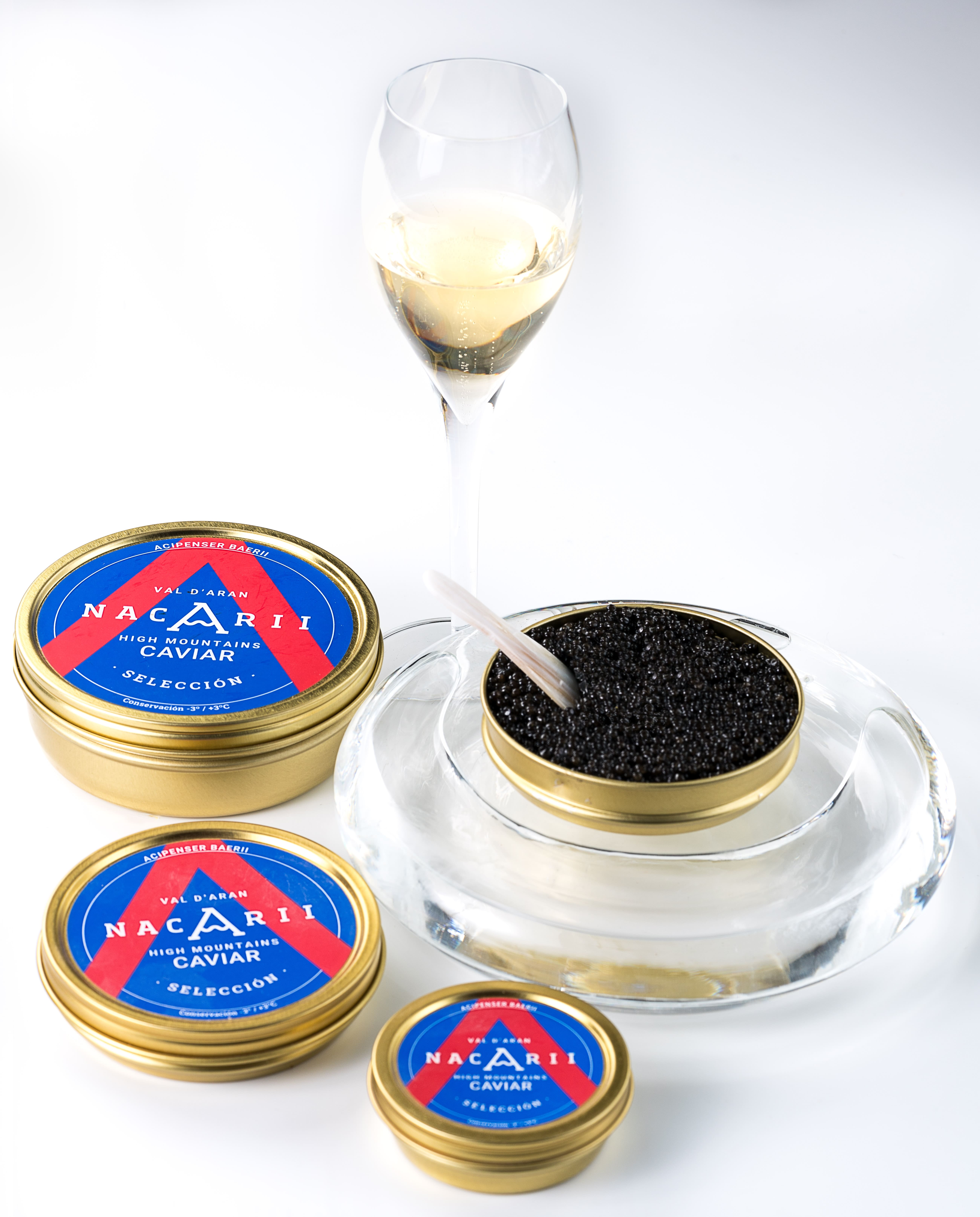
So, one day I go there for the promised tasting and meet Blanca Ohlsson, director of Caviar Nacarii, who answers all my questions. The space belongs to an energy company, Neoelectra, which generates electricity in the Aran Valley. They produce CO2, but instead of sending it into the atmosphere, they convert it into heat, and this is where the sturgeons ---or rather, the female sturgeons--- come into play, because if the water is warmer, they eat more. The female sturgeons in the Aran Valley have their water heated by two to four degrees. "Now, today, all the caviar in the world comes from sturgeons in captivity," Blanca tells me, and that's something I didn't know. In '98, regulations began, and there were caviar quotas. In 2008, the commercialization of wild caviar was already prohibited. Therefore, the caviar we can taste today is from fish farms, and it says so on the back of the can. There is a C that means "Captivity." Before 2000, the can could also have a W for "Wild." If someone offers you wild caviar today, they are either lying or committing a crime!
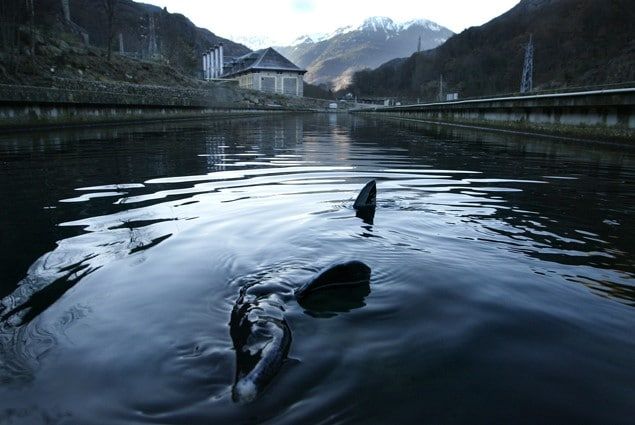
Nacarii's first production was in 2005. They only (and I apologize for this "only") made fifty kilos. Female sturgeons, in reality, are like wine. For one of them to spawn, at least ten years must pass. Nacarii's spaces, at first, started as a distribution company in the Aran Valley, but passers-by (skiers) would ring the doorbell and ask if they also sold. They decided to open in Barcelona. While we talk, a young couple enters, a lady alone, and a gentleman who leaves us amazed, because he takes a large can for his wedding anniversary. I am about to propose bigamy to him.
"People are very afraid of caviar, but if you offer them a tasting for 28 euros... They realize that a 200-gram can is not necessary," Blanca reasons. "For twice a year, it's an amazing product. An experience in the mouth that not many products offer. Surely everyone knows how to tell if they are tasting good caviar, just as if you give a child Jabugo ham or the other ham, they will tell you, without hesitation, which one they like more."
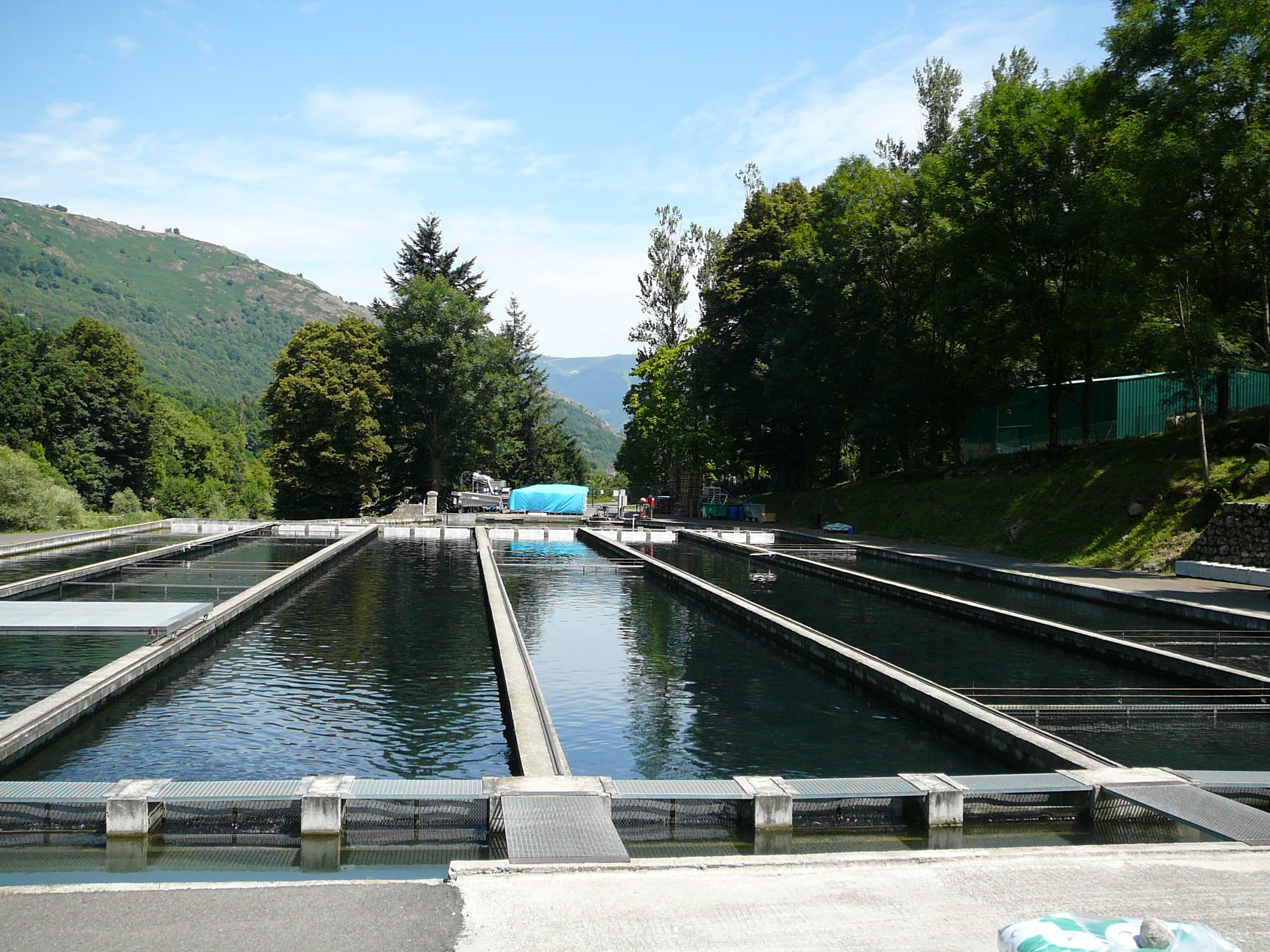
How is caviar made? The roe is extracted, mixed with salt in a kind of tin "barrel" and left to mature for between three weeks and a year. The salt penetrates the roe. And here we have the difference between caviars. The younger one has a firmer, more subtle roe. As time passes, it softens and becomes creamier, more iodized. The salt is the same. "Which is better or worse? You can't say. It depends on what you like more. Perhaps if you haven't tried caviar, you might prefer the young one. But there are people who knew caviar because perhaps they had traveled to Russia and brought it back. And what happened? These transports, with the suitcase, caused, cause, the caviar to mature very quickly. And so, because of the memory, perhaps you prefer the mature one. The memory you have of the caviar you've tasted is like your grandmother's lentils, which are always the best."
But then, in a restaurant, when it's served with other products, which one might be better? In restaurants, we all remember the eternal combination: caviar, potato, and egg. "If they are such powerful products, perhaps the mature one is better. Anyway, if it's a product you'll eat once a year and in small quantities, a tip: eat it alone."
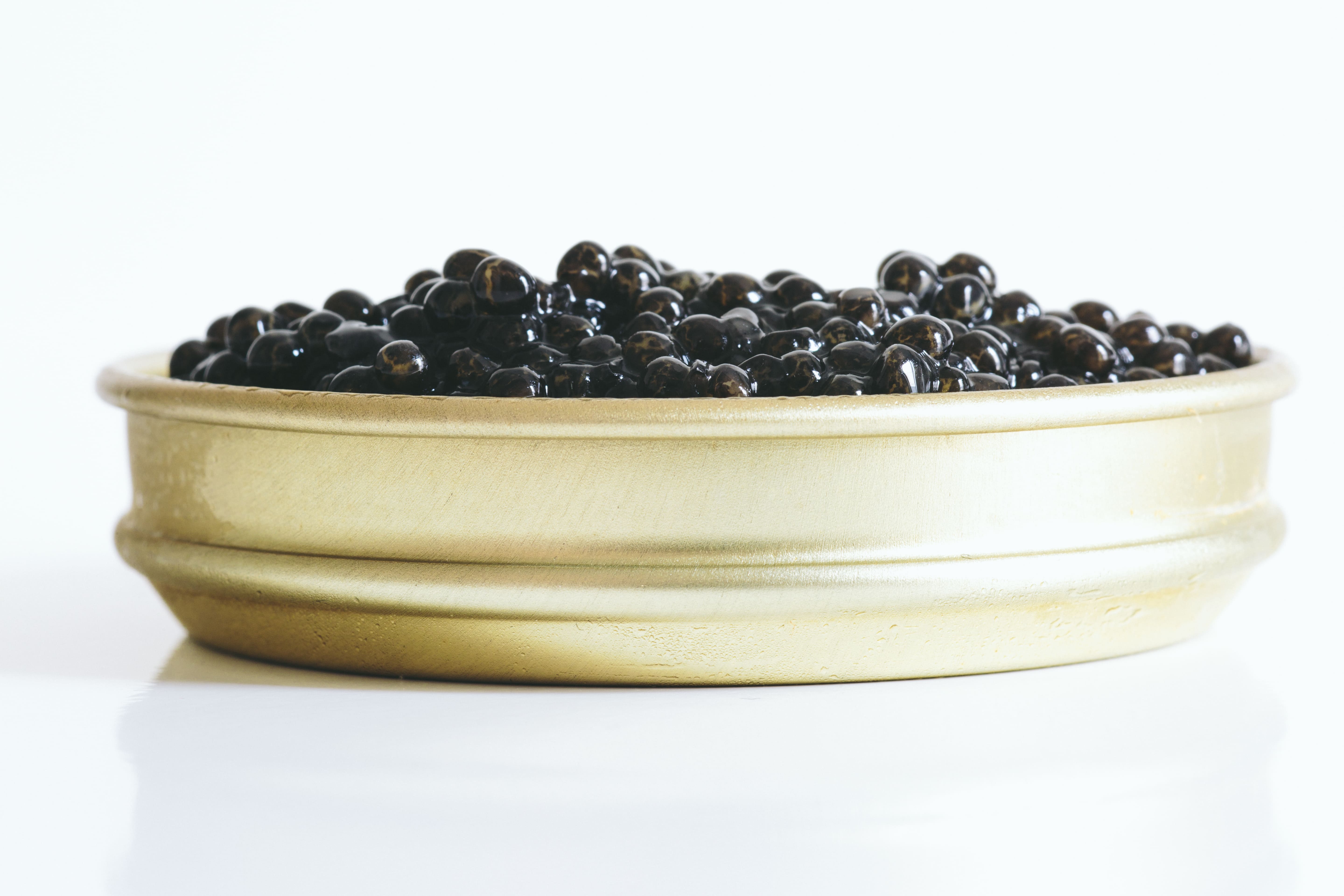
To eat it, we will close our hand as if holding a bouquet of flowers. And we will place the spoonful of caviar between the base of the thumb and the index finger, to lick it directly. Our hand will warm it. We have kept it cold until the last moment, so that it does not alter. Our hand is the best way to raise its temperature. The spoon should be mother-of-pearl, because a metal spoon would disturb its flavor. But if we don't have one, a plastic ice cream spoon or a wooden one can also work well.
"Let it melt in your mouth, between the tongue and the palate," says Blanca. "Remember! It must not explode in your mouth. It has to melt. If it explodes, if it makes a "clack," it's because it's pasteurized. With butter? If you want. But you can also put it on a blini with creme fresh. Cava or vodka are just to cleanse the palate. Whenever I lead a tasting (because we are not a gourmet store) it ends up being a conversation... I always ask them if they have tried caviar. And they tell me: the Russian or the Iranian. But eighty percent of the world's caviar is produced in China." She shows me the back of one of the cans. "All of them must have the CITES code. It tells you about the type of sturgeon (if it's Siberian, for example), Nacarii is a sturgeon breed. Therefore, if someone says "Iberian Sturgeon" they are telling the truth, because in the Iberian Peninsula there were sturgeons, which swam up the Guadalquivir river. Since 2008 you will always see, on the can, a C, which means "farmed". Before 2008 there were both distinctions. C and W. If you see the letters CN it means it comes from China. Russia has banned exports."
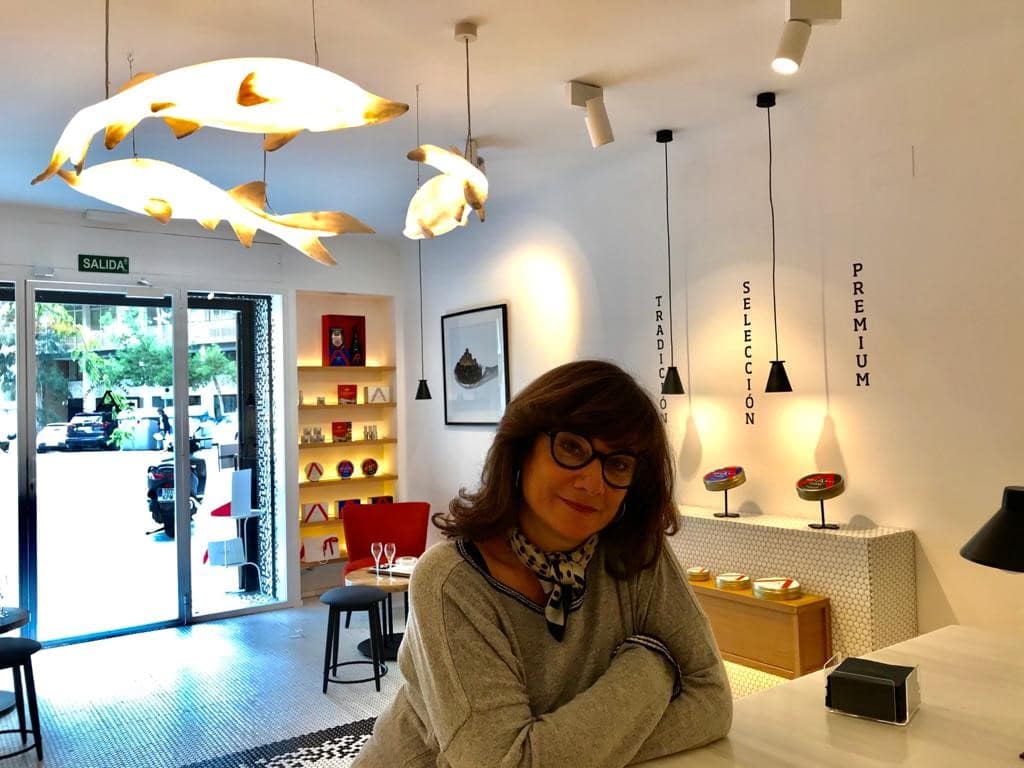
The store is small, very beautiful (don't miss the ceiling lamp: a work of art in the shape of a sturgeon) and the two women talking to me exude emotion. They do tastings for companies, at homes, at weddings... "I spent ten years traveling the world," says Blanca. "I sold water purification plants. My last battle was Haiti and I landed in the Arán Valley. And now... Here I am. I'm Basque. And you know that for us, Basques, this food thing is sacred...".
With my tongue I collect the roe. I let them melt. I am moderately happy.
Add The New Barcelona Post as your preferred Google source for free
Stay informed with the latest news.