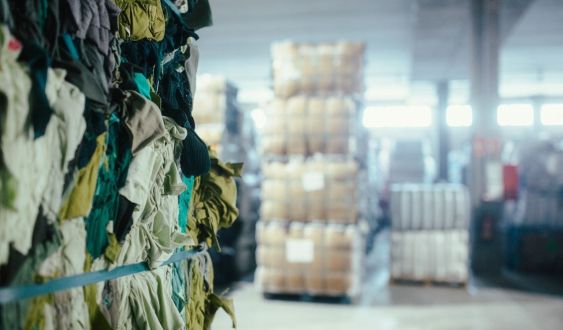
For years, Catalonia has been one of the leading regions globally in textile recycling and scraps left over in factories when making clothes. However, this textile waste linked to manufacturing represents only 20% of the total discarded fabrics: in Europe, 80% comes from used garments, which mainly end up in treatment centers located thousands of kilometers away, often in Asia.
In a context where Europe aims to expand and improve the management of the waste it generates, the textile value chain in Catalonia has organized itself from industrial links to fashion brands, with the aim of positioning Catalonia not only as a leader in pre-consumer textile recycling, but also post-consumer, as explained by Jordi Costa, technical secretary of the Pacte per la Moda Circular, promoted by the Generalitat.
"Given that in Catalonia we are already leaders in pre-consumer, we have a double opportunity: an environmental opportunity, to manage our waste, and a business and economic opportunity, to boost a sector that is already a leader in its segment and could be so for all textile recycling in Europe," guarantees the also manager of Datambient, an environmental services company that coordinates the project together with the Catalan Fashion Cluster.
With this dual objective, the pioneering Retexcat initiative was born in 2023, aligning 18 existing companies and entities from the fashion and waste management sectors to maximize the circularity of the textile industry. Now, the project has reached a milestone: it has brought to the market the first garments designed and manufactured from textile waste through the actors in the chain.
Specifically, the initiative has managed to convert more than one ton of used clothing into jackets and pants that are already being commercialized in Mango Kids, the children's line of the Catalan multinational. And it has done so by developing an innovative process and technology that encompasses the various stages of the chain. "We have demonstrated both the technical and economic viability of the project," Costa claims.
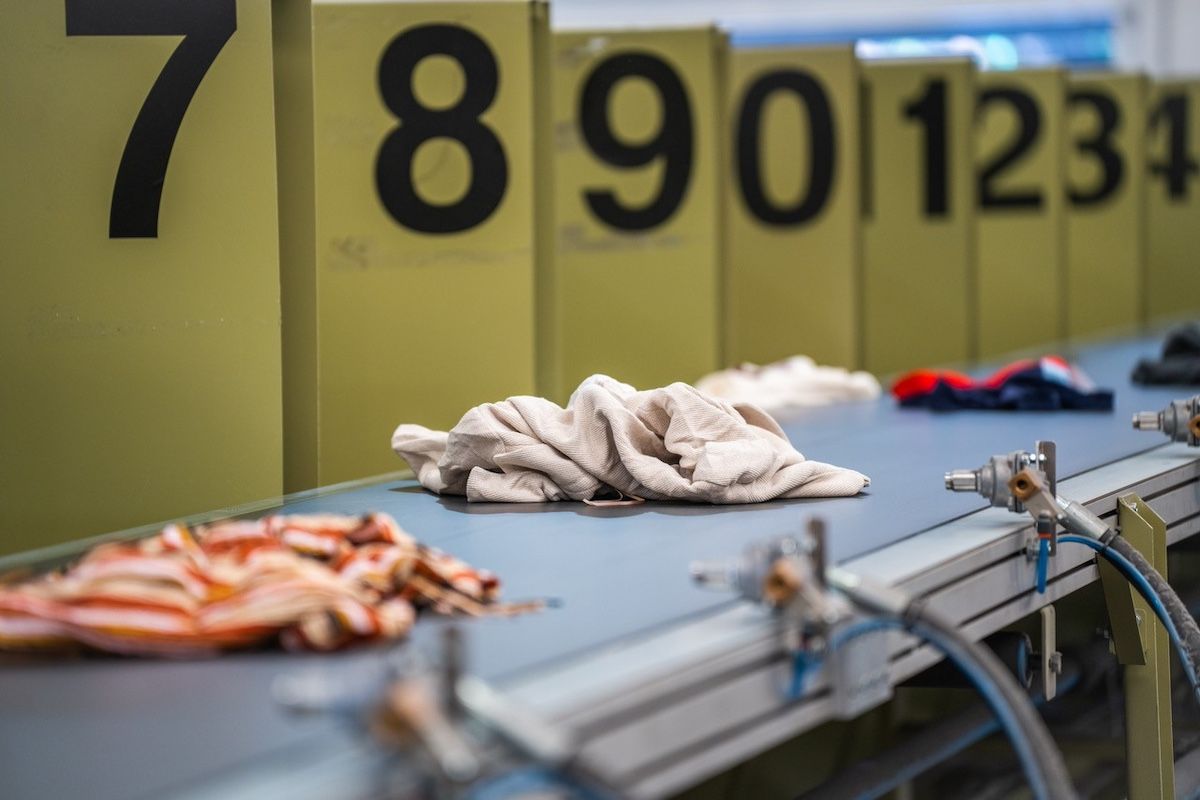
Everything begins with the collection of clothes, through two channels: containers, through Solidança, and take back in fashion companies participating in the project, which include Yerse, Boboli, Sita Mur, System Action, and Simorra, thus contributing to advancing the circularity of their own market. Afterwards, the clothes that can be recycled are selected and classified according to colors and compositions, through Picvisa's artificial vision, a technology company that operates from the DFactory in the Zona Franca. Once classified, it's time for the extraction of elements such as buttons, zippers, labels, and embroideries, which are removed from the clothes with a manual process by professionals from the company Coleo, which has been working in the sector for 12 years and has a hundred employees.
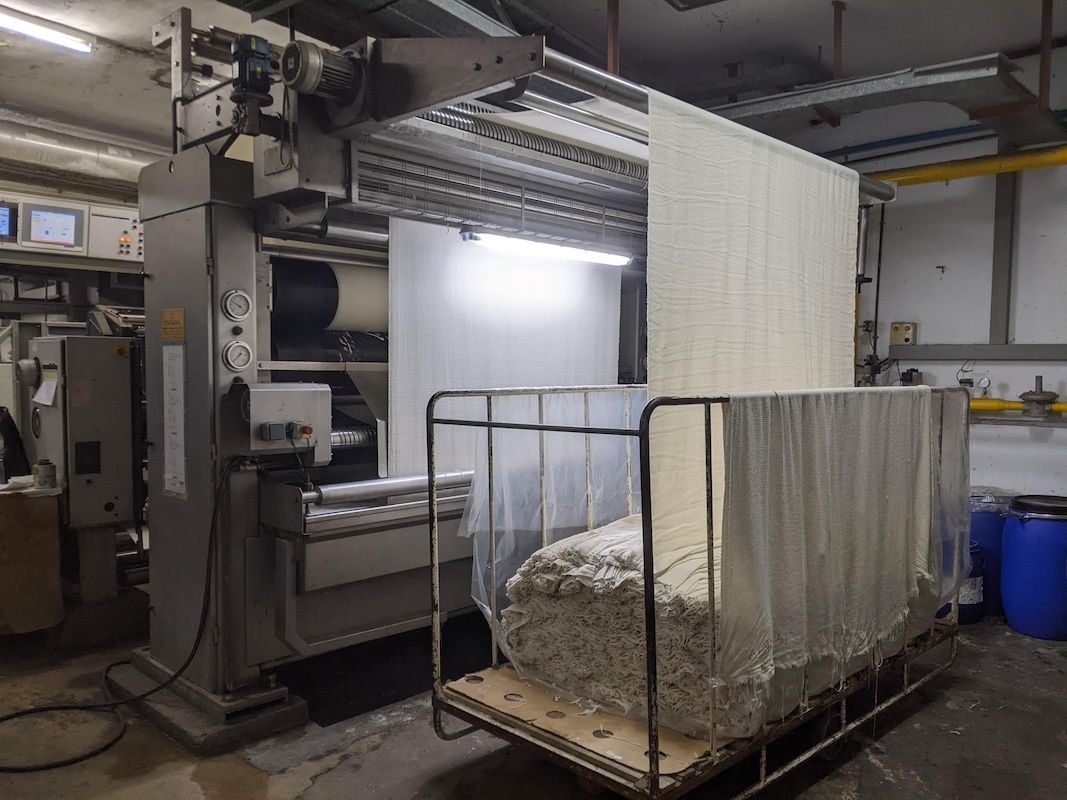
Then comes the most industrial phase of the process, which begins with the shredding of clothes, with the processes of Triturats la Canya, which has a century of experience recovering textile fibers from Girona. Afterwards, what was once used clothing is separated and mixed with other materials to create the yarns that will make new garments. In this phase, the companies Hilaturas Jesús Rubio, Hilosa, Pagès Valentí, and Planafils have experimented with the appropriate percentage of secondary material fiber to achieve quality yarns to shape new garments for the fashion brands participating in the project. Then, the weaving phase begins, after which the fabric is ready for finishing focused on extending the durability of the clothes with Estampados DAMF. Finally, Coleo manufactured the new garments in its own factory in Tangier, and the material returned to the market reconverted into new fashion pieces, thus closing the circle.
The project, which has a subsidy of 854,000 euros from the Agència de Residus de Catalunya, has so far focused on cotton fashion garments, and is already looking towards other areas. "We are starting to coordinate another project with about fifteen companies focused on home textiles," an area in which Retexcat sees great potential. However, it will explore it without neglecting the fashion sector, and new orders are being studied that replicate the current cotton project, and applications in wool are being explored, with three more companies.
"We have proven that it is possible to carry out textile recycling of such quality that it can reach firms like Mango. Now, the challenge is the cost," explains Costa. And it is that, for now, first-use textile garments are sold at a lower price than those made from recycled material: "Many people believe that recycled material has to be cheaper, and that is not the case, since the processes involved are more expensive." However, European legislation is moving in the direction of promoting textile recycling, with the possibility that brands assume part of the cost of the process, and processes can become cheaper if the industry gains volume and automates processes: "We could reach a paradigm where the two prices come very close."
From Coleo, Nacho Bueno agrees in defending that "when it scales, prices will be much more competitive," although he claims that they already are: otherwise, large companies would not acquire those that Coleo already makes from fabrics to which they give a second life. And not everything is a matter of price: the environmental impact of recycling is much lower than that of making clothes from virgin resources. Water consumption is a thousand times less, and it generates nine times less CO2: "Doing things well is often more expensive." Thus, although a fabric is equally obtained, both processes prioritize different aspects: "They are two realities that are difficult to compare."
Thus, according to Bueno, this project shows that "the textile industry is at a moment that requires a change," and that Catalonia has an industry and a competitive opportunity to stand out in a field destined to grow in the coming years.
"We already have the technology, now we have to ensure that it is bought in a sustained and scalable way," Costa remarked, with a final goal: to advance towards the circularity of the textile industry and demonstrate that it is not only viable, but essential for a more sustainable and local model that benefits the Catalan business fabric.
Add The New Barcelona Post as your preferred Google source for free
Stay informed with the latest news.
