There are establishments that, over the years, end up becoming part of the way a city understands the act of going out to eat, meeting up, or extending a conversation. Casa Fernández, for almost four decades, has known how to read the currents, trends, and needs of different generations of diners, and it continues to do so today.
Perhaps part of the success comes from the fact that the establishment was inspired by Carmen Fernández, mother of Javier de las Muelas, and now also benefits from the perspective of Borja de las Muelas, his son. It's not just about a family saga, but a genealogy attentive to changes in tastes, habits, and ways of understanding restoration. This explains why, almost forty years later, we can still return to the restaurant on Santaló street.
A dining house with memory
Opened in 1989, Casa Fernández was one of the first spaces in the city to bet on a lively central bar, uninterrupted kitchen and that difficult-to-imitate warmth that turns some restaurants into a refuge. The neighbors of the neighborhood still remember the place as a place where you could always end up eating good fried eggs at any time. Curiously, an idea that now reappears even in new restaurants that claim a certain domestic and direct cuisine.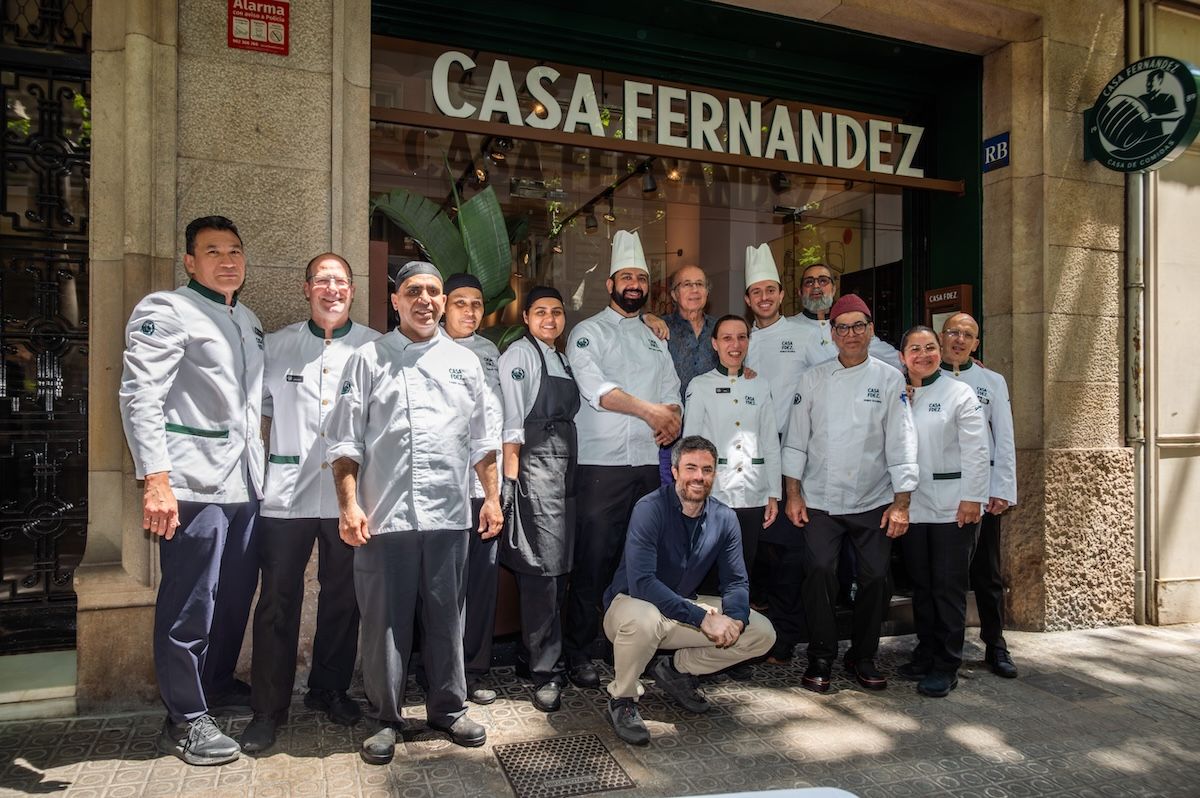
During the presentation of the renovated premises, Borja de las Muelas recalled that Casa Fernández is almost his age and that it was here where he first worked, when he was still a teenager. The phrase helps to understand that this is not just a reopened restaurant, but a place that has gone through generations, ways of eating and different ways of understanding the city.
Perhaps that is why Javier de las Muelas's phrase during the celebration made so much sense: "Bars are churches". Places where people return, meet, discuss, celebrate and build small daily rituals. Spaces that matter more than they seem because, beyond the food, they end up sustaining a way of being together.
Art, bar and classics that don't leave
The place breathes De las Muelas from the first moment. It shows in the selection of works hanging on the walls, where references to Eduardo Chillida or Francis Bacon coexist with less predictable artists like Jim Avignon, recently acquired. That gaze also appears on the menu, capable of maintaining historical classics of the place and mixing them with more current dishes without anything seeming forced.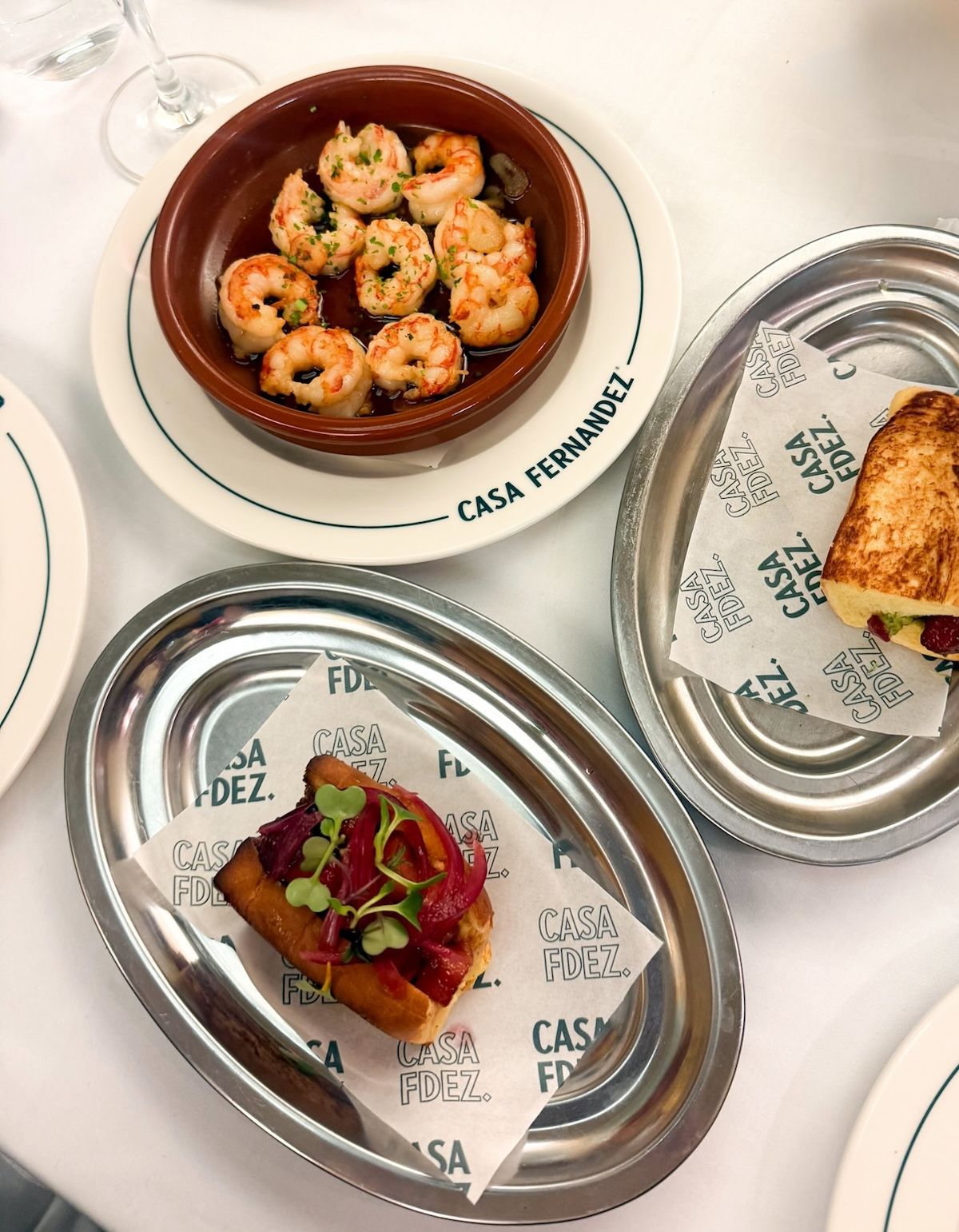
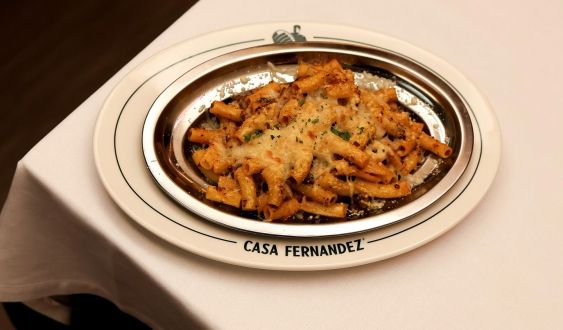
The shrimp fritters, the bravas (De las Muelas' own favorites, he confesses) or the cardinal's macaroni, one of those dishes that have survived intact since day one, are still there. But also a very good Chateaubriand steak, the tartar brioche or the crystal prawns with fried free-range egg are introduced. A menu that understands that tradition does not need to remain frozen.
Along the central bar, the constructivist mural by Carlos Rolando, a recently deceased designer and a key figure of that generation of Argentine creators who contributed to renewing design in Catalonia, also stands out. It features ships, beer barrels and a Central European atmosphere that connects directly with the conceptual origin of the place. De las Muelas also wanted to dedicate a few words to him during the presentation.
The German clue
Part of the idea for Casa Fernández was born from a trip Javier de las Muelas made to Munich during Oktoberfest. From there he returned fascinated by the large shared tables, the beer, the Schnapps and those places where people eat, drink and converse for hours. The large elongated table located at the entrance responds exactly to that vision, which today seems natural but at the time already anticipated a more shared and less rigid way of understanding restoration.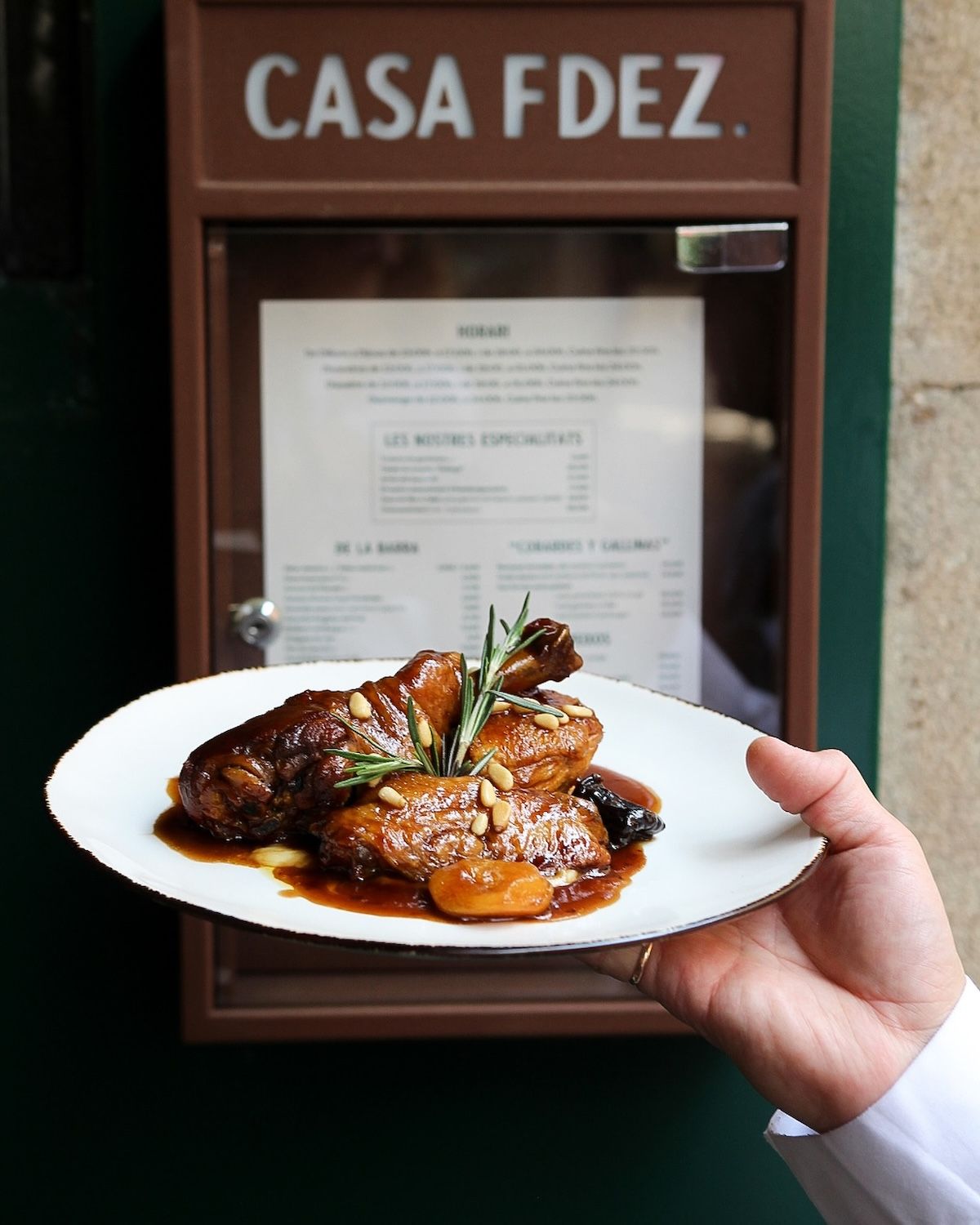
That desire for proximity also appears in the name. Fernández is, on the one hand, the maternal surname. But, as De las Muelas also explained, it is a common, close, and transparent surname. One of those that almost anyone could have nearby. In an era obsessed with increasingly cryptic names, Casa Fernández retains a rather powerful clarity: it sounds like a familiar place even before entering.
And then there is the craft, which inevitably connects with the universe of Dry Martini. Not only because of the business family, but because of a way of understanding service: waiters in white jackets, attentive treatment, and teams that have been part of the project for years, just like in Montesquieu or Dry Martini itself. All of this helps to understand that a place can be accessible without falling into the easy, classic without being old, and popular without giving up its own perspective.
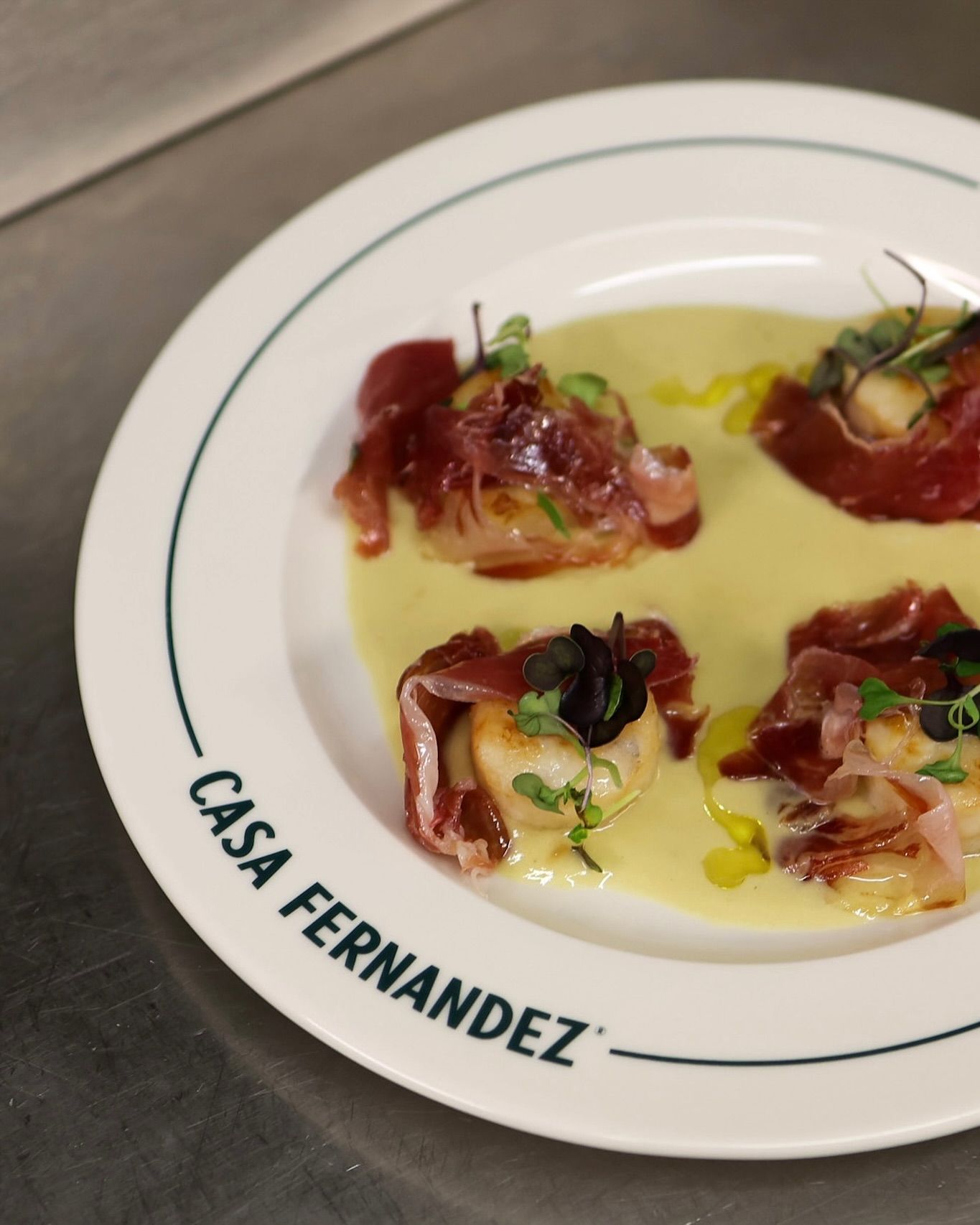
Perhaps that is why the reopening functions as a novelty and, at the same time, as a restitution: it is not about inventing a new house, but about putting back into circulation what has always worked.
Add The New Barcelona Post as your preferred Google source for free
Stay informed with the latest news.