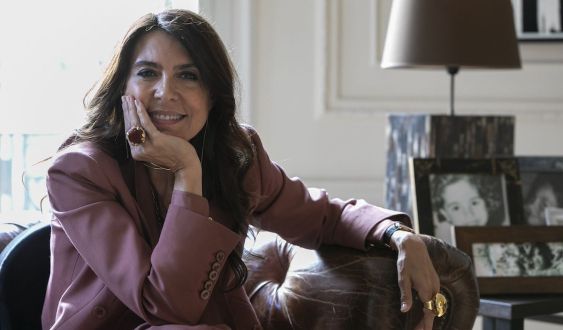
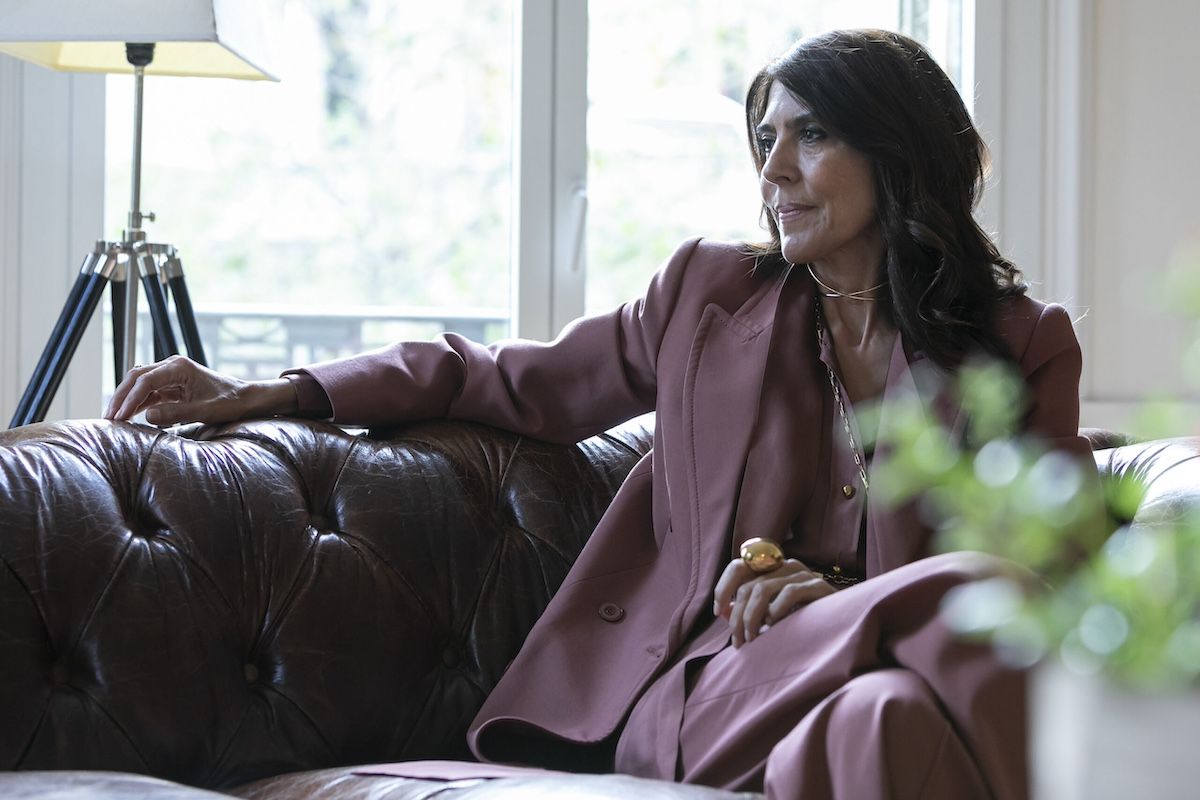
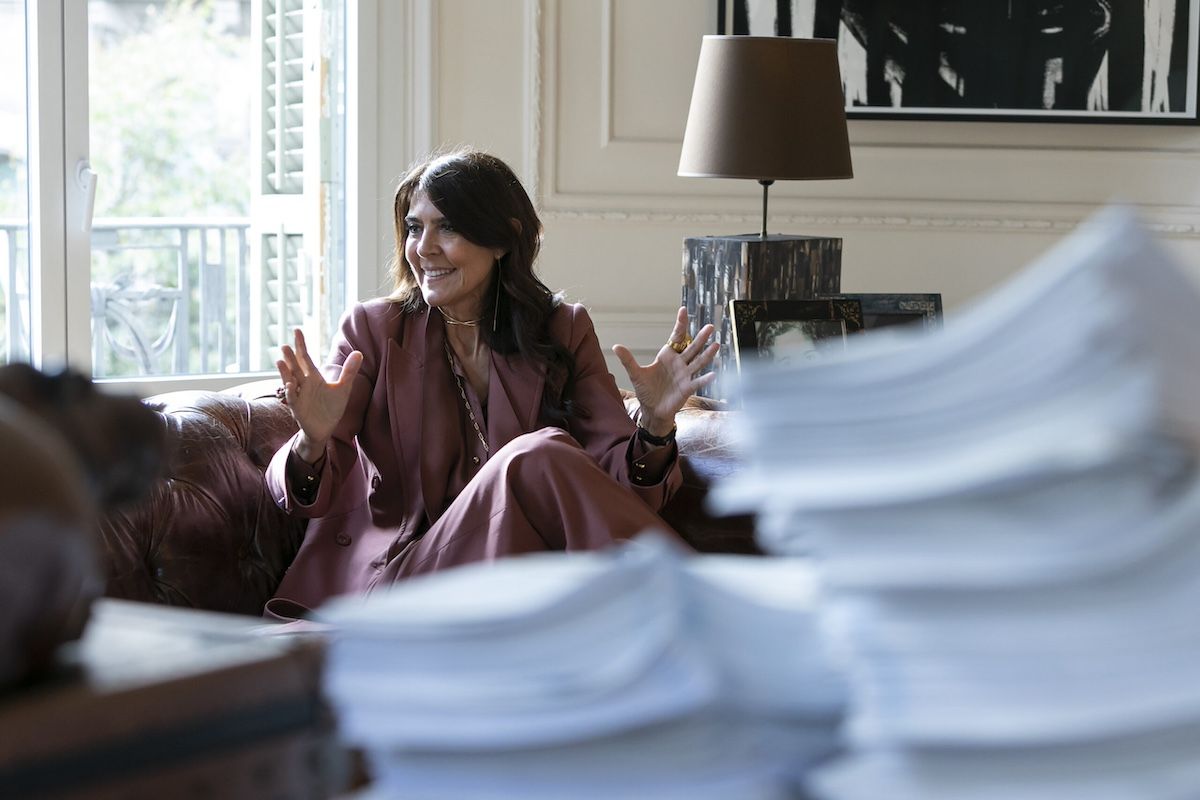
Camino Quiroga is a notary, but she could have been a pianist or an orchestra conductor. Music is her soul and family is one of the great melodies of her life. And hers is Galician. From her father she inherited her love for Barça and, from her mother, her love for writing and her vision to go as far as possible. Her role models are her daughters. She has experienced the notaries of San Sadurniño, Cogolludo, Madrid, Begur and Barcelona from the inside.
"People trust you when you tell the truth. The notary is like the pharmacist, the judge or the priest. That trusted person to tell your life to and find solutions," she asserts. In fact, with the notary's office, she helps fulfill people's dreams, from getting married to setting up a company or buying a house. She co-founded the Diagonal 490 notary's office in 2015. She is also secretary of the board of directors of the Cercle d'Economia and a professor at ICAB. She suffered from thyroid cancer that reorganized her priorities, made her grow and also let go of baggage. Camino proves herself by walking, like Antonio Machado's famous poem.
--- She often says that her mother and father have greatly influenced her life.
--- I had a cherished childhood full of small and thousands of simple moments that have marked me. My father was an essentially vital man, absolutely proud of his family and tremendously friendly, as well as very cultured. When he had a family with the unconditional support of my mother, he worked very hard to give us the best.
--- And what has been the best?
--- I have inherited his desire to enjoy life, his accessibility to everyone and his passion for football. My mother made sure I knew how to write when I started kindergarten and instilled in me that everything is achieved with effort and perseverance. She is an extraordinarily hardworking woman, a born entrepreneur and a visionary who helped us go as far as possible. Both instilled in us the love for family. My house was always full of family who came from our Galicia.
--- She studied Law and Business Administration.
--- I wanted to be a pianist and I really liked orchestra conducting. My father supported me, but he died when I was only 18, so my mother asked me to study Law, because my father had a law firm. I was the oldest, so I did it. And although I had finished my piano degree at 14 and had started virtuosity, I left it to study Law and help my mother in the store. At that time, it was what had to be done. I don't regret it and I am proud of it.
--- Notary for almost 30 years.
--- I have to thank my mother for putting the idea of being a notary in my head. I can't find any profession that I could like more because it's very human, intellectually very powerful, and very creative. People think it's always the same and that everything is equal, but you have to solve many different problems and that makes you use your head and think outside the box, in addition to learning to read between the lines of all personal situations.
--- What kind of situations?
--- In the world of notary, there are difficult-to-solve issues. Basically, people tend to do what they want, without checking if it's legal or not, and they also tend to be negligent when it comes to doing all the documentation. So when they arrive at the office, many things are quite or very legally complicated. There's also the issue of everyone's egos, negative personal perceptions of the other, or enormous distrust.
"Being a notary is a challenge from an intellectual point of view; you have to coordinate the law with wills and egos. You have to be creative to fulfill people's dreams and solve their problems"--- Curing the ego is a great challenge.
--- This greatly affects the ability to convince stakeholders to find a suitable solution for everyone that meets their expectations and protects them. It happens in all areas: from buildings or constructions without a license to agreements of all kinds that have never been officially documented and there are only private documents that pass from parents to children, or even to strangers. Sometimes, there are no documents, but only a de facto situation for many years: problems between siblings or relatives in inheritances, in divorces, between partners or between investors.
--- What does it mean to be a notary?
--- It is a challenge from an intellectual point of view, as one has to coordinate the law with wills and egos. Everything must be handled with great elegance and humanity, putting yourself in those people's shoes and finding an intermediate solution where everyone feels comfortable and their interests are recognized. One must be creative in both human and professional aspects.
--- And playing as a team.
--- We are more than 60 people and this wonderful human team becomes your family. Together we live a very intense life in the office, because behind the curtain there is another life.
--- What is the curtain like?
--- The curtain is working, resolving conflicts, and people leaving the office feeling at ease. Then there is everything that happens behind it, that is, each person's personal circumstances, the enormous stress of the job with its constant urgencies, and the need to do things legally well. And I, I would add, also morally well. It is a fascinating profession to fulfill, as a colleague of mine said, people's dreams: setting up a company, getting married, buying a house, resolving things for when you are gone through a will...
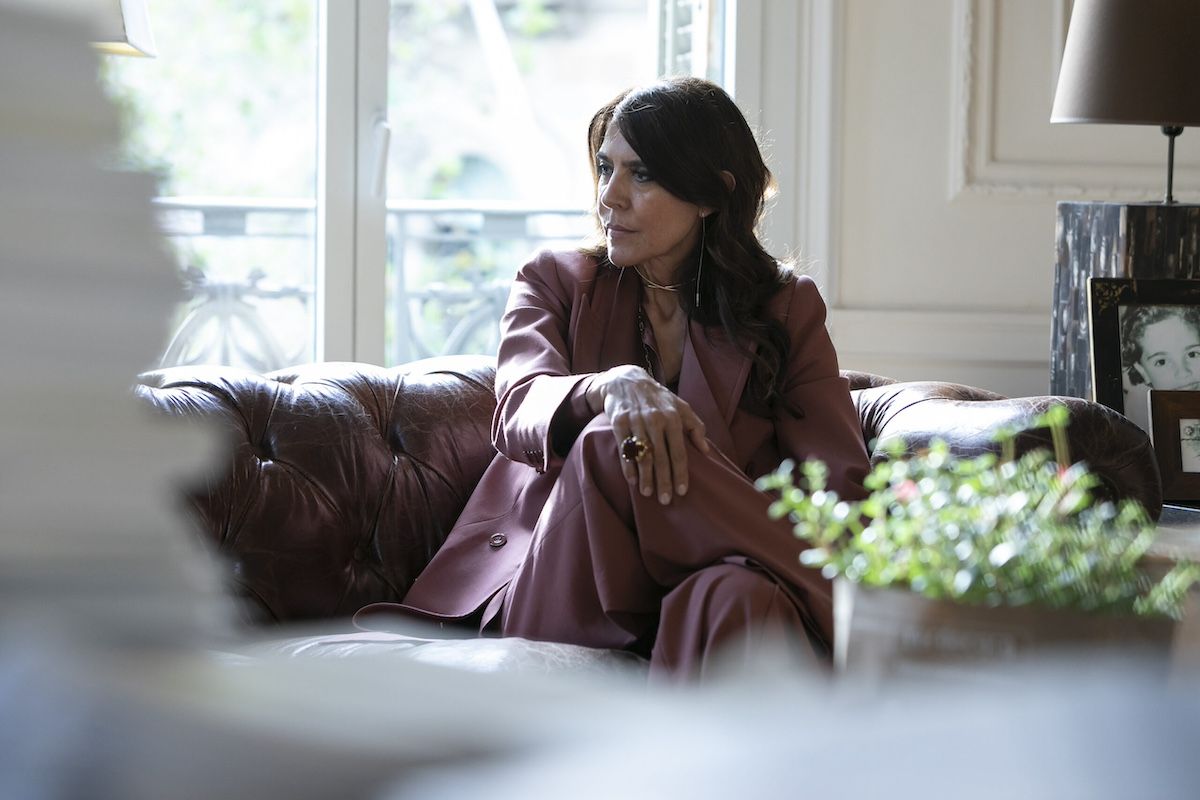
--- In a conversation at Il Giardinetto, you said that "the notary is the advisor for people without economic resources."
--- We have a high level of training as jurists, we are law graduates and we have passed very tough competitive examinations. In addition, we have the legal duty to advise and recommend the most appropriate legal solution, and then transform it into a legal act or transaction by creating and drafting the document. I like to compare ourselves to the great professionals we have at the service of public medicine, because here too everyone can access, with more or less resources, with more or less training or from any social stratum.
--- The price makes the difference.
--- Notaries are public officials who provide legal certainty to everyone at very affordable prices set by the State. In fact, we charge frankly little for the work we do.
"The notary is like the teacher, the pharmacist, the judge or the priest in the villages of old. That trusted person to tell your worries to and find solutions"--- People usually think the opposite...
--- People sometimes think we charge a lot because often they give us all the money intended to pay, on their behalf, taxes and other expenses, such as registration and administrative fees. And that leads to a mistaken idea. But the system is designed so that everyone can access that level of knowledge at a low cost. In village notaries, this is perfectly well known. Perhaps in cities the idea that the notary "just signs" is more widespread because the public who does not regularly go to the notary really does not know everything we do.
--- What place does the notary occupy in society?
--- The notary is like, in the old days in villages, the teacher, the pharmacist, the judge or the priest. That trusted person to tell your worries to and find solutions. Clients ask you for advice on what to do. This surprised me a lot when I was young, and now it fascinates me that they give you such a gift. Humanly it is a real gift.
"In Galicia I became tremendously feminist. Either they don't see you or they don't give you the opportunity"--- First stop: San Sadurniño, Ferrol.
--- I have a wonderful memory of San Sadurniño, which is a very small town. I arrived there as a young woman, and the previous notary only opened in the afternoons, because he thought people were at sea or with the milk, eucalyptus, or wood during the day. I started opening in the mornings and also served villages and parishes.
--- A good first step.
--- I met wonderful people, and it was a very beautiful time in which I learned a lot from the natural intelligence of Galicians, both in legal matters and for business. It also helped me learn that not everything is what it seems and that one must delve into the hidden human reality. And, little by little, contact with a real world different from my home made me become tremendously feminist.
--- Tremendously feminist.
--- Although Galicia was a very matriarchal area, the truth is that I began to see what real Spain was like. I said: My goodness! How much there is to do.
--- And how much remains to be done…
--- A lot, still. For example, I was totally against quotas, because I thought one had to be smart and get there by one's own merits and however possible, but you realize it's very difficult.
--- Is there a lack of equality and meritocracy in senior management?
--- Either they don't see you, or they don't give you the opportunity. There are many highly prepared women with a great interest in collaborating with society, but they don't go where they don't feel addressed. Our network is different, we speak differently and we also help each other personally. Anyway, it happens in everything. Not only, man-woman, but also with professions. For example, they tend to categorize me as a notary, and they don't see my business side or other capacities that complement me, because we are all a rich and diverse reality. There is a lot of bias in general.
--- In favor of the quota?
--- Totally. I am in favor of the quota, quota and more quota. We must reach 50%, because otherwise it will take too long. Or with the new winds blowing, we might not even reach real equality. I believe that any social structure is much richer if it is more diverse. Diversity is richness and evolution. And this applies to gender, origin, race, culture, knowledge, to everything.
--- Second stop: Cogolludo (Guadalajara).
--- I went to a small town in Guadalajara because the person who had been my tutor, Juan Bolás Alfonso, who is my teacher, was elected president of the General Council of Notaries. He asked me to attend his notary office in Madrid on a service commission, but at that time, it was necessary to be the holder of a notary office in the same district or an adjacent one. That's why I chose Cogolludo, which was the closest I could get with my little seniority. I was there for a short time. Where I really learned a lot was in Juan's notary office in Madrid.
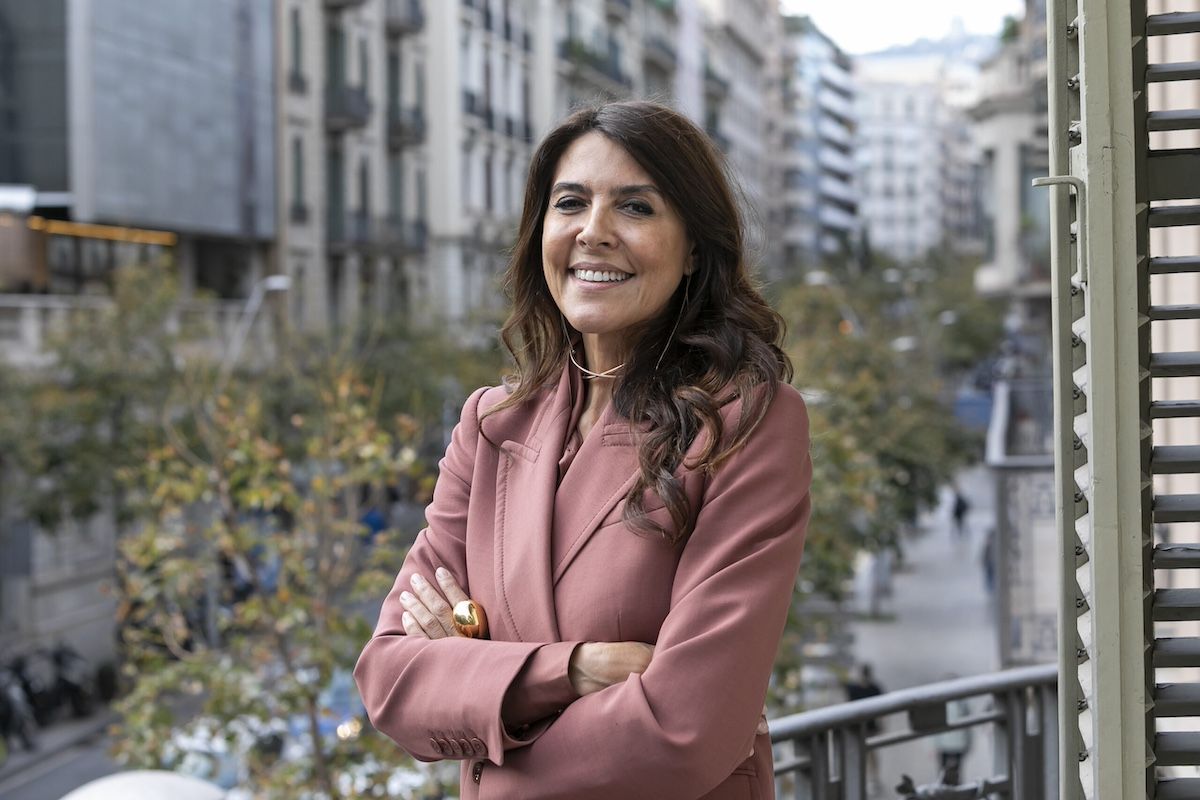
--- What did you learn?
--- Juan taught me to think to solve unsolvable problems, and Isidoro Lora-Tamayo, a wonderful person and Juan Bolás's partner, taught me to be a good notary and to dedicate myself body and soul to this profession.
--- And that was only on a service commission in Madrid.
--- Exactly. I was learning a lot, but it wasn't my notary office. I had to pass some competitive exams, which among notaries are called restricted, to get an important position. Working in Juan and Isidoro's notary office helped me a lot, and by studying hard, I managed to take the exam and did well.
--- In 2001, you moved from Madrid to Begur.
--- I got pregnant while studying and working in Madrid. I decided to slow down and go back to a small-town notary office. At that time, someone who used to vacation there and whom I love and trust told me that Begur was vacant, and I applied for that position. I was there for almost 14 years.
--- Last stop: Barcelona.
--- Yes, a moment came, because my daughters were already grown up and because I wanted to return to a big city. My friend Ramón García-Torrent, who is now my partner, called me to offer to partner up. How lucky I was! We make a good professional pair. We had a very specific idea of a notary office, with a lot of specialization, but, at the same time, very accessible, pleasant, modern, and human. And with languages, which is essential in a great host city like Barcelona.
"Treating people well and being honest and good-natured is the secret to any business. From your employees to your clients. People trust you when you are human and when you tell the truth"--- And in 2015 they founded the Diagonal 490 notary office.
--- Our notary's office can respond quickly and agilely, with highly specialized staff who love what they do. Furthermore, there is a constant and super fluid relationship between the officers and the notaries. But the truth is that I would not have been able to imagine Diagonal 490 without the previous experience of the earlier notary's offices.
--- In four words: professional, international, modern, and efficient.
--- We wanted a place that was pleasant, modern, groundbreaking, and not the typical administrative-style notary's office that almost looks like a courthouse. Here, people come nervous and need to feel at home. They arrive, we offer them coffee, and we try to give them our best.
--- At the notary's office, feel at home.
--- The treatment has to be very human and diverse; we speak different languages and always try to serve with affection and attention. It doesn't matter what they are going to spend, all clients are important. I remember my mother telling me when I was little that you had to show the whole store for the client to fall in love, and that if someone wanted an ashtray, they had to be treated the same as if they were going to decorate their entire house. That famous ashtray stuck with me. But, well, sometimes, like everyone, we make mistakes and things don't always turn out as we want. But we try again.
--- With humanity.
--- That's how they will remember you. If it's your way of being, you feel good and you feel you are doing the right thing. But even if it's not what you think, it's good for you from an economic point of view, because people like to be treated well. Treating people well and being honest and good people, I think, is the secret to any business. From your employees to your clients. People trust you when you are human and when you tell the truth. Even if it doesn't suit you, because maybe you tell them that what they want to do, they shouldn't, and you lose the opportunity to charge for that operation. But if it doesn't suit them, you have to advise them not to do it.
--- Trust is priceless, as Professor Jordi Gual says.
--- That's right.
"We must defend Europe gently, but with tooth and nail. The new authoritarian currents are a real danger to the maintenance of what has been so hard to achieve."--- What place does the Cercle d'Economia occupy in your life?
--- I entered the Cercle d'Economia by pure chance. The previous president, Javier Faus, told me he was forming a parity board and needed a jurist to be the secretary of the board of directors. I didn't know the Cercle well, but I mentioned it to my husband, who did know it, and he told me that, given how I was, I would love it. I will always thank Javier for allowing me to enter and meet incredible people, both from a human and intellectual point of view, because for me it has been a first-class human gift.
--- First-class.
--- Yes, the people you meet, the issues you deal with, the ability to influence, learn, or share your intellectual experience. I feel privileged in the Cercle d'Economia. People listen to us because our predecessors have selflessly and extraordinarily contributed very important things to society and especially to the Spanish economy in very gloomy times during the Franco era. The Cercle has the cachet and prestige it has thanks to our predecessors, the previous boards with their presidents. Visionary and committed people.
--- The Cercle d'Economia was founded in Barcelona in 1958 with the aim of "contributing to modernizing Spanish economic, social, and political life."
--- When one has a megaphone, one must be responsible and use it to improve relationships frankly and provide a vision that allows reaching solutions that build bridges to improve the situation, not only in Barcelona, but also in Catalonia, Spain, and Europe.
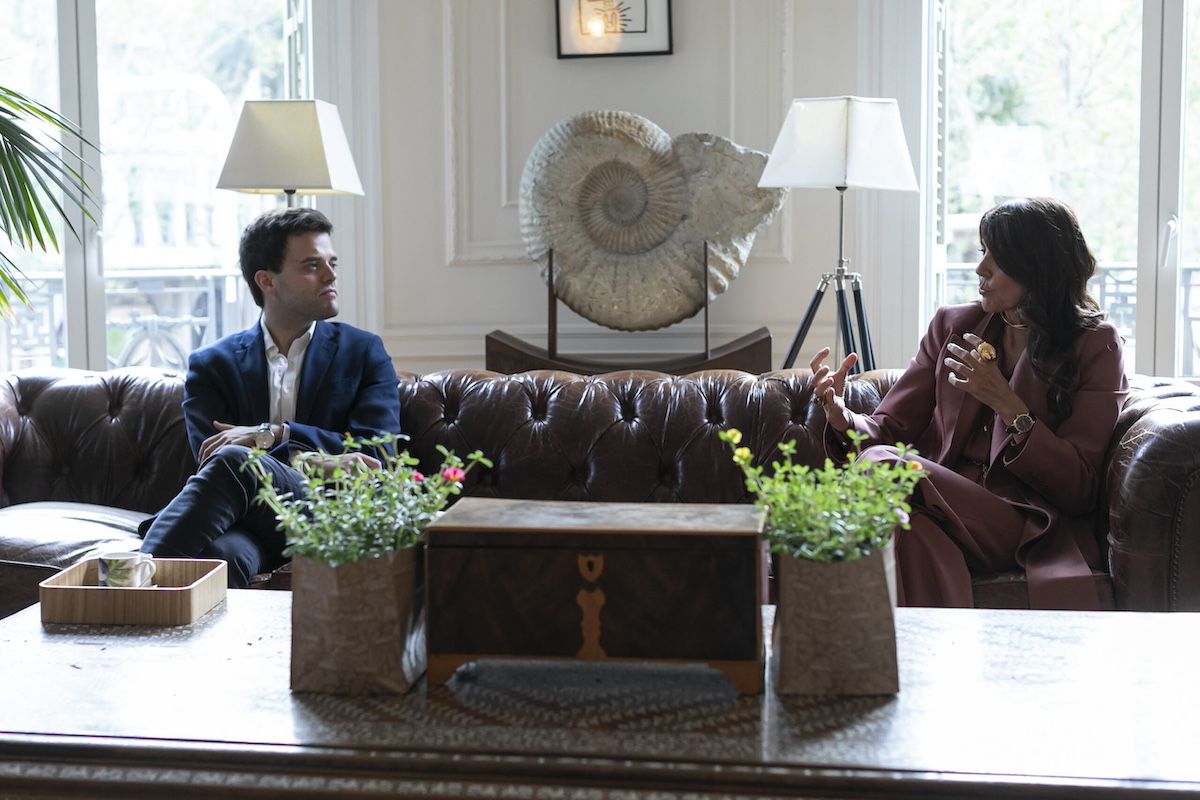
--- The Europeanist vision always present.
--- The Cercle has a very Europeanist vision linked to the principles of Western culture: democracy, human values, and respect for fundamental rights that are so affected today. Europe must be defended gently, but tooth and nail. The new illiberal and authoritarian currents are a real danger to the maintenance of what has been so hard to achieve. Our life and our values have not just arrived like that. They are the fruit of many struggles and efforts and of concessions and understandings. As I said, gently, but tooth and nail, they must be defended.
--- How do you see Barcelona?
--- The city has a lot to offer. So much energy! In Barcelona, you breathe freedom, there are people from all over the world and, in general, a great respect for diversity. It is a very rich and diverse city, from a cultural point of view, and it has the right climate and size to live pleasantly.
--- What does this city have that makes it so special?
--- It has a great medical system and wonderful weather and geography. It is a city with a lot of potential, despite a depressive feeling that things are not going well and it was losing steam. We must forget about so much negative news because the press of Madrid D.F. is what it is. We must go to the facts, to the data. Not to what is said out of self-interest.
--- The narrative always in dispute.
--- There have been many narratives… Not only that of Madrid, but also that of Barcelona itself or of Catalonia. We must look above all at the objective data. And, without a doubt, we must get to work and bring out the best in ourselves.
--- And what are the objective data?
--- Barcelona and Catalonia have wealth and cultural baggage. There is a great willingness of civil society to participate and to take the initiative, and also an extraordinary sensitivity to help, a great feeling of solidarity that surprised me enormously upon arrival. La Marató of TV3 does not exist in any other community, and look at all that is raised each year.
--- An unprecedented success.
--- Here there has always been the will and responsibility to help, and we have examples of private collaboration in public services, such as in healthcare, in research... I will give you an example from more than a century ago: the Sant Pau hospital, built thanks to the patron Pau Gil. But there are many others. There have been and there are important patrons in the field of culture, health, science… It is truly a special distinguishing mark of which we should be proud.
--- What do you recommend to Barcelona?
--- Barcelona must always remember that unique and sui generis identity, of being Mediterranean and Phoenician, of being a welcoming city. Its history means that the people here are accustomed to receiving people and navigators from ancient times, and therefore accustomed to diversity and also to business, to the brainstorming of new ideas and to the variety of mentalities.
--- What role does civil society play?
--- The old bourgeoisie already did it. Today, civil society and in particular the business world has the responsibility to provide this city with the necessary mechanisms for it to continue being exceptional. It is better to think about what can be done from here rather than falling and getting depressed by the interested winds from other latitudes.
"Civil society and in particular the business world has the responsibility to provide this city with the necessary mechanisms for it to continue being exceptional. Public-private collaboration flows naturally again in Barcelona"--- For example?
--- The America's Cup was a dream come true thanks to the efforts of the private sector, private guarantees and then, undoubtedly, the support of the administration. All together. We can debate its economic impact, but it certainly generated the Barcelona brand, just like the Olympic Games.
--- Do we need more and better public-private collaboration?
--- The desire for public-private collaboration has always existed, but lately private contributions have been frowned upon. If they don't let you do it, you withdraw. The way to build a city, a country, a project is for all the stakeholders involved to lend a hand.
--- Lending a hand to the collective.
--- It's a good time because public-private collaboration is flowing naturally again in Barcelona, although it still costs some public sectors. But it is clear that we have all seen that it is essential. Collaborate and do not generate hatred. Great writers and intellectuals already warned us that we must forget about Cainite Spain.
--- Cainite Spain.
--- In Spain there has always been a duality and a kind of hatred that some people and factions have been interested in maintaining and perpetuating. We must turn the page. Spain's entry into the European Union was an essential impulse to go from a poor and uneducated Spain to a Spain like the current one. The funds we received from Europe allowed us to reach unprecedented levels of general living and education. Spain is now a country of educated people. Our professionals are highly valued outside our borders.
--- What do you recommend to turn the page?
--- Not getting carried away by things of the past and forgetting the internal struggle of differentiating elements. Dialogue and collaborate with different political, cultural and intellectual ideologies, between men and women, between Catalonia and Spain and between the public and private sectors. In Spain there is a mature democracy, even if they want to convince us otherwise. There are things to improve, but movement is shown by walking. My name is Camino! In addition to turning the page, I recommend using our potential: We have to find a way for our professionals to develop their careers here and not have to go abroad, where they are highly valued.
"We must dialogue and collaborate with different political, cultural and intellectual ideologies, between men and women, between Catalonia and Spain and between the public and private sectors"--- Walker, there is no path. Path is made by walking.
--- You have to enjoy the journey. Of helping Spain, Catalonia and Barcelona reach a better milestone. And of fighting for our youth to stay, grow and develop their professional activity with dignity, and that it results in a shared improvement.
--- Collaborates with several foundations: Quiero Trabajo, Lluita contra las Enfermedades Infecciosas, Empieza por Educar (ExE), Àgata, Solti. She survived cancer and changed her priorities.
--- Much better not to have cancer, but I was very lucky, as they discovered it very quickly and cured me. Cancer, a divorce or the death of a family member rearrange your head and you even learn to get good things out of it. I had cancer, reorganized my priorities and let go of a lot of baggage. Welcome be all the bad that made me grow!
--- A very holistic vision of vital learning.
--- Otherwise, something else will happen to you… Life is very stubborn and, if you don't learn the first time, you will the second or third, or when you decide.
--- What do music and art mean?
--- Music is my essence. It is my soul.
--- She has a piano degree.
--- I started playing the piano when I was four years old because there was one outside the nursery class. The teacher told my parents that I stayed playing the piano instead of playing in the yard. I finished my degree at 14, I studied history and aesthetics of music, choral ensemble, harmony, counterpoint, solfège. My mother told me that what starts ends, and this has helped me a lot in life.
--- We end this interview as we began.
--- Exactly. (Laughs). Music and singing have been my lifeline, especially during the competitive exams. In my house, we have experienced art from a very young age through my mother's shop or through exhibitions, museums or fairs. In the end, one is what one has lived.
--- The previous interviewee of Persona a Persona, Eloi Planes, asks you the following questions:
--- What has been the most significant moment or decision in your life professionally and personally and what has made you who you are today?
--- From a professional point of view, my teacher, Juan Bolás, trusting me. At a difficult moment in my opposition, he was decisive. I followed his advice, and this has determined that I am a notary and that I can dedicate my life to a profession that I am passionate about. From here I would like to thank him. From a personal point of view, my father's death when I was very young was vital. It made me value every moment of life very much and made me cling to his way of being, in what I liked.
"In life we have the right, and even the moral duty, to feel comfortable with what we do"--- What advice would you give to someone who wants to pursue a life path that combines professional responsibility with commitment to society?
--- I believe that in life we have the right, and I would even say a bit of a moral duty, to feel comfortable with what we do. For this, I believe it is important to fall in love with what one does and bring out the best from within with dedication and passion. If you don't like what you do at all, it's a way of feeling alienated, and this can only result in a divorce between your life, your desires, and your feelings. An absolute lack of alignment that can lead to total dissatisfaction, and even some kind of illness. I believe that soul, mind, and body are indissolubly linked. Therefore, falling in love with one's own life, with one's own work, is essential. And, if not, to search and fight to find what satisfies us.
--- Where is that satisfaction found?
It is not really a question of succeeding economically, but of being happy doing what each one does. And, if you put passion and ambition into it, what truly makes you feel fulfilled will eventually come. In any case, this is the point of view of someone who has been lucky enough to be born at a specific moment in history and in a specific country and family, which is no merit of mine and which has favored me and conditions my vision of life. If I had not had any kind of possibility in life, and I am aware that there are many people like that, surely this reflection would seem to me to be from someone disconnected from reality. But I am who I am because of all my circumstances, like any other person.
Seven of life
- Role model: My two daughters.
- Book: Médico de cuerpos y almas, by Taylor Caldwell.
- Movie: Any of the ones I watched with my daughters and that we loved to watch over and over again, like A Room with a View , Much ado about nothing, The importance of being Ernest or Holydays. We still watch them together from time to time.
- Song: I still haven't found what I'm looking for, by U2
- Favorite spot: My family home in Galicia.
- Life motto: We are here only to help each other.
- Dream: That wars end.
Add The New Barcelona Post as your preferred Google source for free
Stay informed with the latest news.
