
The Cal Carré publishing house was forged during the pandemic and the many moments it provided for confined thoughts. Its founder, Antònia Carré-Pons, comes from a family of butchers based in Terrassa, where her grandparents settled in the late fifties, coming from Balaguer. The butcher shop opened in the Can Aurell neighborhood and saw four generations pass through its workshop. Six decades later, years and illnesses forced it to close.
Until Carré-Pons found a way to recover the family brand. "We decided to convert the family butcher shop's seal into a publishing house. We have gone from pork booklets to books with the conviction that food for the soul is as necessary as food for the body," says the ideologist of this new venture for the Carrés, accompanied by her nephews Mariona and Guillem.
And without forgetting what she learned behind the counter, from seeing her relatives running the butcher shop for years and from when she herself worked there as a young woman. "We work in the same way my parents and grandparents made 'butifarras' in the workshop, that is, first-quality materials, and classics are, elaborated with patience and consciousness, without adulterating," explains Carré-Pons. All this, accompanied by translators and proofreaders, a new family, she emphasizes, to present "impeccable and pleasant books to read."
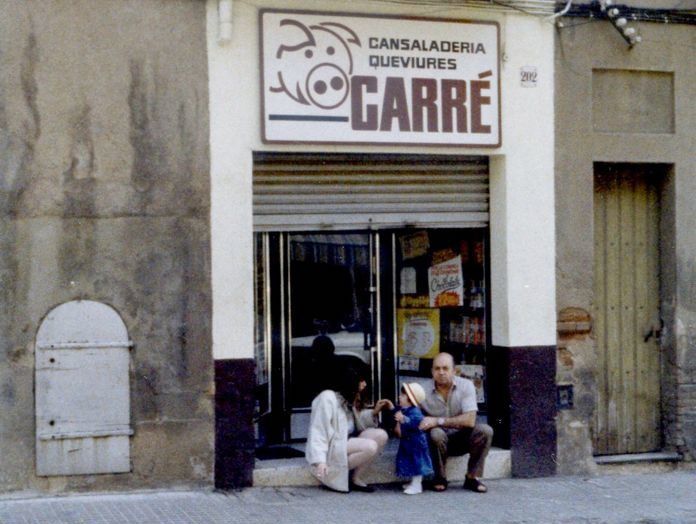
Cal Carré's focus is on publishing books by classic authors in Catalan, but with the mission of making them attractive to the general public. "We want to address those people who haven't read them because they are intimidated by them, by providing them with readable volumes," says its promoter.
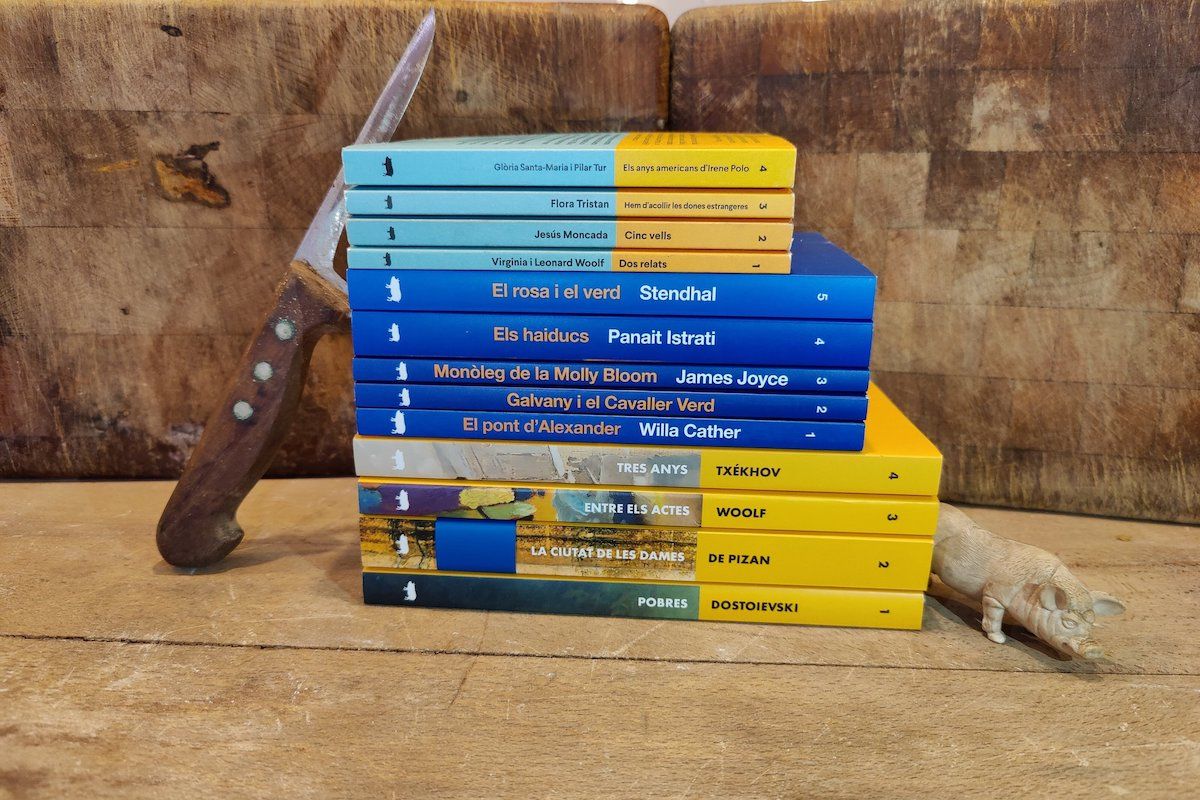
Knowing that one of the reasons for rejection is that the most famous classics are often long, sometimes incredibly extensive and dense, the publishing house focuses on lighter titles by authors such as Jane Austen, Virginia Woolf, Willa Cather, James Joyce, Fyodor Dostoevsky, Anton Chekhov, or Stendhal. With small booklets, of pages and ink, it offers short novels to discover writers whose presence can deter many and vindicates a genre very popular in other countries that is gaining strength here in recent years, with similar proposals like Blanca Pujals' Petits Plaers, in this case, also with a Spanish version.
To the quality and brevity sought by the publishing house, Carré-Pons adds modernity. "We want books with covers that don't make you think they are a classic, that are not vintage, but modern, because I am convinced that classics are modern and, if they are of interest, it is because they explain things that still affect us today, even if they were written two hundred years ago." Even the pig that served as a logo in the butcher shop in Terrassa has been updated, even intellectualized, to become the new inseparable icon of the publishing house.
"Classics are modern and, if they are of interest, it is because they explain things that still affect us today, even if they were written two hundred years ago"But, above all, Cal Carré does not publish any book that the founder of the publishing house, a medievalist philologist and writer of titles such as El llibre d'Elionor (laBreu, 2022) and Com s'esbrava la mala llet (Club Editor, 2018), does not like."Leaving aside the butchery, I have lived my whole life with books," he points out, "in a way, I am sharing my library with readers."
Cal Carré's first book came out in September 2021, printed by Romanyà Valls and distributed by Les Punxes. It was Dos relats by Virginia and Leonard Woolf, the volume that inaugurated the also family-owned Hogarth Press, founded by the celebrated couple during World War I.
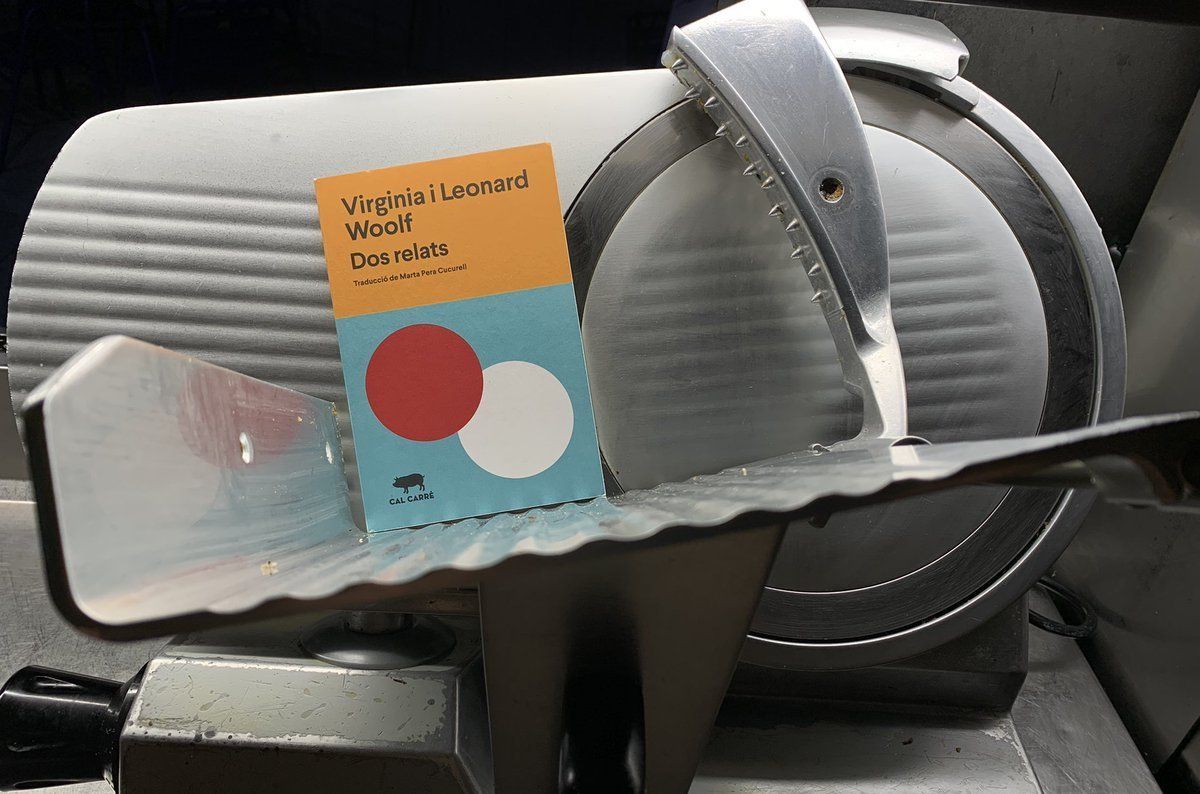
Two years later, they are approaching twenty published titles, divided into three collections. Following their origins and using butchery jargon, they have the menuts, the llibrets, and the lloms dos colors. For the new academic year, there will be new releases by Jane Austen, Virginia Woolf, and Panait Istrati, but a classic like Leo Tolstoy will also be added to the catalog. Based in Collblanc, the publishing house already has programming until 2025, although Carré-Pons continues to note new titles and authors for later.
Since the first book, the curious story of Cal Carré appears on the last pages, probably the only publishing house that was once a butcher shop. But it also explains to whom each novel they publish is dedicated. It is about Joana, Antònia's sister and Mariona and Guillem's mother. She died when the new family business was starting, distracting and encouraging her with the preparations. "She is the true engine of this emotional and cultural adventure, a tribute to good literature, to butchery, and to family," Carré-Pons remarks. In the old butcher shop in Terrassa, in the office Joana used, Cal Carré's copies are stored, increasingly more.
Add The New Barcelona Post as your preferred Google source for free
Stay informed with the latest news.
