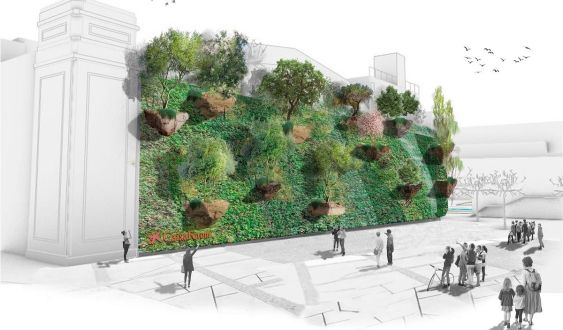
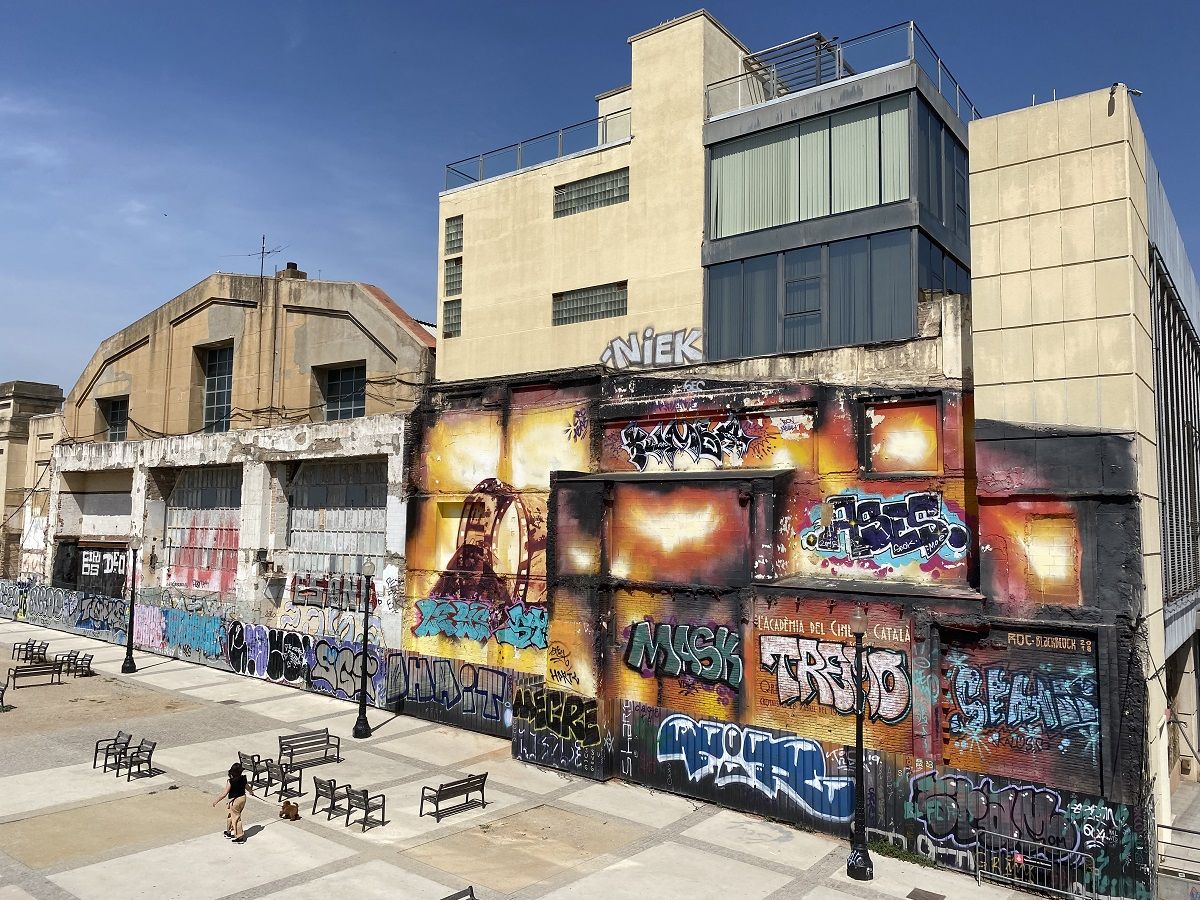
Suspended trees, accompanied by shrubs and hanging plants, will cover the wall that was left bare when the old La Pèrgola restaurant disappeared, behind the Montjuïc fairgrounds and just before reaching CaixaForum. Nature will replace the graffiti that has invaded this party wall in recent years thanks to the intervention that the cultural institution will carry out, coinciding with the celebration of its 20th anniversary. "It will be unique in the world," defends the deputy general director of the La Caixa Foundation, Elisa Durán.
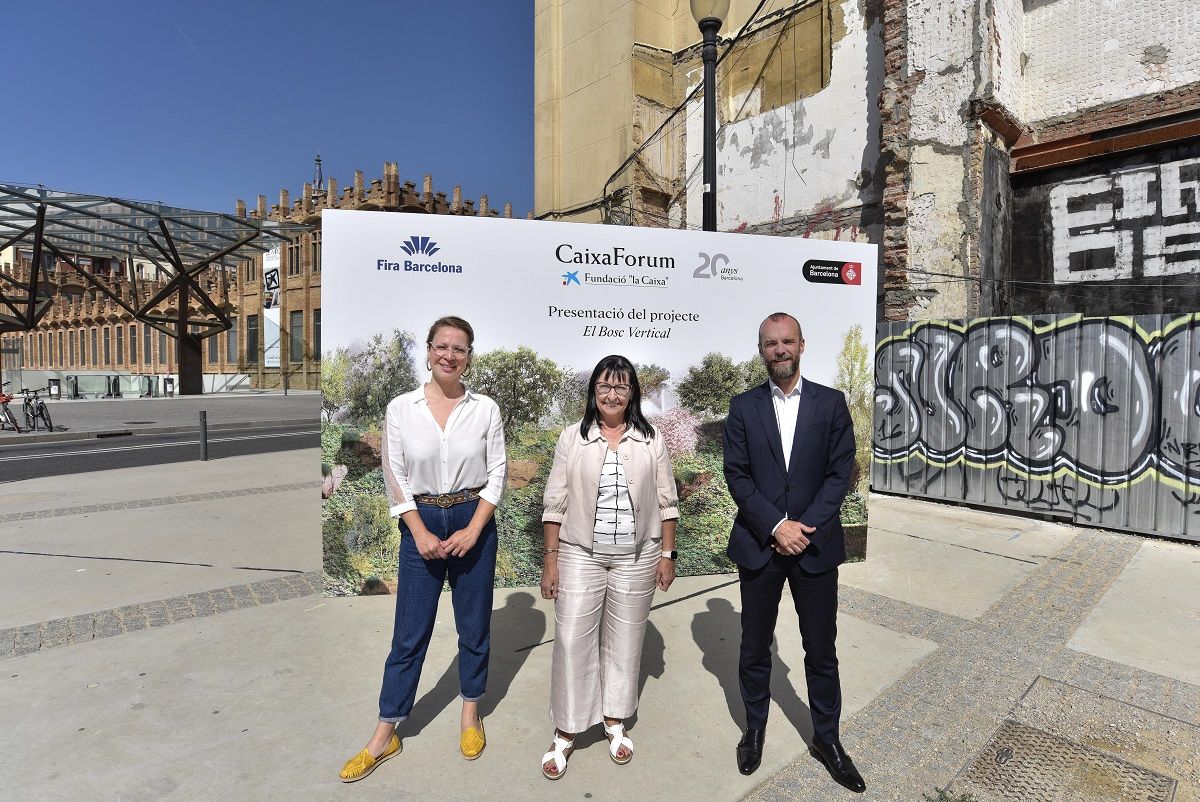
The entity will thus take another step in the vertical gardens it has been developing, first in Madrid and then in CosmoCaixa. For the first time, the protagonists will be trees. "It manages to integrate architecture, landscape, and biodiversity very well," emphasizes the deputy mayor of Urban Planning of the Barcelona City Council, Janet Sanz. In addition, Sanz highlights that it does so by perfectly fitting with the transformation that the administration projects for this area of the city. To make it possible, CaixaForum has worked hand in hand with Fira de Barcelona in the design of the project. Its director of venue and infrastructure services, Marc Serra, points out that this intervention represents an opportunity to dignify a facade that had been left in poor condition after the demolition of La Pèrgola.
With an investment of one million euros, the vertical gardening and green roofs company Babilon will develop the project, with the collaboration of L'Obrador Arquitectura i Paisatge, Vidal i Solanes Arquitectes, and Most Enginyers. The new vertical forest is expected to be ready by the end of 2022. Its components have already begun to grow in greenhouses, waiting to be transplanted to this pioneering installation, which will have an area of more than 500 square meters, 50 meters wide and 12 meters high. A self-supporting structure, made of galvanized steel and weighing 45 tons, will cover the old wall of the Palacio de la Metalurgia and will be the support for the trees, shrubs, and plants that will grow on it.
The green installation conceived by CaixaForum will consist of 15 large trees and 22,000 plants, including climbers, shrubs, and hanging plants. They will be distributed across four levels, each 2.5 meters high. The trees will be housed in planters, adorned with hyperrealistic sculptures that will imitate their roots, with the aim of seeing what is never seen through art. "Nature and culture cannot be separated," Durán emphasizes. There will also be vertical meshes to support the guide plants. In the central area of the forest, a large-format element will be included to explain the geological formation of the cliffs in Montjuïc.
To populate this innovative forest, a total of 40 different species have been selected, all of them native or adapted to the Mediterranean climate. In this selection, species with high melliferous value have been prioritized, with the aim of feeding populations of bees, butterflies, or hoverflies. Species that bear fruit at different times of the year have also been sought, but especially in winter, a season when birds have more difficulty finding sustenance and warmth. Even species that attract insects that prey on or help control pest invasions have been included, creating a refuge for vertebrates and invertebrates of all kinds.
Some of the botanical species that will be included are fescue, periwinkle, sage, lavender, ivy, and yarrow. There will also be plants such as jasmine or honeysuckle, and trees such as carob, olive, pomegranate, hazelnut, willow, and white poplar. QR codes distributed throughout the plant mural will provide information on how the different species interact with each other and the diversity of local fauna, as well as the culinary, medicinal, decorative, and economic uses of these plants, shrubs, and trees.
The ensemble will be completed with an irrigation system, consisting of two water pumps and 500 linear meters of pipes. It has been designed to consume rainwater and reuse irrigation water, with 13 tanks for storage. It is estimated that they will be able to cover up to 15 days of irrigation self-sufficiency, a figure that will drop to seven in the driest months.
Add The New Barcelona Post as your preferred Google source for free
Stay informed with the latest news.
