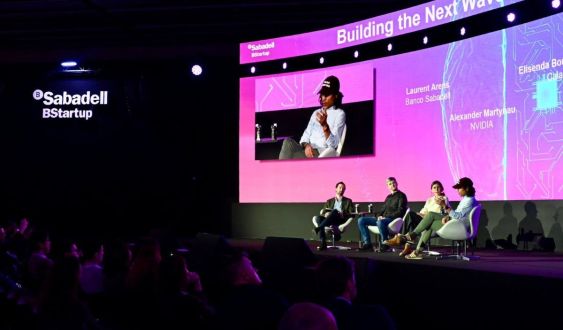
The entrepreneurial ecosystem that these days fills the halls of the Mobile World Congress has in 4YFN its most precise thermometer of the immediate future. While the parent congress has focused on infrastructure and large corporations, Four Years From Now —which is being held until Thursday, March 5— has focused on disruptive ideas, new business models, and the talent that aspires to lead the next technological cycle. In this context, the Banc Sabadell Stage hosted this Tuesday the round table "Building the next wave of AI-native companies", moderated by Laurent Arens, investment director of BStartup, the financial service for startups and scaleups of Banco Sabadell. The session brought together Elisenda Bou-Balust, CEO and co-founder of Cala; Alexander Martynau, regional head for the Nordic countries and Central and Eastern Europe at NVIDIA; and Eduardo Ordax, Principal Go to Market Generative at Amazon Web Services (AWS).
The round table was part of a wide range of sessions promoted by the bank within the framework of 4YFN: a total of 12 meetings designed to generate strategic conversation among entrepreneurs, investors, and corporations around the major vectors of technological transformation.
From "using AI" to being AI-native
Bou-Balust has opened the debate by redefining a concept that is beginning to consolidate in the ecosystem: that of an AI-native company. "AI-native companies are those that are already going beyond the GenAI era: you start building your product through AI or involving agents; it's an agent-based product," he explained.It is not, therefore, about being "AI-first" as a marketing label, but about designing products, processes, and corporate culture around intelligent agents from the outset. Organizations with an agent-first mindset, where everything from product development to internal workflows is automated.
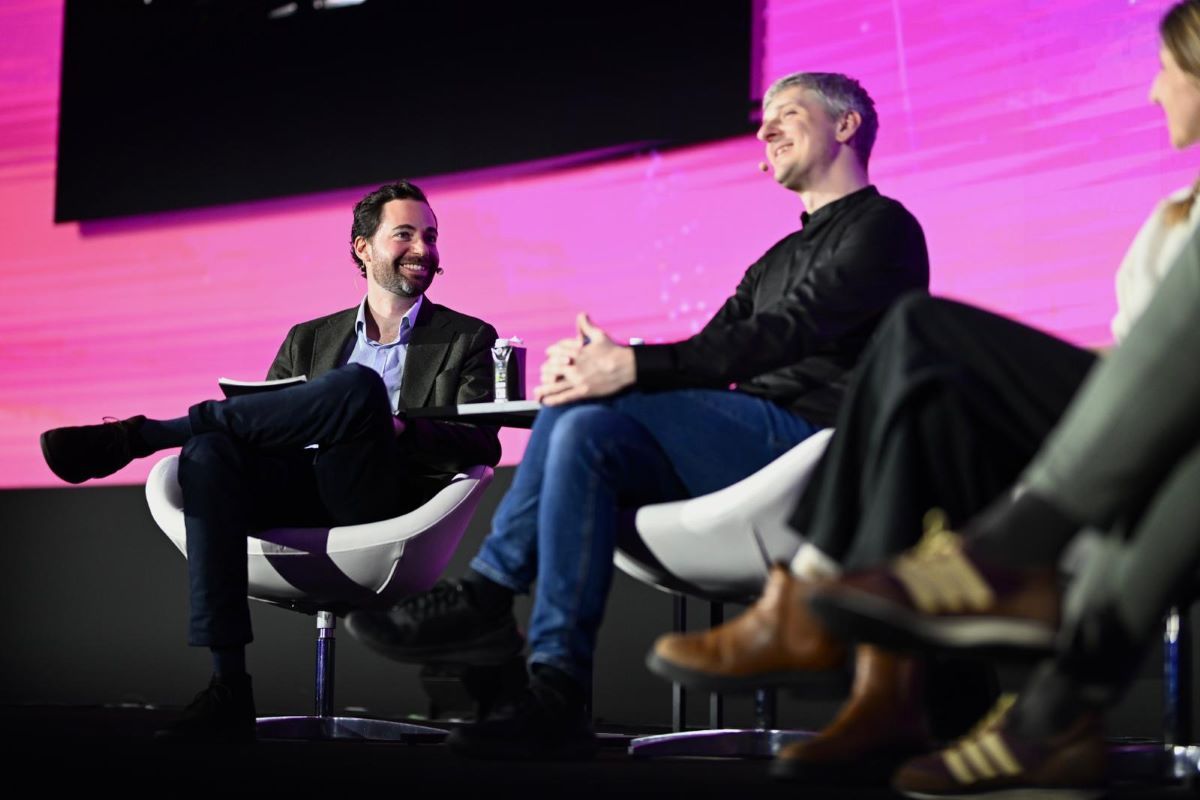
Ordax clarified this vision: "It's not about being AI-first. AI is a journey, and you need to enjoy the journey and learn how to navigate it." In his opinion, adoption is not a binary destination, but a continuous process of learning and adaptation.
Martynau: "The most successful AI-native startups are global from day one"
Startups, on the frontier
From an infrastructure perspective, Martynau has highlighted the role that startups play as the spearhead of technological change. "At NVIDIA we try to follow startups because today they are the leaders. They are on the frontier," he stated.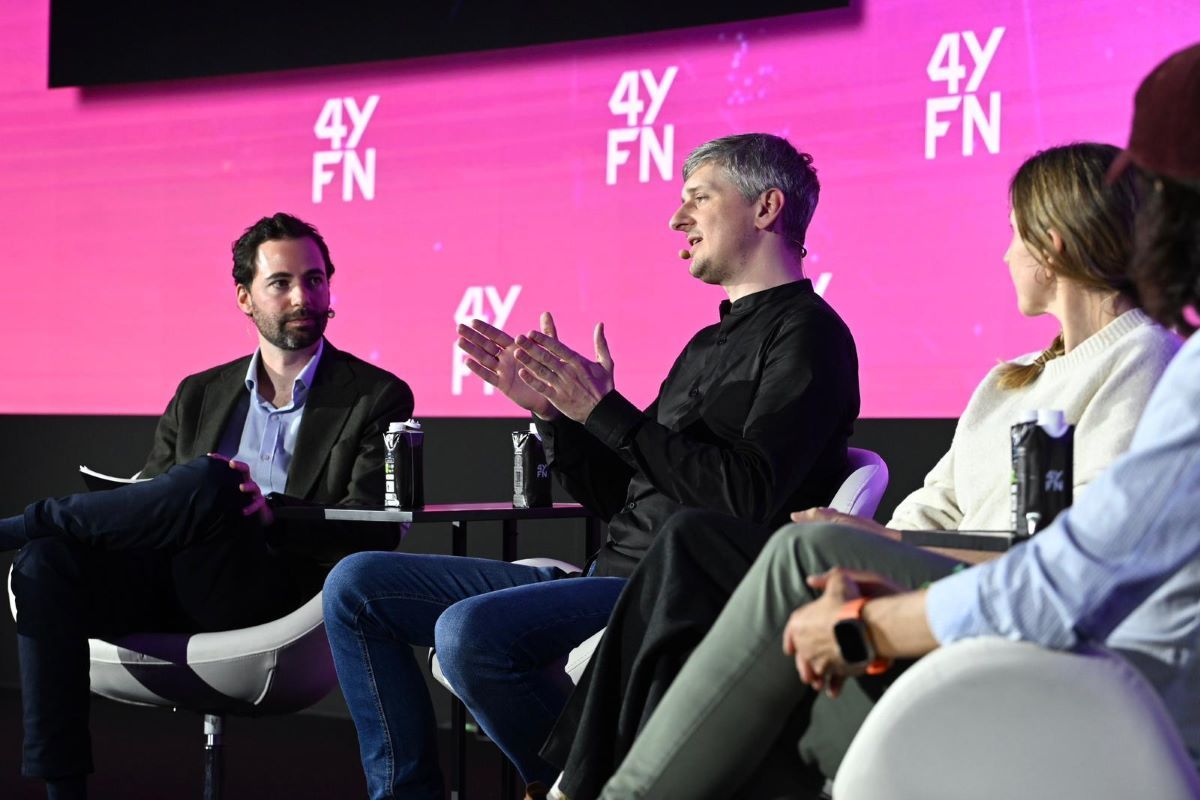
The company, he explained, has been preparing for years both large-scale training and inference capacity, not only with hardware, but with a complete software stack, SDKs and optimized libraries to enable the next wave: that of autonomous agents.
In that scenario, successful startups share two clear traits. "The most successful AI-native startups are global from day one. They build for the world, not for their region, not even for Europe," he noted. And he added: "The best founders think big from the start and are very, very resilient."
95% is easy; 5% makes the difference
One of the most revealing moments of the debate has revolved around the so-called "battle of the last 5%". Bou-Balust summarized it clearly: "When you connect an LLM or an agent to a task, it's quite easy to get it to 95% of what you need, and then that extra 5% is what really requires time or knowledge."That critical margin depends, to a large extent, on data quality. "The internet was not built for agents. Perhaps it is not the best repository of human knowledge we have either," he pointed out. Hence, Cala works on structured and reliable databases that allow agents to operate with precision in real environments.
Ordax added another key idea about expectations: "We need to understand that two plus two is not going to be four. It's going to be 3.7 or 3.9, and that has to be good enough." The management of uncertainty and probabilistic error becomes part of the business DNA.
Scaling in an exponential environment
The conversation has also addressed the challenge of scalability. The demand for computing has grown exponentially, especially with multimodal models and agent-based architectures. Martynau has identified two paths: that of brute force, common in heavily funded startups, and that of efficiency from design, more frequent in Europe.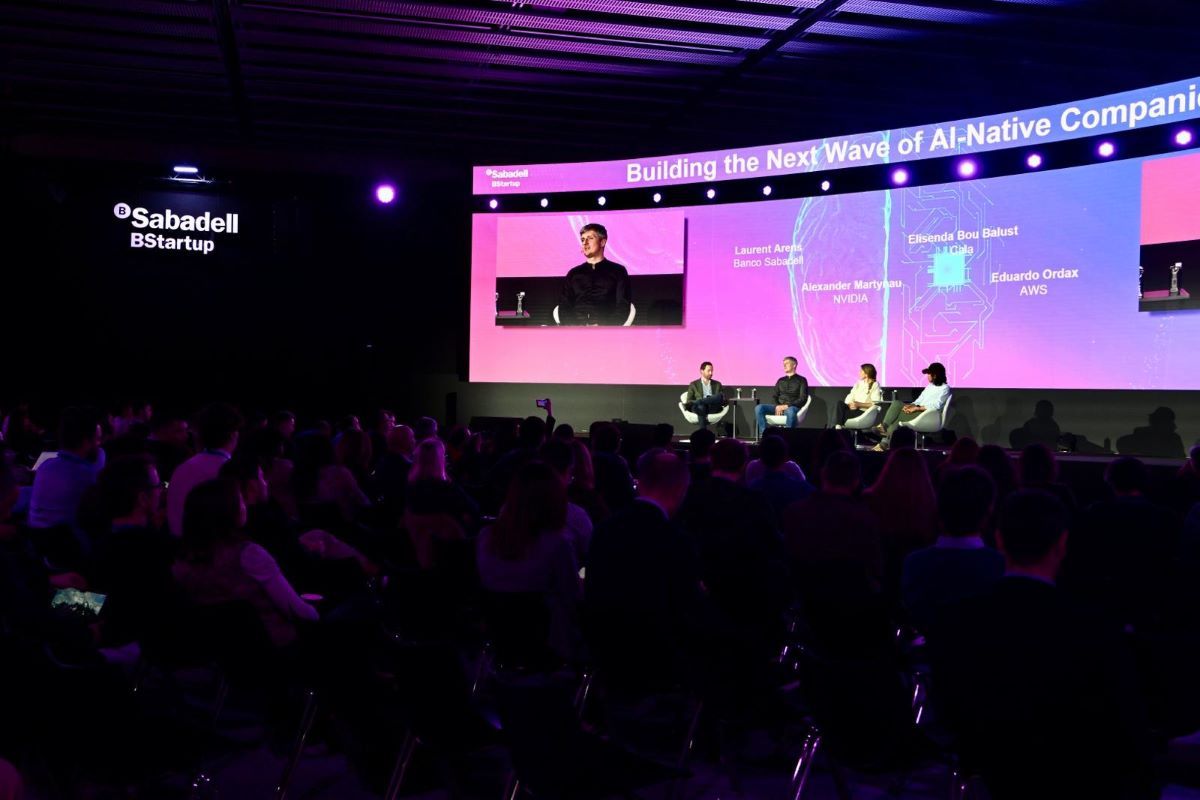
For his part, Ordax has warned that it is not about building with a ten-year vision, but about adapting to an environment in constant transition. The adoption of AI could multiply by one hundred or one thousand, which will make current architectures unsustainable in terms of cost or performance if they are not continuously reviewed.
Ordax: "Agentic AI will become mainstream and that will have a huge impact for customers"An indicator of the structural change to come is the labor market. "In the next two or three years, agentic AI will become something mainstream and that will have a huge impact for clients, but also for us as employees", Ordax anticipated. He even revealed that one of the big global firms —"one of the big four"— has already announced that it is slowing down the hiring of full-time employees to focus more on creating new agents.
Guardrails and talent for the new era
Given the imminent wave of autonomous agents, Martynau has insisted on the need to build limits and safety frameworks: "I hope that in the next year or two we also focus more on building guardrails for AI. It's going to be critical with the wave of autonomous agents coming."Bou-Balust: "We are looking for talent that has two main traits: that they are capable of thinking and that they have curiosity"Talent will be another differentiating factor. Bou-Balust has summarized it in two essential qualities: "We are looking for talent that has two main traits: one, that is capable of thinking —and I don't say that lightly— and the second, that has curiosity."
The speed of adoption has also generated an unprecedented phenomenon: "For the first time, because AI adoption is going so fast, large companies are hiring startups to help them with their internal workflows," explained the founder of Cala.
The conclusion that has hovered over the session has been clear: the distance between companies that simply "use AI" and those that automate their organization with agents is growing exponentially. At 4YFN, a global showcase for technological entrepreneurship, the message has been unequivocal: the next generation of companies will not incorporate artificial intelligence as an additional layer, but as its own foundational architecture.
Add The New Barcelona Post as your preferred Google source for free
Stay informed with the latest news.
