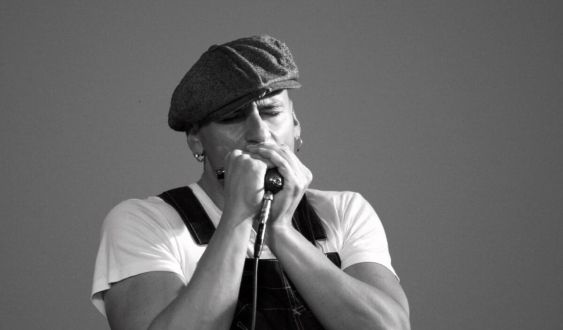
"I would like to call myself a musician," Blas Picón blurts out, savoring the foam of his glass of weissbier. "I have worked to have a roof over my head and pay the bills, and I have worked to be able to share the lights and shadows of this business, or rather, courtyard of passions, with real musicians," he continues.
He arrived at the Bar in mid-morning, and, at this point, he confesses that he only stays up late if he's on a gig, "and even then, it's hard for me." He has propped his two meters of imposing bulk against the bar, ordered his drink, and when asked if he felt like accompanying the chat with some background music, he replied: "My body is asking for some Skip James, if possible." Immediately afterwards, the lacerating and humid lament of Devil got my woman filled the space.
"I have never given credit to the future," reflects the singer and harmonica player, currently one of the most active and interesting faces in Barcelona's blues scene, before adding: "And I don't say it with pride, it's just how I am. You could say I improvise as the waves come."
Waves that have taken him to hundreds of stages and to record notable albums, whether fronting The Junk Express, Three Time Losers, or other projects with musicians like Iker Piris, Óscar Rabadán, or Mario Cobo, with whom, right now, he announces that he is working "towards the production of a new album". "For now it's a project in the air, but I hope that sooner rather than later it becomes a reality," he says.
--- And do you have any more projects, in your quiver?
--- Well, apart from this one with Mario, keep trying to get gigs to pay the bills.
The cave of Barcelona blues was in Sants
When asked about the moments that have most marked and defined him in his journey, the regular customer thinks about it for half a minute while sipping his beer and, after careful consideration, replies: "There have been many, but the most significant for my musical facet begins with leaving my job at Seat after eight years, to open, with three high school friends, the Honky Tonk Blues Bar," a place located in the heart of the Sants neighborhood that, during its existence, brought together the core of Barcelona's blues scene.
It was not a decision that had great family support: "My parents almost had a fit. Andalusian immigrants in the fifties, they couldn't understand that I would abandon a job with an indefinite contract for a romantic unreality without any security."
--- It was a risky bet, of course.
--- As I said, no credibility in the future.
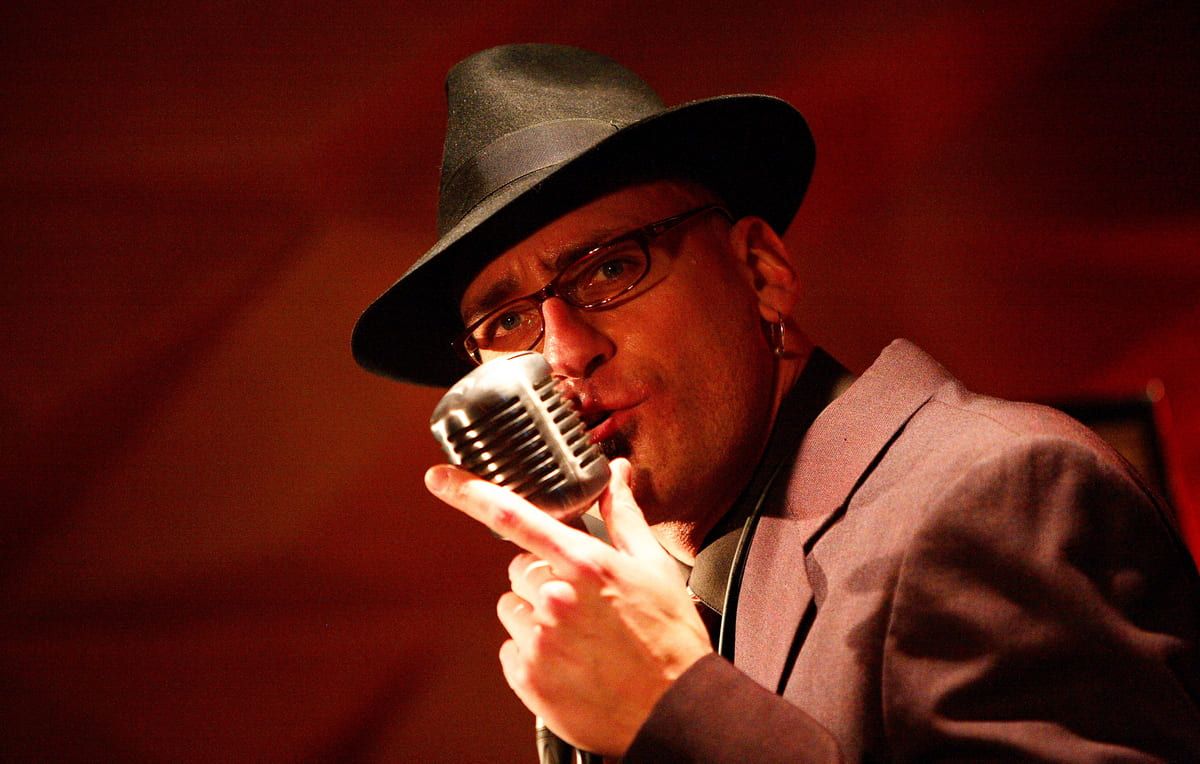
Skip James' Illinois blues plays, and the musician takes a few seconds to enjoy the beats before continuing: "For better or worse, the Honky Tonk becomes my life for thirteen years." During that period, the regular develops his musical growth and lays the foundations of the bluesman with a name and surname that he is today. Something he is not particularly proud of. "I reserve pride for my friends, who are not many, but they are very important. Without the friendship and support of artists like Mario Cobo, Óscar Rabadán or Manuel López Poy, I would not have been able to carry out any project."
--- But you must be especially satisfied with some album or project, right?
Without rushing to answer, Blas thinks about it before admitting: "I don't know if it's the best or not, but because of the effort it demanded of me and the unusual nature of the proposal, as a composer and performer, I would say that my most complete work is Aires de tormenta, the album that provides the soundtrack to the eponymous book by the aforementioned Manuel López Poy."
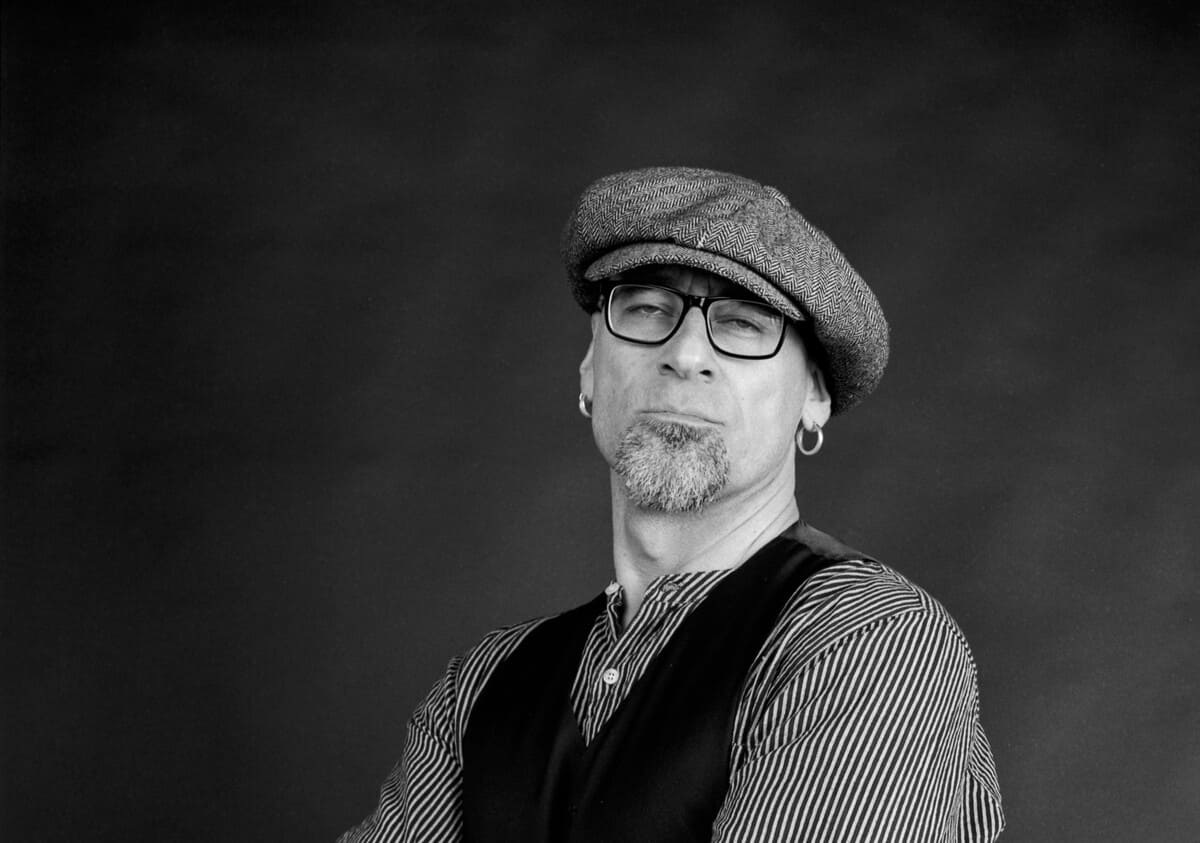
A circumstantial Barcelona
"I am from Barcelona by birth, but stateless by conviction. I am the son of my mother and my father, and that is the only homeland I recognize because everything else is circumstantial, so I don't usually have an attachment to places just because I live or was born in them. Not even at a neighborhood level. I like and admire some people who coincidentally live in or are from Barcelona, but I resist considering the city as an entity," confesses the musician, stateless like a good blues, and in love with several episodes such as the Canadian Strike.
--- That one in 1919 seems like an incredible feat to me, inconceivable today, ---he laments.
Disgusted by gentrification, "and that slow but inexorable process of turning the city into a large shopping center without character and completely surrendered to speculation," the bluesman alludes to the recent disappearance of the Honky Tonk: "A close and painful example of this scourge that affects several cities and also Barcelona."
--- What is not gentrified is our gastronomic offer. We have rich tapas, exquisite menu and amazing combined dishes.
A Blas Picón a half-smile appears on his face: "Red wine. I adapt to everything else."
Add The New Barcelona Post as your preferred Google source for free
Stay informed with the latest news.
