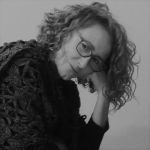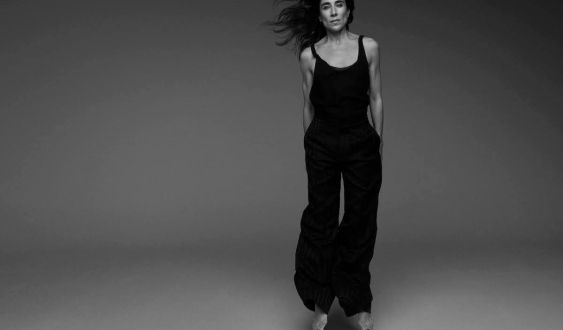
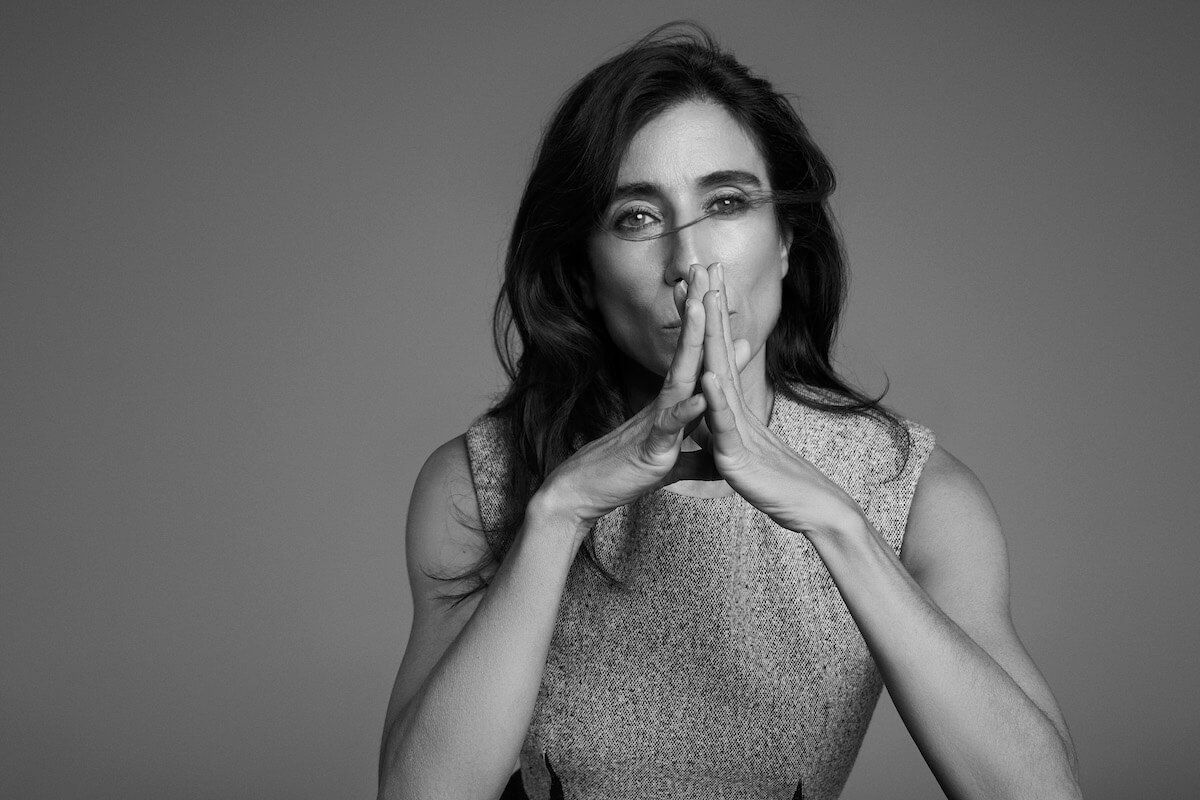
"I didn't decide it, it was there." Blanca Li refers to her passion for dance. She leaves Barcelona infected by the happy audience who enjoyed her latest show, tribal and telluric, in the patio of the Liceu, Solstice. She looks at me from her screen and I watch her nibble on a delicious sweet that someone has brought her for breakfast before flying to the airport. The image she radiates is full of light, overhead on her dark, pulled-back hair and that long, unmistakable face of the choreographer. Happy.
Her vocation, that which "was there," was born into a festive family; noisy children, "up to 20 children we would gather, among cousins and siblings," and their favorite game was "putting on" dances and little plays. Show. She was born Blanca Gutiérrez Ortiz, 1964, Granada, the third of seven and the third artist. Older siblings Chus Gutiérrez, the filmmaker, and Tao, the musician who soundtracks her ideas. At 17, she receives a scholarship to study at the Martha Graham dance school, New York. And as soon as she arrives, she "puts on" her first choreography. Harlem, bars, Broadway and a flamenco-rap group, the Xoxonees, which drags her siblings Chus and Tao, and some others who continue today in her troupe, there.
New York-Marrakech, where she follows her husband, Etienne Li, a university professor of mathematics and the group's set designer. From Andalusian music and the trance of gnawa rituals, in Moroccan lands emerges Nana & Lila, a choreography she presents at the Seville Expo and which will earn her the "public off" prize at the Avignon Festival in 1993. She had returned to Spain and in Madrid she establishes her first dance company, "but in Madrid nothing was happening, I felt blocked, I had too much desire and energy." Back to packing, this time bound for Paris, where she continues, where those who follow her around the world continue with her. In between, she has worked as a choreographer for the Paris Opera and the Metropolitan Opera House in New York, and has directed the ballet of the Komische Oper in Berlin; she has made five feature films and numerous artistic installations for museums such as the Guggenheim in Bilbao or the Grand Palais in Paris.
She has been named an academician of Fine Arts of France, the first female choreographer, and, for a little over this cursed year (November 2019), director of the Teatros del Canal in Madrid. She has two children and a husband who is her "everything," Professor Li, but she remains that girl nibbling on the delicious cake someone brought her this morning to the light-filled kitchen.
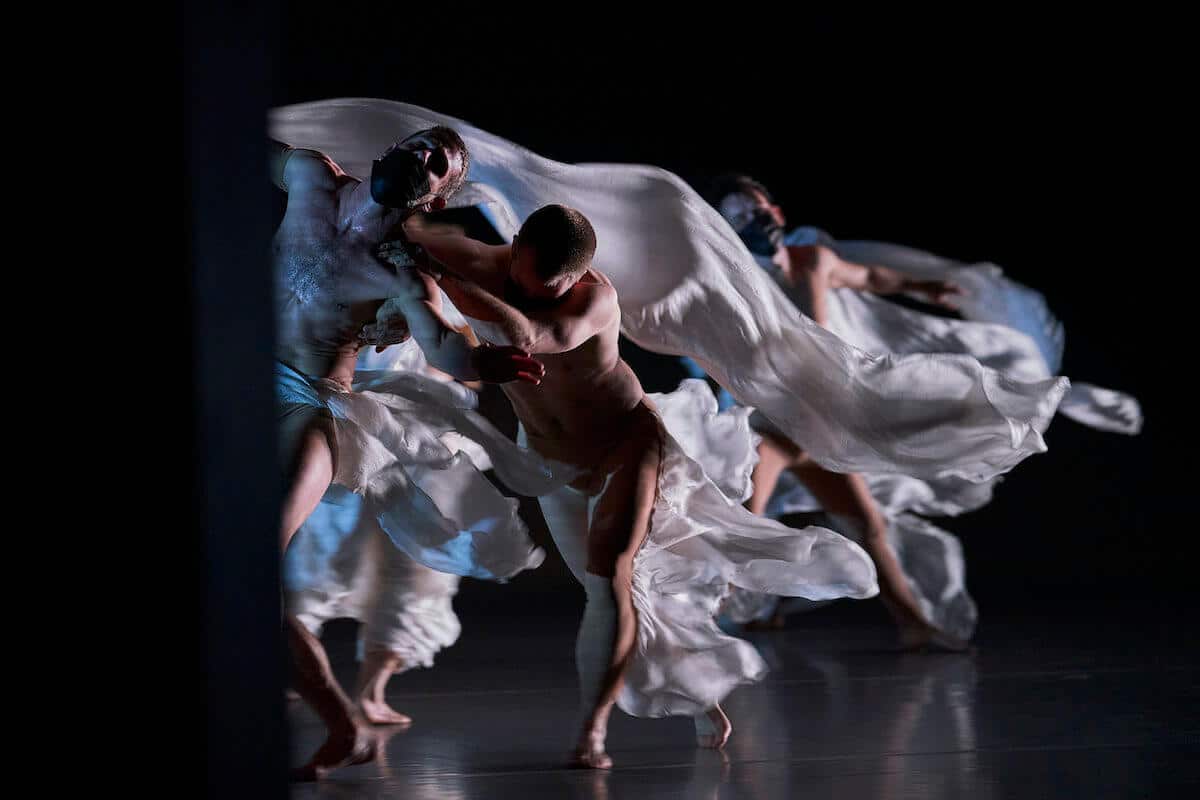
--- Is it a milestone to debut at the Gran Teatre del Liceu even after having done so by commission 20 years ago at the Paris Opera Ballet, or at the Metropolitan Opera in New York, or having directed the ballet of the Komische Oper in Berlin?
--- The Liceu is one of the most important theaters in the world and has a very powerful history in the world of dance. And that is felt on stage, and it is very exciting; it also has very beautiful acoustics and intimacy, which produces a very particular feeling of love. Added to this is that the audience is wonderful, they seemed very happy: today's audience appreciates culture so much...
Solstice, the passage of time and the degradation of nature: "Contemporary civilization lives disconnected from nature. Before, people were aware that if nature fails, everything fails; if it doesn't rain, famine comes. We wanted to live ignoring it, but for some time now this loss of connection has been taking its toll, so we demand the attention of governments. And what can I, as an individual, do? I felt the need to contribute something and created a choreography that evoked nature. Throughout history, even before, dance and music have always been present in man's relationship with nature, and I was inspired by this force of the elements. I believe it is proven that the community, through small daily gestures, can make the inertia of companies change: we have to act."
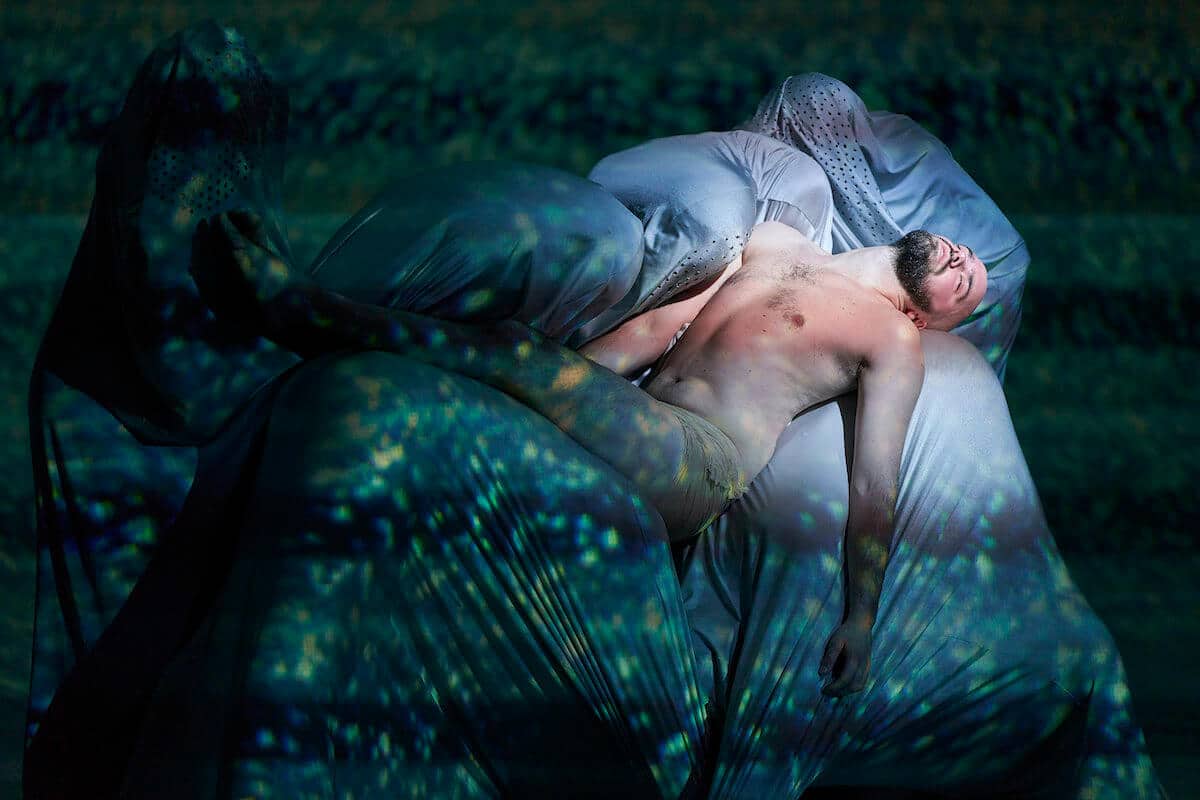
--- Are we guilty (not just responsible) of what is happening?
--- I wouldn't say we are guilty. We have grown up in this consumer and welfare society, but until recently we used to return washed bottles to the store and kept plastic bags to reuse them; in Morocco, for example, it was natural to separate trash. But there has been a change in our way of consuming (the era of hyper-consumption) and all these small gestures were forgotten. We have to go back in time, go back and recover the awareness of small things.
--- Blanca, what is that large family of numerous artists that is yours like?
--- My parents are not artists but at home there was always a lot of love for dance and music, and for parties; and family parties consisted of everyone showing what they knew how to do: theater pieces, dances... It was family fun, and that encouraged our creativity. As a child, I was on the national gymnastics team, but I left it at 12, because I wanted to dance; Chus also started making films early and Tao, music. Yes, perhaps this very festive family is the origin of everything. My parents would stir us up, come on, let's put something together! We would go to the beach bar to eat some migas and I always ended up dancing. Actually, I don't know when I started creating, but I do remember my first choreography for the end of the year: I was 12 years old and that's where it all began. I didn't decide anything, it was there (dance). I put on my first show at 18 as soon as I arrived in New York.
[subscribe_newsletter_esp]
As far as she dragged her older brothers, Chus and Tao, to learn and create together. They still do it whenever they can. Tao is the usual composer for her shows. A stop in Marrakech, where music, color, Andalusian culture, and Gnawa spirituality inspire her first major choreography, a passport to the world. "Nana & Lila is a round trip between my Andalusian nature and my encounter with Morocco: a cultural journey." Another in Madrid, where she establishes a stable company (25 years), and a leap forward: "In life, you have to move forward. My husband requested a transfer from his position in Marrakech…" et voilà! Paris: 30 years later, her team is still the same: she comes and goes, creates and directs. But there are voices, mostly unmoving, that question her ability to direct the Teatros del Canal, is it because she is unclassifiable or because she is a woman, what weighs more in that distrust? "Oh, well, I just found out… Directing is something totally natural for me: I have been a director and businesswoman since I was 17. I have launched all kinds of productions and have worked in companies all over the world with huge budgets. There is nothing I haven't done already. And to that is added that I am an artist, and having the sensitivity of an artist, knowing and living the craft from the inside of an artist, is something very important and very helpful when you direct a theater."
So she returns to Madrid, assumes the direction of the (3) Teatros del Canal, and, without even time to present a first program, this appears, the bug, the fear, the reclusion, the stagnation; the closure of the scene itself. "Yes, I arrived in the most difficult year anyone could imagine. Maintaining balance and giving meaning to all this is complicated, and yet I am enjoying it immensely, for the audience and for the artists. We are, like the Liceu, one of the few theaters in the world that have remained open, and the emotion felt on stage today, what the audience gives off, is wonderful. The day-to-day is very hard, but the result is exciting. And in the annals of history will remain our courage to keep culture open."
--- Dance, theater, performance; actress, stage director, audiovisual artist… What dream is left for you to dream?
--- I would love to be an opera singer, but I sing terribly. I am very crazy, and as a child, I dreamed everything I later did. If I hadn't been a dancer, I would be an architect, but I love being a dancer.
Add The New Barcelona Post as your preferred Google source for free
Stay informed with the latest news.